

Just send us your questions or concerns by starting a new case &
we will give you the help you need. Start Here...
Trademark Registration
Sat, Aug 22 2026
Raju Karn
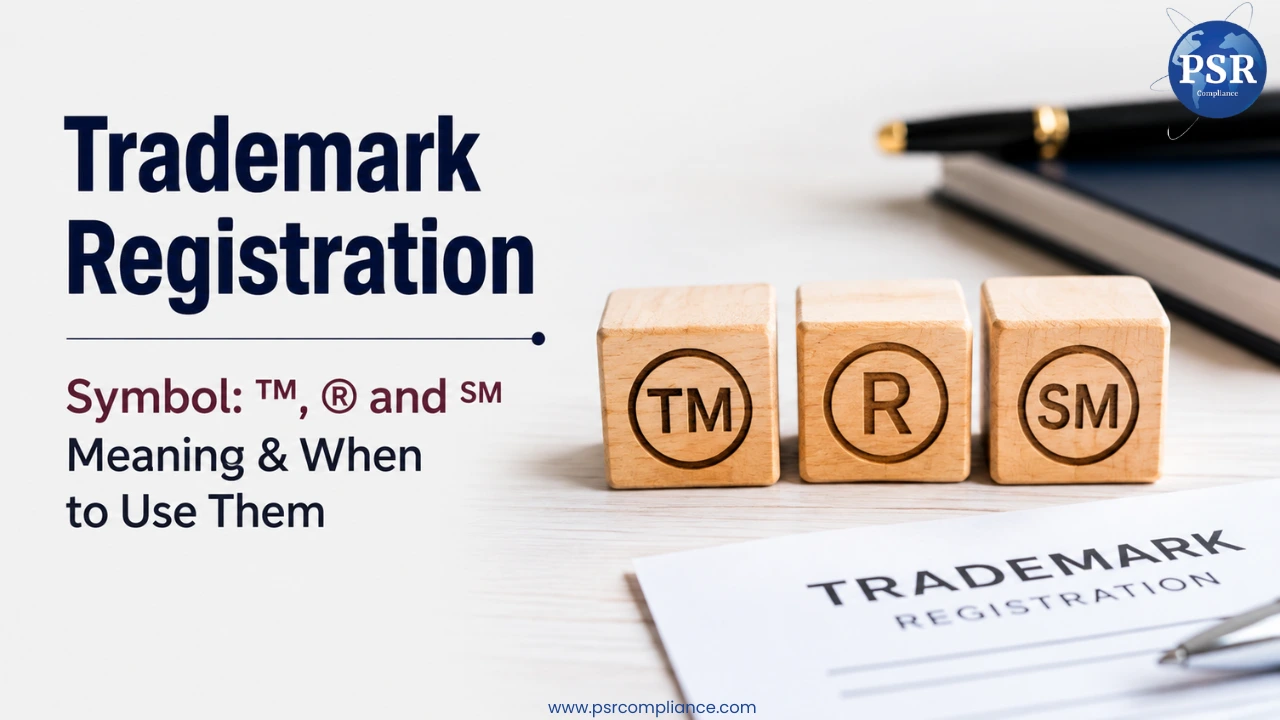
Trademark Registration Symbol: ™, ® and ℠ Meaning & When to Use Them
Brand names, logos, slogans, or service names can become one of the most valuable assets of a company. Nonetheless, the creation of a brand cannot guarantee complete protection automatically. Often, businesses tend to use symbols like ™, ® and ℠ to indicate their claim over the mark. Although these symbols appear alike, they differ in meaning and have to be used at various stages of protection of brands.
The importance of understanding the meaning of the Trademark Registration Symbol cannot be ignored by startups, manufacturers, service providers, and even well-established companies because of the confusion arising out of the incorrect use of a symbol. In India, trademark rights are mostly regulated by the Trade Marks Act, 1999 and the Trade Marks Rules, 2017.
This article will help you understand the meaning of ™, ® and ℠, their usage, differences, common errors, and connection to trademark registration in India.
What Is a Trademark Symbol?
A trademark symbol is a graphical marking appearing adjacent to a brand name, logo, slogan, or any other type of mark that signifies either the right claimed over such a mark or its registration.
The three symbols one typically encounters are:
- TM – Trademark
- R – Registered trademark
- SM – Service mark
Note that these symbols represent different stages in trademarking, as the use of each of these symbols does not indicate the same legal status. ™ and ℠ symbols could usually be used in advance of registering a trademark. However, the ® symbol is tied to a registered mark and cannot be used simply as an alternative to ™.
For instance, according to the USPTO, ™ could be used for the goods, and ℠ could be used for services even without filing an application. Upon registration of a trademark, the ® symbol could be used for the goods or services listed on the registration certificate.
™ Symbol: Meaning and When to Use It
What does ™ mean?
™ is a trademark symbol. ™ is used in association with a word, name, logo or slogan that a company thinks is its trademark for goods.
Example:
ABC Foods™
It shows that ABC Foods is considered a trademark. It does not in any way mean that the mark has been legally registered.
It is common practice in businesses to use ™ during the preparation of a trademark application, at the time when the application is pending, or even before the application for trademark registration in India.
When should ™ be used?
The ™ symbol can be very useful in case when:
- There is a newly selected brand name.
- The company uses the mark in commercial activity.
- A trademark application is being prepared.
- A trademark application has been made, but registration has not been made.
- The company needs to communicate to the world its claim of trademark.
- Yet, the use of the TM symbol is not an alternative for the trademark registration process. In India, trademark protection rests with the provisions of the Trade Marks Act, 1999. IP India says that a person who claims to be the proprietor of the mark which is in use or proposed to be used can make an application for registration.
℠ Symbol: Meaning and When to Use It
What does ℠ mean?
The '℠' sign is the abbreviation for Service Mark symbol. It is usually placed next to a mark that is used to identify services and not products.
For instance:
XYZ Consulting℠
The '℠' sign indicates to the market that XYZ Consulting is claimed to be the distinct mark used for its services.
So, the difference between ™ and ℠ is basically in terms of what is identified by the mark:
™ → Goods
℠ → Services
The USPTO clearly differentiates the two marks and says that businesses may use ™ for goods and ℠ for services without registering an application for the same.
In business communication, ™ is much more recognized and is at times used informally for both goods and services. However, businesses must keep in mind the requirements of law of the concerned country.
® Symbol: Meaning and When to Use It
What does ® mean?
® stands for registered trademark. The symbol conveys the message that the mark has been registered.
Example:
ABC®
Unlike ™, the ® symbol must not be used merely on the grounds that a company wishes to register its brand. It is necessary to have registration when the symbol is used.
USPTO points out that the trademark registration symbol may be used following registration, and then only in relation to the goods/services for which the mark has been registered.
Importance of ®
Usage of ® helps in clearly informing the world about the registered trademark status. In addition to this, registration of a trademark can help in receiving certain legal advantages. For instance, as per USPTO, there exists a legal presumption of ownership and public notice upon federal registration.
Indian businesses need to be especially careful while using representations regarding trademark registration in India. Section 107 of the Trade Marks Act, 1999 deals with false representation of a trademark as well as usage of expressions, symbols or signs indicating registration.
® is, thus, not just a decorative symbol.
™ vs ® vs ℠: Key Differences
| Trademark Registration Symbol | Meaning | Common Use | Registration Required? |
|---|---|---|---|
| ™ | Trademark | Goods | Not necessarily |
| ℠ | Service mark | Services | Not necessarily |
| ® | Registered trademark | Registered goods/services mark | Yes, where registration is being claimed |
The simplest way to remember the difference is:
™ = trademark claim
℠ = service mark claim
® = registered mark
The legal implication of every trademark registration symbol may vary among jurisdictions; hence, companies that have their presence across the globe should ensure they know the regulations prevailing in different markets.
Trademark Registration and Symbol Usage in India
In India, there is a proper mechanism to protect trademarks. As per the guidelines from IP India, a trademark can either be for goods or services and is classified through the Nice Classification system. Classes 1–34 refer to goods, while classes 35–45 relate to services.
There are several steps in the trademark registration process in India.
1. Search for Existing Trademarks
Before submitting registration applications, one should do a search to see whether there exists any similar or conflicting trademark.
2. Select the Correct Class
A trademark application should state the appropriate goods or services. This is critical as registration of the mark will be based on the stated goods or services.
3. Prepare the Application
The applicants should provide appropriate information, which includes the applicant information, presentation of the mark, and description of goods or services. IP India identifies Form TM-A as the appropriate form for new applications.
4. File the Application
The application should be filed through the official e-filing process. The applicant will then be able to monitor the status of the application.
5. Examination and Objection
The Registry will review the application. Where there is an objection, the applicant may have to respond or participate in a hearing.
6. Publication and Opposition
An approved application is published in the Trade Marks Journal. Any objections can be raised by third parties during the prescribed time period. At present, according to IP India, an objection to the application can be raised within four months of its publication.
7. Registration
If the application is successfully cleared at all stages without any objections, then the application can be registered.
Claims indicating registration should be made only when the concerned registration is completed.
Why Trademark Registration in India Matters for Businesses
Trademark registration in India goes beyond having just a trademark registration symbol alongside the company name. This is part of the bigger picture when it comes to branding.
There is always an investment of money and time when it comes to naming, logo, packaging, advertising, and recognition of the brand by customers. The use of confusingly similar marks by other companies could cause some legal and financial troubles for the original company.
One can view from the global filing activity the importance of trademarks. There were active trademark registrations globally, totaling approximately 93.2 million in 2024, as per WIPO. India had an estimated 3 million active trademark registrations.
These numbers clearly show how trademarks are used by companies.
Common Mistakes When Using Trademark Symbols
Using ® Before Registration
This is perhaps one of the most critical mistakes. An application being filed does not necessarily imply that the trademark is registered.
The safest way forward would be to use ™ wherever necessary until the registration has been granted, after which you may go ahead to use ®.
Assuming ™ Means Legal Registration
While ™ implies that an individual or organization owns the trademark, ™ does not always mean that it has been registered by a governmental trademark agency.
Using ® for Unregistered Goods or Services
The process of registration is always tied to certain goods/services. It is therefore clear from the USPTO that the symbol ® must be used with only those goods/services that have been registered.
Businesses must understand that registration is always tied to the specific goods/services. They should therefore not go ahead and use ® broadly for other non-registered products.
Treating the Symbol as a Substitute for Registration
The trademark registration symbol in itself does not give the same legal protection as a registration.
How to Add ™, ® and ℠ to Business Content
Trademark symbols can appear on:
- Product packaging
- Websites
- Advertisements
- Brochures
- Product catalogues
- Social media creatives
- Business presentations
- Software interfaces
- Marketing materials
The trademark registration symbol is commonly positioned immediately after the brand name or logo.
For example:
BrandName™
BrandName®
ServiceName℠
Consistency is key. But in most cases, there is no need to include the trademark registration symbol after every single mention of the brand name. One can always find consistency in creating a style for marketing and business purposes.
Does the Trademark Symbol Provide Automatic Protection to the Brand?
Not really. The symbol should never be associated with automatic protection.
The protection depends on several criteria like location, nature of the trademark, use, registration, goods and services in question, and the relevant legislation.
According to IP India, in India, a registered trademark symbol is valid for 10 years from the date of filing an application and may be extended in the subsequent period of 10 years by using the prescribed procedure.
Thus, managing a trademark becomes essential. There are several other factors in addition to registration.
Best Practices for Using Trademark Symbols
A practical approach is to follow these rules:
- Use ™ for an unregistered trademark claim relating to goods.
- Use ℠ for an unregistered service mark where appropriate.
- Use ® only when the relevant trademark is actually registered.
- Check the registration scope before using ®.
- Do not assume a pending application equals registration.
- Use the correct trademark class for the relevant goods or services.
- Monitor the trademark after registration.
- Renew the registration on time.
- Review brand use across packaging, websites and advertising.
- Seek professional guidance where ownership, infringement or registration status is unclear.
Conclusion
The three symbols ™, ® and ℠ are small but carry a lot of meaning regarding the brand. ™ is normally used to denote a trademark on products, ℠ to denote a service mark, and ® to show that the mark is already registered. It is essential for the correct symbol to be used depending on the status of the mark.
India-based companies must understand the Trademark Registration Symbol along with doing other things like confirming the availability of the mark, selecting the appropriate class, filing the trademark, and post-registration maintenance. Any business seeking expert help in regard to trademark registration and other regulations must contact PSR Compliance. They offer trademark registration services along with other compliance services for your business in India.
Protect Your Brand with Trademark Registration
Don't leave your brand name or logo unprotected. PSR Compliance helps businesses with trademark search, application filing, documentation, objection support, and complete trademark registration assistance.
📞 Call: (+91) 8796104190
📧 Email: support@psrcompliance.com
FAQs
1. Can ™ be used before trademark registration?
Yes. ™ is commonly used to show claim over a trademark without requiring completion of the registration. Nevertheless, local legislation should be taken into account.
2. How ™ differs from ®?
™ is normally used to show that the company claims the trademark, whereas ® shows that the particular trademark is registered. It should be noted that the ® symbol cannot be used as a substitute for the application.
3. Can ℠ be used for services?
Yes. ℠ stands for service mark and is intended to indicate services. The USPTO draws a distinction between ™ and ℠ based on this definition.
4. Can ® be used during the process of trademark registration?
No. The mere filing of the application does not provide the trademark owner with the right to use the ® Trademark Registration Symbol.
5. Is the trademark registration in India permanent?
No. In India, the trademark will remain registered for 10 years from the filing date of the application and can be further renewed for 10-year terms.