Sat, Nov 28 2026
Utkarsh Sharma
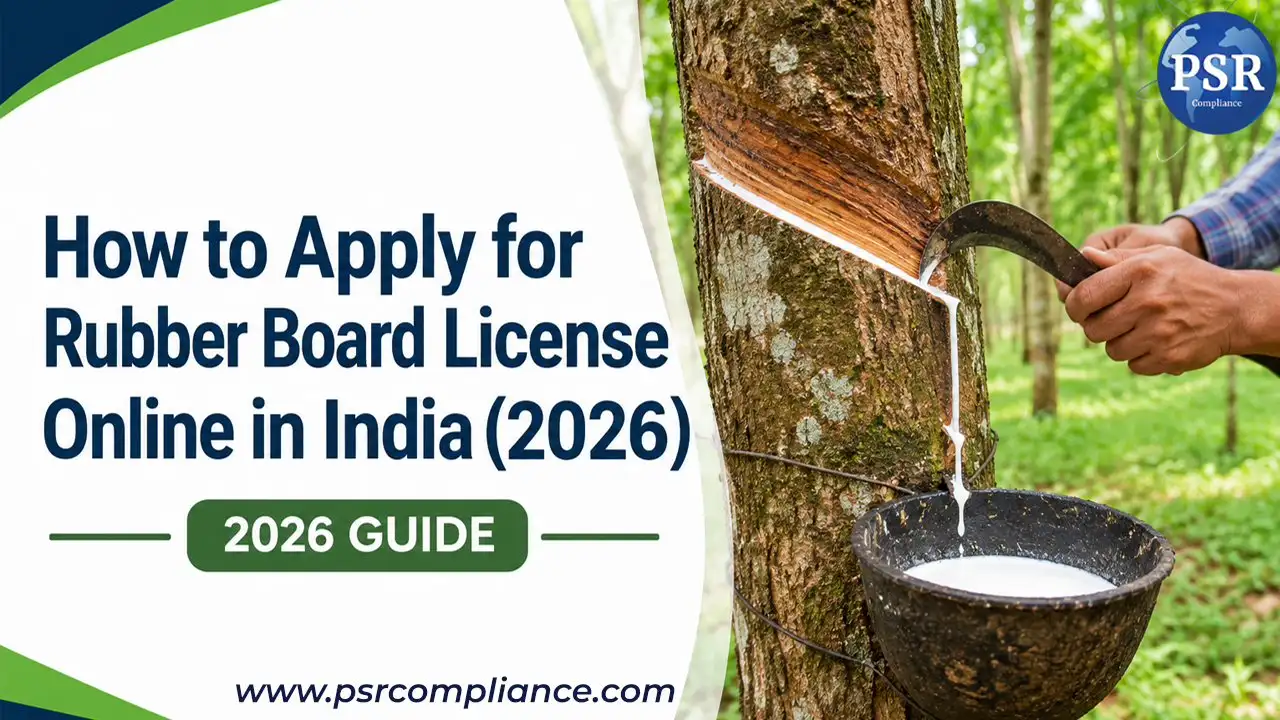
How to Apply for Rubber Board License Online in India (2026)
Rubber is a big business in India, especially in Kerala, Tamil Nadu, Karnataka, and the North East. But many new traders and factory owners get stuck at one point: the paperwork. They are not sure which license they need, which form to fill, or how to apply online. Because of this confusion, applications get delayed or rejected.
This guide explains how to apply for a Rubber Board license in simple words. You will learn who needs a license, what documents to keep ready, what it costs, and how to avoid common mistakes.
What Is the Rubber Board of India?
The Rubber Board of India is a government body under the Ministry of Commerce and Industry. It was set up under the Rubber Act, 1947. Its main office is in Kottayam, Kerala.
Functions of the Rubber Board
The Board does many jobs:
- It helps develop and promote the rubber industry.
- It guides rubber growers on better farming.
- It collects data on rubber production and trade.
- It issues licenses to dealers, processors, and manufacturers.
- It supports exporters of natural rubber products.
Simply put, if your business buys, sells, processes, or uses natural rubber in large amounts, the Rubber Board is the authority you will deal with.
What Is a Rubber Board License?
A Rubber Board license is legal permission to deal in, process, or use natural rubber for business. The rules come from the Rubber Act, 1947 and the Rubber Rules, 1955.
In simple terms, this license shows that:
- You are a registered and approved rubber business.
- Your trade is open and recorded with the Board.
- You are following government rules on rubber trade.
Without the required license, trading or processing rubber as a business can lead to penalties.
Types of Rubber Board Registration and Licenses
There are different licenses based on what you do. Here are the main ones:
| License | Form | Who Needs It |
|---|---|---|
| Dealer License | Form B | Anyone who buys and sells rubber |
| Processor License | Form B1 | Those who buy rubber to process it and sell it |
| Manufacturer License | Form D | Factories that use rubber to make goods |
Besides these, the Board also helps exporters with registration for export purposes. Growers can also register with the Board to get access to schemes and support.
Rubber Board Dealer License: Who Needs It?
A Rubber Board dealer license is needed by anyone who buys rubber and sells it for business. This includes:
- Traders and rubber merchants.
- Agents and commission traders.
- Wholesalers who buy from growers and sell to factories.
- Small collection centers in rubber-growing areas.
If you only grow rubber on your own land and sell directly, the rules can be different. Check the Board's latest guidance for your case.
Rubber Board Processor License: Who Needs It?
A Rubber Board processor license is for people who buy raw rubber, process it into another form, and sell it. For example:
- Making sheets or crepe rubber.
- Producing latex concentrate.
- Running a small rubber processing unit.
Processors usually need extra papers, such as a project report and a pollution control board NOC, because processing can affect the environment.
Why Is a Rubber Board License Important?
Some people treat this as just another form. It is much more than that. If you work without the needed license, you may face:
- Penalties under the Rubber Act.
- Trouble selling to big buyers.
- Legal action.
- Problems with exports and records.
- On the other hand, a valid license gives you:
- Legal approval to run your rubber business.
- Trust from growers, factories, and buyers.
- Access to government schemes and support.
- Smooth trade without surprise checks.
Basic Requirements Before Applying
Before applying, make sure you have these ready:
- A clear business plan (dealer, processor, or manufacturer).
- Proper business premises or godown.
- A registered business entity or proprietor details.
- PAN and GST details.
- Pollution control approval (for processors).
If something is missing, your application can be delayed or sent back.
Practical Tips for Rubber Traders and Processors
If you are serious about this business, keep these in mind:
- Decide your business type before applying.
- Keep all documents updated and scanned clearly.
- Check the latest fees and forms on the official portal.
- Maintain proper stock and sales records.
- Set a calendar reminder for renewal.
- Take expert help if the process feels confusing.
Benefits of Having a Rubber Board License
A valid license is good for business growth. It helps you:
- Build trust with factories, exporters, and growers.
- Qualify for government support and schemes.
- Work with larger buyers who ask for proof of registration.
- Expand into export markets with proper paperwork.
- Stay safe from legal trouble.
Documents Required for Rubber Board License
Here are the documents required for a Rubber Board license. The exact list changes by license type, so always check the latest list on the Board's portal.
- PAN card and Aadhaar of the owner, partners, or directors.
- Proof of business ownership (proprietorship, partnership, company, or cooperative society).
- Address proof of the premises, or a rent agreement.
- GST registration certificate.
- Copy of the old license, if you had one before.
- Details of rubber bought and sold in the past years (for renewal or existing traders).
- Project report (for processors).
- NOC from the State Pollution Control Board (for processors).
- IEC code (for exporters).
Keep scanned copies clear and in the right format. Blurry uploads are a top reason for delay.
How to Apply for Rubber Board License Online (Step-by-Step)
The Rubber Board now handles applications through its online system, called RUBIS. It has separate options for dealer, processor, and manufacturer licenses. Here is how Rubber Board online registration works.
Step 1: Decide Your License Type
Choose between dealer (Form B), processor (Form B1), or manufacturer (Form D), based on your business.
Step 2: Visit the Official Rubber Board Website
Go to the Rubber Board's official portal and open the licensing section. Look for the "fresh license" option on the portal.
Step 3: Create an Account
Enter your business details, phone number, and email. Create your login.
Step 4: Fill in the Application Form
Fill in the right form with business details, premises address, and the kind of work you do. Check each field twice.
Step 5: Upload Documents
Upload scanned copies of all required papers.
Step 6: Pay the License Fee Online
Pay using net banking, debit card, credit card, or NEFT, as allowed on the portal.
Step 7: Verification
The Board checks your documents. In some cases, an officer may inspect your premises, especially for processors and manufacturers.
Step 8: License Issued
If everything is correct, your license is approved and issued.
Quick Tip: Take your time at Step 4. Small mistakes in names, addresses, or PAN details cause many rejections.
Rubber Board Registration Fees in India (2026)
The Rubber Board registration fees in India depend on the type of business activity, such as rubber dealing, processing, or manufacturing. Applicants are required to pay the prescribed government licence fee, along with applicable GST.
Dealer and processor licences may have different fee requirements from manufacturer licences, depending on the quantity of rubber handled annually. Applicants should check the latest fee structure on the official Rubber Board portal before submitting their applications.
Rubber Board Registration Government Fees
| License Type | Annual Government Fee (Including 18% GST) | Estimated Fee for 3 Years |
|---|---|---|
| Dealer License (Form B) | ₹1,180 | ₹3,540 |
| Processor License (Form B1) | ₹1,180 | ₹3,540 |
| Manufacturer License (Up to 4 MT) | ₹590 | ₹1,770 |
| Manufacturer License (Above 4 MT) | ₹1,180 | ₹3,540 |
Rubber Board License Validity and Renewal
According to the Rubber Board's 2023–24 annual report, dealer licenses are generally issued first for three years and later renewed for five years. Some sources mention different periods for other license types, so check your own license certificate.
Steps for Rubber Board License Renewal
Rubber Board license renewal is simple if you stay on time:
- Log in to the Rubber Board's online portal.
- Choose the renewal option.
- Upload updated documents (old license copy, PAN, GST, and so on).
- Pay the renewal fee online.
- Submit the application before the license expires.
Important: File your renewal before the expiry date. Late renewal can lead to extra charges or a gap in your legal right to trade.
Timeline for Rubber Board License
Here is a realistic idea of how long it can take:
| Process | Estimated Time |
|---|---|
| Document preparation | 5–10 days |
| Online application and fee payment | 1–2 days |
| Verification | 10–20 days |
| Inspection (if needed) | Depends on scheduling |
| Final approval | About 3–6 weeks in smooth cases |
If everything is correct, the process is smooth. Most delays happen because of mistakes.
Common Mistakes People Make
From real experience, these are the most frequent problems:
- Choosing the wrong license type (dealer instead of processor).
- Uploading blurry or incomplete documents.
- Wrong PAN, address, or business name details.
- Missing the pollution NOC for processing units.
- Not renewing the license on time.
- Not keeping records of rubber bought and sold.
- These mistakes can delay your license by weeks.
Real-Life Example: Why Rubber Licensing Matters in Kerala
Kerala is India's biggest rubber-producing state, and the Rubber Board's head office is in Kottayam. In its 2023–24 annual report, the Board noted the issue and renewal of dealer licenses as part of its regular work. This shows that licensing is an active, ongoing system. Traders and processors in rubber hubs like Kottayam deal with it every year.
For a small trader, this means keeping the license current is part of normal business. A trader who plans ahead, files renewal early, and keeps records neat avoids stress and keeps supply deals running without any break.
Why Choose PSR Compliance for Rubber Board Registration?
Getting a Rubber Board License requires selecting the correct licence category, preparing documents and completing the application process properly. PSR Compliance provides professional assistance to help rubber dealers, processors and manufacturers manage their registration smoothly.
- Expert Guidance: Get assistance in selecting the appropriate Rubber Board licence based on your business activities.
- Documentation Support: We help prepare, review and organise the required documents to reduce application errors.
- Online Application Assistance: Get support with application filing, document uploads and fee payment procedures.
- Application Follow-Up: We assist with tracking application progress and responding to queries raised during the process.
- Transparent Service: Get clear information about government fees, professional charges and the registration process.
- End-to-End Support: From initial consultation to application follow-up, we help simplify the registration journey.
- Choose PSR Compliance for reliable guidance and hassle-free assistance with Rubber Board Dealer, Processor and Manufacturer License registration in India.
Planning to Start a Rubber Business but Feeling Confused?
Applying for a license can feel tricky, especially if it is your first time. PSR Compliance can handle everything for you, from choosing the right license and preparing documents to online filing and follow-up.
Frequently Asked Questions
1. What Is the Rubber Board of India?
It is a government body under the Ministry of Commerce and Industry that supports and regulates the rubber industry under the Rubber Act, 1947.
2. How to Apply for a Rubber Board License?
You can apply online through the Rubber Board's portal. Create an account, choose your license type, fill in the form, upload documents, and pay the fee.
3. What Is Rubber Board Registration?
It is the process of getting approved as a dealer, processor, manufacturer, grower, or exporter with the Rubber Board.
4. Can I Do Rubber Board Online Registration from Home?
Yes. The application, document upload, and fee payment can be done online.
5. What Is a Rubber Board Dealer License?
It is a license, applied for in Form B, that anyone who buys and sells rubber for business needs.
6. What Is a Rubber Board Processor License?
It is a license, applied for in Form B1, for those who buy rubber to process and sell it.
7. What Are the Documents Required for a Rubber Board License?
Usually PAN, Aadhaar, business proof, address proof, GST details, and for processors a project report and pollution NOC.
8. What Are the Rubber Board License Fees?
Fees depend on the license type. Published figures include ₹1,180 (with GST) in one fee table and ₹3,540 for 3 years in another summary, so confirm on the official portal.
9. How Long Is a Rubber Board License Valid?
Dealer licenses are generally issued for three years first and renewed for five years. Check your own certificate for exact dates.