Fri, Nov 27 2026
Princi Rawat
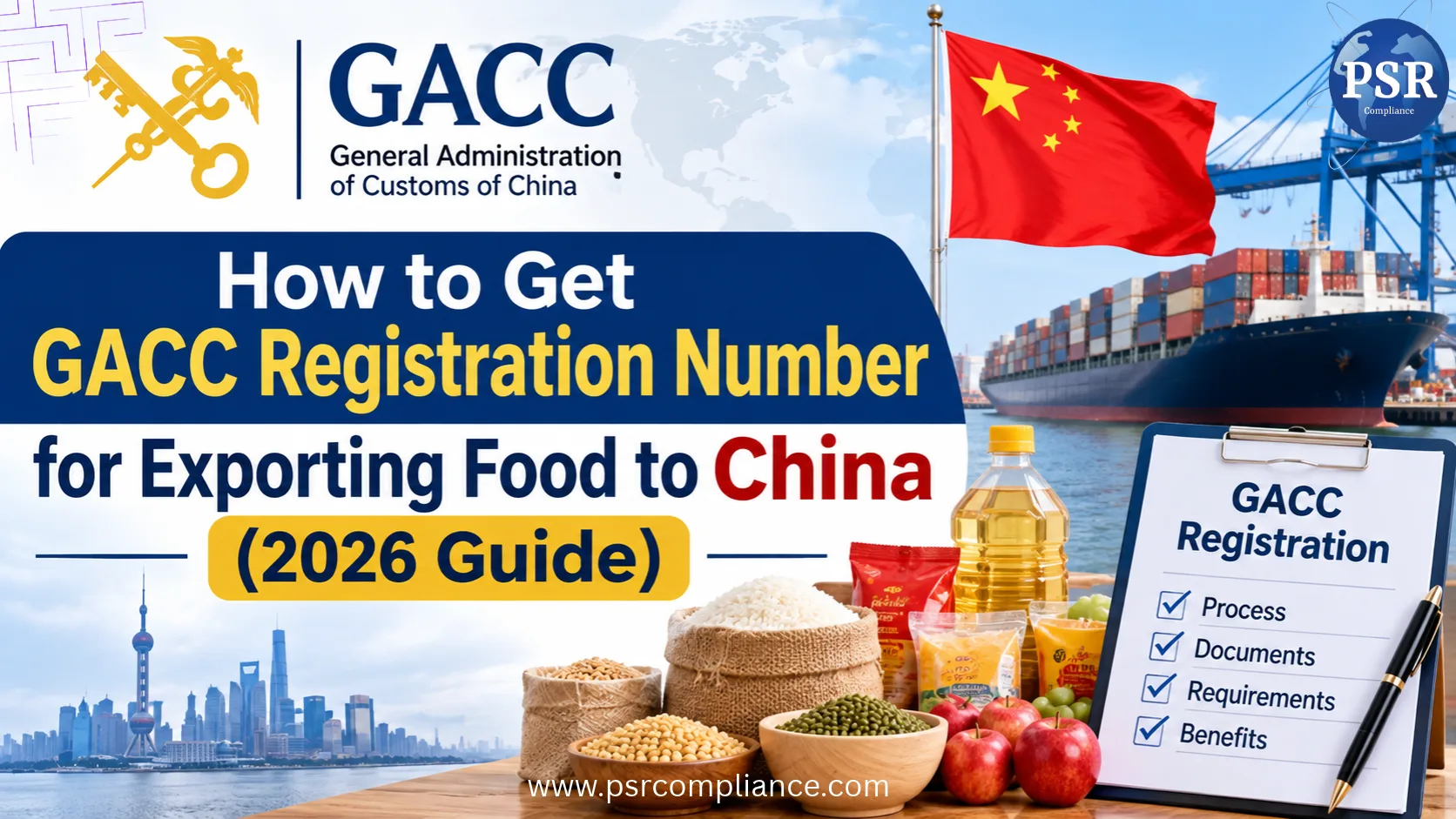
How to Get GACC Registration Number for Exporting Food to China (2026 Guide)
China is one of the biggest food buyers in the world, and Indian spices, rice, tea, seafood, nuts and processed foods all sell well there. Yet many Indian exporters get stuck before their first shipment leaves the port, because they don’t have a valid GACC Registration Number.
Chinese customs will not clear your goods without this number. Your container can sit at the port, get sent back, or be destroyed.
The rules changed in 2026, and many exporters are still working from old guides based on Decree 248, which no longer applies. Below, you’ll find how to get a GACC Registration Number, which rules apply now, and how to avoid costly mistakes when you export food to China from India.
What is GACC Registration?
GACC stands for the General Administration of Customs of China. This Chinese government body controls everything that enters China, including food.
GACC Registration is China’s official approval of your factory, processing unit or storage facility as safe and allowed to send food to China. Once you are approved, GACC gives you a unique GACC Registration Number.
In simple terms, this registration confirms that:
- Your facility meets Chinese food safety standards
- Your products are traceable to a registered factory
- Chinese customs can check your details anytime
- No GACC Registration Number = No food export to China.
Big 2026 Update: GACC Decree 248 Registration is Now Replaced by Decree 280
If you searched for GACC Decree 248 Registration, here is the most important news of the year. China's customs published Decree No. 280 on October 14, 2025, and it took effect on June 1, 2026, when Decree No. 248 (2021) was repealed.
What does this mean for you?
- Old registrations are safe. Existing valid registrations issued under Decree No. 248 automatically carry over and remain valid until their expiry date, so no new application is needed.
- Faster process for high-risk foods. Earlier, the exporting country's authority had to submit the application to China for the company. Now, companies can apply directly after getting the inspection report and recommendation letter from their home authority.
- Automatic renewal for most foods. At the end of the five-year validity period, most registrations now renew automatically for another five years without any action.
- Exception: Meat and meat products, and edible bird's nests, still need an active renewal application filed between 3 and 12 months before expiry.
- New customs rule: Since June 1, 2026, every food shipment into China must show the producer's registration number and the purpose "edible" in the customs declaration. Missing or wrong entries mean the shipment cannot clear customs.
What is CIFER Registration China?
CIFER Registration China is the online system where everything happens. CIFER stands for China Import Food Enterprise Registration.
Through this official system at cifer.singlewindow.cn, businesses can apply for new registrations, make changes, renew, track progress, and check their registration number and validity.
Tip: GACC has warned about fake websites copying the official system, and it charges no fee for any registration activity. Only the official CIFER portal should be used.
Who Needs GACC Registration for Food Exporters?
- A food manufacturer exporting to China
- A food processing unit (spices, rice, nuts, oils, etc.)
- A seafood, dairy or meat exporter
- A cold storage operator storing meat or seafood for China
- A merchant exporter sourcing from factories (your supplier factory must be registered)
Remember, registration is for the facility, not just the company. If you have two plants that export to China, both need their own registration.
Note: Food additives and food packaging materials fall outside Decree No. 280 and are covered by separate rules.
Benefits of GACC Registration for Food Exporters
1. Legal Entry into the Chinese Market
Your GACC Registration Number is your entry pass. With it, your food products can legally enter China, one of the largest food-importing countries in the world.
2. Smooth Customs Clearance
Chinese customs checks your registration number for every shipment. A valid number means fewer holds, fewer questions, and faster delivery to your buyer.
3. No Risk of Rejected Shipments
Unregistered shipments can be returned or destroyed. Registration protects your goods, your freight money, and your stock.
4. Instant Trust from Chinese Buyers
Chinese importers can check your registration status online. A verified GACC Registration Number tells them you are a serious, safe and reliable supplier.
5. Five Years of Export Freedom
Once approved, your registration is valid for 5 years. Most food categories now renew automatically under Decree 280, so you spend less time on paperwork.
6. No Government Fee
GACC does not charge anything for registration. It is one of the lowest-cost ways to open a big new market.
Two Main Routes in the China GACC Registration Process
Route 1: Official Recommendation (High-Risk Foods)
This route covers 17 higher-risk food categories, including meat, casings, bird's nests, bee products, eggs, edible oils, stuffed pasta, edible grains, grain milling products and malt, dehydrated vegetables, seasoning powders, nuts and seeds, dried fruits, foods for special dietary uses, health foods, dairy and aquatic products. For these, you first need an inspection and recommendation letter from the right Indian authority, such as APEDA, EIC, MPEDA or FSSAI, depending on your product.
Route 2: Self-Registration (Other Foods)
Food categories not on the official list can apply directly to GACC through CIFER, submitting an application form, business identity documents and a compliance declaration. This usually covers processed spices, tea, confectionery, bakery items and many packaged foods.
Important: Some raw farm products like fresh vegetables, dried beans, oil seeds and unroasted coffee and cocoa beans were moved out of the Decree 280 lists and are now covered by a separate rule, GACC Announcement [2025] No. 219. Always confirm your product's category before applying.
Documents Required for GACC Registration China
- Business registration certificate / Company incorporation documents
- IEC (Import Export Code)
- FSSAI License
- GST registration
- Factory address, layout plan and production flow chart
- Product list with HS codes
- Food safety system details (HACCP, ISO 22000, etc., if available)
- Water test report and pest control records
- Compliance declaration as per Chinese standards
Recommendation letter and inspection report from APEDA/EIC/MPEDA/FSSAI (for high-risk foods only)
Authorization letter (if a consultant or agent files for you)
How to Get GACC Registration Number: Step-by-Step
Step 1: Check Your Product Category
Find your product's HS code and see if it falls in the 17 high-risk categories or in the self-registration list. Choosing the wrong route is the most common reason for rejection.
Step 2: Get Indian Authority Recommendation (If Needed)
For high-risk foods, apply to the right Indian authority. They will inspect your facility and issue a recommendation letter.
Step 3: Create Your Account on CIFER
Register on the official CIFER portal and set up your facility account. Enter company and facility details carefully. Spellings and addresses must match your documents exactly.
Step 4: Fill the Application and Upload Documents
Add your product details, HS codes, production capacity and food safety information. Upload all documents clearly.
Step 5: GACC Review
GACC reviews your file. It may ask questions or request extra papers. Reply quickly to avoid delays.
Step 6: Receive Your GACC Registration Number
Once approved, your unique GACC Registration Number is issued. You can view it in your CIFER account. Share it with your Chinese importer, because it must be entered in the customs declaration for every shipment.
GACC Registration Fees in India (2026)
The cost of obtaining GACC Registration in India depends on the type of food product, the registration category and the level of compliance required by the exporting facility. GACC does not charge any government fee for submitting an application through its official CIFER portal. However, exporters may need to spend money on supporting activities such as document preparation, food testing, inspection, translation and professional assistance.
For businesses applying through a GACC Registration Consultant in India, additional service charges may apply depending on the complexity of the application and the documentation involved.
Expenses that exporters may need to consider include:
- Government Registration Charges: No government registration fee is payable to GACC.
- Documentation Expenses: Costs may arise when preparing, updating or translating business and factory-related documents.
- Testing and Inspection Costs: Applicable expenses depend on the product category and inspection requirements.
- Consultancy Charges: Professional fees may apply for application preparation, CIFER filing, document verification and application tracking.
Important: There is no single fixed cost for every exporter. The actual expenditure depends on the product category, facility requirements and assistance needed during the registration process.
Timeline for GACC Registration
- Document preparation: 7–15 days
- Indian authority recommendation (high-risk foods): Depends on inspection scheduling
- GACC review (self-registration): Usually 1–2 months
- GACC review (recommended categories): Can take longer
- Validity: 5 years.
Why GACC Registration is a Smart Business Move
Without GACC Registration, you may face:
- Shipments rejected at Chinese ports
- Goods returned or destroyed
- Lost buyers and damaged reputation
- Heavy financial loss on freight and stock
With GACC Registration, you get:
- Legal access to one of the world's biggest food markets
- Smooth customs clearance
- Trust from Chinese importers (they can check your status online)
- Five years of export peace of mind
Products Covered Under GACC Registration in India?
Indian food manufacturers and exporters supplying food products to China may need GACC registration before exporting. Under the new GACC Decree No. 280, effective from 1 June 2026, 17 food categories require registration with a recommendation from the competent authority in India.
Singapore Food Agency+1
1. Food Products Requiring Official Authority Recommendation
| S. No. | Product Category | Examples |
|---|---|---|
| 1 | Meat and Meat Products | Frozen meat, processed meat, poultry products |
| 2 | Casings | Natural and artificial sausage casings |
| 3 | Bird's Nests and Bird's Nest Products | Edible bird's nests and processed products |
| 4 | Bee Products | Honey, beeswax and other bee products |
| 5 | Eggs and Egg Products | Fresh eggs, egg powder and processed eggs |
| 6 | Edible Fats and Oils | Vegetable oils, edible animal fats |
| 7 | Stuffed Wheaten Food | Stuffed buns, dumplings and similar products |
| 8 | Edible Grains | Rice, wheat and other food grains |
| 9 | Grain Flour and Malt | Wheat flour, cereal flour and malt |
| 10 | Dehydrated Vegetables | Dried onions, garlic and dehydrated vegetables |
| 11 | Seasoning Powder | Spice powders and seasoning mixes |
| 12 | Nuts and Seeds | Almonds, cashews, walnuts and edible seeds |
| 13 | Dried Fruits | Raisins, dried mangoes and dates |
| 14 | Special Dietary Foods | Special-purpose nutritional food products |
| 15 | Health Foods / Dietary Supplements | Health supplements and nutritional products |
| 16 | Dairy Products | Milk powder, cheese, butter and dairy products |
| 17 | Aquatic Products | Fish, shrimp, prawns and seafood |
Real-Life Example: Indian Rice Exporters and GACC Registration
Indian rice is a strong example of why GACC compliance matters.
When China first allowed Indian rice imports, it recognised only 16 Indian mills. Over time, it began accepting the Indian government's own recognition, and now over 100 rice mills are authorised to export to China.
Demand is growing too. India's rice exports to China reached 73,722 metric tons in January-February 2026, roughly double the 36,432 mt shipped a year earlier.
But 2026 also brought problems. China rejected several Indian rice shipments over GMO concerns. In response, APEDA tightened the rules. Under its June 8, 2026 trade notice, rice consignments to China can only be shipped by exporters holding a valid GACC registration for their processing unit, or sourced from units that hold one.
The lesson: Exporters with proper GACC registration and clean paperwork kept trading. Those without it were simply shut out.
Common Mistakes Food Exporters Make
- Following outdated Decree 248 guides
- Choosing the wrong registration route
- Using wrong HS codes for products
- Mismatched names or addresses across documents
- Forgetting to register each facility separately
- Missing renewal deadlines (for meat and bird's nest products)
- Not giving the registration number to the Chinese importer for customs declaration
Practical Advice for Exporters
- Check your product category before anything else
- Keep all documents consistent and up to date
- Use only the official CIFER portal
- Note your expiry date and set a reminder
- Talk to your Chinese buyer about the new customs declaration rules
- Take expert help if you're unsure
Why Hire a GACC Registration Consultant in India?
The CIFER portal is partly in Chinese, product categories are tricky, and the 2026 rules are new. One small error can mean rejection and a long wait. A good GACC Registration Consultant in India helps you:
- Pick the correct registration route
- Prepare and check documents
- Coordinate with APEDA, EIC, MPEDA or FSSAI
- File on CIFER and handle GACC queries
- Track renewals and updates
Planning to export food to China from India but confused about GACC rules?
PSR Compliance can handle everything for you, from product category check to your final GACC Registration Number.
Get your GACC Registration done right the first time.
FAQs on GACC Registration
1. What is a GACC Registration Number?
It is a unique number given by China's customs to an approved overseas food facility. It must be shown in the customs declaration for every food shipment into China.
2. How to get GACC Registration Number in India?
Check your product category, get a recommendation from the Indian authority if needed, apply on the CIFER portal, and receive your number after GACC approval.
3. Is GACC Decree 248 Registration still valid?
Decree 248 was replaced by Decree 280 on June 1, 2026. Registrations already approved under Decree 248 stay valid until they expire.
4. What is CIFER Registration China?
CIFER is China's official online system for applying, tracking and renewing GACC registrations.
5. Is there a government fee for GACC Registration?
No. GACC does not charge any fee. You only pay if you hire a consultant for professional help.
6. How long is GACC Registration valid?
It is valid for 5 years. Most categories now renew automatically, except meat products and edible bird's nests.
7. Do merchant exporters need GACC Registration?
The factory that makes the food must be registered. Merchant exporters must source only from GACC-registered facilities.