Sat, Nov 21 2026
Advocate Rajkumar
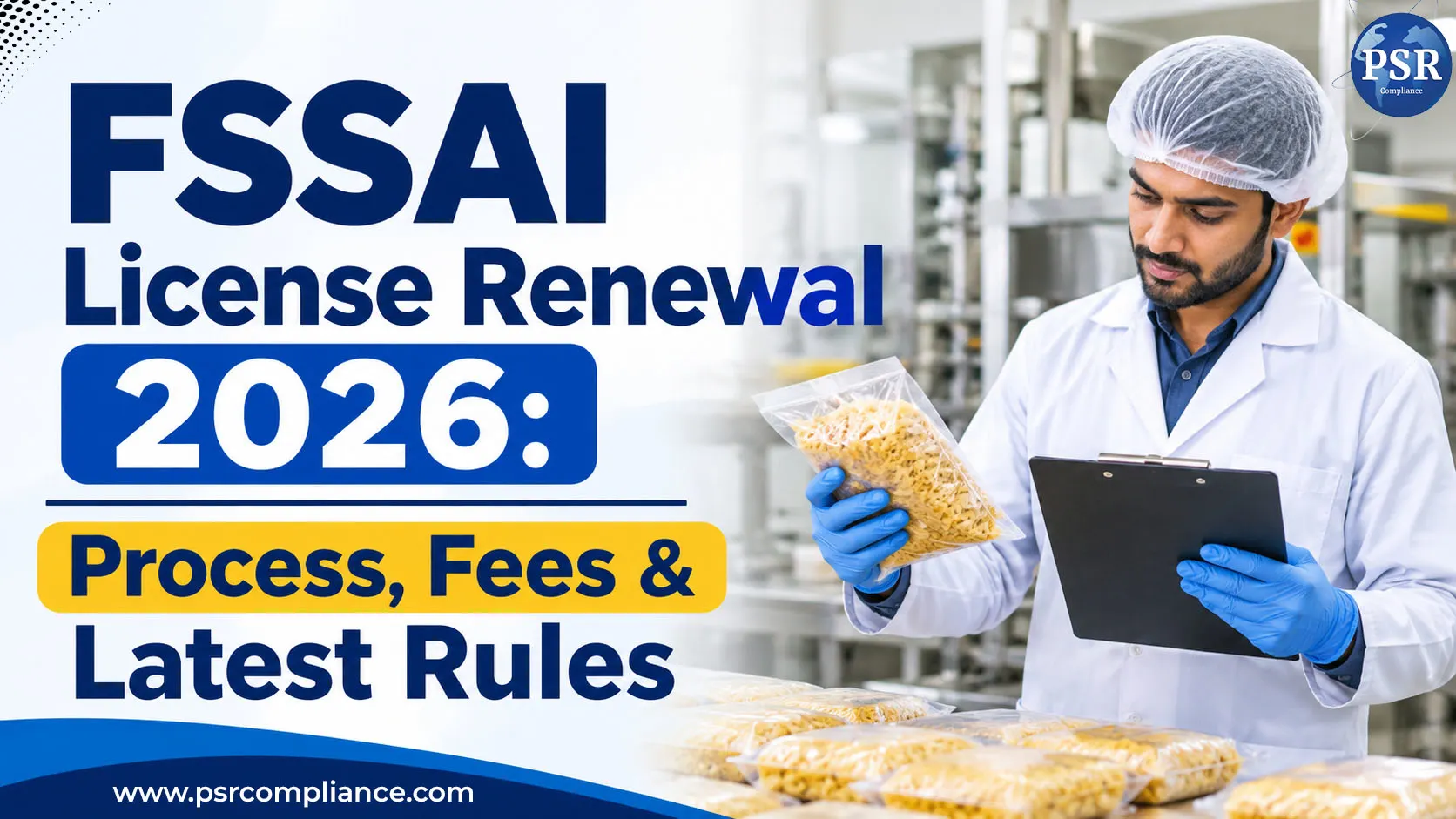
FSSAI License Renewal 2026: Process, Fees & Latest Rules
Food businesses operating in India must obtain the appropriate FSSAI Registration or License under the Food Safety and Standards Act, 2006. Whether you operate a restaurant, cloud kitchen, food processing unit, food retail shop, manufacturing unit or food distribution business, maintaining valid FSSAI authorization is an essential regulatory requirement.
However, obtaining an FSSAI Registration or License is not the only compliance responsibility. Food Business Operators (FBOs) must also understand the applicable renewal requirements, license modifications, validity conditions and ongoing food safety obligations.
In March 2026, the Food Safety and Standards Authority of India (FSSAI) introduced a significant regulatory change by providing perpetual validity to FSSAI Registrations and Licenses. This reform has removed the requirement for periodic renewal under the revised framework.
Previously, businesses had to renew their FSSAI license before expiry by following the prescribed application procedure and paying the applicable renewal fees. Under the new system, businesses must understand how the renewal provisions have changed and what steps they should take if their existing certificate still displays an expiry date.
This guide explains the FSSAI License Renewal Process, earlier renewal rules, required documents, applicable fees, online status checking and the latest validity changes in 2026.
What Is FSSAI License Renewal?
FSSAI License Renewal refers to the process of extending the validity of an existing FSSAI Registration or License before its expiry date so that a food business can continue its operations legally.
Under the earlier licensing framework, FSSAI Registration and Licenses were issued for a selected period ranging from one to five years. Businesses were required to submit a renewal application before the expiry date mentioned on their certificates.
The renewal process involved:
- Checking the existing license expiry date.
- Logging into the FoSCoS portal.
- Submitting the prescribed renewal application.
- Providing the required information and supporting documents.
- Paying the applicable renewal fees.
- Tracking the application until the authority completes the process.
Important 2026 update: Under the Food Safety and Standards (Licensing and Registration of Food Businesses) Amendment Regulations, 2026, FSSAI Registrations and Licenses have been granted perpetual validity. Therefore, routine periodic renewal is no longer required under the revised framework.
What Are the Latest FSSAI License Renewal Rules in 2026?
FSSAI introduced major regulatory reforms through the Food Safety and Standards (Licensing and Registration of Food Businesses) Amendment Regulations, 2026, notified on 10 March 2026.
The Ministry of Health and Family Welfare approved these reforms to simplify the licensing process, reduce compliance costs and improve the food safety monitoring system.
The important changes are:
1. Perpetual Validity of FSSAI License
FSSAI Registrations and Licenses will remain valid unless they are suspended, cancelled or voluntarily surrendered. Businesses no longer need to submit periodic renewal applications.
2. No Periodic Renewal Requirement
Food Business Operators are no longer required to follow the previous annual or multi-year renewal cycle under the new framework.
3. Revised Turnover Limits
The eligibility thresholds for Basic Registration, State License and Central License have been revised with effect from 1 April 2026.
4. Risk-Based Inspections
Food businesses may be inspected according to their risk category, compliance history and applicable food safety requirements.
5. Continued Compliance Obligations
Perpetual validity does not mean that food businesses are exempt from regulatory responsibilities. They must continue following hygiene, sanitation, food safety, labelling and other applicable requirements.
These changes are intended to make FSSAI licensing easier while ensuring that food businesses continue to maintain the required safety standards.
What Is the New FSSAI License Validity Period?
Before the 2026 amendment, FSSAI Registration and Licenses were issued for a selected validity period of one to five years.
After the introduction of perpetual validity, the renewal requirement has changed significantly.
| Particulars | Earlier Rules | New Rules (2026) |
|---|---|---|
| Validity period | 1–5 years | Perpetual |
| Periodic renewal | Required | Not required |
| Renewal application | Required before expiry | Not required routinely |
| Renewal fees | Payable for selected period | No periodic renewal fee |
| License status | Subject to expiry | Valid until suspension, cancellation or surrender |
Does perpetual validity mean lifetime approval?
Perpetual validity means that the FSSAI Registration or License does not require periodic renewal and continues to remain valid unless suspended, cancelled or surrendered. However, food businesses must continue complying with all applicable food safety requirements.
Types of FSSAI Registration and License Under the 2026 Rules
Before applying for FSSAI Registration or checking existing license details, businesses should identify the correct category based on their turnover and applicable business activity.
The revised turnover thresholds effective from 1 April 2026 are:
| Registration / License Type | Annual Turnover |
|---|---|
| Basic FSSAI Registration | Up to ₹1.5 crore |
| FSSAI State License | Above ₹1.5 crore and up to ₹50 crore |
| FSSAI Central License | Above ₹50 crore |
The applicable category also depends on the nature of the food business and activity-specific licensing conditions.
FSSAI
1. Basic FSSAI Registration
Basic FSSAI Registration generally applies to eligible petty food businesses, small retailers, hawkers, food vendors and small food operators falling within the prescribed turnover threshold.
2. FSSAI State License
An FSSAI State License generally applies to eligible food businesses with annual turnover above ₹1.5 crore and up to ₹50 crore.
3. FSSAI Central License
An FSSAI Central License generally applies to eligible food businesses with annual turnover exceeding ₹50 crore, along with businesses that require central licensing under activity-specific provisions.
Is FSSAI License Renewal Still Required in 2026?
No. Under the new FSSAI perpetual validity framework, routine renewal of FSSAI Registration and Licenses is no longer required.
However, businesses should not ignore their existing certificates or assume that all compliance requirements have ended.
Food Business Operators should:
- Check their existing license details on the FoSCoS portal.
- Verify whether their registration or license is active.
- Ensure that business information is accurate.
- Apply for modification when business particulars or operations change.
- Maintain food safety and hygiene standards.
- Complete applicable annual returns and other regulatory filings.
- Cooperate with inspections and regulatory authorities.
Important: If an older certificate still displays an expiry date, check its current status and applicable instructions through FoSCoS rather than assuming that the displayed date automatically means the license has become invalid.
How to Apply for FSSAI License Renewal Online?
Under the 2026 amendment, routine renewal is not required for FSSAI Registrations and Licenses covered by the perpetual validity framework.
However, businesses dealing with an older renewal application, a portal-specific renewal requirement or an existing record that requires clarification should follow the instructions displayed in their FoSCoS account.
The following is the earlier online renewal procedure, which remains useful for understanding legacy renewal applications and portal workflows.
Step 1: Visit the FoSCoS Portal
Visit the official Food Safety Compliance System website:
Step 2: Log In to Your Account
Use your registered username and password to access the FoSCoS account associated with your FSSAI Registration or License.
Step 3: Select the Applicable Renewal Option
If renewal is applicable to your existing record, select the relevant renewal option available in the portal and provide the required license or registration details.
Step 4: Verify Existing Business Information
Check the following details carefully:
- Name of the food business.
- Registered business address.
- FSSAI Registration or License number.
- Nature of food business activity.
- Food product categories.
Contact information and authorized signatory details.
Step 5: Upload Required Documents
Upload the supporting documents requested by the portal according to the business category and nature of the application.
Step 6: Pay the Applicable Fees
If the portal requires a renewal fee for the particular application, pay the applicable amount through the available payment facility.
Step 7: Submit the Application
Review the information and submit the application. Save the acknowledgement or application reference number for future tracking.
Step 8: Track Application Status
Use the application reference number to check the status through the FoSCoS portal. Respond to any queries raised by the licensing authority within the prescribed period.
Note: The above steps describe the earlier renewal workflow. Do not submit a routine renewal application or pay renewal fees where the perpetual validity framework applies and no renewal is required.
What Were the Earlier FSSAI License Renewal Rules?
Before the 2026 amendment, food businesses were required to follow specific renewal deadlines and late renewal provisions.
Understanding these earlier rules is useful for businesses dealing with historical applications, previous expiry records or renewal-related matters.
The previous renewal provisions included:
1. Validity Period of One to Five Years
Applicants could select a validity period ranging from one to five years when applying for FSSAI Registration or License.
2. Renewal Before Expiry
Businesses were required to submit renewal applications at least 30 days before the expiry date mentioned on the certificate.
3. Late Renewal Fee
A late fee of ₹100 per day was applicable under the earlier provisions for qualifying delayed renewal applications beyond the prescribed advance filing period.
4. Renewal Application Window
Businesses could submit renewal applications up to 180 days before the expiry date.
5. Renewal After Expiry
Under the earlier rules introduced through the 29 October 2021 order:
- 1–90 days after expiry: Three times the existing annual fee.
- 91–180 days after expiry: Five times the existing annual fee.
- After 180 days: Renewal was not permitted under the stated procedure.
These are historical renewal provisions and should not be treated as the routine renewal requirements under the 2026 perpetual validity framework.
Documents Required for FSSAI License Renewal or Modification
Although routine renewal is no longer required under the perpetual validity framework, businesses may still need to submit supporting documents for license modification, correction or other applicable applications.
The documents generally depend on the nature of the business and the requested changes.
Commonly required documents include:
- Existing FSSAI Registration or License Certificate.
- PAN Card of the business or applicant.
- Identity and address proof of the authorized signatory.
- Proof of business premises address.
- Certificate of Incorporation or Partnership Deed, where applicable.
- Details of food products and business activities.
- Supporting documents for changes in business address or ownership.
- Other documents required according to the application category.
The exact document requirements may vary depending on the nature of the food business and the application being submitted.
What Are the FSSAI License Renewal Fees in 2026?
Under the earlier FSSAI licensing system, businesses were required to pay renewal fees according to their registration or license category and the selected validity period.
However, the 2026 perpetual validity reform has removed the requirement for periodic renewal fees.
Accordingly, businesses should distinguish between renewal charges under the earlier system and fees applicable to other services, such as new applications or license modifications.
For the latest applicable fee details, businesses should refer to the official FoSCoS fee structure.
Official portal: https://foscos.fssai.gov.in/
How to Check FSSAI License Validity and Status Online?
Food Business Operators can use the FoSCoS portal to check their FSSAI Registration or License information.
Follow these steps:
Step 1: Open the Official FoSCoS Website
Visit https://foscos.fssai.gov.in/.
Step 2: Access the License Search Facility
Use the available license or registration search facility on the portal.
Step 3: Enter License Details
Provide the FSSAI License or Registration Number and other requested information.
Step 4: Verify Business Information
Check the business name, premises address, registration category and other certificate details.
Step 5: Check Current License Status
Review the available status and any applicable regulatory requirements or pending applications.
Regularly checking your FSSAI information helps identify discrepancies and ensures that your business records remain accurate.
You can also use the official application tracking facility to check pending applications:
https://foscos.fssai.gov.in/view-application
What Happens If a Food Business Does Not Follow FSSAI Compliance Requirements?
Perpetual validity does not provide immunity from regulatory action. FSSAI can take appropriate action against businesses that violate food safety requirements or fail to follow applicable regulations.
Some possible consequences include:
1. Suspension of License: FSSAI may suspend a registration or license in accordance with applicable provisions if serious compliance violations are identified.
2. Cancellation of License: A registration or license may be cancelled where the business fails to meet the applicable legal requirements.
3. Financial Penalties: Businesses may face financial penalties depending on the nature and severity of the violation.
4. Business Disruption: Regulatory action may affect the manufacturing, storage, distribution and sale of food products.
5. Legal Consequences: Operating without the appropriate FSSAI authorization or violating food safety laws may result in legal proceedings.
Therefore, food businesses must continue maintaining proper food safety practices even after receiving a registration or license with perpetual validity.
Why Should You Choose PSR Compliance for FSSAI Registration and License Assistance?
FSSAI licensing involves several regulatory and documentation requirements. Food businesses may need assistance with selecting the appropriate license category, preparing documents, applying for modifications and understanding the latest regulatory changes.
PSR Compliance provides assistance with FSSAI-related registration and licensing requirements.
Our assistance includes:
- Basic, State and Central FSSAI Registration.
- FSSAI License application assistance.
- FSSAI License modification and correction.
- Documentation and application support.
- Guidance on license status and validity.
- Assistance with applicable food safety compliance.
- Guidance on the latest FSSAI regulatory updates.
Our objective is to help food businesses understand their licensing requirements and complete applicable regulatory procedures.
Conclusion
Understanding FSSAI License Renewal and validity rules is important for every food business operating in India. The 2026 amendment has introduced a major change by providing perpetual validity to FSSAI Registrations and Licenses, eliminating the need for routine periodic renewal.
However, businesses must continue maintaining food safety standards, updating their registration details when necessary and fulfilling other applicable regulatory obligations.
If you need assistance with FSSAI Registration, License Modification, documentation or understanding the latest FSSAI rules, PSR Compliance can help you with the applicable process.
📞 Call: +91 87961 04190
📧 Email: support@psrcompliance.com
Frequently Asked Questions (FAQs)
1. Is FSSAI License Renewal mandatory in 2026?
No. Under the 2026 amendment, FSSAI Registrations and Licenses have perpetual validity. Therefore, periodic renewal is no longer required unless a specific regulatory or transitional requirement applies.
2. What is the new validity of an FSSAI License in 2026?
FSSAI Registrations and Licenses have perpetual validity under the revised framework. They remain valid unless suspended, cancelled or voluntarily surrendered.
3. How can I renew my FSSAI License online?
Routine renewal is no longer required under the perpetual validity framework. For an older application or a specific portal renewal requirement, log in to the official FoSCoS portal and follow the applicable instructions.
4. What is the FSSAI License Renewal Fee in 2026?
Periodic renewal fees are no longer required under the new perpetual validity framework. Fees may still apply to other services or applications according to the applicable fee structure.
5. Can I check my FSSAI License validity online?
Yes. You can visit the official FoSCoS portal and use the license search facility to check your FSSAI Registration or License information and current status.
6. What happens if my old FSSAI License shows an expiry date?
If your older certificate displays an expiry date, check its current status through FoSCoS and follow the applicable FSSAI instructions. Do not assume that the displayed expiry date automatically means your authorization is invalid under the new framework.
7. Can I modify my FSSAI License after obtaining it?
Yes. Food businesses can apply for license or registration modifications when there are changes in business details, premises, ownership or applicable business activities. Modification applications continue under the existing procedure.
8. What are the new FSSAI turnover limits from April 2026?
The revised turnover limits are:
- Basic Registration: Up to ₹1.5 crore.
- State License: Above ₹1.5 crore and up to ₹50 crore.
- Central License: Above ₹50 crore.
The applicable category also depends on the nature of the food business and activity-specific requirements.
9. Is annual return filing still required after perpetual validity?
Perpetual validity does not remove other statutory compliance requirements. Food businesses must continue filing applicable annual returns and fulfilling other obligations according to their business category and activities.
10. Can FSSAI cancel a license with perpetual validity?
Yes. Perpetual validity does not prevent FSSAI from suspending or cancelling a registration or license in accordance with applicable legal provisions.