
Just send us your questions or concerns by starting a new case &
we will give you the help you need. Start Here...
Trademark Registration
Tue, Aug 25 2026
Raju Karn
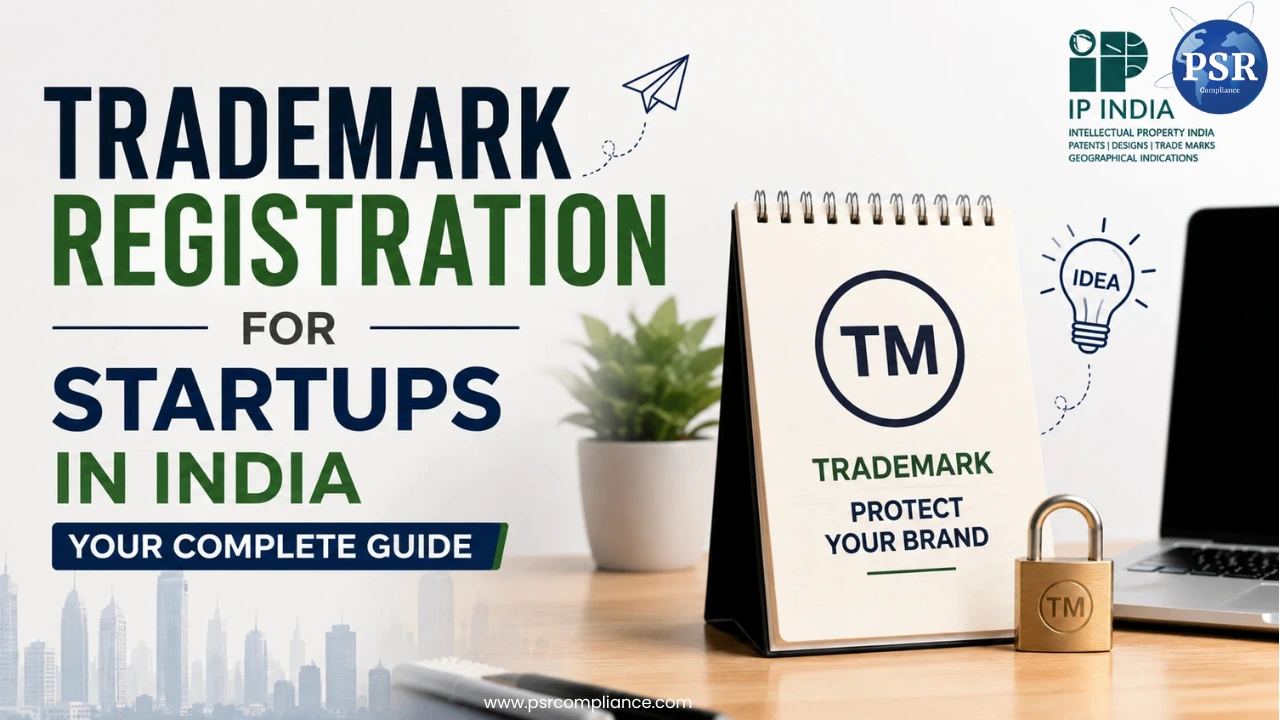
Trademark Registration For Startups In India : Your Complete Guide
Starting a new business is an exciting journey. As a founder, you spend sleepless nights building your product, designing your logo, and choosing the perfect brand name. But what happens if another company steals your name? What if you receive a legal notice telling you to stop using your own brand because someone else registered it first?
This is a common nightmare for many new founders. Rebranding a business can cost you huge amounts of money and lead to a loss of customer trust. The best way to secure your hard work is through a legal shield. That is why getting a Trademark Registration For Startups In India is the most crucial step you can take before launching your products or pitching to investors.
In this comprehensive guide, we will break down everything you need to know to protect your brand identity. We will simplify the Trademark Registration Process For Startups, explain the exact Trademark Registration Cost For Startup, outline the Documents Required For Trademark Registration For Startup, and show you how to claim a 50 Percent Concession On Trademark Fee For Startups.
Why Do Startups Need a Trademark Right Away?
Imagine a real-life scenario. You launch a software startup called "NovaTech Solutions" and start gaining customers. A year later, a larger company operating in a similar space registers the name "Nova Tech" and sends you a cease-and-desist letter. Because they legally registered the trademark and you did not, you might have to change your name, your website domain, your social media handles, and your packaging. All the brand value you built is suddenly gone.
When you register a trademark, you get exclusive legal rights to use your brand name, logo, or slogan across India. A registered trademark acts as an asset. As your business grows, the value of your trademark grows with it. Investors also look for trademarks when funding a startup because it proves that the company has protected its intellectual property. If you want to build a serious business, you cannot afford to skip this step.
E-Filing vs Physical Filing Trademark Fees
| Applicant Category | E-Filing Fee (Per Class) | Physical Filing Fee (Per Class) |
|---|---|---|
| Individual, DPIIT Recognized Startup or MSME | ₹4,500 | ₹5,000 |
| Private Limited Company or LLP (without DPIIT or MSME status) | ₹9,000 | ₹10,000 |
As you can see, a recognized startup pays exactly half of what a large corporation pays. This 50 Percent Concession On Trademark Fee For Startups makes it highly affordable for new founders to protect their brand from day one. Please note that these are purely the government statutory fees and are charged per class. If your business operates in multiple sectors like clothing and software, you will have to pay the fee for each respective category.
The SIPP Scheme : Free Professional Help for Startups
The government has another brilliant initiative called the Scheme for Facilitating Start-Ups Intellectual Property Protection, or SIPP. Under this scheme, the government aims to help startups file for trademarks and patents without worrying about hefty lawyer fees.
If you are a DPIIT recognized startup, you can hire a government-empanelled facilitator to process your trademark application. You only have to pay the statutory government fee of Rs 4,500. The professional fees of the trademark agent or attorney are paid directly by the Central Government. This is a massive financial relief for early-stage companies operating on a tight budget.
Documents Required For Trademark Registration For Startup
- Proof of Business Registration & Startup Status : Provide your business proof along with a DPIIT or MSME certificate to claim fee concessions.
- Applicant Identity & Address Proof : Submit valid documents such as a PAN card, Aadhaar card, or passport for the founder or authorized signatory.
- Certificate of Incorporation : Required for Private Limited Companies or LLPs, issued by the Ministry of Corporate Affairs.
- Brand Identity : A clear image of your logo or the text of the brand name if no logo is used.
- Legal Authorizations : Include Form TM-48 (Power of Attorney) if hiring an attorney, and a User Affidavit if applicable.
The Trademark Registration Process For Startups
Now that we know the costs and the paperwork, let us dive into the actual Trademark Registration Process For Startups. The government has digitized the entire workflow, making it faster and more transparent.
Step 1 : The Trademark Search
Before you fill out any forms, you must conduct a comprehensive search on the public database of the Trade Marks Registry. This ensures your proposed name is not already registered or applied for by someone else. Skipping this step is the biggest mistake founders make.
Step 2 : Selecting the Correct Trademark Class
Trademarks are divided into 45 different classes based on the Nice Classification system. Classes 1 to 34 cover physical goods and products, while Classes 35 to 45 cover services.
Step 3 : Filing the Application (Form TM-A)
Once the search is clear and the class is selected, it is time to file Form TM-A on the IP India portal. You will upload all the Documents Required For Trademark Registration For Startup and pay the government fee.
Step 4 : Examination by the Trademark Registry
Within a few weeks, a government examiner will review your application. They will check if your brand name complies with the rules and if it conflicts with existing trademarks.
Step 5 : Publication in the Trademark Journal
Once the examiner accepts your application, your brand name is published in the weekly Trade Marks Journal. This is an open public platform.
Step 6 : Issuance of the Registration Certificate
Congratulations! Once the four-month journal period passes with no opposition, the government will officially grant you the trademark. You will receive a digital Registration Certificate.
Why You Should Not Do It Alone : The Value of Expert Consultants
While the government allows individuals to file their own trademarks, taking the do-it-yourself route is highly risky for a growing startup. The trademark process is a strict legal procedure. A single mistake in drafting the description of your goods, picking the wrong class, or missing the 30-day deadline to reply to an examination report will lead to your application getting permanently abandoned.
Working with experienced professionals ensures that your application is drafted perfectly the first time. They conduct thorough searches to ensure your name is safe to use, draft strong legal replies if the government raises objections, and track your application status continuously. Your core job as a founder is to build your business, get customers, and secure funding. Managing legal paperwork should be outsourced to people who do it every single day.
Ready to Protect Your Brand Name?
Secure your brand with professional Trademark Registration support from PSR Compliance. Our experts can help you with trademark search, application filing, documentation, and the registration process.
Call us on: (+91) 8796104190
Write to us: support@psrcompliance.com
Frequently Asked Questions (FAQs)
How long does the entire trademark process take in India?
If your application faces no objections from the government and no opposition from the public, the entire process from filing to getting the final registration certificate usually takes around 6 to 8 months. However, if objections are raised, the process can extend to over a year.
Is a trademark valid worldwide once registered in India?
No. Trademarks are territorial. A trademark registered in India only protects your brand within the borders of India. If you plan to expand to the USA or Europe, you will need to file for a trademark in those specific regions or use the international Madrid Protocol system.
Can I register a trademark if my startup is not yet officially incorporated?
Yes, you can. You can file a trademark application as an individual proprietor before you register your Private Limited Company. Once your company is formed, you can legally transfer or assign the trademark from your personal name to the company name.
What happens if I miss the deadline to reply to the examination report?
The trademark registry gives you exactly 30 days to reply to an examination report from the date it is issued. If you fail to submit a valid legal response within this time frame, your application will be marked as abandoned, and you will lose your application fee. You will have to start the entire process again.
Do I need a lawyer to file a trademark?
While it is not legally mandatory to hire a lawyer, it is highly recommended. The process involves legal drafting, navigating government portals, and responding to complex objections based on trademark law. An expert consultant saves you time and significantly increases the chances of a successful registration.