Mon, Nov 23 2026
Advocate Rajkumar
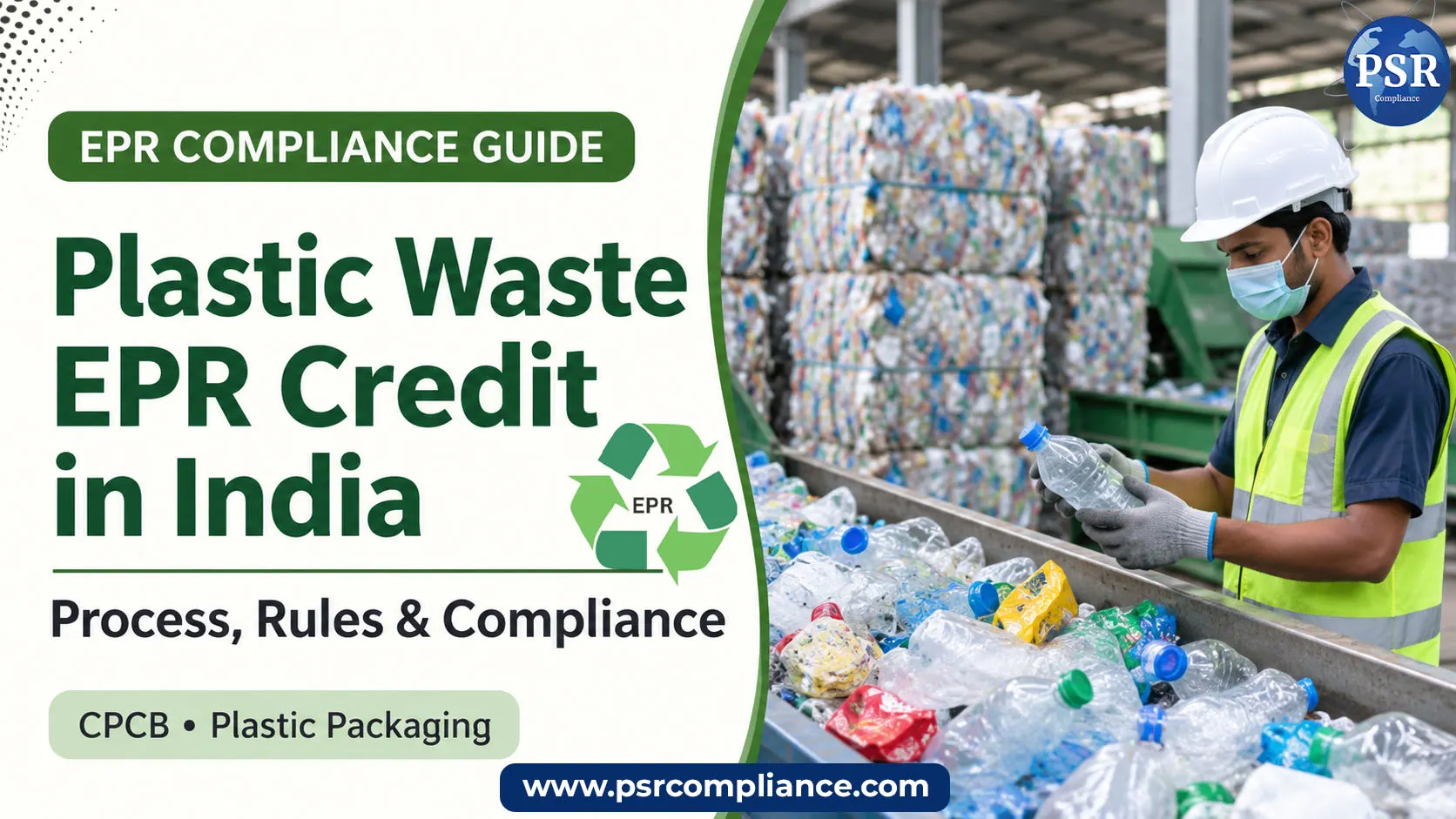
Plastic Waste EPR Credit in India: Process, Rules & Compliance
The problem of handling plastic waste has become quite significant from a compliance perspective in the case of organizations operating in India. Organizations that produce or import and distribute products packed in plastic are required to understand the requirements of compliance in terms of the Extended Producer Responsibility (EPR) regime.
Plastic Waste EPR credit regime forms one of the key elements of the EPR regime, which allows registered plastic waste processors to generate certificates for their processing of plastic waste. Organizations that need to comply with EPR requirements can utilize these certificates towards their recycling obligation.
Understanding of Plastic Waste EPR will help organizations understand EPR credits.
What Is a Plastic Waste EPR Credit?
A Plastic Waste EPR Credit is an electronic certificate that is generated based on the quantity of plastic packaging waste handled by the Plastic Waste Processor (PWP), who is registered. Under the Plastic Waste Management Rules, 2016, and its amendments, the obligation in respect of the Extended Producer Responsibility lies with the Producers, Importers and Brand Owners (PIBOs). The mechanism of the EPR credits provides the link between those companies that need to handle certain amounts of plastic waste and processors that have registered in this capacity.
For example, the company produces packed foods; thus, it generates plastic waste. It has to comply with the criteria of Plastic Waste EPR. It does not have to manage the entire recycling procedure by itself; rather, it can purchase EPR credit certificates from the processors.
It is registered through the government website.
Who Is Required to Participate in the Plastic EPR System?
Various stakeholder groups with the responsibility for managing plastic packaging waste are defined in the Plastic Waste Management Rules.
1. Producers: These are the companies producing plastic packaging or plastic packaging in their products. They will be categorized into one of the categories of producers.
2. Importers: This refers to companies importing products having plastic packaging or plastic packaging materials. They need to determine their EPR liability.
3. Brand Owners: These refer to companies selling their brand products using plastic packaging.
4. Plastic Waste Processors: These refer to registered recyclers and other authorized processors. They process the plastic waste and provide certificates regarding their processing activities.
These are various stakeholder groups involved in the Plastic Waste EPR scheme.
How Does the Plastic Waste EPR Credit Mechanism Work in India?
The Plastic Waste EPR Credit system works through a definite process flow. It links up the companies that generate plastic packaging waste with the duly registered processors of this waste.
The process normally comprises the following steps.
1. Registration on the EPR Portal
The businesses which come under the ambit of the EPR Scheme have to get themselves registered. The businesses that are operating in more than two states/union territories have to get themselves registered with CPCB, while the remaining producers, importers, and brand owners have to get themselves registered with SPCB/PCC.
Similarly, the Plastic Waste Processors also have to get themselves registered for the purpose of generating any EPR Certificates.
The Plastic EPR Registration requires the necessary business information and data regarding the plastic packaging.
2. Assessment of Plastic Waste Generation
Once the businesses get themselves registered, then they have to estimate their EPR liabilities on the basis of the volume as well as the type of plastic packaging which is put into the market.
The types of plastic packaging are as follows:
- Type I - Rigid Plastic Packaging.
- Type II – Flexible Plastic Packaging manufactured using single or multiple layer or using only plastic.
- Type III – Multi-layered Plastic Packaging manufactured using plastic and some other materials.
- Type IV – Compostable Plastic Packaging.
3. Collection and Processing of Plastic Waste
Collection and processing of plastic waste are undertaken by Registered Plastic Waste Processors.
The processes of processing include:
- Recycling.
- Conversion of waste to energy.
- Waste-to-oil technology.
- Composting, when applicable.
The processor is supposed to keep a record of the amount of plastic waste collected and processed. Only the eligible processes, undertaken in compliance with the requirements and the capacity of the register, can be used in issuing certificates.
4. Generation of EPR Credit Certificates
After the plastic waste in an eligible category has been processed, the processor registers himself on the portal and feeds the required information through it.
Through the portal system, the EPR credit certificates for the processed plastic waste in an eligible category can be issued.
Certificates are issued by category and serve as proof of the process undertaken.
For instance, if a registered recycler recycles 100 metric tonnes of plastic packaging waste in Category I, the issuance of these certificates shall be verified based on the portal rules.
The Plastic Waste EPR credit scheme brings transparency to the system, thereby preventing any fraud relating to recycling.
5. Transfer and Purchase of EPR Credits
These registered processors shall carry out eligible transactions of the EPR certificate(s) to any of the obligated entities to achieve their goals.
Either Producer, Importer, or Brand Owner is allowed to buy these credits through the trading process that has been stipulated.
The EPR obligation will be carried out through the EPR Credit Certificate with regard to the criteria types and other conditions set in the mentioned case.
The changes made in 2024 included some provisions related to the electronic exchange and pricing limits for the certificate. Accordingly, the highest and the lowest price of the Certificate at the EPR Credit Market should be 100% of the respective cost of the environmental compensation, while the lowest percentage should be 30% of the same original sum.
Hence, it can be said that the market of EPR Credit for plastic waste is regulated.
What Are the Plastic Waste Recycling Targets?
Businesses must follow the applicable category-wise recycling targets under the EPR framework.
The 2024 amendment prescribed the following minimum recycling levels for Categories I, II and III:
| Plastic packaging category | 2025–26 | 2026–27 | 2027–28 onwards |
|---|---|---|---|
| Category I | 60% | 70% | 80% |
| Category II | 40% | 50% | 60% |
| Category III | 40% | 50% | 60% |
The rates mentioned above will act as the base recycling rates, expressed as a portion of a corresponding EPR target, which does not include end-of-life disposal. In addition to those conditions, companies need to comply with all other principles, including those pertaining to reuse and recycled plastic content. Category IV will have its own requirements in this regard. Companies must consult the relevant notifications when purchasing credits or determining their Plastic Waste EPR target.
What Documents Are Required for Plastic EPR Compliance?
Document preparation is important for businesses that are under Plastic EPR Registration. Depending on the class of the applicant and the registration requirements, businesses may need to prepare any of the following documents:
- PAN and GST Certificate
- Business Registration/Incorporation Certificate
- Names of authorized signatories
- Manufacturing or import details (whichever is applicable)
- Details relating to the Plastic Packaging category and quantity
- Sales and packaging details from the previous financial year
- Details of the manufacturing facility location
- Agreement and documents relating to plastic waste processing
Plastic Waste Processors are also to provide facility details, process details, capacity and pollution control permits where applicable.
It is crucial to ensure document accuracy for EPR compliance in India since errors may lead to complications during verification and obtaining of certificates.
Why Is Plastic Waste EPR Credit Important for Businesses?
The EPR Credit Scheme for Plastic Waste brings many advantages to both companies and the recycling industry.
- Legal Compliance: Thanks to this program, the company can obtain the certificate that allows it to meet its recycling requirement without having to build its own recycling plant.
- Promoting Recycling: This initiative leads to increased interest in both recycling and waste processing operations.
- Increased Transparency: The use of electronic certificates and the system for making transactions enables tracking of the recycling process.
- Promotion of Circular Economy: The recycled plastic can be used as a feedstock which leads to decreased demand for virgin plastic.
- Profit-Generating Opportunity: Registered operators are able to monetize their credits in the market.
- However, the purchase of the EPR Credit Certificate doesn’t relieve the buyer from the need to be compliant with other legal requirements.
Common Challenges in Plastic EPR Credit Compliance
This system may involve difficulties for companies in fulfilling responsibilities.
Inaccurate estimation of waste: Incorrect calculation of volumes of plastic packaging could lead to issues with respect to meeting EPR objectives.
Absence of documentation: The lack of invoices, recycling reports, and even packaging documents could cause problems in terms of evaluations.
Unsanctioned handlers: Obtaining EPR certificates from unsanctioned or unqualified handlers may ruin the chance of obtaining the compliance certification.
Mismatch of categories: The credits must refer to the correct category of plastic packaging. Any other category cannot be used by a company.
Delays in annual reporting: The delay in providing reports may create certain regulatory problems.
Plastic EPR Consultant can assist companies in dealing with such cases. The consultant can assist with EPR registration of CPCB and provision of annual reports, and so forth.
How PSR Compliance Can Help with Plastic EPR Registration
Plastic waste management requires documentation, proper knowledge of regulations, and timely submission of documentation. PSR Compliance is here to assist businesses who seek professional help for Plastic EPR Registration and other associated compliance.
The services offered by us include helping businesses identify which category EPR falls into, documentation preparation for EPR registration, plastic waste targets, and compliance formalities.
Whether you are a Producer, Importer, Brand Owner, or Plastic Waste Processor, professional assistance makes the process much simpler. With the help of a Plastic EPR Consultant, businesses are able to minimize any documentation errors and get a clear idea of their compliance obligations under the Plastic Waste Management Rules.
We at PSR Compliance offer Plastic Waste EPR Compliance Services to businesses, which include registration assistance, certificate assistance, and annual compliance obligations. For any EPR Certificate for Plastic Waste, we can help you out.
Conclusion
The Plastic Waste EPR Credit Scheme is one of the key components of plastic waste management in India. This is the relationship between plastic packaging manufacturers and the recycler/processor of plastic waste, which is registered.
Understanding the registration, recycling targets, certificate issuance, and credit transfer is essential for compliance with the EPR regulations in India. It is also important to maintain your records and stay informed about new regulations to avoid any compliance issues.
If you need help with Plastic EPR Registration, Plastic EPR Credits Obligation, and documents, PSR Compliance will be able to help you with the process of Plastic Waste EPR compliance services management.
Frequently Asked Questions (FAQs)
1. What is a Plastic Waste EPR Credit?
Plastic Waste EPR Credit is a digital document created against eligible plastic packaging waste that has been recycled or processed by a registered Plastic Waste Processor. PIBOs may acquire and utilize eligible credits to satisfy their applicable EPR obligation.
2. Who can create an EPR Credit Certificate?
Eligible plastic waste processors engaged in eligible recycling and other eligible processing activities are able to create EPR credits via the designated government portal, depending on certain conditions.
3. Are there any possibilities for businesses to purchase Plastic Waste EPR Credits?
Yes, it is possible for producers, importers, and brand owners to purchase eligible credits from eligible plastic waste processors via the specified trading platform to reach their EPR goals.
4. Is there a compulsory registration under Plastic EPR in India?
It is obligatory for entities falling within the scope of the Plastic Waste Management Rules to register. The competent authority varies based on their activities.
5. What will happen in case a company fails to meet EPR targets?
In the event of non-compliance with relevant EPR requirements, environmental compensation and other regulatory actions could be taken under the Plastic Waste Management Rules.
6. Where can businesses do Plastic EPR Registration?
Businesses have to opt for the applicable CPCB or SPCB EPR Registration. The previous separate plastic EPR portal has been discontinued since 28 June 2026, and its services have been moved to the Common EPR Portal.