Mon, Nov 23 2026
Advocate Rajkumar
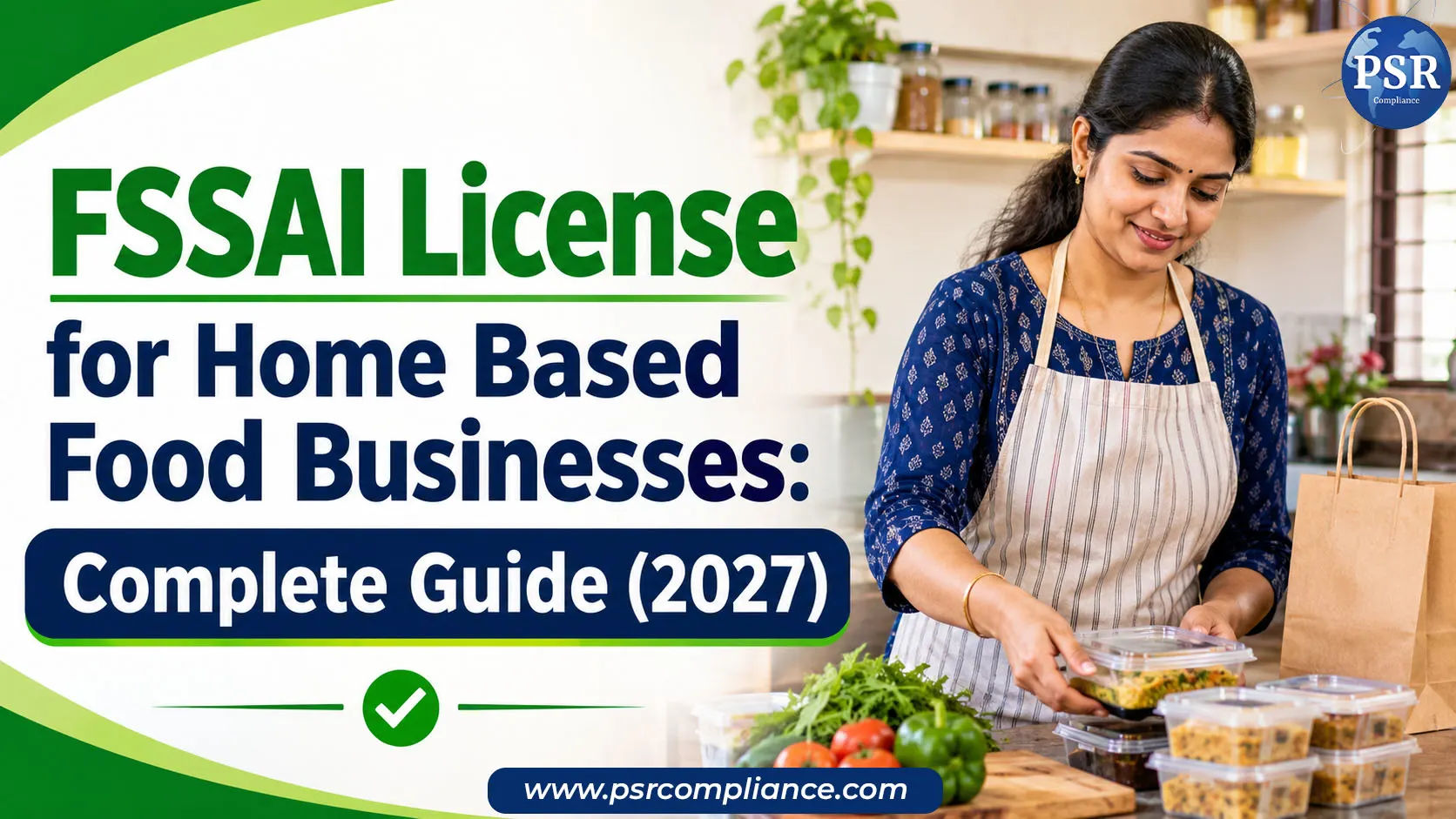
FSSAI License for Home Based Food Businesses: Complete Guide (2027)
Cooking from home is one of the easiest ways to start a business. Tiffin services, cakes, pickles, snacks and cloud kitchens now run from ordinary homes all over India. But many home cooks make one big mistake: they sell food without an FSSAI license.
Selling food without the right food license is against the law, even if you sell only a few boxes a day. It can also stop you from listing on Swiggy or Zomato.
This guide explains the FSSAI License for home based business owners in simple words. You will learn who needs it, which type to choose, what it costs and how to apply online.
What is an FSSAI License?
FSSAI stands for Food Safety and Standards Authority of India. It is the government body that makes sure food sold in India is safe to eat.
Every person who makes, stores, packs or sells food needs an FSSAI Registration or license. After approval, you get a 14-digit number. You must print this number on your packs, bills and website.
In simple terms, the food license tells your customers that:
- Your kitchen follows basic hygiene rules
- Your food is made safely
- You are a legal, trusted seller
Is an FSSAI License Needed for a Home Kitchen?
Yes. An FSSAI license for home kitchen businesses is required the moment you start selling food, even from your own house.
This applies to:
- Home bakers selling cakes, cookies and bread
- Tiffin and meal-box services
- Pickle, jam, masala and snack makers
- Cloud kitchens and online food sellers
- Sweet makers and catering from home
It does not matter if you sell only to neighbours or only on WhatsApp or Instagram. If you sell food for money, you need to be registered.
If you only cook for your family and give food away for free, you do not need one.
Types of FSSAI License: Which One Do You Need?
| Type | Who It Is For | Government Fee |
|---|---|---|
| FSSAI Basic Registration | Small food businesses, home kitchens, home bakers | ₹100 per year |
| State License | Medium businesses, larger restaurants and manufacturers | Starts around ₹2,000–₹5,000 per year |
| Central License | Large businesses, importers, multi-state operators | Around ₹7,500 per year |
Important 2026 Update on Turnover Limits
The old limit for basic registration was ₹12 lakh a year. Many older blogs still show this number. From 1 April 2026, FSSAI raised the limit for FSSAI basic registration to ₹1.5 crore a year, according to recent reports. State license now generally covers turnover above ₹1.5 crore up to ₹50 crore.
This is good news for home businesses. Most home kitchens and home bakers can now stay in the cheap ₹100 basic category for longer. Rules can change, so always check the latest FSSAI notice or ask an expert before you apply.
FSSAI Registration for Home Bakers and Home Kitchens
Most home businesses need only the FSSAI basic registration. It is the simplest and cheapest option.
Who Should Choose Basic Registration?
- You run a small home-based food business
- Your yearly sales are within the basic limit
- You work from one place (not many states)
- You are a home baker, tiffin provider or small snack maker
What You Can Sell
Cakes, cookies, chocolates, tiffin meals, pickles, namkeen, sweets, ready-to-cook mixes and more. Some foods, such as dairy or meat products, may have extra rules, so check before you start.
When to Upgrade
When your sales grow beyond the basic limit, you must move to a State License. Planning ahead saves you from penalties.
FSSAI License for Cloud Kitchen: What Is Different?
A cloud kitchen has no dine-in area. It cooks only for delivery. Many are run from small commercial spaces, and some from homes.
An FSSAI license for cloud kitchen works in the same way as for a home kitchen. Your turnover decides the type:
- Small cloud kitchen: Basic Registration
- Bigger or multi-outlet cloud kitchen: State License
Why it matters: Delivery apps like Swiggy and Zomato will not list you without a valid 14-digit FSSAI number. Without it, you lose a big share of your customers.
If you run more than one cloud kitchen, each location may need its own registration or license. If you want to give your business a proper structure, PSR Compliance can also help with Company Registration in India and Startup Registration in India.
Documents Required for FSSAI Registration
- Passport-size photo of the owner
- Aadhaar card or other ID proof
- PAN card
- Address proof of the kitchen (rent agreement, electricity bill or ownership papers)
- Rent agreement with a No Objection Certificate (NOC) from the owner, if the home is rented
- List of food items you will sell
- Email ID and mobile number
- Declaration form (provided during the application)
How to Apply for FSSAI Registration Online (Step by Step)
You can do the whole process online through the government's FoSCoS portal (Food Licensing and Registration System).
Step 1: Visit the FoSCoS Website
Go to the official FoSCoS portal and create an account with your mobile number and email.
Step 2: Choose the Right Application
Select "Apply for Registration" (Form A) for basic registration, or "Apply for License" (Form B) for a state or central license.
Step 3: Fill in Your Business Details
Enter your name, kitchen address, type of food business and estimated yearly turnover.
Step 4: Pick Your Food Category
Choose the "Kind of Business" that matches what you make. Choosing the wrong category is one of the most common reasons for delay.
Step 5: Upload Documents
Upload clear scans of all the documents listed above. Blurry or mismatched documents lead to rejection.
Step 6: Pay the Government Fee
Pay online. For basic registration, the fee is ₹100 per year, and you can pay for more years at once.
Step 7: Verification
An officer reviews your application. For basic registration, an inspection is usually not needed. For a license, an officer may visit your premises.
Step 8: Get Your Certificate
After approval, you can download your FSSAI registration certificate with your 14-digit number. You can then start selling legally.
How Long Does It Take?
- Document preparation: 1–3 days
- Application review for basic registration: about 7 days
- State license with inspection: 15–30 days or more
Delays usually happen because of wrong details, wrong food category or missing documents.
FSSAI License Cost for Home Based Business
- Basic Registration: ₹100 per year
- State License: from about ₹2,000 to ₹5,000 per year, depending on the business type
- Central License: about ₹7,500 per year
You may pay for several years at once. Some reports say FSSAI licenses became perpetual in 2026, so confirm the latest renewal rules on the official portal before you apply. If you hire a professional, a service fee is extra.
Rules Every Home Food Business Must Follow
- Keep your kitchen clean and free of pests
- Use clean water and safe ingredients
- Wash hands and wear clean clothes while cooking
- Store raw and cooked food separately
- Check expiry dates on ingredients
- Print your FSSAI number and label details on every pack
- Keep purchase bills and records
- Use food-grade packaging
What Happens If You Sell Food Without a License?
Many small sellers think nobody will notice. That is risky. Under the Food Safety and Standards Act, selling food without a license or registration can lead to a penalty of up to ₹5 lakh and even jail in some cases. Selling unsafe or sub-standard food can mean heavy fines too.
Besides the law, there are business risks:
- Delivery apps can remove or refuse to list you
- Customers lose trust after a complaint
- Your kitchen can be sealed after a food safety inspection
Real-Life Example: A Home Baker Who Needed an FSSAI Number
Take a common case. A home baker starts selling cakes through Instagram and then wants to list on a food delivery app. The app asks for a 14-digit FSSAI number before going live. Without it, the listing is blocked, and orders from the app are lost.
Once the baker completes basic registration, the number arrives, the listing goes live and the cake labels also look more trusted. This is why many food platforms treat the FSSAI number as the first step to selling online.
Common Mistakes to Avoid
- Choosing the wrong kind of business
- Using an old limit from outdated blogs
- Uploading unclear or mismatched documents
- Forgetting the rent agreement NOC for rented homes
- Not printing the FSSAI number on labels
- Ignoring the upgrade to a State License when sales grow
- Selling before the certificate arrives
Other Registrations You May Need
GST registration, if your sales cross the GST limit or you sell through e-commerce
Shop and Establishment License for a commercial kitchen or outlet
Trademark Registration to protect your brand name and logo
IEC registration, if you plan to export, which PSR Compliance can also help with through its IEC Registration service
A virtual business address for GST and company registration if you do not want to use your home address
Why Choose PSR Compliance for Your FSSAI License?
Online forms look easy, but one wrong choice can delay your approval by weeks. PSR Compliance helps you avoid that.
How we help:
- Right license choice: We check your turnover and business type and tell you which one you need.
- Document support: We check every paper before it is uploaded.
- Online filing: We fill in and submit your FoSCoS application correctly.
- Follow-up: We track your application and reply to officer queries.
- Full support: From first call to certificate, we guide you at each step.
- Related services: Company registration, trademark, GST and more under one roof.
Read more about our FSSAI License in India service.
Start Your Home Food Business the Legal Way
A home kitchen can grow into a big brand, but only if it starts on a safe, legal base. The right FSSAI license builds trust, opens doors to delivery apps and protects you from fines.
Do not wait for a notice. Get your FSSAI Registration done first and then focus on cooking and growing.
📞 Call: +91 87961 04190
📧 Email: support@psrcompliance.com
FAQs
1. Is an FSSAI license mandatory for a home kitchen?
Yes. Anyone who sells food made at home needs at least an FSSAI basic registration.
2. What is FSSAI basic registration?
It is the entry-level food registration for small businesses. The government fee is ₹100 per year. The turnover limit was raised from ₹12 lakh to ₹1.5 crore from April 2026.
3. Can home bakers get FSSAI registration?
Yes. FSSAI registration for home bakers is done under the basic registration category in most cases.
4. Do I need an FSSAI license for a cloud kitchen?
Yes. A cloud kitchen needs an FSSAI registration or license based on its turnover. Delivery apps also ask for it.
5. Can I apply for FSSAI registration online?
Yes. You can apply on the FoSCoS portal by uploading your documents and paying the fee online.
6. What documents are needed?
Photo, ID proof, address proof of the kitchen, rent agreement with NOC (if rented), food list and contact details.
7. How long does it take to get an FSSAI number?
Basic registration usually takes about a week if papers are correct. A State License can take longer.