
Just send us your questions or concerns by starting a new case &
we will give you the help you need. Start Here...
ISO Certification
Thu, Aug 20 2026
Raju Karn
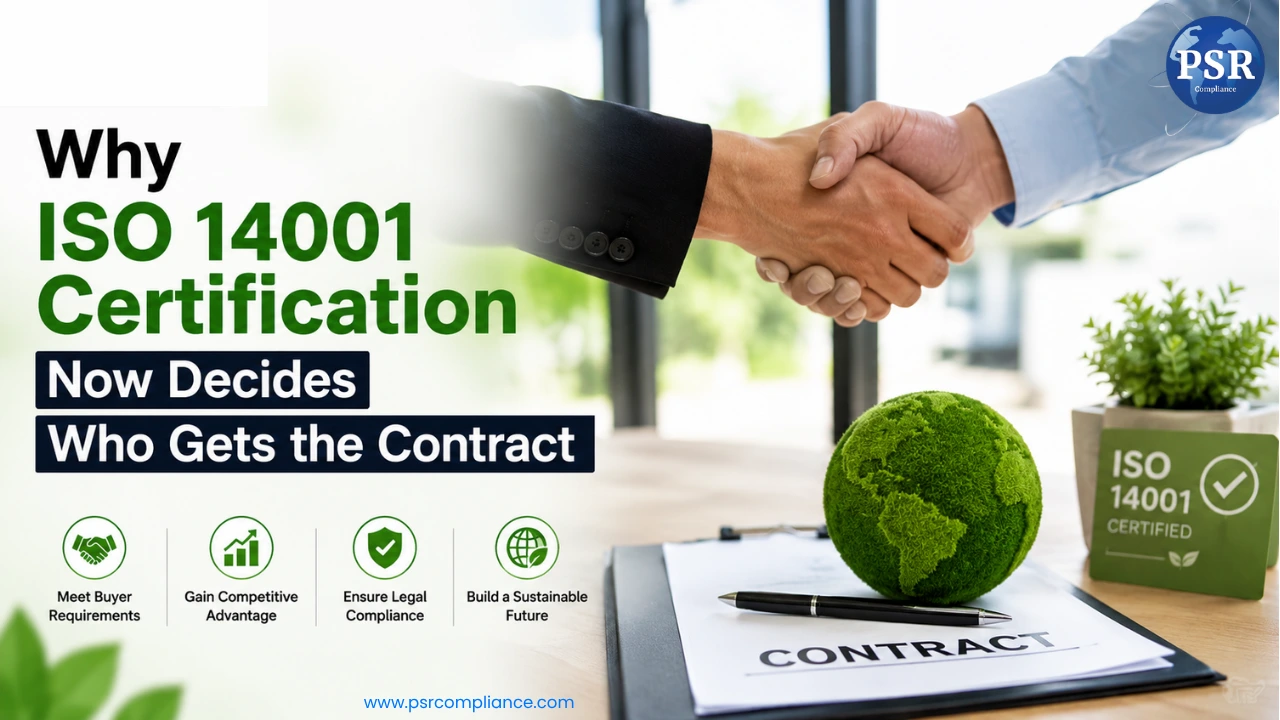
Why ISO 14001 Certification Now Decides Who Gets the Contract
Environmental responsibility used to be a "nice to have" for businesses. Today, it's a hard gate that decides whether you can even bid for certain contracts, supply certain buyers, or export to certain countries. EMS ISO 14001, short for Environmental Management System ISO 14001, has quietly become one of the most commercially important certifications a business can hold ISO not because regulators are watching more closely, but because your customers now demand it before they'll sign a purchase order. This guide breaks down what ISO 14001 actually requires, why it's reshaping supply chains across India, and how getting certified protects your access to some of the country's biggest buyers and export markets.
What is the ISO 14001 Standard?
The ISO 14001 standard is the internationally recognised standard that defines the requirements for an Environmental Management System. In plain terms, it's a structured, process-driven approach to controlling the parts of your business that affect the environment ISO energy use, waste, emissions, water discharge, and more.
ISO 14001 is relevant to all organizations, regardless of size, location, or industry. It doesn't set fixed environmental performance targets for you ISO instead, it provides a systematic approach for identifying your environmental impacts, setting your own objectives, monitoring performance, and continually improving over time. Whether you run a manufacturing unit, construction company, logistics firm, hospital, or service organization, the framework adapts to your operations.
Why This Certification is a Business Gatekeeper, Not Just an Environmental Nice-to-Have
1. It's now a hard requirement for major Indian supply chains. OEM supply chain qualification for companies like Tata, L&T, Mahindra, BHEL, and Hyundai requires ISO 14001, and major auto manufacturing clusters in Peenya, Pune, Chennai, and Manesar mandate it for their Tier-1 and Tier-2 suppliers. If you're trying to break into or stay in one of these supply chains, certification isn't optional.
2. Export markets are locking out uncertified suppliers. The EU's Carbon Border Adjustment Mechanism (CBAM) now requires environmental data from Indian steel, aluminium, cement, and fertiliser exporters. Gulf Cooperation Council (GCC) buyer contracts increasingly mandate it too. Major EU fashion buyers like H&M, Zara, Primark, and M&S require ISO 14001 from their Indian garment suppliers before doing business.
3. It's a prerequisite for winning government infrastructure work. CPWD, NHAI, metro rail projects, and state PWD tenders now include ISO 14001 in their environmental qualification criteria. Real estate developers pursuing IGBC or LEED green building ratings also need it as a foundation.
4. It's mandatory across entire industrial clusters, not just individual factories. Pharma manufacturing hubs in Ankleshwar, Vapi, and Hyderabad commonly require ISO 14001 from suppliers operating in the region. This means the certification requirement often isn't a single buyer's preference ISO it's the baseline expectation across an entire industrial ecosystem.
5. It protects your business from real financial risk, not just reputational risk. Environmental Management Systems help organizations identify emergency situations before they escalate, providing an opportunity for disaster management and preventing major losses due to potential incidents like spills, contamination events, or regulatory shutdowns. The cost of not having a system in place can be far higher than the cost of certification itself.
What Are the Core Elements of EMS ISO 14001?
Understanding the structure helps you see why this certification is taken so seriously by buyers and regulators alike. The core elements of an ISO 14001 Environmental Management System typically include:
- Environmental Policy ISO your organization's documented commitment to environmental management
- Planning ISO identifying environmental aspects and impacts, and understanding applicable legal and regulatory requirements
- Implementation and Operation ISO defining roles, responsibilities, training, and operational controls
- Checking ISO monitoring, measurement, and evaluation of environmental performance against your own objectives
- Management Review ISO leadership reviewing the system's effectiveness and driving continual improvement
This cycle is what allows a business to keep improving its environmental performance year after year, rather than treating certification as a one-time achievement.
Who Needs This Certification?
- Manufacturing units, especially those in automotive, pharma, chemicals, steel, and cement
- Construction companies and real estate developers pursuing green building certifications
- Exporters selling into the EU, GCC, and other regulated international markets
- Logistics, hospital, and service-based organizations looking to reduce energy consumption, waste, and environmental risk
- Suppliers and vendors seeking to qualify for large OEM or infrastructure tenders
ISO 14001 Requirements: What You'll Need to Prepare
To move toward certification, organizations typically need to prepare:
- A documented environmental policy signed off by leadership
- Risk assessment covering environmental aspects and impacts specific to your operations
- Legal compliance records demonstrating awareness of applicable environmental laws and regulations
- EMS procedures covering waste management, energy use, emissions, and emergency preparedness
- Training records showing staff awareness of environmental responsibilities
The ISO 14001 Certification Process, Step by Step
Step 1: Gap Assessment Evaluate current environmental practices against ISO 14001 requirements to identify what needs to be built or improved.
Step 2: Environmental Policy and Documentation Draft your environmental policy and the supporting documentation required under the standard ISO often summarized in an ISO 14001 Environmental Management System manual.
Step 3: Implementation Put your EMS procedures into practice, training relevant staff and assigning environmental responsibilities across the organization.
Step 4: Internal Audit Conduct an internal review to identify and correct gaps before the formal certification audit.
Step 5: Certification Audit An accredited certification body audits your EMS on-site, typically taking around 7 to 15 working days depending on business size and readiness.
Step 6: Certification and Surveillance Once certified, the certificate is generally valid for three years, with annual surveillance audits required to confirm ongoing compliance.
ISO 14001 Certification Cost in India
ISO 14001 certification cost in India varies based on several factors: ISO number of employees, organization location, number of permanent and temporary sites, and the complexity of the business's environmental footprint. If a company already operates with good environmental processes and practices in place, the certification cost can come down significantly, making it easier to achieve. Costs also depend on which accredited certification body you choose and the scope of your Environmental Management System.
Common Mistakes Businesses Make
- Assuming ISO 14001 only applies to heavy manufacturing, and missing out on tender or export opportunities as a result
- Treating the environmental policy as a document to file away rather than a living commitment reflected in daily operations
- Underestimating the legal compliance component, which requires genuine awareness of applicable environmental laws, not just internal procedures
- Not preparing for annual surveillance audits, and losing certification due to lapsed compliance
- Missing supply chain signals ISO not realizing that a whole industrial cluster or OEM buyer network now expects this certification as standard
Each of these mistakes can result in lost contracts, blocked export shipments, or disqualification from major tenders.
Why Working With an ISO 14001 Consultant Makes Business Sense
1. Correctly scoped implementation. A consultant helps ensure your EMS is built to match your actual environmental risk profile, rather than a generic template that doesn't fit your operations.
2. Faster access to supply chains and tenders. Since so many OEMs, government tenders, and export buyers now require ISO 14001 as a baseline, a smoother certification process directly shortens your path to new business.
3. Ongoing compliance support. With certification requiring renewal and annual surveillance audits, a consultant helps you stay ahead of these deadlines instead of scrambling before an audit.
4. Cost efficiency. Since a business with good practices already in place can significantly reduce certification costs, a consultant helps identify what you already have versus what genuinely needs to be built.
Final Thoughts
EMS ISO 14001 has moved well beyond being a voluntary environmental gesture ISO it's now a practical, commercial requirement that decides whether your business can supply major OEMs, win government infrastructure tenders, or export into regulated international markets. From automotive supply chains to EU carbon reporting rules, the pressure to certify is coming directly from the buyers who write your purchase orders.
If your business is trying to break into a new supply chain, win larger tenders, or expand into export markets, working with an experienced ISO 14001 consultant can help you build an Environmental Management System that's properly scoped, cost-efficient, and ready for the audits that stand between you and your next big contract.
Get ISO 14001 Certification Support with PSR Compliance
Build a stronger environmental management system and meet customer, tender, and business requirements with professional ISO 14001 certification support.
Contact PSR Compliance
📞 Call: +91 8796104190
📧 Email: support@psrcompliance.com
Frequently Asked Questions
Is ISO 14001 certification mandatory for all businesses in India?
No. ISO 14001 certification is not generally mandatory by law for all businesses in India. However, it may be required by major OEMs, government tenders, export buyers, or specific customers as part of their supplier requirements.
What are the core requirements of ISO 14001?
The main requirements include an environmental policy, identification of environmental aspects and legal obligations, defined responsibilities, employee training, monitoring and measurement, documentation, management reviews, and continual improvement.
How long does ISO 14001 certification take?
The certification audit may typically take around 7 to 15 working days. However, the overall timeline depends on the size of the business, its operations, and how well its existing environmental management system is implemented.
How long is an ISO 14001 certificate valid?
An ISO 14001 certificate is generally valid for three years, subject to successful surveillance audits conducted during the certification cycle.
Does ISO 14001 apply to service businesses, not just manufacturers?
Yes. ISO 14001 can apply to service-based businesses as well as manufacturers. It can help businesses manage energy use, waste, resource consumption, and other environmental impacts.
What industries in India commonly require ISO 14001 from suppliers?
Industries where ISO 14001 is commonly requested include automotive, pharmaceuticals, steel, cement, textiles and garments, infrastructure, construction, and other manufacturing sectors, particularly where supplier or export requirements apply.