Tue, Nov 24 2026
Advocate Rajkumar
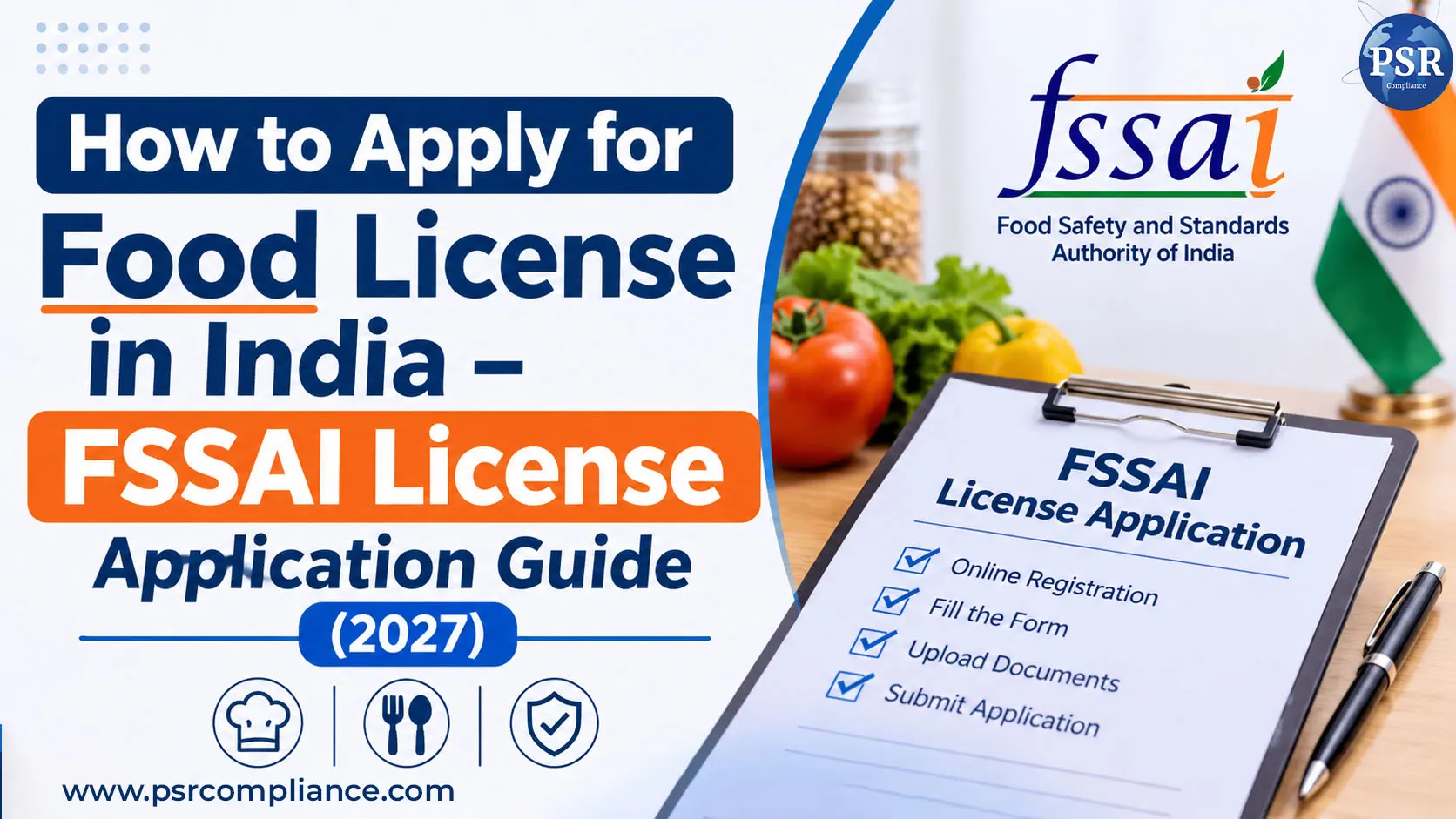
How to Apply for Food License in India – FSSAI Online Application Guide (2027)
Starting a food business is exciting. But one question stops many people at the very first step: "Do I need a license, and how do I get it?"
The answer is yes. In India, every food business needs an FSSAI license or FSSAI registration before it starts selling. This includes restaurants, cloud kitchens, bakeries, sweet shops, tiffin services, food factories, and online sellers.
The rules also changed in 2026. Many old blogs still show outdated limits and fees. This guide is updated for 2026 and explains how to apply for a food license in India in simple steps, so you can avoid delays and start your business with confidence.
What Is a Food License (FSSAI License)?
A Food License, commonly known as an FSSAI License, is an official approval issued by the Food Safety and Standards Authority of India (FSSAI) to businesses involved in food manufacturing, processing, packaging, storage, distribution, transportation and sale. It ensures that food businesses follow the prescribed food safety and hygiene standards under the Food Safety and Standards Act, 2006.
Every eligible Food Business Operator (FBO), including restaurants, hotels, food manufacturers, wholesalers, retailers, distributors and online food sellers, must obtain the applicable FSSAI Registration or License before commencing business operations. The type of approval depends on the nature, scale and eligibility of the food business.
Food License vs FSSAI Registration: What Is the Difference?
People use "food license" and "FSSAI registration" as if they mean the same thing. They are close, but not identical:
FSSAI Registration is for small food businesses. It is the simplest and cheapest option.
FSSAI License (State or Central) is for bigger businesses. It needs more documents and a higher fee.
In daily talk, all of these are called a "food license."
Which FSSAI License Do You Need in 2026?
From 1 April 2026, FSSAI raised the turnover limits. The category depends mainly on your yearly turnover (your total yearly sales, not your profit).
| Type | Yearly Turnover (from 1 April 2026) | Government Fee (per year) |
|---|---|---|
| Basic Registration | Up to ₹1.5 crore | ₹100 |
| State License | Above ₹1.5 crore and up to ₹50 crore | ₹2,000 to ₹5,000 (depends on business type) |
| Central License | Above ₹50 crore | ₹7,500 |
Note: Some businesses need a Central License no matter their turnover, such as certain importers, exporters, and multi-state operators. Also, the old limits were ₹12 lakh and ₹20 crore, so if you read those numbers elsewhere, that article is outdated.
Why You Must Get a Food License
Some people think a license is just a piece of paper. It is much more than that.
Without a license, you may face:
A fine of up to ₹5 lakh and possible jail time
Closure of your shop or unit
Seizure of your food stock
Removal from food delivery apps
With a license, you get:
Legal permission to run your business
Trust from customers
Entry to Swiggy, Zomato, and other online platforms
Easier bank loans and business tie-ups
Documents Required for FSSAI Registration and License
Keep these ready before you start. Missing documents are the main reason for delays.
For Basic FSSAI Registration:
- Photo ID (Aadhaar or PAN)
- Passport-size photograph
- Address proof of the business place
- Self-declaration form
For State or Central FSSAI License (extra documents):
- Business proof (partnership deed, company papers, or proprietorship proof)
- Rent agreement or ownership papers, with NOC from the owner
- List of food products you will make or sell
- Layout plan of your kitchen or unit
- Food Safety Management Plan (FSMP)
- Water test report (for manufacturers)
- Import Export Code (for importers and exporters)
Exact documents change by business type, so always check the list for your category on the official portal.
How to Apply for FSSAI License Online (Step-by-Step)
You can do FSSAI Registration Online from your phone or laptop. The only official place to apply is the FoSCoS portal (foscos.fssai.gov.in). Here is the simple process.
Step 1: Check Your Category
Find out if you need Basic Registration, a State License, or a Central License. Choosing the wrong one is a very common mistake, and it can lead to rejection.
Step 2: Create an Account on FoSCoS
Visit the portal and sign up with your mobile number and email. Verify with the OTP.
Step 3: Select Your Business Details
Choose your state, your kind of business (for example, restaurant, bakery, or manufacturer), and your business location.
Step 4: Fill the Application Form
Use Form A for Basic Registration. Use Form B for State and Central Licenses. Type your details carefully, because even a small spelling error can cause trouble later.
Step 5: Upload Documents
Upload clear, readable copies of all your documents.
Step 6: Pay the Fee Online
Pay the government fee through the portal. You can also pay for more than one year in advance.
Step 7: Review, Inspection, and Approval
An officer checks your file. For some licenses, there may also be an inspection of your kitchen or factory. Once approved, you can download your certificate from the portal.
Quick tip: If you are searching for "food license apply online" or "apply for FSSAI license online," remember that the process above is the same for everyone. What changes is the category and the documents.
FSSAI Food License Fees in India
The government fee for an FSSAI Registration or License depends on the type of food business and license category.
| License Type | Government Fee |
|---|---|
| Basic FSSAI Registration | ₹100/year |
| State License – Small Manufacturer | ₹3,000/year |
| State License – Large Manufacturer | ₹5,000/year |
| State License – Restaurant | ₹2,000/year |
| Central FSSAI License | ₹7,500/year |
Important Points:
- Licenses are generally available for 1 to 5 years.
- Fees depend on the business category.
- Professional consultancy charges are separate.
- Actual fees should be verified against the applicable FSSAI fee schedule.
How Long Does It Take to Get an FSSAI Food License?
The time required to obtain an FSSAI Registration or License depends on the type of application, document verification and whether a premises inspection is required. As per FSSAI guidelines, the official processing timelines are:
| License Type | Official Processing Timeline |
|---|---|
| Basic FSSAI Registration | Within 7 days |
| Basic Registration (if inspection is required) | Up to 30 days |
| State FSSAI License | Up to 60 days |
| Central FSSAI License | Up to 60 days |
FSSAI Validity: What Changed in 2026?
Earlier, a license was valid for one to five years, and you had to renew it. From April 2026, licenses and registrations have perpetual validity. This means there is no expiry date and no renewal.
But please read this carefully:
- You still must pay the annual fee every year.
- Some licensed businesses must also file their annual returns on FoSCoS.
- If you miss the annual fee, your license can be suspended.
- If your details change (address, product type, or ownership), you must update your license.
So perpetual does not mean "forget about it." Put a yearly reminder in your phone.
Common Mistakes People Make
From real experience, these are the most common issues:
- Choosing the wrong license type
- Using old turnover limits from outdated websites
- Giving a wrong or unclear address
- Uploading blurry documents
- Ignoring officer queries on the portal
- Forgetting to pay the annual fee
- Not displaying the license number on bills and in the shop
- These mistakes can delay your approval by weeks.
Practical Advice for First-Time Applicants
- Pick your category carefully before you apply
- Keep digital copies of all documents in one folder
- Check your spelling twice
- Reply to portal queries quickly
- Display your FSSAI certificate and number at your place
- Take expert help if you feel stuck
A rejected or delayed application costs more than doing it right the first time.
Real-Life Example: When Unlicensed Restaurants Were Removed from Food Apps
In July 2018, FSSAI told 10 online food platforms, including Swiggy, Zomato, and Foodpanda, to remove restaurants that did not have an FSSAI license or registration. This came after complaints about poor-quality food being delivered through apps. By October 2018, FSSAI said more than 5,000 restaurants had been delisted. FSSAI had also found that a large share of restaurants on these apps did not show valid license details.
The rule still stands. In December 2024, FSSAI again reminded e-commerce food businesses that they must not list any seller without a valid license or registration number.
The lesson: Even if you cook great food, you can lose your online sales overnight without a license. Getting it early protects your income.
Why Choose PSR Compliance for Food License in India?
- Expert Guidance: Get professional assistance in selecting the right FSSAI registration or State/Central food license based on your business type.
- End-to-End Application Support: Assistance with the complete FSSAI application process, from form filling to final submission.
- Document Verification: Get your documents reviewed to minimize errors, missing information, and application delays.
- Online Application Assistance: Convenient support for applying for an FSSAI license online through the FoSCoS portal.
- Application Tracking & Query Support: Assistance with application status, responding to department queries, and handling objections.
- Transparent Pricing: Clear information about government fees and professional service charges before proceeding.
- Pan-India Assistance: Support for food businesses, restaurants, cloud kitchens, manufacturers, retailers, and food entrepreneurs across India.
- Ongoing Compliance Support: Assistance with license modifications, annual fee requirements, and other FSSAI compliance needs.
Choose PSR Compliance for reliable FSSAI registration and food license assistance in India. Get expert guidance to make your food licensing process simpler and smoother.
Conclusion
Getting an FSSAI food license is an essential step before starting or operating a food business in India. Whether you run a restaurant, cloud kitchen, bakery, food manufacturing unit, or home-based food business, choosing the correct FSSAI registration or license helps you meet food safety requirements and build customer trust.
By understanding the eligibility criteria, required documents, government fees, and online application process, you can make your FSSAI application smoother and avoid common mistakes.
If you need assistance with FSSAI Registration or Food License Apply Online in India, PSR Compliance can help you identify the right license category, prepare documents, submit your application, and handle department queries. Contact PSR Compliance for professional guidance and support throughout your food licensing process.
Frequently Asked Questions
1. How to apply for a food license in India?
Go to the FoSCoS portal, create an account, choose your business type and category, fill Form A or Form B, upload documents, and pay the fee online.
2. Can I apply for FSSAI license online from home?
Yes. The whole process is online. You do not need to visit a government office to submit the application.
3. What is the cost of an FSSAI license?
The government fee is ₹100 per year for registration, ₹2,000 to ₹5,000 per year for a State License, and ₹7,500 per year for a Central License. Professional help is optional and costs extra.
4. Is FSSAI registration enough for a small food business?
Yes, if your yearly turnover is up to ₹1.5 crore and your business type allows it. If your turnover goes higher, you must move to a State License.
5. Do home bakers and cloud kitchens need an FSSAI license?
Yes. If you sell food to customers, even from home, you need at least a basic registration.
6. How long does it take to get an FSSAI license?
Basic registration can take a few days. State and Central Licenses usually take a few weeks, depending on your documents and the officer review.
7. Do I need to renew my FSSAI license?
Not for licenses and registrations issued under the 2026 rules. They have perpetual validity, but you must pay the annual fee and meet compliance rules to keep them active.
8. What happens if I forget to pay the annual fee?
Your license may be suspended, and you cannot legally run your business until it is restored.
9. What is the difference between FSSAI registration and an FSSAI license?
Registration is for small businesses with lower turnover. A license (State or Central) is for larger businesses and needs more documents.