Just send us your questions or concerns by starting a new case &
we will give you the help you need. Start Here...
BIS Certification
Mon, May 25 2026
Raju Karn
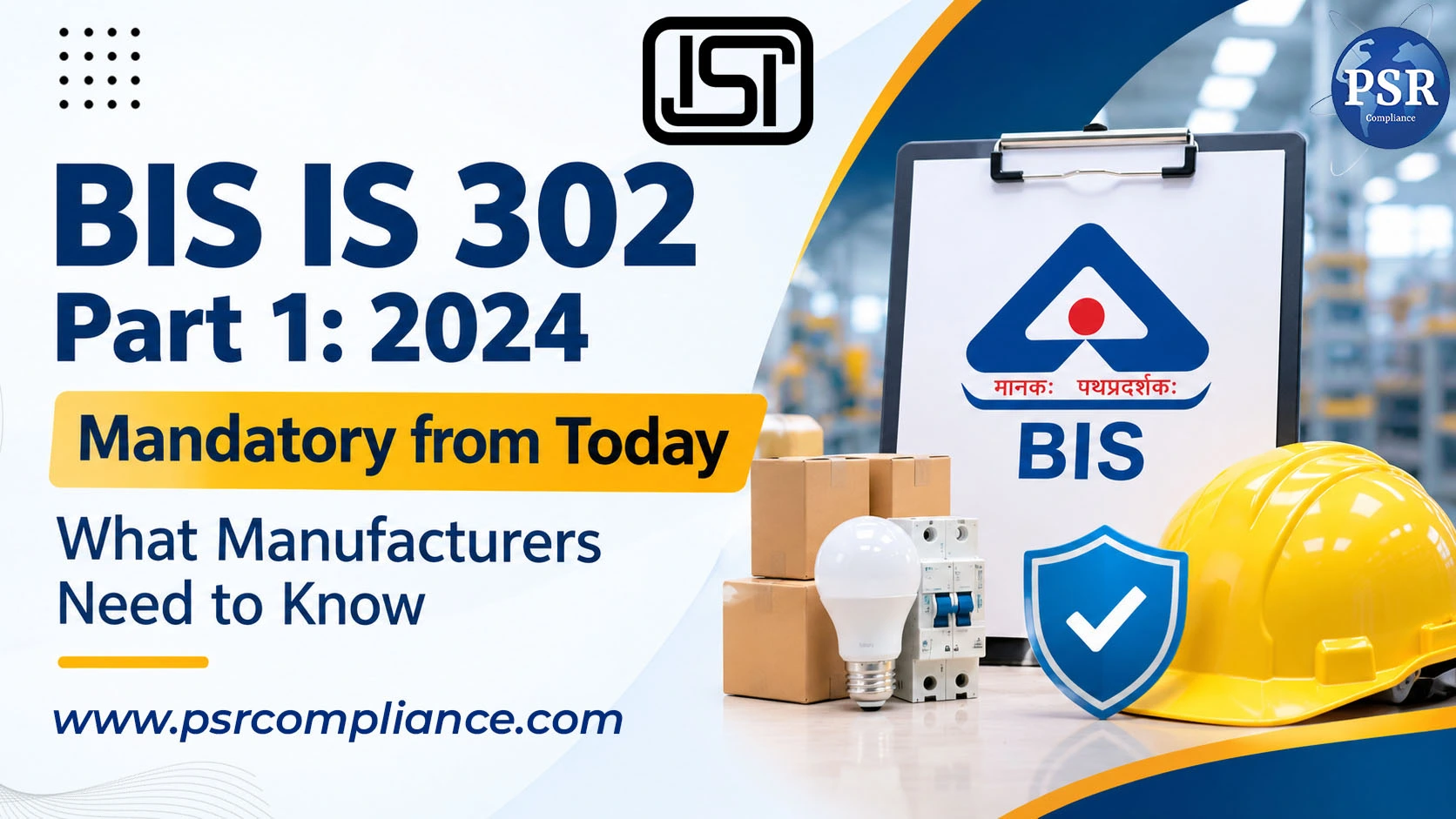
BIS Certification for Toilet Appliances IS 302 (Part 1): 2024 – Step-by-Step Guide 2026
In 2026, India is making electrical product safety rules stricter. This is especially important for toilet appliances and bathroom electrical products because they are used in wet areas. Many businesses are now looking for BIS certification under IS 302 (Part 1): 2024 to make sure their products follow Indian safety rules. Selling products without proper certification can lead to legal trouble, product bans, and business losses.
Today, products like smart toilet seats, automatic toilet systems, sensor-based bathroom devices, and other electronic washroom products are becoming common in homes, hotels, hospitals, malls, and offices across India. Since these products use electricity near water, safety is very important. BIS certification helps reduce the risk of electric shock, fire, and unsafe products. This guide explains the BIS certification process in simple language so manufacturers, importers, traders, startups, and business owners can easily understand it.
What is BIS Certification?
BIS stands for Bureau of Indian Standards. It is the national authority in India responsible for making safety and quality standards for products sold in the Indian market. BIS helps ensure that products are properly tested and safe for consumers to use.
BIS mainly looks after:
- Product quality
- Safety standards
- Testing requirements
- Certification systems
After a product passes BIS testing and approval, manufacturers can use:
✅ ISI Mark
✅ BIS Standard Mark
These marks show that the product follows Indian safety and quality rules.
What is IS 302 (Part 1): 2024?
IS 302 (Part 1): 2024 is an Indian safety standard for electrical appliances, household devices, and similar electrical equipment. This standard helps make sure that electrical products are safe for people to use in homes, offices, hotels, and other places.
The standard mainly focuses on:
➤ Electrical safety
➤ Insulation protection
➤ Overheating prevention
➤ Shock protection
➤ Safe product design and construction
For toilet appliances and bathroom electrical products, these safety rules are very important because water and electricity can be dangerous together if the product is not properly designed or tested.
Why BIS Certification is Important for Toilet Appliances
Many businesses think BIS certification is only a paperwork process. But in reality, it is very important for product safety and legal business operations in India. BIS certification helps ensure that toilet appliances and bathroom electrical products are safe for customers to use.
BIS certification also affects:
➜ Product safety
➜ Legal selling permission
➜ Customer trust
➜ Import clearance
➜ Online marketplace approvals
Without proper BIS compliance, businesses may face serious problems such as:
⚠ Customs clearance issues
⚠ Product seizure
⚠ Penalties and fines
⚠ Sales restrictions
⚠ Legal notices
In some cases, retailers and online marketplaces may also refuse to sell products that do not have proper BIS certification.
Which Toilet Appliances May Require BIS Compliance?
The need for BIS compliance depends on the product type, electrical functions, applicable Indian standards, and government rules. Different products may have different certification requirements based on how they are designed and used.
Common toilet and bathroom products that may require safety compliance include:
▸Smart toilet seats
▸Electric bidet systems
▸Automatic flushing systems
▸Heated toilet appliances
▸Sensor-operated washroom devices
▸Electronic hygiene appliances
Manufacturers and importers should always check the latest BIS notifications and applicable Quality Control Orders (QCOs) before selling or importing products in India.
Who Needs BIS Certification?
BIS certification may be required for businesses involved in manufacturing, importing, or selling electrical products in India. The requirement depends on the product category and applicable Indian regulations.
Businesses that may need BIS certification include:
• Indian manufacturers
• Importers
• Foreign manufacturers
• Brand owners
• OEM suppliers
Even if a product is imported from another country, BIS approval may still be necessary before the product can be legally sold in India.
Benefits of BIS Certification
Proper BIS certification is very important for businesses because it helps them sell safe and trusted products in the Indian market. It also ensures that products meet Indian safety and quality standards set by the Bureau of Indian Standards.
Key Benefits
➝ Builds strong customer trust in the product
➝ Improves product quality image and credibility
➝ Helps avoid legal issues and compliance penalties
➝ Increases acceptance in the Indian market
➝ Makes import clearance faster and smoother
➝ Helps products get approval on online marketplaces easily
In simple words, BIS certification makes it easier for businesses to sell products legally, safely, and successfully in India.
Step-by-Step Process for BIS Certification for Toilet Appliances
The BIS certification process may look complicated, but it can be understood easily if we break it into simple steps. Below is a clear explanation of how manufacturers and importers get approval for toilet appliances and similar electrical products.
Step 1: Identify the Correct Standard
First, you need to understand which BIS standard applies to your product. This is a very important step because the wrong selection can delay or reject your application.
At this stage, you check:
- Which BIS standard applies to your product
- Whether IS 302 (Part 1): 2024 is applicable
- Whether any additional standards are also required
If the product is classified incorrectly, the whole process can get delayed or rejected. That is why correct product identification is the foundation of the certification process.
Step 2: Product Testing in Approved Lab
After identifying the standard, the product must be tested in a BIS-recognized laboratory. This testing confirms whether the product is safe to use.
The lab checks important safety points such as:
- Electrical safety
- Insulation strength
- Leakage current
- Overheating or temperature rise
- Construction safety
- Overall performance
Once testing is completed successfully, the lab issues an official test report. This report is a key document for the application.
Step 3: Document Preparation
Before applying, all required documents must be properly prepared and verified. Missing or incorrect documents are one of the main reasons for delays.
Common documents include:
- Business registration certificate
- GST certificate
- Factory license
- Product technical details
- Circuit diagram
- User manual
- Product label design
- Manufacturing process details
- Test report from approved lab
- Trademark authorization (if required)
For importers or foreign manufacturers, additional documents may be required depending on the case.
Step 4: Online BIS Application Submission
Once documents are ready, the application is submitted online through the official BIS portal managed by the Bureau of Indian Standards.
In this step, you upload:
- Company and factory details
- Product category information
- Technical documents
- Lab test report
It is important to ensure everything is correct because even small mistakes can lead to delays or re-submission.
Step 5: Factory Inspection (If Required)
In some cases, BIS officials may visit the factory to check production standards. This step is mainly done to confirm that the product is consistently manufactured as per Indian safety rules.
During inspection, they may check:
- Manufacturing setup
- Quality control system
- Testing equipment
- Production process
- Safety measures in the factory
This step ensures that not only the product sample, but the full production process meets BIS standards.
Step 6: Grant of BIS Certification
If all documents, test reports, and inspections are approved, BIS issues the certification license.
After approval:
- The manufacturer can legally sell the product in India
- The product can carry the ISI Mark
- The product is considered compliant with Indian safety standards
This final step confirms that the product meets all required safety and quality rules for the Indian market.
What is the ISI Mark?
The ISI Mark is a safety symbol used on products in India. It shows that a product has been tested and it meets Indian safety and quality standards set by the Bureau of Indian Standards. In simple words, it means the product is safe, reliable, and approved for use in the Indian market.
For Consumers
The ISI Mark helps customers feel more confident when buying a product.
▪ It shows the product is safe to use
▪ It increases trust in the product
▪ It assures better quality and reliability
For Businesses
The ISI Mark is also very important for selling products in India.
▪ It improves market acceptance
▪ It ensures legal compliance
▪ It increases sales opportunities
▪ It helps in getting approval from retailers and online platforms
Common Mistakes Businesses Make
Many businesses face delays, rejection, or extra cost during BIS certification because of simple but avoidable mistakes. Most of these problems happen due to lack of proper planning or missing details.
Wrong Product Classification
- Choosing the wrong BIS standard for the product
- Confusion about whether IS 302 (Part 1): 2024 applies
- This can lead to delay, correction requests, or rejection
Incomplete Test Reports
- Missing important test results or safety parameters
- Lab report not matching BIS requirements
- This can result in rejection or re-testing
Poor or Incorrect Labeling
- Wrong product label details
- Missing mandatory information like model number or safety mark
- This creates non-compliance issues during approval
Using Non-Recognized Labs
- Testing done in labs not approved by BIS
- Such reports may not be accepted
- Product may need to be tested again in an approved lab
Incomplete Technical Documents
- Missing product specifications or circuit diagrams
- Incomplete user manuals or manufacturing details
- This slows down the approval process and causes delays
Why Importers Should Be Careful in 2026
In 2026, India is becoming more strict about safety and quality rules for imported electrical and electronic products. Because of this, importers need to be very careful before bringing products into the country.
Customs and regulatory authorities are now closely checking:
▫ BIS certification and license
▫ Product test reports
▫ Product labels and markings
▫ Manufacturer details and documents
If proper compliance is not followed, importers may face serious problems such as:
▫ Shipment getting stopped at customs
▫ Delays in customs clearance
▫ Product rejection or return
▫ Extra storage or penalty charges
That is why proper BIS compliance is very important before importing any electrical products into India in 2026.
Real Example
A sanitary appliance importer in Delhi, AquaTech Bath Solutions Pvt. Ltd. (name used for example), planned to launch imported smart toilet seats in the Indian market in early 2026. The company initially assumed that general electrical safety compliance would be enough and did not focus on BIS requirements under IS 302 safety standards.
Later during the import preparation stage, they realized that proper BIS certification and product testing would be required before selling the products in India. PSR Compliance supported the importer by identifying the correct BIS standard, arranging product testing in an approved lab, preparing all technical documents, and completing the certification process step by step.
Because the compliance process was handled before shipment arrival, the company avoided customs delays and product rejection. As a result, they were able to launch their smart toilet seat range in India smoothly and on time.
Why BIS Compliance is Becoming More Important
In India, safety and quality rules are becoming stricter every year. The main focus of the government is to make sure that products sold in the market are safe for people to use and do not create any risk.
The government is especially focusing on:
▪ Consumer safety
▪ Electrical protection
▪ Better quality control
▪ Reducing low-quality or unsafe products in the market
Because of these strong checks, BIS compliance is becoming more important for all manufacturers and importers. It helps ensure that only safe and tested products are allowed in the Indian market.
Tips Before Applying
Before applying for BIS certification, it is very important to prepare everything properly. Small mistakes can lead to delays, rejection, or extra cost, so careful planning is needed.
Important Tips
- Verify the correct BIS standard for your product before applying
- Prepare all documents carefully and keep them complete
- Check product labeling requirements as per Indian rules
- Get product testing done only from BIS-approved laboratories
- Avoid submitting incomplete or incorrect applications
In simple terms, proper preparation before applying helps save time, reduces delays, and makes the BIS approval process much smoother.
How PSR Compliance Can Help
PSR Compliance helps businesses with:
✓ Product Testing Support
✓ BIS Documentation
✓ Import Compliance
✓ Technical Guidance
✓ Regulatory Consultation
Need help with BIS Certification for Toilet Appliances?
Contact PSR Compliance at support@psrcompliance.com or call +91 87961 04190 for complete assistance.
FAQs on BIS Certification for Toilet Appliances (India)
1. What is BIS certification for toilet appliances in India?
BIS certification for toilet appliances is a mandatory approval issued by the Bureau of Indian Standards. It ensures that electrical sanitation products such as bidets, heated toilet seats, and washlets meet Indian safety, performance, and quality standards before being sold in the market.
This certification confirms that products are safe for consumer use, especially in wet bathroom environments.
2. Which toilet appliances require BIS certification?
All electrical toilet and sanitation appliances that connect to power require BIS certification, including:
- Electronic bidet systems
- Heated toilet seats
- Bidet-integrated washlets
- Smart toilet hygiene systems
- Electric water spray attachments
These products must comply with IS 302 (Part 1): 2024.
3. Is BIS certification mandatory for toilet appliances in India?
Yes. BIS certification is mandatory in India for all applicable electrical toilet appliances.
Manufacturers and importers cannot legally sell or distribute uncertified products. Non-compliance may result in:
- Product seizure
- Heavy financial penalties
- Market access restrictions
- Legal action by regulatory authorities
4. What safety standards are tested under BIS certification?
BIS testing ensures that toilet appliances are safe for continuous use in moisture-prone environments. Key safety parameters include:
- Electric shock protection: Safe insulation and grounding
- Water resistance (IP rating): Protection from moisture ingress
- Thermal safety: Prevention of overheating in heaters and seats
- Material safety: Non-toxic, durable, and hygienic materials
- Fire resistance: Protection against electrical faults
- Mechanical durability: Resistance to wear, impact, and pressure
5. Can foreign manufacturers apply for BIS certification in India?
Yes. Foreign manufacturers can apply for BIS certification, but they must:
- Appoint an Authorized Indian Representative (AIR)
- Test products in a BIS-recognized laboratory in India
- Ensure full compliance with Indian safety standards
Foreign certifications such as CE or UL are not automatically accepted in India.
6. What is the process to get BIS certification for toilet appliances?
The certification process typically includes the following steps:
- Application submission with technical and company documents
- Product sample testing in a BIS-approved laboratory
- Factory inspection by BIS officials
- Compliance verification of manufacturing and quality systems
- License approval and ISI marking authorization
Once approved, manufacturers can legally sell products in India.
7. How long does BIS certification take for toilet appliances?
The timeline usually ranges from a few weeks to several months.
The duration depends on:
- Completeness of documentation
- Testing time at laboratories
- Scheduling of factory inspection
- Product complexity and compliance readiness
8. Where can I get official information on BIS certification?
Official guidelines, application forms, and testing laboratory details are available through the Bureau of Indian Standards portal.
You can also refer to BIS product certification guidelines for updated compliance requirements.