
Just send us your questions or concerns by starting a new case &
we will give you the help you need. Start Here...
BIS Certification
Sat, Jan 03 2026
Raju Karn
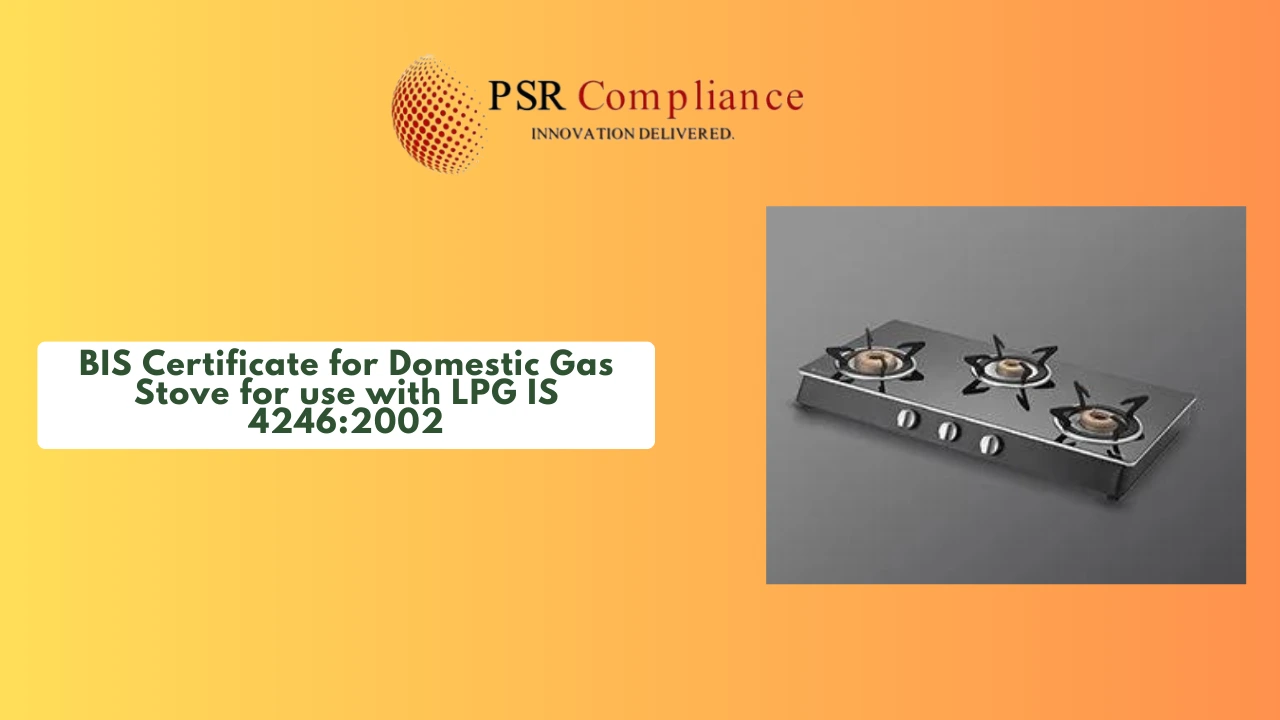
BIS Certificate for Domestic Gas Stove for use with LPG IS 4246:2002
Domestic gas stoves that use Liquefied Petroleum Gas (LPG) continue to be one of the most common cooking appliances in Indian homes in 2026. They provide a convenient and efficient way to cook, especially in areas where natural gas is not available. LPG stoves are easy to install, portable, and reliable, making them a preferred choice for daily cooking.
In 2026, modern LPG stoves also come with advanced safety features such as flame failure devices, a standardized safety mechanism recognized under Indian Standards for LPG appliances, along with other safety features like automatic shut-off systems that many manufacturers now build in. These features help prevent accidents and gas leaks, ensuring that households can cook safely and confidently every day. Notably, BIS issued an amendment to the LPG gas stove standard (IS 4246:2025) in mid-2026, with stricter safety requirements set to become mandatory for manufacturers by the end of the year, so stoves entering the market going forward are expected to meet even tighter safety benchmarks.
Understanding IS 4246:2002: DOMESTIC GAS STOVE
IS 4246:2002 is an Indian Standard that sets the safety and quality requirements for domestic gas stoves that use Liquefied Petroleum Gas (LPG). This standard ensures that gas stoves are safe, efficient, and reliable for everyday household use. The certification is issued by the Bureau of Indian Standards (BIS), which is India’s national standards authority.
Key Points About IS 4246:2002
● It applies to domestic gas stoves designed for LPG use
● Ensures safety features like flame stability and leak prevention
● Sets quality requirements for materials and design
● Helps manufacturers meet legal and safety regulations
● Provides consumers with a mark of safety and reliability
● This standard protects both households and manufacturers by making sure LPG stoves are tested and certified before they are sold in India.
Specification of BIS for Domestic Gas Stove
The BIS standard for domestic gas stoves sets clear rules for their design, operation, and safety. It applies to stoves with metallic bodies, toughened glass tops, or a combination of both, made for use with Liquefied Petroleum Gas (LPG). The standard ensures that stoves are safe, reliable, and efficient for everyday household use.
Key Specifications of BIS for Domestic Gas Stoves
➤ Design and construction requirements to ensure durability and safety
➤ Material standards for metallic and glass components
➤ Performance requirements to ensure proper flame control and cooking efficiency
➤ Safety features such as leak prevention and flame failure protection
➤ Tests to check quality, safety, and overall performance
These specifications help manufacturers produce high-quality stoves and give consumers confidence that their LPG stoves are safe to use.
Key Components of IS 4246:2002: BIS for Domestic Gas Stove
IS 4246:2002 is an Indian Standard that sets safety, design, and performance requirements for domestic gas stoves that use Liquefied Petroleum Gas (LPG). While the full standard provides detailed specifications, here is a simple and clear overview of the key components and requirements covered:
Key Components and Requirements:
- Burners
The standard defines how burners should be designed and perform, including the number of burners and their individual characteristics for safe and efficient cooking. - Heat Output
Gas stoves must meet specific requirements for heat output to ensure proper cooking efficiency. - Materials
Guidelines cover the materials used in stove construction to ensure durability, safety, and compliance with health standards. - Safety Features
Safety devices like Flame Failure Devices (FFD) or thermocouples are required to automatically shut off the gas supply if the flame goes out. - Performance Testing
The stove must pass tests for ignition, flame stability, and overall functionality to ensure reliable performance. - Marking and Labeling
The stove must have proper markings and labels to show it complies with the standard, including symbols and other essential information.
Process Steps of Obtaining the BIS Certification for IS 4246:2002
Getting BIS certification for domestic LPG gas stoves under IS 4246:2002 ensures your products are safe, high-quality, and legally approved. Here’s the process in simple step-by-step form:
Step 1: Product Testing
Test the gas stoves in BIS-recognized laboratories. This includes checking performance, flame stability, safety features, and other criteria specified in IS 4246:2002.
Step 2: Document Preparation
Prepare all required documents such as test reports, details of the manufacturing process, and any other supporting information requested by BIS. Accuracy and completeness are essential.
Step 3: Application Submission
Submit your BIS certification application through the official BIS online portal or other authorized channels. Include all documents and product details to avoid delays.
Step 4: Factory Inspection
BIS may conduct an inspection of your manufacturing facility to ensure production processes comply with the standard. This step verifies consistent quality and safety in manufacturing.
Step 5: Grant of BIS Certification
If the product and factory meet all requirements, BIS issues the certification. This indicates that your LPG gas stove complies with IS 4246:2002 standards and is safe for the market.
Step 6: Renewal and Surveillance
BIS certification is valid for a specific period, after which it must be renewed. BIS may also carry out surveillance inspections to ensure ongoing compliance with the standard.
Documents Required for BIS for Domestic Gas Stove
To get BIS certification for domestic LPG gas stoves under IS 4246:2002, you need to prepare and submit the following documents along with your application:
1. Product Information
Provide detailed specifications and technical details of the gas stove, including design features, dimensions, number of burners, and other relevant product information.
2. Test Reports
Include test reports from BIS-recognized laboratories that confirm your product meets the performance, safety, and quality standards outlined in IS 4246:2002.
3. Factory Inspection Report
If BIS conducts a factory inspection, submit the report verifying that your manufacturing facility follows the standards required for consistent product quality and safety.
4. Trademark or Logo Authorization
If your product uses a trademark or logo, provide authorization for its use.
5. Application Form
Complete and submit the official BIS application form with all required information about your company and the gas stove.
6. Other Legal Documents
Attach legal documents such as your company’s incorporation certificate, GST registration, PAN card, and any other documents proving the identity and legality of your business.
Conclusion
In conclusion, obtaining BIS certification for domestic gas stoves, as per IS 4246:2002, involves a comprehensive process to ensure that the products meet specified safety and quality standards. The key steps include determining the applicability of the standard, conducting product testing, preparing and submitting necessary documentation, undergoing a factory inspection, and obtaining the BIS certification.
For more information contact us -PSR Compliance
FAQs
What is BIS Certification for LPG gas stoves?
BIS Certification confirms that LPG gas stoves comply with the applicable Indian Standard and relevant BIS certification requirements for safety, quality and performance.
Is BIS Certification mandatory for LPG gas stoves in India?
Yes, LPG gas stoves covered under the applicable BIS compulsory certification requirements must comply with the relevant Indian Standard and certification requirements before being marketed in India.
Which BIS standard applies to LPG gas stoves?
LPG gas stoves for domestic use are covered under IS 4246. The applicable version of the standard should be confirmed based on the current BIS requirements and any applicable transition provisions.
How can I get BIS Certification for an LPG gas stove?
The manufacturer generally needs to identify the applicable standard, arrange product testing, prepare the required documents, submit the BIS application and complete the inspection and assessment requirements prescribed by BIS.
What documents are required for BIS Certification of LPG gas stoves?
Common documents may include manufacturing-unit details, product specifications, test reports, manufacturing process information, quality-control details, machinery and testing-facility details, and documents required by BIS.
Is testing required for BIS Certification of LPG gas stoves?
Yes. Product testing is an important part of the BIS certification process. Testing is conducted against the applicable requirements of the relevant Indian Standard.
How much does BIS Certification for LPG gas stoves cost?
The overall cost can include BIS application and processing charges, testing fees, inspection-related expenses and professional assistance charges. The actual cost varies depending on the product and certification requirements.
How long does LPG gas stove BIS Certification take?
The timeline depends on factors such as testing, documentation, factory inspection, BIS assessment and the manufacturer's compliance with applicable requirements. It can vary from case to case.
Can an Indian manufacturer apply for BIS Certification for LPG gas stoves?
Yes. Indian manufacturers whose products fall within the applicable BIS certification requirements can apply by following the prescribed certification procedure.
Can foreign manufacturers get BIS Certification for LPG gas stoves?
Foreign manufacturers may be eligible to obtain BIS certification under the applicable BIS scheme, subject to the requirements for overseas manufacturers and the relevant certification procedure.
What are the testing requirements for LPG gas stoves?
The LPG gas stove must meet the applicable performance, safety, construction and other technical requirements specified in the relevant Indian Standard. The required tests depend on the product and applicable standard.
Is IS 4246:2002 still applicable to LPG gas stoves?
The applicable version of IS 4246 should be checked against the latest BIS requirements because the standard has been revised. Manufacturers should confirm the currently applicable standard and any transition requirements before applying.
Can BIS Certification be obtained without product testing?
Generally, required product testing cannot simply be skipped where testing is prescribed under the applicable BIS certification scheme. The exact testing route depends on the certification scheme and product requirements.
What happens if an LPG gas stove is sold without required BIS compliance?
Selling a product that is subject to compulsory BIS certification without meeting the applicable requirements can lead to regulatory action and other consequences under the relevant laws and regulations.
Can PSR Compliance help with BIS Certification for LPG gas stoves?
Yes. PSR Compliance can assist manufacturers with BIS certification documentation, testing coordination, application filing and related compliance requirements.