Thu, Jun 18 2026
Utkarsh Sharma
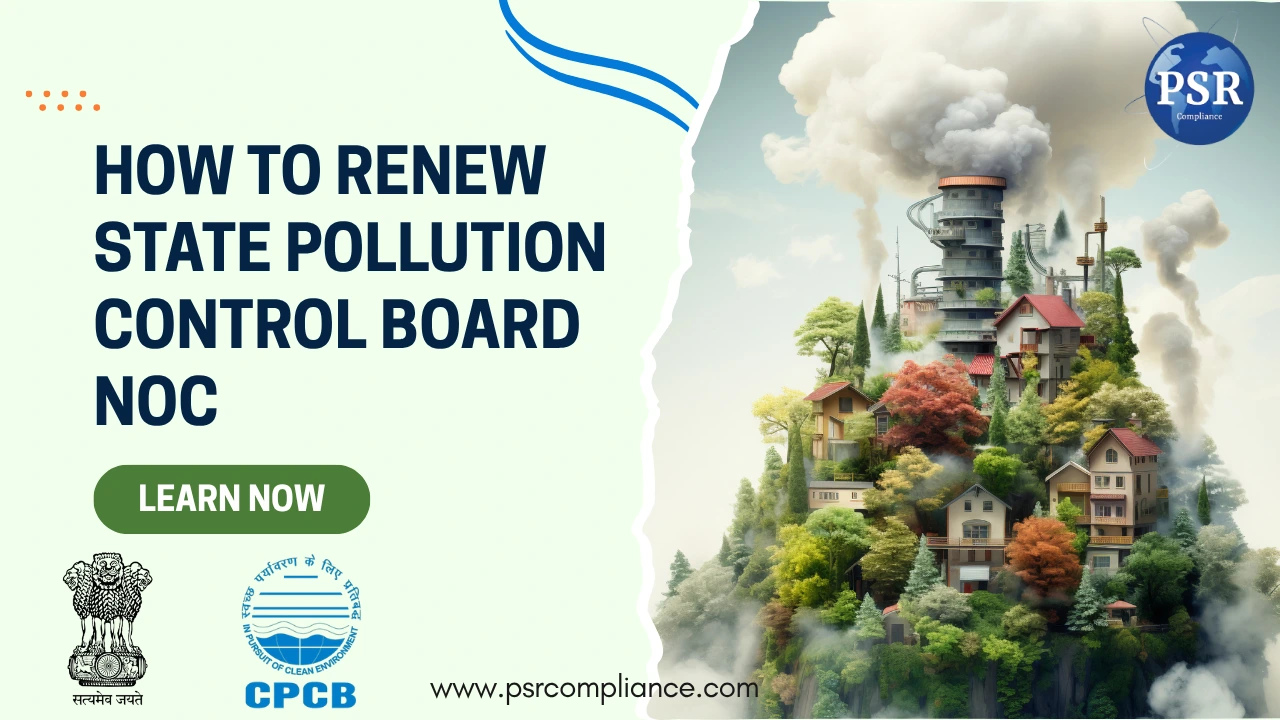
How to Renew State Pollution Control Board NOC
Environmental compliance is an important responsibility for industries and businesses operating in India. Many businesses obtain approvals from the State Pollution Control Board before starting operations, but obtaining approval is only the first step. To continue operating legally, businesses must ensure timely renewal of their Pollution NOC and related consents.
Failure to renew the required approvals can result in penalties, legal notices, operational restrictions, or even closure orders from regulatory authorities. Understanding the renewal process can help businesses avoid compliance risks and maintain uninterrupted operations.
In this guide, we will explain how to renew a State Pollution Control Board NOC, the documents required, applicable fees, and key compliance requirements.
What is State Pollution Control Board NOC Renewal?
The State Pollution Control Board (SPCB) issues various environmental approvals, including Consent to Establish (CTE), Consent to Operate (CTO), and other permissions related to pollution control.
These approvals are generally issued for a specific validity period. Once the validity expires, businesses must apply for renewal to continue operations in compliance with environmental regulations.
A valid pollution control board certificate demonstrates that the industry follows pollution prevention measures and complies with applicable environmental standards.
Why is Renewal of Pollution NOC Important?
Renewing a pollution noc on time is essential for maintaining legal compliance and avoiding disruptions in business operations.
Some key reasons include:
- Continued authorization to operate the facility
- Compliance with environmental laws and regulations
- Avoidance of penalties and legal action
- Smooth renewal of other business licenses
- Improved environmental management practices
- Better credibility with customers and stakeholders
Timely renewal also helps businesses demonstrate commitment toward environmental protection and sustainable operations.
When Should You Apply for SPCB NOC Renewal?
Businesses should apply for renewal well before the expiry date of the existing approval.
Most State Pollution Control Boards recommend filing renewal applications several months before expiration to allow sufficient time for document verification and inspection, if required.
Delaying the renewal application may lead to:
- Additional scrutiny
- Late fees (where applicable)
- Compliance notices
- Operational risks
Therefore, businesses should regularly track the validity of their existing approvals.
Difference Between Consent to Establish (CTE) and Consent to Operate (CTO)
Many businesses confuse Consent to Establish (CTE) and Consent to Operate (CTO) issued by the State Pollution Control Board. Understanding the difference is important when applying for renewal or ensuring environmental compliance.
| Particulars | Consent to Establish (CTE) | Consent to Operate (CTO) |
|---|---|---|
| Purpose | Approval to set up an industrial unit or project | Approval to commence and continue operations |
| When Required | Before construction or installation of the facility | Before starting commercial production or operations |
| Issuing Authority | State Pollution Control Board | State Pollution Control Board |
| Applicability | New industries, expansion projects, or modifications | Existing operational industries |
| Main Verification | Proposed pollution control measures and project details | Actual implementation of pollution control systems |
| Renewal Requirement | Generally required when project timelines extend or significant modifications occur | Periodic renewal based on industry category and state regulations |
| Documents Required | Project report, site plan, manufacturing process details, pollution control proposal | Compliance reports, monitoring records, waste management details, existing consent orders |
| Objective | Prevent environmental issues during project planning | Ensure continued compliance during operations |
Step-by-Step Process to Renew State Pollution Control Board NOC
The renewal procedure may vary slightly from state to state, but the overall process generally follows these steps:
Step 1: Review Existing Consent Conditions
Before applying, businesses should review all conditions mentioned in the existing consent order.
Authorities may verify whether:
- Pollution control systems are operational
- Waste management practices are being followed
- Environmental monitoring records are maintained
- Previous compliance requirements have been fulfilled
Step 2: Prepare Required Documents
Collect all necessary documents and supporting records before initiating the application process.
Having complete documentation helps avoid delays during scrutiny.
Step 3: Submit Online Renewal Application
Most SPCBs have online portals for environmental compliance services.
The applicant must:
- Log in to the SPCB portal
- Select the renewal application option
- Fill in industry details
- Upload supporting documents
- Submit the application
Step 4: Pay Applicable Fees
After completing the application, the prescribed renewal fee must be paid through the online payment system.
The fee amount depends on various factors such as:
- Industry category
- Investment size
- Production capacity
- Type of consent being renewed
- State-specific regulations
Step 5: Scrutiny by SPCB
The spcb reviews the submitted application and supporting documents.
Authorities may seek clarification or request additional information if required.
Step 6: Site Inspection (If Applicable)
In some cases, SPCB officials may conduct a site inspection to verify:
- Pollution control equipment
- Waste disposal systems
- Compliance with consent conditions
- Environmental management practices
Step 7: Grant of Renewed Consent
After successful verification, the authority issues the renewed consent or NOC.
Businesses should download and maintain copies of the renewed approval for future compliance purposes.
Documents Required for State Pollution Control Board NOC Renewal
The exact document requirements may vary depending on the state and industry type. However, commonly required documents include:
Business Documents
- Certificate of Incorporation
- Partnership Deed (if applicable)
- GST Registration Certificate
- PAN Card of the entity
- Factory License
Existing Environmental Approvals
- Previous Consent to Operate (CTO)
- Previous Consent to Establish (CTE)
- Existing Pollution NOC
- Previous compliance reports
Operational Documents
- Production details
- Manufacturing process flow chart
- Water consumption details
- Fuel consumption records
- Raw material details
Pollution Control Documents
- Details of pollution control equipment
- Air pollution control system information
- Effluent treatment plant details
- Waste management records
- Hazardous waste authorization (if applicable)
Monitoring and Compliance Records
- Environmental monitoring reports
- Laboratory analysis reports
- Stack monitoring reports
- Water quality reports
- Compliance status reports
Providing accurate and updated documents helps ensure faster approval of the renewal application.
State Pollution Control Board NOC Renewal Fees
The renewal fee for a pollution control board certificate is not fixed across India. Different states follow different fee structures.
The fee generally depends on:
Industry Category
Industries are usually classified as:
- Red Category
- Orange Category
- Green Category
- White Category
Higher-risk industries generally pay higher renewal fees.
Capital Investment
Many SPCBs calculate fees based on the total capital investment in land, building, plant, and machinery.
Validity Period
Some states provide multiple validity options, and the fee may vary accordingly.
Production Capacity
Certain industries may have fee calculations linked to production levels or operational capacity.
Businesses should check the applicable SPCB portal for the latest fee schedule before submitting the application.
Common Reasons for Renewal Delays
Many applications face delays due to avoidable mistakes.
Common issues include:
- Incomplete documentation
- Incorrect application details
- Non-payment of fees
- Missing compliance reports
- Expired supporting approvals
- Non-functional pollution control systems
Careful preparation can significantly reduce processing time.
Why Choose PSR Compliance for SPCB NOC Renewal?
Renewing SPCB approvals can involve extensive documentation, regulatory requirements, and compliance verification. PSR Compliance provides end-to-end assistance for State Pollution Control Board NOC renewal, helping businesses complete the process efficiently and accurately.
📞 Call: 8796104190
📧 Email: support@psrcompliance.com
Conclusion
Renewing a State Pollution Control Board NOC is an essential compliance requirement for industries across India. Timely renewal helps businesses maintain legal operations, avoid penalties, and demonstrate adherence to environmental regulations.
The renewal process generally involves document preparation, application submission, fee payment, compliance verification, and approval by the concerned pollution control board. By maintaining proper records and applying before expiry, businesses can ensure a smooth renewal process without operational interruptions.
Frequently Asked Questions (FAQs)
1. How do I renew a State Pollution Control Board NOC?
To renew a State Pollution Control Board NOC, businesses must submit an online renewal application, upload required documents, pay applicable fees, and comply with environmental regulations. The SPCB may also conduct a site inspection before granting approval.
2. What is the validity of a Pollution Control Board Certificate?
The validity of a Pollution Control Board Certificate depends on the industry category and state-specific regulations. Red, Orange, Green, and White category industries may have different validity periods prescribed by the concerned State Pollution Control Board.
3. What documents are required for State Pollution Control Board NOC renewal?
Commonly required documents include previous Consent to Operate (CTO), Consent to Establish (CTE), GST certificate, PAN card, production details, compliance reports, waste management records, and pollution control equipment details.
4. What happens if a Pollution NOC expires?
If a Pollution NOC expires, the industry may face penalties, legal notices, operational restrictions, or closure orders from the State Pollution Control Board. Therefore, renewal should be completed before the expiry date.
5. How much is the fee for Pollution Control Board NOC renewal?
The renewal fee varies depending on factors such as industry category, capital investment, production capacity, validity period, and state-specific environmental regulations.
6. Is Pollution Control Board NOC mandatory for industries?
Yes. Most manufacturing units, processing facilities, and pollution-generating industries are required to obtain approval from the State Pollution Control Board before commencing operations.
7. Can Pollution Control Board NOC renewal be completed online?
Yes. Most State Pollution Control Boards provide online portals where businesses can submit renewal applications, upload documents, track status, and make fee payments electronically.
8. What is the difference between Consent to Establish (CTE) and Consent to Operate (CTO)?
Consent to Establish (CTE) is required before setting up an industrial unit, while Consent to Operate (CTO) is required before starting commercial operations. Both approvals are issued by the State Pollution Control Board.
9. How long does it take to renew a State Pollution Control Board NOC?
The processing time generally ranges from 15 to 60 days depending on the state, industry category, document verification requirements, and whether a site inspection is required.
10. Who issues the Pollution Control Board Certificate in India?
The Pollution Control Board Certificate is issued by the respective State Pollution Control Board (SPCB) or Pollution Control Committee (PCC) operating within the state or union territory.