Thu, Jun 25 2026
Raju Karn
Sewage Treatment Plant (STP) Guide 2026: Process, Benefits, Cost & Requirements
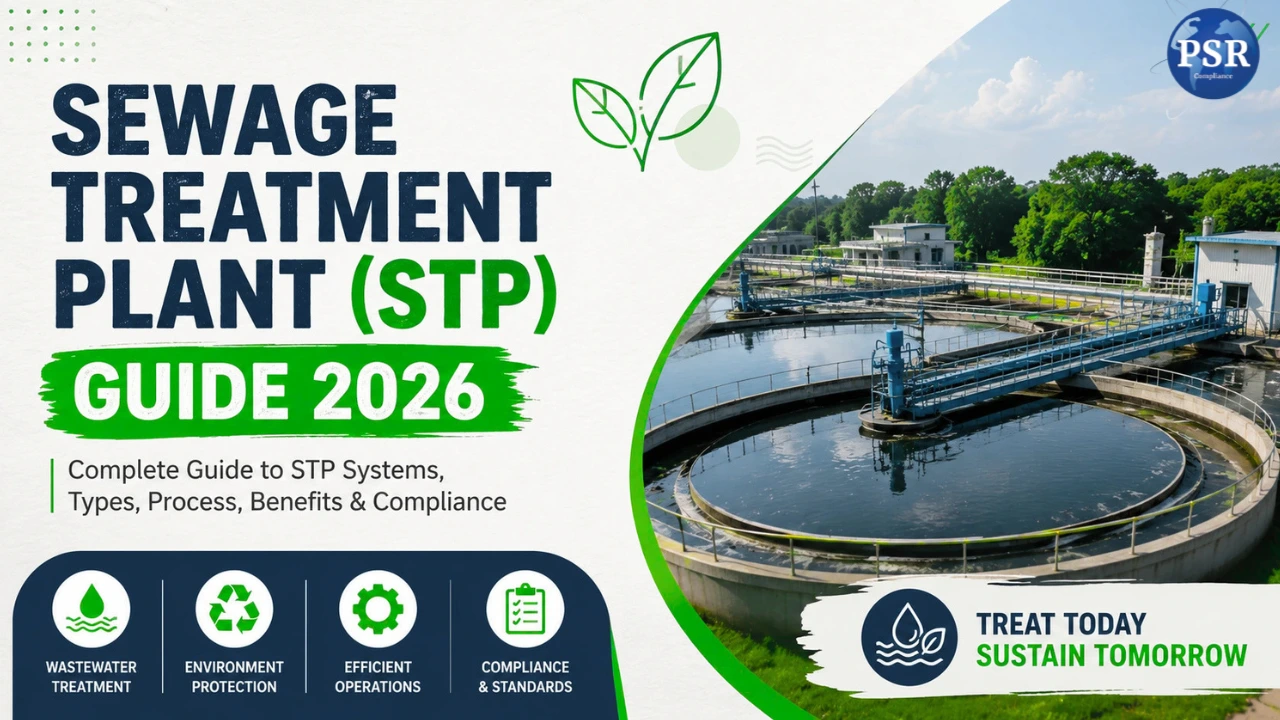
As cities grow and water demand increases, managing wastewater has become more important than ever. Every day, homes, apartments, hotels, hospitals, schools, and commercial buildings generate large amounts of sewage water. If this wastewater is released without treatment, it can pollute rivers, lakes, groundwater, and the environment. A Sewage Treatment Plant (STP) helps solve this problem by treating wastewater and making it safe for disposal or reuse. In many residential and commercial projects, installing an STP is now a legal and environmental requirement.
This guide explains what is STP, how it works, its benefits, types, costs, and why it is important in 2026.
What is a Sewage Treatment Plant (STP)?
The STP full form is Sewage Treatment Plant. An STP is a wastewater treatment system designed to collect and treat sewage generated from homes, apartments, offices, hotels, hospitals, schools, and commercial buildings. The main purpose of a Sewage Treatment Plant is to remove harmful contaminants, solid waste, organic matter, and disease-causing microorganisms from wastewater before it is released into the environment or reused.
In simple terms, what is STP? It is a system that converts dirty sewage water into cleaner and safer water through various treatment processes. The treated water can be reused for non-drinking purposes such as gardening, landscaping, flushing, and cleaning, helping to conserve water and reduce environmental pollution. As water scarcity and environmental concerns continue to grow, Sewage Treatment Plants have become an essential part of sustainable wastewater management..
What is Sewage?
Sewage is wastewater generated from:
➤ Homes
➤ Apartments
➤ Offices
➤ Hotels
➤ Hospitals
➤ Schools and colleges
➤ Shopping malls
This water may contain food waste, soap, detergents, human waste, oil, and other pollutants.
Why is Sewage Treatment Important?
Treating sewage is important for both environmental and public health reasons.
• Protects Water Sources
Untreated sewage can contaminate rivers, lakes, and groundwater. Proper treatment helps keep water bodies clean.
• Prevents Disease
Wastewater contains harmful microorganisms that can spread diseases if not treated properly.
• Supports Water Reuse
Treated water can be reused for landscaping, cooling systems, flushing, and other non-potable applications.
• Helps Meet Legal Requirements
Many government authorities require large residential and commercial projects to install an STP.
• Saves Fresh Water
Water scarcity is becoming a major issue in India. Reusing treated water reduces dependence on fresh water sources.
Untreated vs Treated Sewage
| Untreated Sewage | Treated Sewage |
|---|---|
| Causes pollution | Environment-friendly |
| Contains pathogens | Safer for reuse |
| Produces foul odor | Reduced odor |
| Harms ecosystems | Protects ecosystems |
| Wastes water resources | Supports water conservation |
Who Needs an STP Plant?
An STP is commonly required in places that generate large amounts of sewage.
▪ Residential Apartments
Large housing societies and apartment complexes often require STPs to manage wastewater.
▪ Hotels and Resorts
Hotels consume large quantities of water every day and benefit significantly from wastewater recycling.
▪ Hospitals
Hospitals generate wastewater that must be treated before disposal.
▪ Educational Institutions
Schools, colleges, and universities use STPs to manage sewage responsibly.
▪ Shopping Malls and Commercial Buildings
Commercial properties with high occupancy usually require sewage treatment systems.
Typical STP Requirements
| Property Type | STP Requirement |
|---|---|
| Apartments | Usually Required |
| Housing Societies | Required |
| Hotels | Recommended or Required |
| Hospitals | Required |
| Shopping Malls | Often Required |
| Educational Institutions | Recommended |
| Commercial Buildings | Often Required |
Types of Sewage Treatment Plants
Different technologies are available depending on the project size, budget, and treatment requirements.
1. Activated Sludge Process (ASP)
ASP is one of the oldest and most widely used sewage treatment methods.
Advantages:
Proven technology
Effective treatment
Limitations:
Requires more space
Higher maintenance
2. Moving Bed Biofilm Reactor (MBBR)
MBBR uses special plastic media where beneficial bacteria grow and treat wastewater.
Advantages:
Compact design
High treatment efficiency
Easy operation
3. Sequencing Batch Reactor (SBR)
SBR performs multiple treatment steps within a single tank.
Advantages:
Excellent water quality
Space-saving design
4. Membrane Bioreactor (MBR)
MBR combines biological treatment with membrane filtration.
Advantages:
Very high-quality treated water
Suitable for water reuse
Limitations:
Higher installation cost
STP Technology Comparison
| Technology | Space Required | Efficiency |
|---|---|---|
| ASP | High | Good |
| MBBR | Medium | Very Good |
| SBR | Low | Excellent |
| MBR | Very Low | Excellent |
Sewage Treatment Plant Process
Understanding the STP process helps in knowing how wastewater is transformed into reusable water.
Step 1: Collection of Sewage
Wastewater from toilets, kitchens, bathrooms, and drains is collected and sent to the STP.
Step 2: Screening
Large materials such as plastic, cloth, paper, and other debris are removed using screens.
Purpose:
Protect equipment
Prevent blockages
Step 3: Equalization
Wastewater is stored in an equalization tank where flow and quality are balanced before treatment.
Purpose:
Maintain steady treatment conditions
Step 4: Aeration
Air is supplied into the wastewater to support beneficial bacteria.
These bacteria consume organic pollutants and break them down naturally.
Purpose:
Reduce organic waste
Improve water quality
Step 5: Clarification
The treated water enters a clarifier where solids settle at the bottom.
Purpose:
Separate sludge from water
Step 6: Filtration
The water passes through filters that remove remaining fine particles.
Purpose:
Improve clarity
Remove suspended solids
Step 7: Disinfection
Chlorine, UV treatment, or ozone may be used to destroy harmful microorganisms.
Purpose:
Kill bacteria and pathogens
Step 8: Reuse or Disposal
The treated water is either reused or discharged according to environmental standards.
STP Process Flow Table
| Stage | Purpose |
|---|---|
| Screening | Remove large waste |
| Equalization | Balance wastewater flow |
| Aeration | Biological treatment |
| Clarification | Separate solids |
| Filtration | Improve water quality |
| Disinfection | Remove pathogens |
| Reuse/Disposal | Final utilization |
Cost of an STP Plant in India
The cost of an STP depends on several factors.
Factors Affecting Cost
- Treatment capacity
- Technology selected
- Automation level
- Civil construction work
- Site conditions
Approximate Cost of STP Plants
| Capacity | Estimated Cost |
|---|---|
| 10 KLD | ₹2–5 Lakhs |
| 25 KLD | ₹5–10 Lakhs |
| 50 KLD | ₹8–20 Lakhs |
| 100 KLD | ₹15–35 Lakhs |
| 500 KLD | ₹50 Lakhs+ |
Note: Actual costs may vary depending on location, technology, and project requirements.
Benefits of Installing an STP
Installing a Sewage Treatment Plant provides long-term environmental and financial benefits.
➜ Water Recycling
Treated water can be reused for gardening, landscaping, and flushing.
➜ Reduced Water Bills
Using recycled water lowers fresh water consumption.
➜ Environmental Protection
STPs help prevent pollution of natural water bodies.
➜ Compliance with Regulations
Installing an STP helps projects comply with environmental norms.
➜ Improved Sustainability
Sewage treatment supports sustainable development and responsible water management.
Difference Between STP and ETP
Many people confuse STP and ETP. While both treat wastewater, their purpose is different.
| Feature | STP | ETP |
|---|---|---|
| Full Form | Sewage Treatment Plant | Effluent Treatment Plant |
| Waste Source | Domestic sewage | Industrial wastewater |
| Users | Apartments, Hotels, Hospitals | Factories and Industries |
| Treatment Complexity | Moderate | High |
| Purpose | Sewage treatment and reuse | Industrial pollution control |
Conclusion
A Sewage Treatment Plant (STP) plays an important role in wastewater management. It helps protect the environment, conserve water, and meet legal requirements.
As water scarcity and environmental concerns continue to grow, STPs have become essential for residential, commercial, and institutional projects. By understanding what is STP, its process, types, and benefits, property owners can make informed decisions and contribute to sustainable water management.
Investing in a reliable STP not only ensures compliance but also creates long-term environmental and economic benefits.
Get Expert Help with Sewage Treatment Plant (STP) Compliance
Need assistance with Sewage Treatment Plant (STP) planning, environmental approvals, wastewater management requirements, or regulatory compliance? PSR Compliance provides complete end-to-end support—from documentation and project guidance to Pollution Control Board compliance and environmental clearances—ensuring a smooth and stress-free process.
👉 Avoid compliance issues, environmental penalties, project delays, and approval challenges with expert guidance.
📞 8796104190
📧 support@psrcompliance.com
Frequently Asked Questions (FAQs)
What is STP full form?
STP stands for Sewage Treatment Plant.
What is a sewage treatment plant?
A sewage treatment plant is a system that treats wastewater and removes harmful pollutants before reuse or disposal.
Is STP mandatory for apartments?
Many large apartment projects are required to install an STP based on local regulations.
Can treated STP water be reused?
Yes. Treated water is commonly reused for gardening, flushing, and cleaning.
What is the cost of an STP plant?
The cost depends on capacity and technology, typically ranging from a few lakhs to several crores for large projects.
What is the difference between STP and ETP?
STP treats domestic sewage, while ETP treats industrial wastewater.
Which STP technology is best?
MBBR and SBR are widely preferred because they offer high efficiency and require less space.
How long does an STP last?
With proper maintenance, an STP can operate efficiently for many years.