Fri, Mar 06 2026
Raju Karn
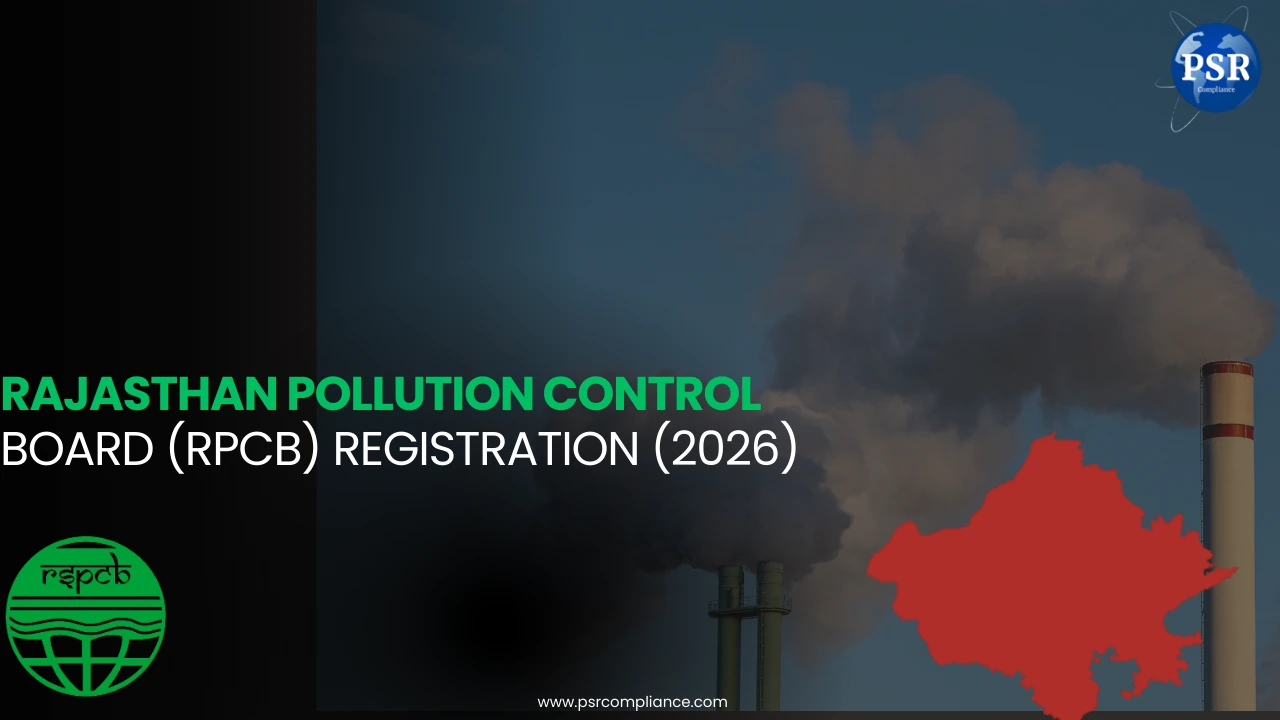
RSPCB Registration in Rajasthan 2026 – Step-by-Step Guide
In cities like Jaipur, Udaipur, Jodhpur, Kota, and Alwar, many people start factories, warehouses, hotels, or small manufacturing units. Most business owners focus on investment, machines, and sales. However, after starting operations, some receive a notice from the Rajasthan State Pollution Control Board asking for environmental approval because they were not aware that certain businesses must take permission before starting.
This rule exists to protect the environment and nearby communities. Some businesses produce smoke, wastewater, chemicals, or industrial waste that can harm nature. Because of this, the RSPCB requires businesses to get approval before operating. Without this permission, companies in cities like Bhiwadi, Ajmer, or Udaipur may face penalties, legal problems, or even closure. That’s why many business owners look for simple information about RPCB registration, who needs it, and how to apply for approval in Rajasthan.
What is Rajasthan Pollution Control Board (RPCB)?
The Rajasthan State Pollution Control Board (RPCB) is a government authority responsible for controlling pollution in Rajasthan.
Its main job is to make sure industries and businesses do not harm the environment.
The board checks whether businesses are managing:
- Air pollution
- Water pollution
- Industrial waste
- Hazardous chemicals
Before starting operations, businesses must take permission from the RSPCB Rajasthan.
This permission usually comes in two stages:
Consent to Establish (CTE)
Consent to Establish (CTE) is the first approval you need before starting any industry or factory. It is given by the Pollution Control Board before you set up your unit, install machines, or begin construction work. In simple words, CTE is permission to build your plant, not to run it. It ensures that your planned business follows environmental rules from the very beginning and will not create pollution issues later.
Consent to Operate (CTO)
Consent to Operate (CTO) is the next important permission. You need this before actually starting your production or business operations. Even if your factory is fully built and machines are installed, you cannot start work without CTO. In simple words, CTO is permission to run your business and start production legally after everything is set up and approved.
Why RPCB Registration is Important
RPCB approval is not just a formality. It protects the environment and ensures industries operate responsibly.
If businesses operate without permission from the Rajasthan Pollution Control Board, they can face serious legal issues.
RPCB registration helps businesses:
➤ Operate legally
➤ Follow environmental laws
➤ Avoid heavy penalties
➤ Build a responsible business image
Today, environmental compliance is becoming important for business growth, government approvals, and international trade.
Types of Industry Categories under RPCB
The Rajasthan State Pollution Control Board (RPCB / RSPCB) classifies industries based on how much pollution they produce. This helps control environmental damage and ensures proper permissions before starting a business.
| Category | Pollution Level | Examples |
|---|---|---|
| 🟥 Red Category | High pollution | Chemical factories, cement plants, oil refineries, large manufacturing units |
| 🟧 Orange Category | Medium pollution | Food processing units, textile manufacturing, engineering workshops |
| 🟩 Green Category | Low pollution | Small manufacturing units, packaging units, assembly units |
| ⚪ White Category | No pollution | Software companies, educational institutions, service-based offices |
Advantages of RPCB Registration
Getting RPCB approval offers several important benefits.
Legal Protection
Businesses can operate without fear of government penalties or closure.
Environmental Responsibility
Proper waste management protects natural resources.
Easier Government Approvals
Many other licenses require environmental clearance.
Business Credibility
Customers and partners trust companies that follow environmental laws.
Long-Term Business Stability
Compliance helps avoid sudden legal or regulatory problems.
Documents Required for RPCB Registration
Businesses usually need the following documents while applying for RSPCB approval:
→ PAN card of the company
→ Business registration certificate
→ Land ownership or lease documents
→ Factory layout plan
→ Details of machinery and production process
→ Water consumption details
→ Waste management plan
Additional documents may be required depending on the type of industry.
RPCB Registration Process (Step-by-Step Simple Guide)
Getting approval from the Rajasthan Pollution Control Board (RPCB / RSPCB) is a step-by-step process. If you understand each step clearly, it becomes easy to complete without confusion.
Step 1: Find Your Industry Category
First, you need to identify what type of industry you are starting. RPCB divides industries into Red, Orange, Green, and White categories based on pollution levels.
This step is important because the rules and approval process depend on the category of your industry.
Step 2: Collect Required Documents
Next, you must prepare all basic documents before applying. These usually include:
- Business registration documents
- Factory or site layout plan
- Address proof of the location
- Details of machinery and production process
- Pollution control or waste management plan
This step simply means getting all your paperwork ready.
Step 3: Apply for Consent to Establish (CTE)
After documents are ready, you need to apply online for Consent to Establish (CTE).
This approval is required before setting up your factory or installing machines. It confirms that your planned project is allowed under environmental rules.
Step 4: Inspection by Authorities (If Required)
In some cases, RPCB officials may visit your site for inspection. They check:
- Location suitability
- Surrounding environment
- Safety arrangements
- Pollution control plans
This step ensures the setup follows environmental guidelines.
Step 5: Apply for Consent to Operate (CTO)
Once your factory is fully set up and machines are installed, you must apply for Consent to Operate (CTO).
This permission allows you to legally start production and run your business.
Step 6: Receive RPCB Approval Certificate
After successful verification and approval, you will receive the official RPCB certificate.
This confirms that your business is legally approved to operate under pollution control rules.
Problems Businesses Face Without RPCB Approval
Some businesses try to operate without Rajasthan Pollution Control Board approval, which can create serious problems.
Common issues include:
⚠ Heavy Penalties
Authorities may impose large fines.
⚠ Business Shutdown
Industries operating without approval can be sealed or closed.
⚠ Difficulty Getting Other Licenses
Banks and government departments may reject applications.
⚠ Legal Complications
Companies may face legal notices and compliance issues.
Because of these risks, obtaining RSPCB registration before starting operations is always recommended.
RPCB Registration Fees, Timeline, and Validity
Registration Fees
The cost depends on:
- Industry category
- Production capacity
- Factory size
Small industries usually pay lower fees, while large industries may pay higher charges.
Approval Timeline
The RPCB approval process usually takes:
15 to 30 working days
This can vary depending on documentation and inspections.
Validity
The validity of Consent to Operate (CTO) typically ranges from 1 to 5 years, depending on the industry category.
Businesses must renew the certificate before expiry.
Real Life Example
A packaging manufacturing company named Shree Balaji Packaging Industries, Jaipur was planning to start production but was unsure about the environmental approvals required from the Rajasthan Pollution Control Board (RPCB). During the setup stage, the owner discovered that RSPCB registration and Consent to Operate were mandatory before running the factory.
The company contacted PSR Compliance for assistance. The PSR team helped them prepare all required documents, submit the RPCB application, and handle the approval process with the authorities. Within a few weeks, Shree Balaji Packaging Industries successfully received its Consent to Operate certificate, allowing the factory to begin production legally without facing compliance issues.
Need Help with RPCB Registration?
Getting approval from the Rajasthan Pollution Control Board can be confusing, especially for new businesses.
PSR Compliance helps companies across India obtain pollution control approvals and environmental registrations quickly and smoothly.
If you need assistance with RPCB / RSPCB registration in Rajasthan, our experts can guide you through the entire process.
📞 Call PSR Compliance today: 8796104190
Our team will help you complete the process correctly and avoid delays or legal problems.
FAQs
1. What are the industry categories under RSPCB classification?
Industries are classified into A, B, C, and H categories based on their pollution potential and environmental impact under RSPCB guidelines.
2. What does H-category mean in industrial pollution classification?
H-category refers to highly polluting industries that require strict environmental controls, monitoring systems, and higher compliance standards.
3. What is Consent to Establish (CTE) from RSPCB?
Consent to Establish (CTE) is a mandatory approval issued by the Rajasthan State Pollution Control Board before setting up any industrial unit.
4. What is Consent to Operate (CTO) under RSPCB regulations?
Consent to Operate (CTO) is the approval required after installation of machinery to legally begin production or industrial operations.
5. How long does it take to get RSPCB consent approval?
The approval process for CTE or CTO generally takes around 30 days, provided all documents are complete and correct.
6. What is the validity of an RSPCB consent certificate?
The validity of RSPCB consent typically ranges up to 5 years, depending on the category and type of industry.
7. Do highly polluting industries require real-time monitoring systems?
Yes, H-category industries must install real-time emission and effluent monitoring systems to ensure environmental compliance.
8. Can industries get RSPCB consent in non-conforming or restricted areas?
Industries located in restricted or non-conforming zones may face limitations and often do not receive approval.
9. How many regional offices does RSPCB have in Rajasthan?
The Rajasthan State Pollution Control Board operates 13 regional offices across Rajasthan, with its headquarters in Jaipur.
10. Which environmental laws are enforced by RSPCB?
RSPCB enforces major environmental laws such as the Water Act, 1974 and the Air Act, 1981 to control pollution and protect the environment.