Sat, Jun 13 2026
Maneesh Kumar
ISI Mark Certification in Noida Complete BIS ISI Mark Guide 2026
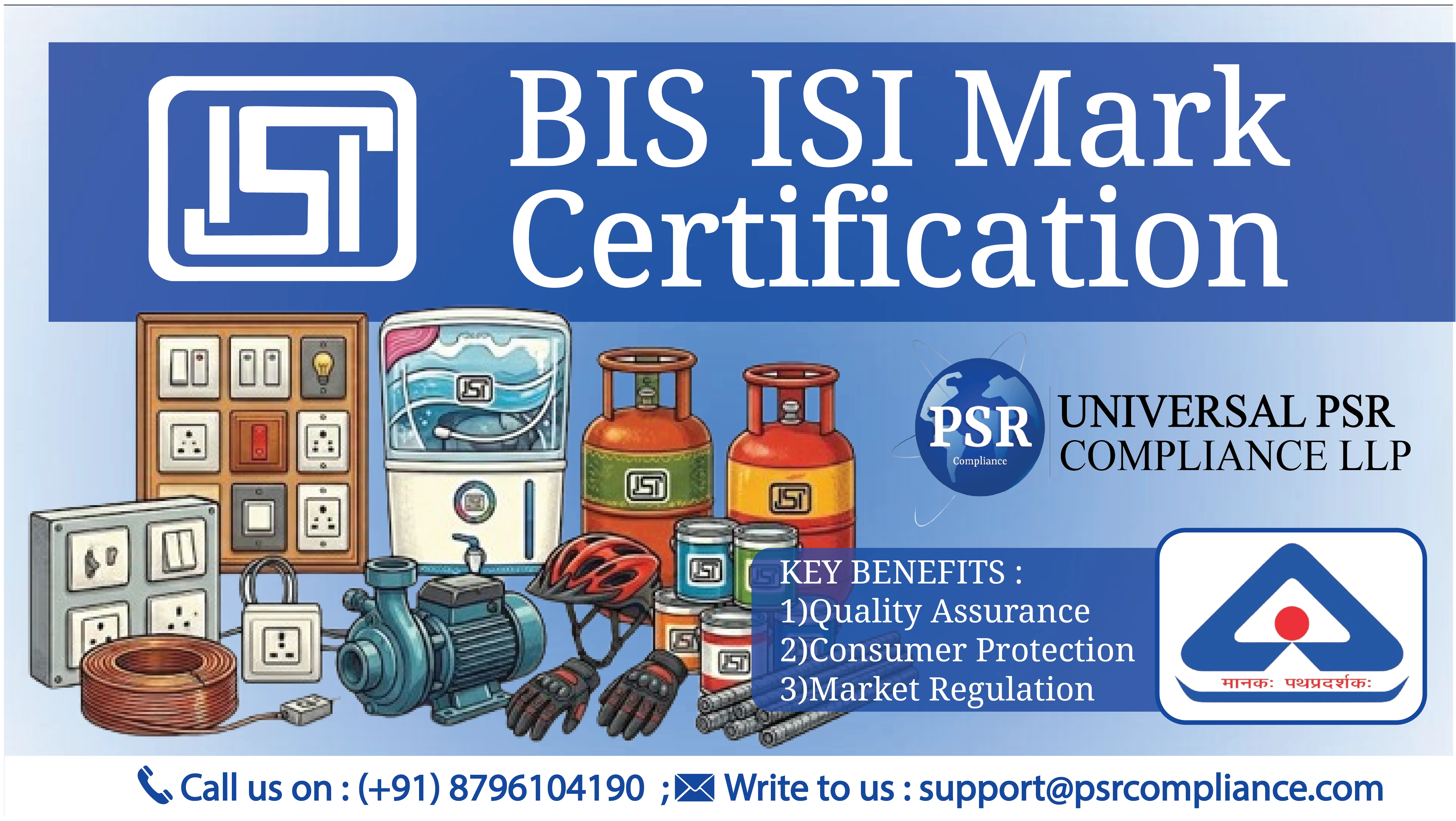
ISI Mark Certification is one of the most recognized quality certifications in India. Consumers often look for the ISI Mark before purchasing products because it assures them that the product has been tested and complies with Indian quality and safety standards. For manufacturers operating in Noida and across India, obtaining ISI Mark Certification is not only a mark of quality but also a legal requirement for many regulated products.
The certification is issued by the Bureau of Indian Standards (BIS), the national standards body of India. Businesses searching for ISI Mark Certification Noida, BIS Certification Noida, or BIS ISI Mark Certification often want to understand how the certification process works, which products require certification, what documents are needed, and how long the approval process takes.
Noida has become a major manufacturing hub for electrical products, construction materials, consumer goods, packaging materials, and industrial equipment. Many products manufactured in Noida fall under mandatory BIS Certification schemes. Therefore, understanding the complete ISI Certification Process is essential for businesses looking to launch products legally and build customer trust.
This comprehensive guide explains everything you need to know about ISI Mark Certification in Noida, including the BIS Certification Process, eligibility requirements, documentation, benefits, costs, timelines, and compliance obligations in 2026.
What is ISI Mark Certification?
The ISI Mark stands for Indian Standards Institute Mark. Although the Indian Standards Institute was replaced by the Bureau of Indian Standards in 1986, the ISI Mark continues to be the most recognized certification symbol in India.
The ISI Mark indicates that a product complies with the applicable Indian Standard and has successfully passed the testing and inspection requirements specified by BIS.
Products carrying the ISI Mark are considered safe, reliable, and compliant with Indian quality regulations. The certification is granted only after rigorous evaluation, testing, and factory inspection procedures.
The primary objective of ISI Mark Certification is to protect consumers from unsafe, substandard, and poor-quality products. By ensuring compliance with Indian Standards, the certification helps maintain product consistency and improves overall market confidence.
For manufacturers in Noida, obtaining ISI Mark Certification demonstrates commitment to quality and regulatory compliance, making products more competitive in the marketplace.
What is BIS?
BIS stands for Bureau of Indian Standards. It is the national standards organization of India responsible for developing standards, certification systems, testing procedures, and quality frameworks for products and services.
BIS operates under the BIS Act and is responsible for:
- Developing Indian Standards
- Conducting product certification
- Performing factory inspections
- Monitoring product quality
- Protecting consumer interests
- Promoting standardization activities
The Bureau of Indian Standards grants licences that allow manufacturers to use the ISI Mark on approved products.
Difference Between BIS and ISI Mark
Many businesses confuse BIS and ISI Mark Certification.
BIS is the authority responsible for creating standards and issuing certifications. ISI Mark is the certification symbol displayed on products that meet BIS requirements.
In simple terms:
- BIS = Certification Authority
- ISI Mark = Certification Symbol
A manufacturer receives approval from BIS and then becomes eligible to use the ISI Mark on certified products.
Why ISI Mark Certification is Important
ISI Mark Certification offers significant advantages for both businesses and consumers.
Step 1: Legal Compliance
Many products cannot be sold in India without mandatory BIS approval. Failure to obtain certification may result in penalties, product seizure, and regulatory action.
Step 1: Consumer Trust
Customers often prefer products carrying the ISI Mark because it assures safety and quality compliance.
Step 2: Product Quality
Certification requires manufacturers to follow strict quality control measures and testing procedures.
Step 3: Market Expansion
Certified products gain easier access to domestic and international markets.
Step4 : Brand Reputation
Businesses with certified products are often viewed as more reliable and trustworthy.
Products Covered Under ISI Mark Certification
Thousands of products fall under BIS certification schemes.
Common categories include:
Electrical Products
- Switches
- Cables
- Fans
- Water Heaters
- Circuit Breakers
Step 1: Construction Materials
- Cement
- Steel Bars
- Pipes
- Structural Materials
Step 2: Consumer Products
- Pressure Cookers
- Toys
- Packaged Drinking Water
- Household Appliances
Step 3: Industrial Products
- Industrial Valves
- Safety Equipment
- Mechanical Components
The list continues to expand as BIS introduces new quality control orders and standards.
ISI Mark Certification Process
The certification process generally involves:
Step 1: Application Submission
The manufacturer submits the application along with technical documentation and business details.
Step 2: Product Testing
Samples are tested in BIS-recognized laboratories according to the applicable Indian Standard.
Step 3: Factory Inspection
BIS officials inspect the manufacturing facility to verify quality control systems and production capabilities.
Step 4: Evaluation
Test reports, documentation, and inspection findings are reviewed.
Step 5: Grant of Licence
Upon successful evaluation, BIS grants the licence and authorizes use of the ISI Mark.
Step 6: Ongoing Surveillance
Periodic inspections and testing ensure continued compliance.
Step 7: Documents Required
Commonly required documents include:
- Company Registration Certificate
- Factory Licence
- GST Registration
- PAN Card
- Product Specifications
- Technical Drawings
- Manufacturing Process Details
- Quality Control Records
- Test Reports
- Authorized Signatory Documents
Accurate documentation significantly improves approval chances.
Cost of ISI Mark Certification
The total certification cost depends on:
- Product category
- Applicable standard
- Testing requirements
- Number of product variants
Costs generally include:
- Application fees
- Testing charges
- Inspection fees
- Licence fees
Timeline
The certification process typically takes between 30 and 90 working days depending on:
- Product complexity
- Documentation accuracy
- Laboratory testing timelines
- BIS review process
Why Businesses in Noida Need ISI Mark Certification
Noida is one of India’s fastest-growing manufacturing centers. Businesses operating in electronics, construction materials, packaging, consumer goods, and industrial manufacturing often require BIS approval.
Benefits include:
- Better market credibility
- Improved customer trust
- Easier regulatory compliance
- Enhanced business opportunities
- Stronger brand reputation
Why Choose PSR Compliance?
PSR Compliance provides complete support for:
- BIS Certification
- ISI Mark Certification
- BIS Registration
- CRS Registration
- FMCS Certification
- Product Testing Assistance
- Documentation Support
- Compliance Management
- BIS Renewal Services
Conclusion
ISI Mark Certification plays a critical role in ensuring product quality, safety, and regulatory compliance in India. For manufacturers in Noida, obtaining BIS ISI Mark Certification helps improve customer confidence, expand market access, and comply with legal requirements. Businesses that prioritize certification gain a competitive advantage while building long-term trust in the marketplace.
Contact PSR Compliance
📞 Call: +91 7065883416
📧 Email: support@psrcompliance.com
🌐 Website: www.psrcompliance.com
📍 Office Address: D-49, D Block, Sector 6, Noida, Uttar Pradesh – 201301
Frequently Asked Questions (FAQs)
1. What is ISI Mark Certification and why is it important?
ISI Mark Certification is a quality certification issued by the Bureau of Indian Standards (BIS) that confirms a product complies with Indian safety and quality standards. It helps manufacturers build consumer trust and meet legal compliance requirements.
2. Is ISI Mark Certification mandatory for all products in India?
No, ISI Mark Certification is mandatory only for products covered under the mandatory BIS certification scheme and relevant Quality Control Orders (QCOs). Products notified by the government cannot be sold without BIS approval.
3. What is the difference between BIS Certification and ISI Mark Certification?
BIS is the certification authority, while the ISI Mark is the quality mark displayed on products after successful BIS approval. In simple terms, BIS grants the licence and the ISI Mark represents compliance with Indian Standards.
4. How can a manufacturer obtain ISI Mark Certification in Noida?
Manufacturers can obtain ISI Mark Certification by submitting an application to BIS, completing product testing in a BIS-recognized laboratory, undergoing a factory inspection, and meeting all applicable Indian Standard requirements.
5. Which products require ISI Mark Certification in India?
Products such as cement, steel products, electrical appliances, pressure cookers, packaged drinking water, toys, cables, and several industrial products require mandatory ISI Mark Certification under BIS regulations.
6. What documents are required for ISI Mark Certification?
Common documents include company registration certificates, GST registration, factory licence, manufacturing process details, product specifications, quality control records, and authorized signatory documents.
7. How much does ISI Mark Certification cost in Noida?
The cost depends on the product category, testing requirements, applicable Indian Standards, and factory inspection requirements. The total cost varies from one product category to another.
8. How long does the ISI Mark Certification process take?
The certification process generally takes between 30 and 90 working days, depending on documentation accuracy, laboratory testing timelines, and BIS approval procedures.
9. What happens if a product is sold without mandatory ISI Mark Certification?
Selling products without mandatory BIS approval may result in product seizure, financial penalties, licence suspension, legal action, and restrictions on manufacturing or sales.
10. Why should businesses choose a BIS consultant in Noida for ISI Mark Certification?
A professional BIS consultant helps with documentation, product testing coordination, application filing, factory inspection preparation, and query resolution, which can reduce delays and improve approval success rates.
11. Can foreign manufacturers apply for ISI Mark Certification in India?
Yes, foreign manufacturers can obtain BIS certification through the Foreign Manufacturers Certification Scheme (FMCS) to legally export and sell their products in the Indian market.
12. Is ISI Mark Certification valid across India?
Yes, once granted by BIS, the certification is recognized across India and allows the manufacturer to use the ISI Mark on approved products according to BIS guidelines.