
Just send us your questions or concerns by starting a new case &
we will give you the help you need. Start Here...
BIS
Fri, Jul 17 2026
Raju Karn
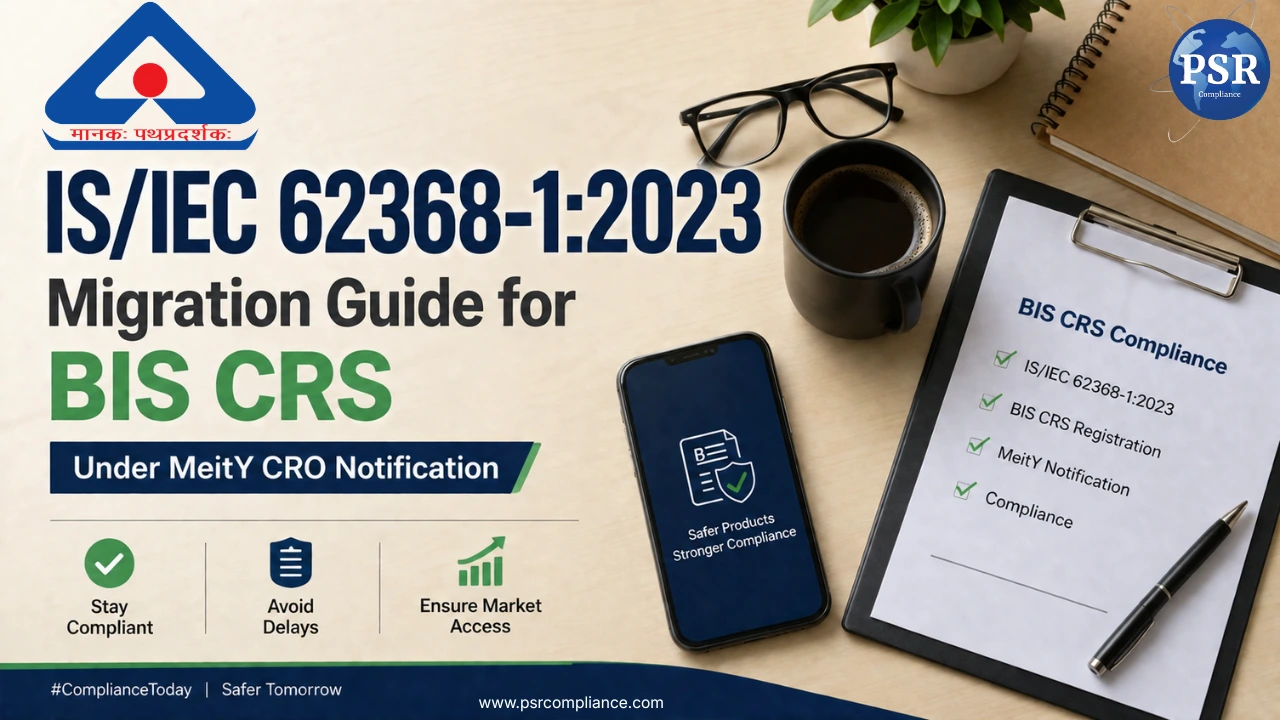
Guidelines for Migration to IS/IEC 62368-1:2023 Under MeitY CRO Notification
The way electronic products are designed has changed significantly over the last decade. Devices that were once classified separately as information technology equipment or audio-video equipment now combine multiple technologies into a single product. A smart TV is no longer just a television, a smartphone performs far more than communication functions, and a VR headset integrates displays, sensors, processors, batteries, cameras, wireless communication, and software into one compact device. As product design has evolved, India's safety standards have also been updated to ensure these multifunctional devices meet a unified set of safety requirements.
To address this shift, the Ministry of Electronics and Information Technology (MeitY) issued Notification S.O. 4997(E) dated 29 October 2025, amending the Electronics and Information Technology Goods (Requirement of Compulsory Registration) Order, 2021. The notification replaces IS 13252 (Part 1):2010 and IS 616:2017 with IS/IEC 62368-1:2023 – Audio/Video, Information and Communication Technology Equipment – Part 1: Safety Requirements. Rather than maintaining separate standards for IT equipment and audio-video products, the revised standard introduces a single safety framework that reflects how modern electronic products are designed, manufactured, and used. For manufacturers, importers, and brand owners, this migration is not merely a regulatory update—it directly impacts BIS registration, product approvals, testing requirements, and market entry planning.
What Has Changed Under MeitY's Notification?
The notification introduces a unified safety standard for products covered under the Electronics and Information Technology Goods (Requirement of Compulsory Registration) Order, 2021. Businesses that previously relied on IS 13252 (Part 1):2010 or IS 616:2017 must now understand the migration requirements and applicable implementation timelines.
Standard Migration Overview
| Previous Standard | New Standard | Applicability |
|---|---|---|
| IS 13252 (Part 1):2010 | IS/IEC 62368-1:2023 | Information Technology Equipment |
| IS 616:2017 | IS/IEC 62368-1:2023 | Audio and Video Equipment |
| Separate Safety Standards | Single Unified Safety Standard | Audio, Video, Information & Communication Technology Equipment |
The objective of this migration is to establish a common safety framework for products that increasingly combine computing, communication, multimedia, and connected technologies. Instead of regulating these devices under separate standards, IS/IEC 62368-1:2023 evaluates them using a modern hazard-based safety approach, making compliance more suitable for today's electronics market.
Why This Migration Matters for Businesses
Many businesses assume they have enough time because most product categories can continue using the old standards until 1 November 2028. While this transition period provides flexibility, it should not be viewed as an opportunity to postpone compliance planning. Migrating to a new BIS standard often requires fresh testing, updated technical documentation, laboratory coordination, and licence amendments, all of which take considerable time to complete.
The situation is more urgent for Extended Reality (XR) Products, including Augmented Reality (AR), Virtual Reality (VR), and Mixed Reality (MR) devices. Under Serial No. 65 of the CRO schedule, concurrent running of the previous standards was allowed only until 1 May 2026. Businesses dealing with XR products must therefore comply directly with IS/IEC 62368-1:2023, making early compliance planning essential to avoid delays in product launches and market entry.
Implementation Timeline
| Product Category | Concurrent Running Ends |
|---|---|
| Most IT & Audio/Video Products | 1 November 2028 |
| Extended Reality (AR/VR/MR) Products | 1 May 2026 |
Why Extended Reality (XR) Products Were Added Separately
Extended Reality (XR) products represent one of the fastest-growing segments in the electronics industry. Unlike conventional devices, XR products combine multiple technologies into a single wearable system. A VR headset may include high-resolution displays, processors, batteries, cameras, sensors, wireless communication modules, microphones, speakers, charging systems, and sophisticated software. Since these devices are worn close to the eyes and face and are often used continuously for extended periods, they require a higher level of safety evaluation than traditional electronic products.
Recognizing these unique characteristics, MeitY introduced Extended Reality Products, including Augmented Reality (AR), Virtual Reality (VR), Mixed Reality (MR), and similar devices, as a separate product category under Serial No. 65 of the CRO schedule. Unlike most electronic products, whose migration period continues until 1 November 2028, the concurrent running period for XR devices ended on 1 May 2026. This means manufacturers and importers can no longer rely on the earlier standards and must obtain BIS registration under IS/IEC 62368-1:2023 before supplying these products in the Indian market.
Why XR Products Require Special Attention
- Devices are worn directly on the head or face.
- Products combine multiple technologies in one unit.
- Used for extended periods in gaming, education, healthcare, and industrial training.
- Higher safety expectations due to close human interaction.
- Mandatory BIS compliance under IS/IEC 62368-1:2023 after 1 May 2026.
What New Applicants Should Understand
The BIS implementation guidelines provide a transition mechanism for businesses that had already started the certification process before the migration. Applications where product samples had already been submitted to a BIS-recognized laboratory or where test reports had already been issued under IS 13252 (Part 1):2010 or IS 616:2017 may continue to be processed under the previous standards during the concurrent running period. Similarly, applications submitted during the transition period may be accepted under either the old standards or IS/IEC 62368-1:2023, depending on the applicable timelines.
However, this flexibility is available only until the end of the concurrent running period. After the applicable deadline, BIS will no longer grant licences under the earlier standards. For most product categories, the old standards remain valid until 1 November 2028, whereas for Extended Reality Products, this transition ended on 1 May 2026. Businesses planning new product launches, licence renewals, or model additions should therefore evaluate whether migrating directly to the new standard is a more practical and cost-effective approach than continuing with the previous standards.
BIS Transition Timeline for New Applicants
| Product Category | Old Standards Accepted Until | Standard Applicable After Deadline |
|---|---|---|
| IT & Audio/Video Products | 1 November 2028 | IS/IEC 62368-1:2023 |
| Extended Reality (AR/VR/MR) Products | 1 May 2026 | IS/IEC 62368-1:2023 Only |
Businesses Should Plan the Following Before Applying
- Identify whether the product falls under the general category or the XR category.
- Review existing BIS licences and planned model additions.
- Arrange testing through a BIS-recognized laboratory.
- Update technical documentation as per IS/IEC 62368-1:2023.
- Verify whether any additional Indian Standards or Essential Requirements apply.
- Avoid planning new XR product registrations under the withdrawn standards.
This proactive approach helps reduce repeat testing, additional documentation, licensing delays, and unexpected interruptions during product launch or import planning.
Why IS/IEC 62368-1:2023 Is Commercially Useful
Many businesses initially view the migration to IS/IEC 62368-1:2023 as an additional compliance burden. In reality, it also creates significant commercial advantages. Modern electronic products are expected to meet higher safety standards because consumers, institutional buyers, and regulatory authorities increasingly look beyond price and features. They also evaluate product reliability, electrical safety, battery protection, thermal performance, and overall quality before making purchasing decisions. A BIS-registered product certified under the latest applicable standard demonstrates that it has been assessed against current safety requirements, helping businesses build greater trust in the market.
This advantage becomes even more important for products such as smart devices, communication equipment, and Extended Reality products that are used in schools, hospitals, training centres, offices, factories, and public spaces. Buyers are more likely to prefer products that comply with the latest BIS standards because they offer greater confidence in safety and regulatory compliance. For manufacturers and importers, migration to IS/IEC 62368-1:2023 is therefore not just about meeting legal obligations—it also strengthens brand credibility and supports long-term business growth.
Business Benefits of Early Migration
- Improves customer confidence.
- Supports faster product approvals.
- Enhances brand reputation.
- Builds trust with distributors and institutional buyers.
- Reduces future compliance risks.
- Improves competitiveness in regulated markets.
The Mistake Companies Should Avoid
One of the biggest mistakes businesses make is treating migration as a simple paperwork update. Changing the standard number on an existing BIS licence is only one part of the process. Depending on the product category, businesses may need fresh product testing, updated technical documentation, revised declarations, and verification of additional Indian Standards or Essential Requirements. Delaying these activities until the last moment often creates unnecessary pressure and increases the risk of missing important market deadlines.
A poorly planned migration can also lead to repeated testing, additional expenses, delays in licence approval, and interruptions in imports or product launches. The risk is even higher for Extended Reality Products, where the concurrent running period under the previous standards has already ended. Instead of waiting until compliance becomes urgent, businesses should review their entire product portfolio and develop a structured migration plan well in advance.
Risks of Poor Migration Planning
- Delay in BIS licence approval.
- Repeat product testing.
- Additional documentation requirements.
- Import and customs delays.
- Marketplace listing issues.
- Missed product launch schedules.
- Increased compliance costs.
- Loss of dealer and customer confidence.
Final Takeaway
The migration to IS/IEC 62368-1:2023 marks a significant change in India's electronics regulatory framework under the Electronics and Information Technology Goods (Requirement of Compulsory Registration) Order, 2021. By replacing IS 13252 (Part 1):2010 and IS 616:2017 with a single safety standard, the Government aims to create a modern compliance framework that reflects the design and functionality of today's electronic products. While most product categories have a concurrent running period until 1 November 2028, businesses should avoid waiting until the final deadline. Migration involves testing, documentation, licence updates, and coordination with BIS-recognized laboratories, all of which require careful planning.
For Extended Reality (XR) Products, including Augmented Reality (AR), Virtual Reality (VR), and Mixed Reality (MR) devices, the transition period ended on 1 May 2026, making compliance with IS/IEC 62368-1:2023 mandatory. Businesses that review their product portfolio, identify applicable standards, and begin the migration process early will be better prepared to avoid delays in product launches, imports, and market access. In today's regulated electronics industry, compliance is more than a legal requirement—it is an important part of building customer confidence, maintaining business continuity, and staying competitive in the Indian market.
Key Dates at a Glance
| Activity | Date |
|---|---|
| MeitY Notification Issued | 29 October 2025 |
| Migration Standard Introduced | IS/IEC 62368-1:2023 |
| Concurrent Running Ends (Most Products) | 1 November 2028 |
| Concurrent Running Ends (Extended Reality Products) | 1 May 2026 |
How PSR Compliance Can Help
Migrating to a new BIS safety standard requires more than submitting an application. Businesses often need assistance with product applicability, technical documentation, laboratory coordination, licence updates, and compliance planning. PSR Compliance supports manufacturers, importers, and brand owners throughout the BIS registration process, helping them understand the applicable standards and complete the required formalities efficiently.
Our BIS Compliance Services
- BIS CRS Registration Consultancy
- Product Applicability Assessment
- Documentation Preparation
- Technical File Review
- Coordination with BIS-Recognized Laboratories
- BIS Application Filing
- Licence Migration Support
- Model Addition Assistance
- End-to-End Compliance Consultancy
Contact PSR Compliance
📞 +91 8796104190
Frequently Asked Questions (FAQs)
1. What is IS/IEC 62368-1:2023?
IS/IEC 62368-1:2023 is the Indian safety standard for Audio/Video, Information and Communication Technology Equipment. It replaces IS 13252 (Part 1):2010 and IS 616:2017 under the Electronics and Information Technology Goods (Requirement of Compulsory Registration) Order, 2021.
2. Why has MeitY introduced IS/IEC 62368-1:2023?
Modern electronic devices combine computing, communication, audio, and video technologies into a single product. The new standard provides a unified safety framework that is better suited to these multifunctional devices than the earlier separate standards.
3. Which products are covered under this migration?
The migration applies to several electronic products covered under the CRO, including laptops, televisions, monitors, printers, scanners, mobile phones, CCTV cameras, smart watches, wireless headphones, smart speakers, Bluetooth speakers, and Extended Reality (AR/VR/MR) devices, among others.
4. When does the migration become mandatory?
For most electronic products, the concurrent running period continues until 1 November 2028. However, for Extended Reality (AR/VR/MR) Products, the concurrent running period ended on 1 May 2026, making compliance with IS/IEC 62368-1:2023 mandatory.
5. Can businesses continue using IS 13252 (Part 1):2010 or IS 616:2017?
Only during the applicable concurrent running period. After the relevant deadline, BIS will no longer grant licences under the earlier standards, and businesses must comply with IS/IEC 62368-1:2023.
6. What should businesses do before starting the migration?
Businesses should identify the applicable standard for each product, review existing BIS licences, arrange testing through a BIS-recognized laboratory, update technical documentation, verify any linked Indian Standards or Essential Requirements, and prepare all required declarations before submitting the migration application.
7. Why is early migration recommended?
Starting early allows businesses to complete product testing, documentation, and licence updates before the mandatory deadline. It also reduces the risk of delays in imports, product launches, marketplace approvals, and overall business operations.