Just send us your questions or concerns by starting a new case &
we will give you the help you need. Start Here...
BIS ISI Mark
Fri, Jul 17 2026
Raju Karn
BIS QCO for Wrought Aluminium Utensils and Aluminium Beverage Cans: Why 1 October 2026 Is a Business Deadline
A utensil may look like an ordinary kitchen product. An aluminium beverage can may seem like simple packaging. But under India's latest Quality Control Order (QCO), both have become regulated products that require mandatory compliance before they can be sold in the Indian market.
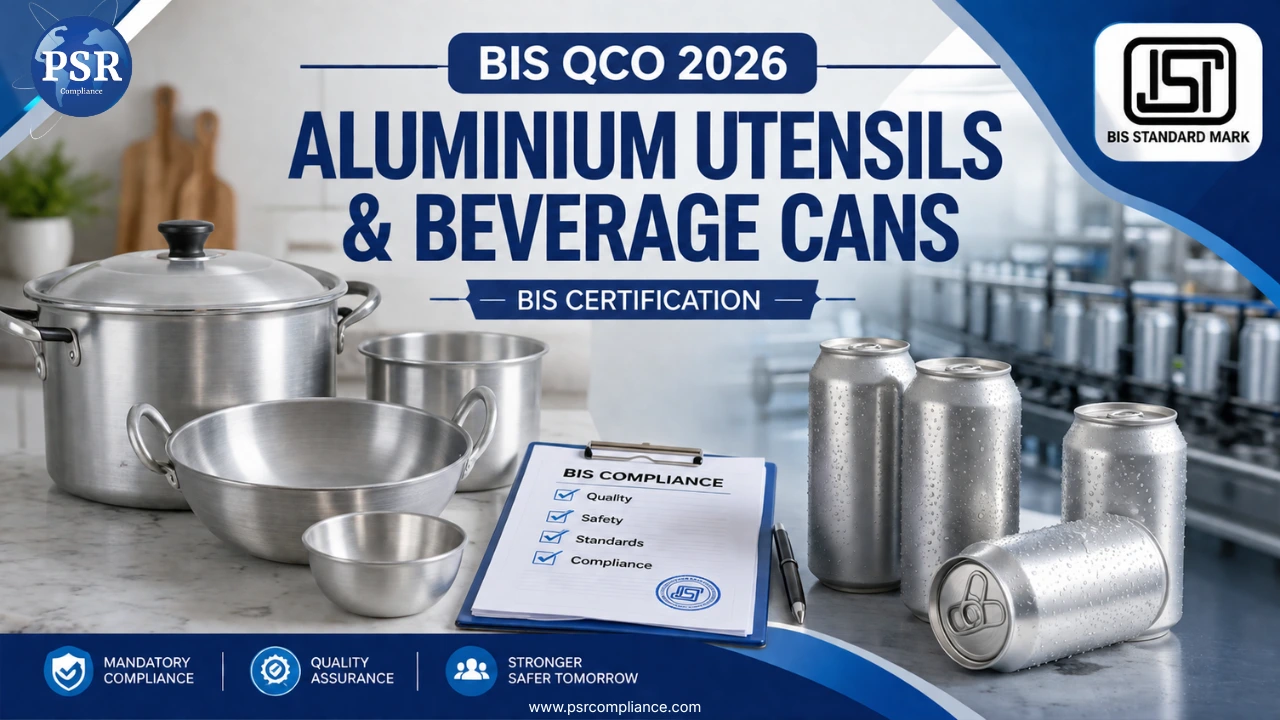
The Cookware, Utensils and Cans for Foods and Beverages (Quality Control) Order, 2026 introduces mandatory BIS certification for Wrought Aluminium Utensils and Aluminium Cans for Beverages. Once the implementation dates arrive, manufacturers and importers cannot rely only on product quality or competitive pricing. They must also ensure their products comply with the relevant Indian Standards and carry a valid BIS Standard Mark.
For general enterprises, the compliance deadline is 1 October 2026. Small enterprises receive additional time until 1 January 2027, while micro enterprises have until 1 April 2027. Although these dates may appear distant, BIS certification involves testing, documentation, factory assessment, and licensing, making early preparation essential.
What Has Changed Under the New QCO?
The Government of India has introduced the Cookware, Utensils and Cans for Foods and Beverages (Quality Control) Order, 2026, bringing two major product categories under mandatory BIS certification.
The products covered are:
- IS 1660:2024 – Wrought Aluminium Utensils
- IS 14407:2023 – Aluminium Cans for Beverages
Under the new order, products falling within these standards must conform to the applicable Indian Standard and bear the BIS Standard Mark (ISI Mark) under a valid BIS licence before being sold in India after the applicable implementation date.
This means that aluminium cookware and beverage cans will no longer be treated as ordinary products. They become regulated products requiring compliance before entering the Indian market.
Why This QCO Is More Than Just a Compliance Requirement
Many businesses initially view BIS certification as a responsibility of the quality or technical department. In reality, this Quality Control Order directly affects sales, procurement, inventory planning, customer confidence, and market access.
Dealers increasingly ask for compliance documents before accepting stock. Large retailers, online marketplaces, institutional buyers, and beverage companies often require proof of BIS certification before placing orders. Imported products may also face greater scrutiny if compliance requirements are not satisfied.
For manufacturers and importers, the QCO is not simply a legal obligation. It is a business planning requirement that influences supply chains, production schedules, dealer relationships, and long-term brand credibility.
Wrought Aluminium Utensils Under IS 1660:2024
Wrought aluminium utensils remain one of the most widely used categories of cookware in India. They are commonly found in households, restaurants, hotels, hostels, catering businesses, sweet shops, community kitchens, and institutional food service operations.
Their popularity comes from being lightweight, durable, affordable, and easy to manufacture. However, products used directly for food preparation must also meet acceptable standards of quality and safety. Poor manufacturing practices can affect product durability, surface finish, structural strength, and consumer confidence.
Under the Quality Control Order, all applicable wrought aluminium utensils must comply with IS 1660:2024 before being sold in the Indian market.
The requirement directly affects:
- Aluminium utensil manufacturers
- Cookware brands
- Aluminium utensil importers
- Wholesale utensil distributors
- Private-label cookware companies
- Hotel and catering suppliers
- Retail chains
- E-commerce sellers
- Domestic sellers of imported aluminium cookware
Products manufactured exclusively for export are not covered when they are not intended for the Indian market. However, any product supplied domestically must satisfy the applicable BIS requirements.
Aluminium Beverage Cans Under IS 14407:2023
Aluminium beverage cans are a critical part of India's food and beverage packaging industry. Every beverage can supplied to manufacturers becomes part of a much larger production chain involving packaging companies, beverage brands, filling units, logistics providers, retailers, and distributors.
The Quality Control Order makes IS 14407:2023 mandatory for aluminium beverage cans supplied within India.
This affects businesses such as:
- Aluminium can manufacturers
- Beverage packaging companies
- Soft drink manufacturers
- Juice brands
- Energy drink companies
- Breweries
- Packaging importers
- Contract filling units
- Private-label beverage brands
- FMCG packaging suppliers
For beverage companies, delays in packaging can quickly affect production schedules. If compliant cans are unavailable, bottling and filling operations may slow down, resulting in delayed product launches, missed seasonal demand, and disruption across the supply chain.
Because of this, BIS certification becomes an important commercial requirement rather than merely a regulatory obligation.
The Earlier QCO Has Been Replaced
Businesses should also note that the Cookware and Utensils (Quality Control) Order, 2025 will stand revoked once the 2026 Quality Control Order comes into force.
The revised order now focuses specifically on:
- IS 1660:2024 – Wrought Aluminium Utensils
- IS 14407:2023 – Aluminium Cans for Beverages
At the same time, several standards that were included under the earlier order have been removed from its coverage, including:
- IS 14756:2024 – Stainless Steel Utensils
- IS 13983:1994 – Stainless Steel Sinks for Domestic Purposes
- IS 18427:2024 – Three-piece Round Open-top Metal Cans for Foods and Beverages
Businesses that previously relied on the 2025 QCO should therefore reassess their product mapping according to the revised 2026 order rather than assuming earlier coverage remains unchanged.
Existing Stock Requires Proper Planning
One of the most practical aspects of the Quality Control Order relates to products manufactured or imported before the implementation dates.
The Order provides a limited transition period for existing stock. Where manufacturers have already obtained BIS certification, have submitted applications before the implementation date, or importers possess eligible stock before the deadline, such declared inventory may continue to be sold, displayed, or offered for sale for up to six months from the applicable implementation date.
However, this benefit is not automatic. Manufacturers or importers must submit a Chartered Accountant-certified declaration to the Bureau of Indian Standards confirming the eligible stock.
Businesses planning inventory before October 2026 should therefore maintain proper production records, import documents, stock registers, invoices, and supporting declarations to avoid future compliance issues.
R&D Imports Get Limited Relief
The Quality Control Order also provides a limited exemption for manufacturers importing products for research and development (R&D) purposes. Businesses engaged in developing new cookware designs, testing manufacturing processes, or evaluating product performance may import up to 200 units per year under this provision.
However, this exemption comes with strict conditions. The imported products cannot be sold in the market or supplied to customers. They must be used only for research, testing, or development activities and later disposed of as scrap. Manufacturers are also required to maintain year-wise records of these imports and produce them before the Central Government whenever requested. This makes it clear that the R&D exemption is intended to support innovation—not commercial sales.
Filled Goods Imported into India
Another important clarification in the Quality Control Order relates to imported goods that are already filled with food, beverages, or other materials.
The Order specifies that it does not apply to goods or articles imported into India when they are already filled with material in solid, liquid, or gas form. This distinction is particularly important for food and beverage businesses because importing an empty aluminium beverage can is treated differently from importing a finished beverage already packed inside a compliant can.
Businesses involved in food packaging, beverage imports, and FMCG products should therefore evaluate their products carefully before assuming whether the QCO applies to their shipments.
Who Should Start Preparing Now?
Although the mandatory implementation dates are still ahead, businesses should begin their compliance planning well in advance. BIS certification involves documentation, product testing, factory assessment, licence approval, and possible corrective actions if deficiencies are identified during the process.
The Quality Control Order is particularly relevant for:
- Wrought aluminium utensil manufacturers
- Aluminium cookware brands
- Aluminium beverage can manufacturers
- Beverage packaging companies
- Aluminium can importers
- Cookware importers
- Beverage brands
- Contract manufacturers
- Private-label sellers
- Wholesale traders
- Retail chains
- E-commerce sellers
- Hotel and catering suppliers
- FMCG packaging companies
- Compliance consultants
If your business manufactures, imports, distributes, brands, or sells products covered under IS 1660:2024 or IS 14407:2023, this is the right time to begin reviewing your compliance position.
Documents Required for BIS Certification
Proper documentation plays a significant role in obtaining BIS certification smoothly. Missing technical records or incomplete paperwork often lead to unnecessary delays during application review and factory inspection.
Businesses should prepare the following documents before beginning the certification process:
- Company registration certificate
- Factory address proof
- Product specification sheets
- Product model or variety details
- Manufacturing process flow chart
- Quality Control Plan
- Machinery details
- Testing equipment list
- Brand or trademark registration documents
- Product labels and marking artwork
- BIS application documents
- Technical drawings and specifications
- Internal quality records
Importers should also maintain supplier details, shipment documents, invoices, Bills of Entry, packing lists, product specifications, and stock declarations wherever applicable. Strong documentation not only supports the BIS application but also improves customer confidence during procurement discussions.
Why Early BIS Certification Gives Businesses an Advantage
Many companies wait until the implementation deadline approaches before beginning compliance activities. This often creates unnecessary pressure because BIS certification is a structured process involving product testing, document verification, factory inspection, application review, and licence approval.
Starting early offers several business advantages. It allows manufacturers to resolve testing issues without disrupting production schedules, gives importers sufficient time to coordinate with overseas suppliers, and helps sales teams confidently respond to buyer enquiries regarding regulatory compliance. Businesses also gain greater flexibility in managing existing inventory and preparing dealers for the transition.
Early certification can help businesses:
- Avoid last-minute compliance pressure
- Protect dealer and distributor relationships
- Plan imports more efficiently
- Prevent marketplace listing issues
- Manage transition stock legally
- Respond confidently to customer compliance queries
- Strengthen brand credibility
- Compete effectively in regulated markets
A BIS-certified product demonstrates more than regulatory compliance—it signals reliability, quality, and readiness for the Indian market.
Final Takeaway
The Cookware, Utensils and Cans for Foods and Beverages (Quality Control) Order, 2026 represents a major regulatory change for manufacturers, importers, distributors, and packaging businesses dealing with wrought aluminium utensils and aluminium beverage cans.
From 1 October 2026, general enterprises must ensure compliance with IS 1660:2024 for wrought aluminium utensils and IS 14407:2023 for aluminium beverage cans. Small enterprises receive additional time until 1 January 2027, while micro enterprises must comply by 1 April 2027. Although these deadlines provide some preparation time, businesses should not postpone compliance planning until the final months.
Review your product categories, verify applicable standards, organise technical documentation, evaluate existing inventory, and begin the BIS certification process well in advance. Companies that prepare early will be better positioned to maintain uninterrupted sales, protect customer confidence, and compete successfully in a regulated market.
When customers purchase cookware or beverage packaging in the future, they will not only ask about quality or price—they will increasingly expect proof that the product is BIS certified.
Need Assistance with BIS Certification?
If your business manufactures or imports wrought aluminium utensils or aluminium beverage cans, PSR Compliance can help you navigate the complete BIS certification process.
Our Services
- BIS Certification Consultancy
- Product Applicability Assessment
- Documentation Preparation
- Factory Inspection Support
- Product Testing Coordination
- BIS Application Filing
- Technical File Review
- End-to-End Compliance Assistance
Contact PSR Compliance
📞 +91 8796104190
Frequently Asked Questions (FAQs)
1. What products are covered under the Cookware, Utensils and Cans for Foods and Beverages (Quality Control) Order, 2026?
The order currently covers Wrought Aluminium Utensils (IS 1660:2024) and Aluminium Cans for Beverages (IS 14407:2023).
2. When does BIS certification become mandatory?
For general enterprises, BIS certification becomes mandatory from 1 October 2026. Small enterprises must comply from 1 January 2027, while micro enterprises have until 1 April 2027.
3. Can manufacturers sell existing stock after the implementation date?
Yes, under specified conditions. Eligible stock manufactured or imported before the implementation date may be sold for up to six months after the deadline, provided the required declaration certified by a Chartered Accountant is submitted to BIS.
4. Does the QCO apply to products imported for research and development?
Manufacturers may import up to 200 units per year for R&D purposes. However, these products cannot be sold commercially and must be disposed of as scrap after use while maintaining proper records.
5. Are filled beverage products imported into India covered under this QCO?
No. The Order specifically excludes goods imported into India when they are already filled with material in solid, liquid, or gas form.
6. Why should businesses start BIS certification early?
Early preparation allows businesses to complete testing, documentation, factory inspections, and licence approval before the mandatory implementation date, reducing the risk of supply chain disruptions and delayed market access.