Fri, Jun 19 2026
Raju Karn
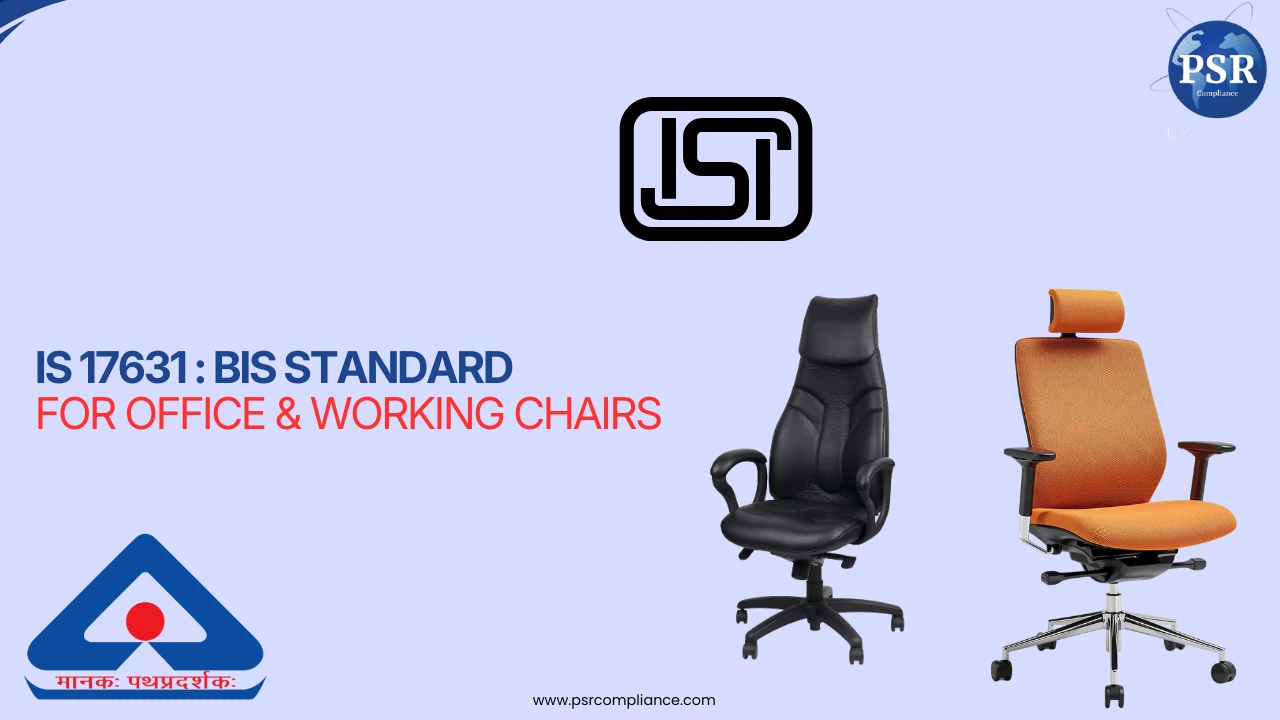
IS 17631: BIS Standard for Office & Working Chairs in India (2026 Guide)
Office chairs are used every day in offices, government departments, schools, colleges, hospitals, co-working spaces, and commercial establishments. Since employees spend many hours sitting on these chairs, safety, durability, comfort, and quality are important factors.
To ensure that office and working chairs meet minimum quality requirements, the Bureau of Indian Standards (BIS) has introduced IS 17631, a standard that specifies the performance and safety requirements for office and working chairs. Manufacturers, importers, suppliers, and buyers should understand the requirements of IS 17631 to ensure that chairs supplied in the Indian market meet acceptable quality standards.
This guide explains IS 17631 in simple language, including its scope, requirements, testing parameters, benefits, and importance for manufacturers and consumers.
What is IS 17631?
IS 17631 is an Indian Standard published by the Bureau of Indian Standards (BIS) for office and working chairs.
The standard provides guidelines and requirements related to:
• Chair performance
• Structural strength
• Stability
• Durability
• Safety
• Functional performance
The objective is to ensure that office chairs are safe and suitable for regular workplace use.
Why is IS 17631 Important?
Office chairs are used continuously throughout the day. Poor-quality chairs may cause:
▪ Breakage during use
▪ Safety hazards
▪ Reduced durability
▪ Employee discomfort
▪ Workplace injuries
IS 17631 helps establish minimum quality benchmarks so that users receive safe and reliable products.
Products Covered Under IS 17631
| Sector / End Use | Examples / Coverage under IS 17631 (Work Chairs) |
|---|---|
| Corporate offices | Office chairs, executive chairs, ergonomic task chairs used by employees |
| Government offices | Workstation chairs used in ministries, departments, and public sector offices |
| Educational institutions | Chairs used in staff rooms, computer labs, administrative offices |
| Hospitals | Office chairs used in administration, reception, billing, doctor cabins |
| Commercial establishments | Chairs in retail offices, showrooms, service centers, corporate outlets |
| Business centres | Chairs used in shared office buildings and professional service spaces |
| Co-working spaces | Adjustable work chairs, swivel chairs used in shared desks and cabins |
| Standard Focus | Scope Description |
|---|---|
| Usage type | Regular indoor office/workplace seating |
| Chair type | Work chairs such as swivel, task, executive, ergonomic chairs |
| Intended users | Adult users in professional/office environments |
| Exclusions | Industrial seating and non-office heavy-duty chairs |
Objectives of IS 17631
The main objectives of the standard include:
✓ Ensuring User Safety
The chair should remain stable during normal use and should not pose safety risks.
✓ Improving Product Quality
Manufacturers must ensure consistent product quality and performance.
✓ Enhancing Durability
The chair should withstand repeated use over time.
✓ Standardizing Testing Requirements
Uniform testing methods help evaluate chair performance objectively.
Key Requirements Under IS 17631
The standard evaluates office and working chairs based on several important parameters.
➝ Structural Strength
The chair must be capable of handling normal loads without damage or deformation.
➝ Stability
The chair should remain stable during normal movements and use.
➝ Durability
The chair should withstand repeated use without significant performance loss.
➝ Functional Performance
Components such as backrests, armrests, bases, wheels, and adjustment mechanisms should function properly.
➝ Safety Requirements
The design should minimize risks to users during regular operation.
Testing Parameters Under IS 17631
BIS standards generally include testing procedures to verify product quality.
Office and working chairs may be evaluated for:
| Testing Area | Purpose |
|---|---|
| Stability Test | Checks chair balance and resistance to tipping |
| Strength Test | Evaluates load-bearing capacity |
| Durability Test | Assesses long-term performance |
| Impact Test | Measures resistance to sudden force |
| Functional Test | Verifies moving and adjustable components |
| Safety Evaluation | Confirms safe usage conditions |
Testing helps ensure that chairs meet the requirements specified under the standard.
Who Should Follow IS 17631?
The standard is particularly relevant for:
Manufacturers
Manufacturers should design and produce chairs according to applicable quality requirements.
Importers
Importers should ensure that products entering the Indian market comply with relevant standards.
Suppliers
Suppliers and distributors should source quality products that meet customer expectations.
Institutional Buyers
Government departments, educational institutions, hospitals, and corporate buyers often prefer products that conform to recognized standards.
Benefits of Complying with IS 17631
Following the standard offers several advantages.
Better Product Quality
Standardized requirements improve overall product quality.
Improved Customer Satisfaction
Reliable and durable products help build customer confidence.
Enhanced Safety
Compliance helps reduce safety-related concerns.
Market Credibility
Products manufactured according to recognized standards are often viewed more positively by buyers.
Reduced Product Failures
Quality testing helps identify weaknesses before products reach the market.
How Does BIS Help Maintain Quality?
The Bureau of Indian Standards develops standards to ensure that products used by consumers meet acceptable levels of quality and safety.
Through standards such as IS 17631, BIS helps:
- Promote product quality
- Improve consumer safety
- Encourage standardization
- Support fair market practices
- Increase confidence in Indian products
Factors Buyers Should Consider When Purchasing Office Chairs
When purchasing office chairs, buyers should consider a few key factors to make the right choice.
➤ Build Quality is important because the chair should be made from strong, reliable materials.
➤ Stability ensures the chair is safe and steady during use.
➤ Comfort matters as proper support improves posture and productivity.
➤ Durability is needed so the chair lasts for a long time without damage.
➤ Compliance with Standards ensures the chair meets safety and quality requirements.
Common Applications of Office and Working Chairs
Office and working chairs are commonly used in:
➜ Corporate offices
➜ IT companies
➜ Government departments
➜ Banks
➜ Educational institutions
➜ Hospitals
➜ Reception areas
➜ Customer service centres
➜ Commercial establishments
Because these environments require daily usage, quality and durability become critical considerations.
Why Standardization Matters in Office Furniture
Standardization helps ensure that products offered by different manufacturers meet similar quality expectations.
Without standards, product quality can vary significantly.
Standards such as IS 17631 help create consistency in:
▫ Design performance
▫ Safety requirements
▫ Durability expectations
▫ Testing procedures
▫ Quality benchmarks
This benefits both manufacturers and consumers.
Challenges Faced by Manufacturers
Manufacturers must focus on:
⚠️ Material quality
⚠️ Design consistency
⚠️ Product testing
⚠️ Performance evaluation
⚠️ Quality control
Meeting recognized standards often requires continuous monitoring and quality assurance throughout the manufacturing process.
Future Importance of Quality Standards in Furniture
As workplaces continue to evolve, the demand for high-quality office furniture is steadily increasing. Businesses are placing greater importance on employee comfort, workplace safety, product durability, and long-term value to create more efficient and productive environments.
In this context, quality standards such as IS 17631 are expected to play an important role in guiding manufacturers and ensuring that office furniture meets the required levels of safety, performance, and reliability.
Conclusion
IS 17631 is an important BIS standard that establishes quality, safety, stability, and durability requirements for office and working chairs used in India. The standard helps manufacturers maintain product quality while giving buyers greater confidence in the products they purchase.
For manufacturers, importers, suppliers, and institutional buyers, understanding the requirements of IS 17631 can help ensure that office chairs meet acceptable performance and safety expectations. As demand for quality workplace furniture continues to grow, compliance with recognized standards remains an important aspect of product reliability and customer satisfaction.
Need Help with BIS Certification for Furniture Products?
Need assistance with BIS Certification, IS 17631 compliance, product testing, or certification approvals for office and working chairs? PSR Compliance provides complete support from documentation to certification.
👉 Avoid delays, testing issues, and compliance challenges with expert guidance.
📞 8796104190
📧 support@psrcompliance.com
FAQs
1. What is IS 17631:2022?
IS 17631:2022 is a BIS standard that specifies safety, strength, stability, and durability requirements for office and working chairs in India.
2. Is BIS certification mandatory for office chairs in India?
Yes. Office and working chairs covered under IS 17631 require BIS certification and an ISI Mark under the Furniture Quality Control Order.
3. Which chairs are covered under IS 17631?
The standard covers ergonomic chairs, revolving chairs, executive chairs, task chairs, operator chairs, and other office seating products.
4. Which chairs are excluded from IS 17631?
Industrial chairs and certain general-purpose seating products are not covered under this standard.
5. What tests are conducted under IS 17631?
Common tests include stability testing, load testing, durability testing, swivel testing, castor testing, and material performance evaluation.
6. Can foreign manufacturers obtain BIS certification for office chairs?
Yes. Foreign manufacturers can apply under the BIS Foreign Manufacturers Certification Scheme (FMCS) through an Authorised Indian Representative (AIR).
7. Is BIS certification required for imported office chairs?
Yes. Imported office chairs covered under IS 17631 must obtain BIS certification before being sold in India.
8. What happens if office chairs are sold without BIS certification?
Non-compliant products may face penalties, product seizure, import restrictions, and legal action under the BIS Act.
9. What information must appear on a BIS-certified office chair?
The chair must display the ISI Mark, BIS license number (CML), model details, and year of manufacture.
10. Who needs BIS certification under IS 17631?
Manufacturers, importers, brand owners, and sellers of office and working chairs covered by the standard need BIS certification.
11. What are the benefits of BIS-certified office chairs?
BIS-certified chairs offer better safety, quality, durability, regulatory compliance, and customer confidence.
12. How can manufacturers apply for BIS certification under IS 17631?
Manufacturers must complete product testing, submit documents to BIS, and obtain approval before using the ISI Mark.