Fri, Jan 02 2026
Raju Karn
Introduction to Drug License in Delhi
Drug License in Delhi is an important legal requirement for any business in the pharmaceutical sector. This includes manufacturing, distribution, retail, or import/export of drugs and cosmetics.
The Drugs and Cosmetics Act of 1940_ governs this license. The Delhi Drug Control Department enforces it. This license ensures that products meet strict safety, effectiveness, and quality standards.
Operating without the right licenses can lead to serious penalties. These may include large fines, business shutdowns, or even criminal charges under the NDPS Act. Delhi is a center for pharmaceutical trade. Getting a drug license is a legal requirement.
It also shows credibility. This helps build trust with customers and partners. This guide simplifies the process, ensuring you comply with regulations while avoiding common pitfalls.
Types of Drug Licenses in Delhi
The Delhi Drug Control Department categorizes licenses based on business scope and product type. Understanding the right license for your operations is crucial:
Retail Drug License (Form 20 & 21): Mandatory for local pharmacies selling medicines directly to consumers. This includes standalone pharmacies, hospital dispensaries, or online drugstores.
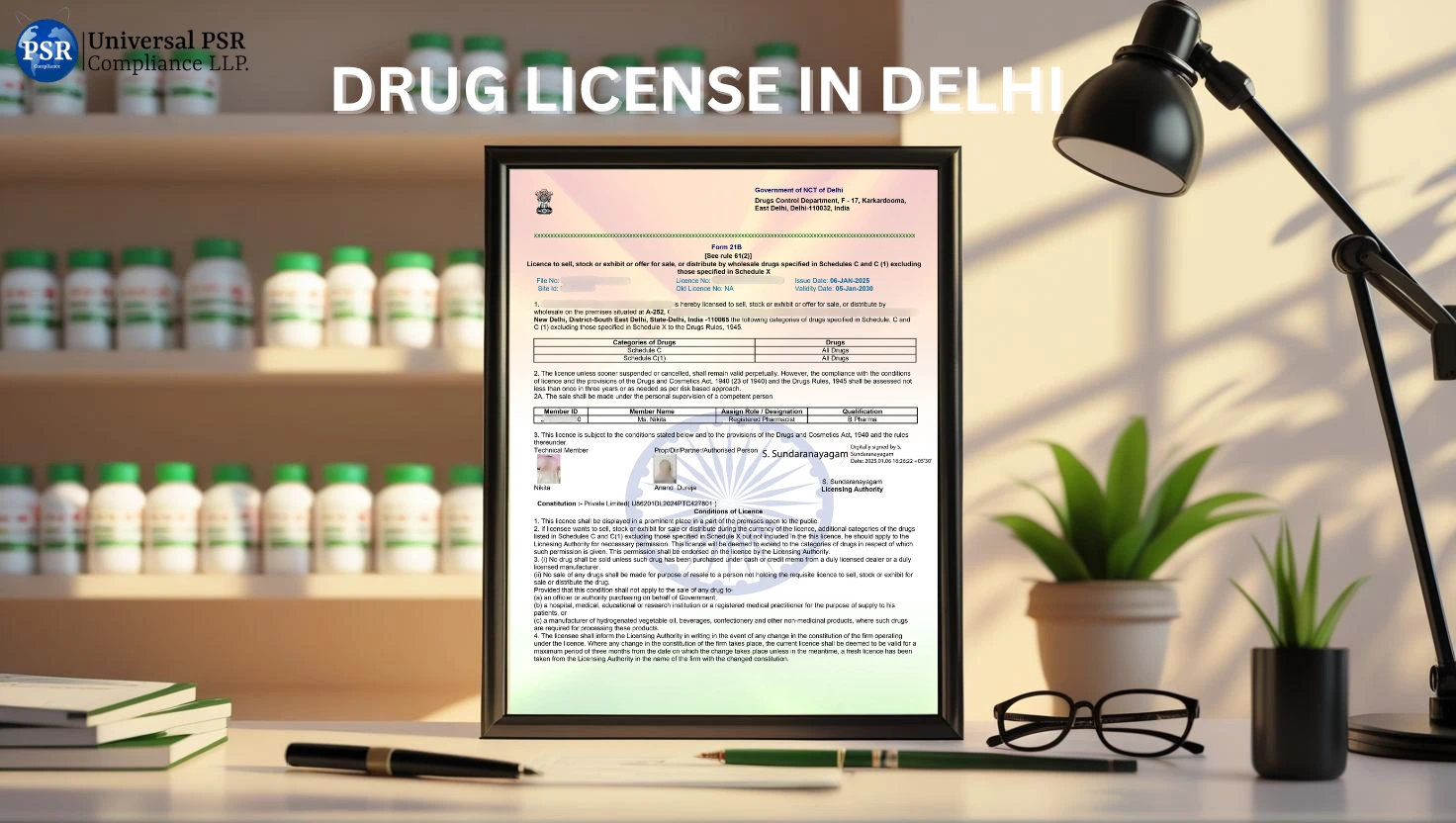
Wholesale Drug License (Form 20B & 21B): Required for distributors supplying drugs to retailers, clinics, or hospitals. Wholesalers must maintain proper storage and documentation for bulk quantities.
Manufacturing License: Issued to facilities producing drugs, with strict compliance requirements for infrastructure, machinery, and qualified staff (e.g., a registered pharmacist and chemist).
Import/Export License: Businesses that trade pharmaceuticals across borders need extra approvals from agencies like the DGFT.
Restricted Licenses: These are special permissions for handling Schedule X drugs, like psychotropics, or homeopathic medicines (Form 20-C). They require closer monitoring.
Eligibility Criteria
Delhi’s drug licensing framework mandates specific qualifications and infrastructure:
Retail License: The premises must employ a registered pharmacist recognized by the Delhi Pharmacy Council. The minimum area for a retail outlet is 10 sq. meters, with adequate refrigeration and storage facilities.
Wholesale License: Applicants need a graduate degree in pharmacy or a related field. They must also have over one year of drug sales experience. Alternatively, individuals with 4+ years of pharmaceutical marketing experience are eligible.
Manufacturing Units: Facilities must follow Good Manufacturing Practices (GMP). They need separate production areas, quality control labs, and waste disposal systems according to MPD 2021 guidelines.
Documents Required
Compiling accurate documentation is key to avoiding delays:
General Requirements:
Completed application form (Form 19 for retail, Form 19-C for Schedule X drugs).
Identity and address proofs (Aadhaar, PAN, electricity bill) of owners/directors.
Detailed site plan and occupancy proof (ownership deed or rent agreement).
Entity-Specific Documents:
Partnership deed, MOA/AOA for companies, or trust registration certificates.
Affidavit declaring no prior convictions under the Drugs and Cosmetics Act.
Staff-Related Papers:
- Pharmacist registration certificate, appointment letters, and experience proofs.
Step-by-Step Application Process
Step 1: License Type Selection
The first step is to identify the type of drug license your business requires. This depends on your business model, such as retail, wholesale, or manufacturing. For specialized drug categories like Schedule X drugs, it is advisable to consult the Delhi Drug Control Department to ensure the correct license type is selected. Choosing the right category at this stage is important because it determines the approval requirements and compliance obligations.
Step 2: Document Preparation
Once the license type is finalized, the next step is preparing all required documents. All paperwork must be properly notarised and legally validated before submission. It is important to ensure that every detail is accurate and complete because missing or incorrect information can lead to rejection or delays in the approval process.
Step 3: Online Submission
After document preparation, the application must be submitted through the official Delhi drug licensing portal at https://drugs.delhi.gov.in/. Applicants are required to fill in the application form carefully and upload all supporting documents. The prescribed government fees must also be paid during this stage, which is ₹3,000 for retail or wholesale licenses and ₹50,000 or more for manufacturing licenses.
Step 4: Inspection Phase
Once the application is submitted, a drug inspector will visit the business premises for physical verification. During this inspection, the officer checks infrastructure, storage conditions, hygiene standards, and staff qualifications. This is a critical stage, as non-compliance with regulatory standards is one of the most common reasons for delays or rejection.
Step 5: License Issuance
After successful inspection and document verification, the licensing authority processes the application for approval. The entire process usually takes between 1 to 3 months. Applicants can track their application status online and are required to respond promptly to any queries raised by the department to avoid further delays.
Fees and Validity
Retail/Wholesale License: Government fees start at ₹3,000, with additional charges for legal or consultancy support.
Manufacturing License: Costs range from ₹50,000 to ₹2 lakhs, depending on production scale and drug categories.
Validity: Licenses are valid for 5 years. Applicants must file renewal applications 90 days before expiry, accompanied by updated documents and inspection reports.
Why Compliance Matters
Delhi’s pharmaceutical sector is heavily regulated to curb counterfeit drugs and ensure public safety. Non-compliance risks:
Fines: Up to ₹5 lakhs for unlicensed operations or storage violations.
Suspension/Cancellation: Immediate shutdown for repeat offenders.
Criminal Charges: For violations involving narcotics or adulterated medicines.
Regular audits enforce adherence to
Storage Protocols: Temperature logs for vaccines and biologics.
Record-Keeping: Maintain purchase/sale registers for 3+ years.
Ethical Sales: Prohibit sales of prescription drugs without valid scripts.
Why Choose Professional Assistance?
The complexity of Delhi’s drug licensing process often demands expert guidance:
Error-Free Applications: Consultants like PSR Compliance ensure documents meet regulatory standards.
Liaison Services: They coordinate with drug inspectors to fast-track approvals.
Post-License Support: Assistance with renewals, GST registration, or handling show-cause notices.
For businesses looking to launch their operations quickly, fast-track drug license approval is an ideal solution. Our experts at PSR Compliance help navigate the process efficiently, minimizing delays and ensuring compliance with all regulatory norms.
Obtaining a drug license can sometimes be a time-consuming process. However, businesses in urgent need of approval can opt for fast-track drug license approval. This process allows for quicker evaluation and issuance of the license, provided all necessary documents and compliance requirements are met. At PSR Compliance, we assist businesses in streamlining their applications, ensuring a smooth and expedited approval process.
Conclusion
Securing a Drug License in Delhi is a non-negotiable step for businesses in the pharmaceutical sector. From stringent eligibility criteria to meticulous documentation and inspections, the process demands attention to detail and adherence to evolving regulations.
Compliance protects your business from legal issues. It also improves your reputation as a reliable company in the industry. Partnering with professionals can simplify approvals, reduce delays, and ensure you stay updated with the latest guidelines.
Whether you're a new pharmacy or a seasoned manufacturer, staying compliant ensures long-term growth and customer trust. If you need assistance, reach out to PSR Compliance for expert guidance and smooth processing of your drug license application.
Need Help with Drug License Registration in Delhi?
Get expert assistance for obtaining your Drug License in Delhi quickly and hassle-free. Our compliance team handles the complete process—from document preparation and online application to inspection support and final approval—ensuring smooth licensing for your pharmacy or pharmaceutical business.
📞 Call: 8796104190
📧 Email: support@psrcompliance.com
Drug License in Delhi FAQs (2026)
Q. What is a drug license in Delhi?
A drug license is an official approval issued by the Drug Control Department of Delhi that allows businesses to sell, distribute, or manufacture pharmaceutical products legally.
Q. Who needs a drug license in Delhi?
Any business involved in retail pharmacy, wholesale drug distribution, or pharmaceutical manufacturing must obtain a valid drug license before starting operations.
Q. What are the types of drug licenses available?
The main types include retail drug license, wholesale drug license, and manufacturing drug license, depending on the nature of the business activity.
Q. How long does it take to get a drug license in Delhi?
The approval process usually takes 1 to 3 months, depending on document verification, inspection, and compliance with regulations.
Q. What is the government fee for a drug license in Delhi?
The fee is approximately ₹3,000 for retail or wholesale licenses, while manufacturing licenses may cost ₹50,000 or more depending on the category.
Q. Is inspection mandatory for drug license approval?
Yes, a drug inspector visits the premises to check infrastructure, storage conditions, and staff qualifications before approval is granted.
Q. Can I apply for a drug license online?
Yes, applications can be submitted online through the official portal https://drugs.delhi.gov.in/ along with required documents and fees.
Q. What documents are required for a drug license?
Common documents include business registration, rent agreement or ownership proof, pharmacist qualification, ID proofs, and premises layout.
Q. Can a pharmacy operate without a drug license?
No, operating without a valid drug license is illegal and can result in penalties, closure of business, or legal action.
Q. Can one license cover multiple locations?
No, separate drug licenses are required for each business premises or location.