Fri, Feb 06 2026
Raju Karn
Hazardous Waste Management Authorization 2026 | Rules & Process
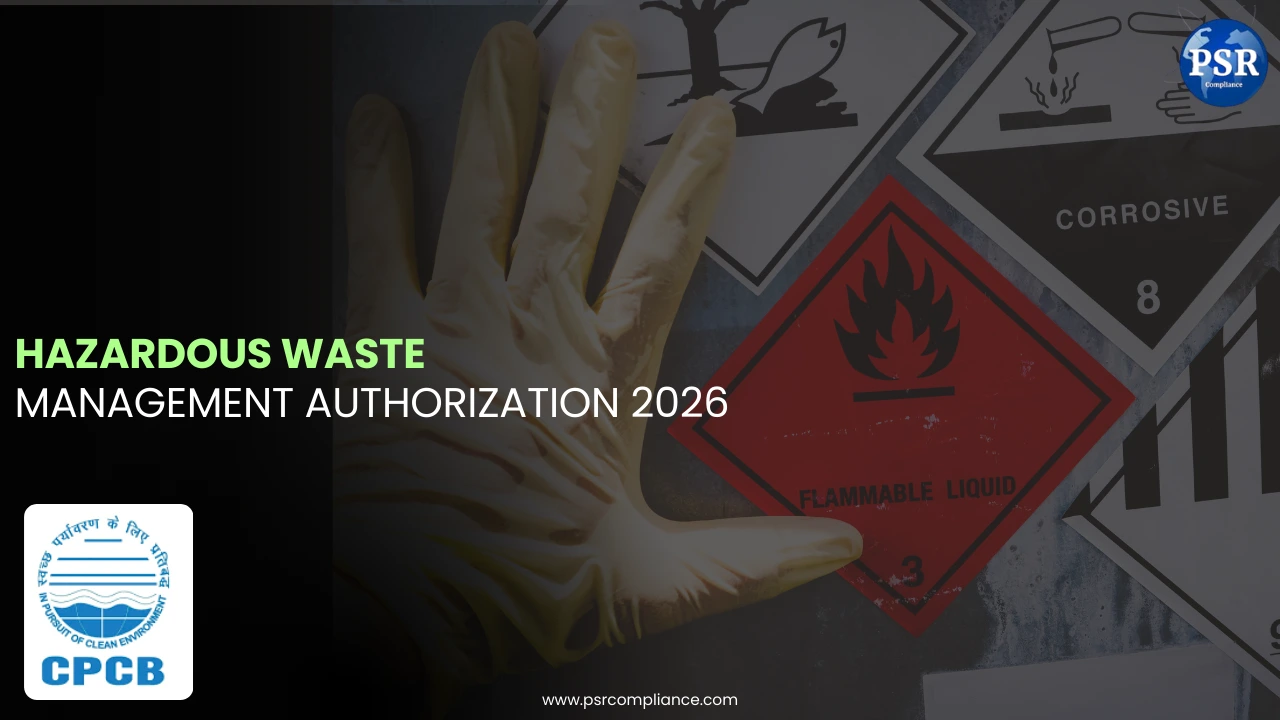
Running a factory, workshop, hospital, warehouse, or small processing unit in India now means you must deal with hazardous waste management authorization. Many owners don’t think about it until a pollution inspection happens, a notice is issued, or waste movement is questioned. By that time, work slows down, pressure increases, and fixing the issue becomes costly and stressful.
This guide is meant to prevent that problem. It clearly explains what hazardous waste is, how it differs from non-hazardous waste, why authorization is compulsory in 2026, and how businesses can handle waste legally and safely—without fines, shutdowns, or repeated visits from authorities.
What Is Hazardous Waste?
handled properly. This harm may come from its chemical nature, toxicity, flammability, corrosive properties, or long-term environmental impact.
In simple terms, if waste:
- Is poisonous
- Can catch fire easily
- Reacts dangerously with water or air
- Pollutes land or groundwater
…it is considered hazardous waste.
This is the basic hazardous waste meaning used by pollution control authorities across India.
Definition of Hazardous Waste as per Law
Under the Hazardous Waste Management Rules, hazardous waste is defined as waste that is generated from industrial, commercial, healthcare, or manufacturing activities and poses a risk to health or the environment due to its physical, chemical, biological, or reactive characteristics.
The legal definition matters because once waste falls under this category, authorization becomes mandatory, not optional.
Common Hazardous Waste Examples Businesses Generate
Many businesses generate hazardous waste without realizing it. Some common hazardous waste examples include:
➜ Used oil, grease, and lubricants
➜ Chemical residues and solvents
➜ Paint sludge, dyes, and varnish waste
➜ Battery waste and electronic components
➜ Acid, alkali, and metal finishing waste
➜ Contaminated packaging materials
➜ Effluent treatment plant sludge
➜ Discarded chemicals and expired materials
If your business handles any of the above, you are already part of the hazardous waste system.
Difference Between Hazardous and Non-Hazardous Waste
Understanding this difference helps avoid confusion during inspections.
Hazardous Waste
▪ Toxic or dangerous
▪ Requires authorization
▪ Must be stored, transported, and disposed through approved methods
▪ Tracked by pollution control boards
Non-Hazardous Waste
▪ Not harmful in nature
▪ Includes paper, food waste, packaging, general scrap
▪ Managed through local municipal systems
▪ Does not require hazardous waste authorization
Many businesses wrongly assume all waste is non-hazardous. This mistake leads to compliance issues.
Who Needs Hazardous Waste Authorization?
You need hazardous waste authorization if you are:
➤ A manufacturing unit
➤ An industrial plant
➤ A chemical processor
➤ A healthcare or laboratory facility
➤ An auto workshop or service center
➤ A warehouse handling chemicals
➤ A recycler or waste handler
Even small units may require authorization if hazardous waste is generated.
How Proper Hazardous Waste Management Helps Your Business
Legal compliance does more than avoid penalties.
It:
🗸 Protects your business reputation
🗸 Builds trust with authorities
🗸 Improves audit readiness
🗸 Supports sustainable operations
🗸 Prevents sudden shutdowns
Good compliance is good business.
Documents Required for Hazardous Waste Management Authorization
→ PAN card of the unit or authorized signatory
→ Aadhaar card of the authorized person
→ Factory license / Udyam / GST registration (any one as applicable)
→ Address proof of the unit (rent agreement or ownership document)
→ Process flow chart showing how waste is generated
→ Details of hazardous waste type and quantity
→ Consent to Establish (CTE) or Consent to Operate (CTO)
→ Agreement with an authorized waste recycler or disposal facility
→ Layout plan of the premises
→ Authorization letter for the signatory (if applicable)
Step-by-Step Process to Get Hazardous Waste Authorization
Step 1: Identify Hazardous Waste Generated
Your waste is analyzed based on raw material, process, and output.
Step 2: Categorize Waste Correctly
Waste is matched with schedules under hazardous waste rules.
Step 3: Prepare Required Documents
This includes:
- Consent certificates
- Process flow
- Waste quantity details
- Storage layout
- Disposal agreements
Step 4: Online Application Filing
Application is submitted through the pollution control board portal.
Step 5: Department Review
Authorities verify waste details and compliance readiness.
Step 6: Grant of Authorization
If everything is correct, authorization is issued.
How Hazardous Waste Should Be Stored
Proper storage is one of the most checked points during inspections.
Key rules include:
⁃ Leak-proof containers
⁃ Labeling with waste category
⁃ Separate storage area
⁃ Secondary containment
⁃ Fire safety measures
Improper storage is a major reason for penalties.
Transportation and Disposal of Hazardous Waste
Hazardous waste cannot be transported or disposed of randomly.
◾ Transport must be done through authorized vehicles
◾ Manifest system must be followed
◾ Disposal must be at approved facilities like TSDFs
◾ Records must be maintained for every movement
This ensures traceability and accountability.
Common Mistakes Businesses Make
Many compliance issues arise due to small mistakes such as:
☒ Applying under wrong waste category
☒ Declaring incorrect waste quantity
☒ Missing disposal agreements
☒ Improper storage arrangements
☒ Ignoring annual return filings
These mistakes delay approvals and invite notices.
Penalties for Non-Compliance
Selling, storing, or dumping hazardous waste without authorization can result in:
☓ Heavy fines
☓ Environmental damage compensation
☓ Business closure
☓ Legal prosecution
☓ Loss of future approvals
In 2026, enforcement is strict and data-driven.
Need Hazardous Waste Management Authorization without stress or delays?
PSR Compliance provides complete support—from documentation to final approval—so your business stays safe and compliant. Speak with our experts today for clear, practical guidance.
📞 Call PSR Compliance at 8796104190
FAQs on Hazardous Waste Authorization
1. What is Hazardous Waste Authorization?
Hazardous Waste Authorization is mandatory approval issued by the SPCB or PCC for facilities handling hazardous waste.
2. Who needs Hazardous Waste Authorization in India?
Any occupier or operator involved in generating, storing, transporting, recycling, or disposing of hazardous waste must obtain authorization.
3. Who is responsible for obtaining Hazardous Waste Authorization?
The occupier of the facility, who controls the operations of the premises, is legally responsible.
4. Which authority grants Hazardous Waste Authorization?
The State Pollution Control Board (SPCB) or Pollution Control Committee (PCC) grants the authorization.
5. What is the validity period of Hazardous Waste Authorization?
Hazardous Waste Authorization is generally valid for five years.
6. Which form is required to apply for Hazardous Waste Authorization?
The application must be submitted in Form 1 to the respective SPCB.
7. What documents are required for Hazardous Waste Authorization?
CTE, CTO, GST certificate, layout plan, plant capacity proof, and identity documents are required.
8. How is the Hazardous Waste Authorization application submitted?
Applications are submitted online through the respective State Pollution Control Board portal.
9. What is the deadline for filing the hazardous waste annual return?
Annual return in Form 4 must be filed on or before 30th June every year.
10. What happens if Hazardous Waste Authorization rules are violated?
Non-compliance can lead to penalties, suspension, or cancellation of authorization.