Mon, Jan 05 2026
Raju Karn
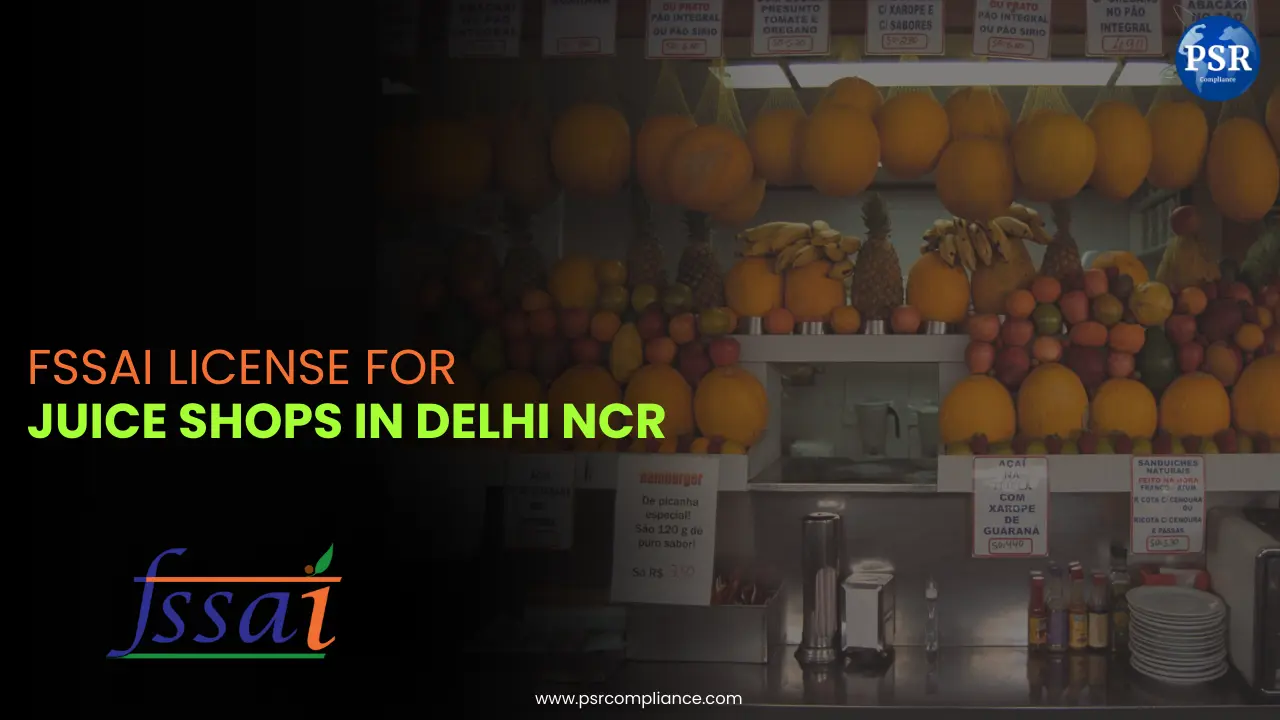
FSSAI License for Juice Shops in Delhi NCR (2026): Complete Guide
Running a juice shop in Delhi NCR is one of the most profitable food business ideas today. People prefer fresh, hygienic, and healthy drinks like sugarcane juice, fruit juices, and cold-pressed juices, especially in busy areas like Connaught Place, Saket, Rohini, Noida Sector 18, and Gurgaon Cyber Hub. The demand is high throughout the year, making it a strong business option for new entrepreneurs.
However, no matter how good your juice is or how busy your shop is, you cannot legally operate without an FSSAI License. Whether you run a small juice stall, a café-style juice bar, a cloud kitchen, or even a franchise outlet, registration with the Food Safety and Standards Authority of India (FSSAI) is mandatory. This license ensures that the food and drinks you sell are safe, hygienic, and approved under Indian food safety laws.
What is an FSSAI License for Juice Shops?
An FSSAI License is a legal approval issued by the Food Safety and Standards Authority of India (FSSAI). It is required for any business that sells food or beverages in India, including juice shops. The main purpose of this license is to make sure that the food and drinks you serve are safe, clean, and prepared in a hygienic environment.
For juice shops, this becomes especially important because juices are made from raw fruits, water, ice, and involve constant human handling. FSSAI ensures that proper hygiene practices are followed so that customers get safe and healthy drinks without any risk of contamination.
Having an FSSAI License also helps your business in many ways, such as:
- Building trust and confidence among customers
- Improving the credibility of your juice shop
- Showing that your juices meet food safety standards
- Getting approval to list your shop on delivery apps like Zomato, Swiggy, Dunzo, Zepto, and Blinkit
- Avoiding legal issues or inspections from food safety authorities
Without an FSSAI License, operating a juice shop is illegal, and you may face penalties or fines up to ₹2,00,000, or even temporary closure of your business.
Who Needs an FSSAI License in Delhi NCR?
If you are planning to start or already running a juice business in Delhi NCR, then getting an FSSAI License is not optional-it is legally required for everyone. The Food Safety and Standards Authority of India (FSSAI) makes sure that all food and beverage businesses maintain proper hygiene and serve safe products to customers. Since juice is made from fresh fruits, water, ice, and involves direct handling, it must follow strict food safety rules.
You must apply for an FSSAI License if you are involved in any type of juice selling or preparation, such as:
⁃ Sell fresh fruit juice from a shop or roadside stall
⁃ Sell packaged or bottled juices
⁃ Run a juice café, juice bar, or juice lounge
⁃ Operate a juice stall, cart, kiosk, or small street vendor setup
⁃ Sell sugarcane juice, cold-pressed juice, or milk-based juices like shakes and smoothies
⁃ Take online orders through your own website or social media pages
⁃ Sell juice through delivery apps like Swiggy or Zomato
In simple terms, whether you are running a small roadside juice stall or a fully branded juice café, FSSAI registration is mandatory for all food businesses in India. It not only keeps your business legally safe but also helps build customer trust because people feel more confident buying from a licensed and hygienic shop.
Types of FSSAI Registration for Juice Shops in Delhi NCR
The FSSAI License type you need depends on the size of your juice business and your yearly turnover. From 1 April 2026, the government has updated the turnover limits to make classification clearer and more practical for small and large food businesses.
1. Basic FSSAI Registration
This is for very small juice shops and local vendors who are just starting out or running at a small scale.
Who should apply:
→ Roadside juice stalls
→ Small kiosks and carts
→ Small independent juice shops
Turnover limit (2026):
→ Annual turnover up to ₹1.5 crore
Simple meaning:
If your juice shop is small and local, Basic Registration is enough to run legally.
2. State FSSAI License
This license is for medium-sized juice businesses that are well established and operating within one state.
Who should apply:
→ Medium juice cafés and juice bars
→ Branded juice outlets
→ Juice shops in malls, markets, and commercial areas
Turnover limit (2026):
→ Above ₹1.5 crore and up to ₹50 crore per year
Simple meaning:
If your juice business is growing and getting steady customers, you need a State License.
3. Central FSSAI License
This is for large juice brands and businesses operating on a big scale across India or internationally.
Who should apply:
→ Large juice chains and franchise brands
→ Businesses supplying to government institutions
→ Exporters of juice and beverages
Turnover limit (2026):
→ Above ₹50 crore per year
Simple meaning:
If your business is very large or operates in multiple states, you need a Central License.
Simple Summary (Easy to Remember)
- Up to ₹1.5 crore → Basic FSSAI Registration
- ₹1.5 crore to ₹50 crore → State FSSAI License
- Above ₹50 crore → Central FSSAI License
Documents Required for FSSAI License (Juice Shops)
For Basic Registration
• Aadhaar Card of owner
• Passport-size photo
• Shop address proof (rent agreement / electricity bill)
• Shop layout or simple description of premises
• Mobile number & email ID
For State License
• All Basic Registration documents +
• NOC from landlord
• Water testing report
• Kitchen/Shop layout
• List of equipment
• Food safety management plan
For Central License
• All State License documents +
• Importer/Exporter code (if applicable)
• Production/processing capacity details
Note: Requirements may vary slightly depending on the location (Delhi, Noida, Gurugram, Faridabad, Ghaziabad).
FSSAI License Fee for Juice Shops in Delhi NCR (2025)
Here is the general fee structure:
Basic Registration → ₹100 to ₹500 per year
State License → ₹2,000 to ₹5,000 per year
Central License → ₹7,500 per year
Renewal of FSSAI License for Juice Shops
If your license is close to expiry, you can renew it easily.
Penalty for late renewal:
‣ ₹100 per day
‣ Possible suspension if ignored
Step-by-Step Process to Apply for FSSAI License for Juice Shops
Step 1: Choose the Correct License Type (Basic / State / Central)
First, identify your business size and turnover to select the right FSSAI license. Small juice shops need Basic Registration, medium businesses need a State License, and large businesses require a Central License.
Step 2: Collect Required Documents
Gather all important documents such as identity proof, address proof, shop details, business registration, and basic information about your juice business before starting the application.
Step 3: Apply on FoSCoS Portal
Visit the official FoSCoS (Food Safety Compliance System) portal and fill in your application form carefully with correct business details.
Step 4: Upload Documents and Submit Application
Upload all required documents in the correct format and submit your application for review.
Step 5: Pay Government Fee
Pay the applicable FSSAI license fee online through the portal. The fee depends on the type of license selected.
Step 6: Department Verification
The Food Safety Department will verify your application and may inspect your juice shop to check hygiene and compliance standards.
Step 7: Get Approval and Download License
Once approved, your FSSAI License will be issued online. You can download it and display it at your shop as proof of legal compliance.
PSR Compliance handles renewal with zero penalty risk.
Why Juice Shops in Delhi NCR Must Get FSSAI License?
➔ Heavy food safety inspections in Delhi
➔ Raw fruits are high-risk for contamination
➔ Ice and water quality need regulation
➔ More customer trust
➔ Required by Swiggy, Zomato, and Blinkit
➔ Avoids penalties
How PSR Compliance Helps Juice Shops in Delhi NCR
PSR Compliance provides end-to-end support for:
☑ FSSAI License Registration
☑ FSSAI State & Central License
☑ Renewal
☑ Modification
☑ Water Testing
☑ Food Safety Management Plan (FSMS)
☑ On-call support anytime
FAQs
Is FSSAI mandatory for juice shops?
Yes, every juice shop in Delhi NCR must have an FSSAI License.
What is the cost of getting an FSSAI license?
It starts from ₹100 and can go up to ₹5,000 depending on the license type.
How long does it take to get an FSSAI certificate?
Typically 3–7 working days.
Can a roadside juice vendor get an FSSAI license?
Yes, they can get Basic FSSAI Registration.
How to renew the FSSAI license?
You can renew online through FoSCoS or via PSR Compliance.
What if I don’t take an FSSAI license?
Your shop may face penalties or temporary closure.
Can I apply for FSSAI without a shop?
Yes, if you have a kiosk, cart, or rented space.