Fri, Jan 16 2026
Raju Karn
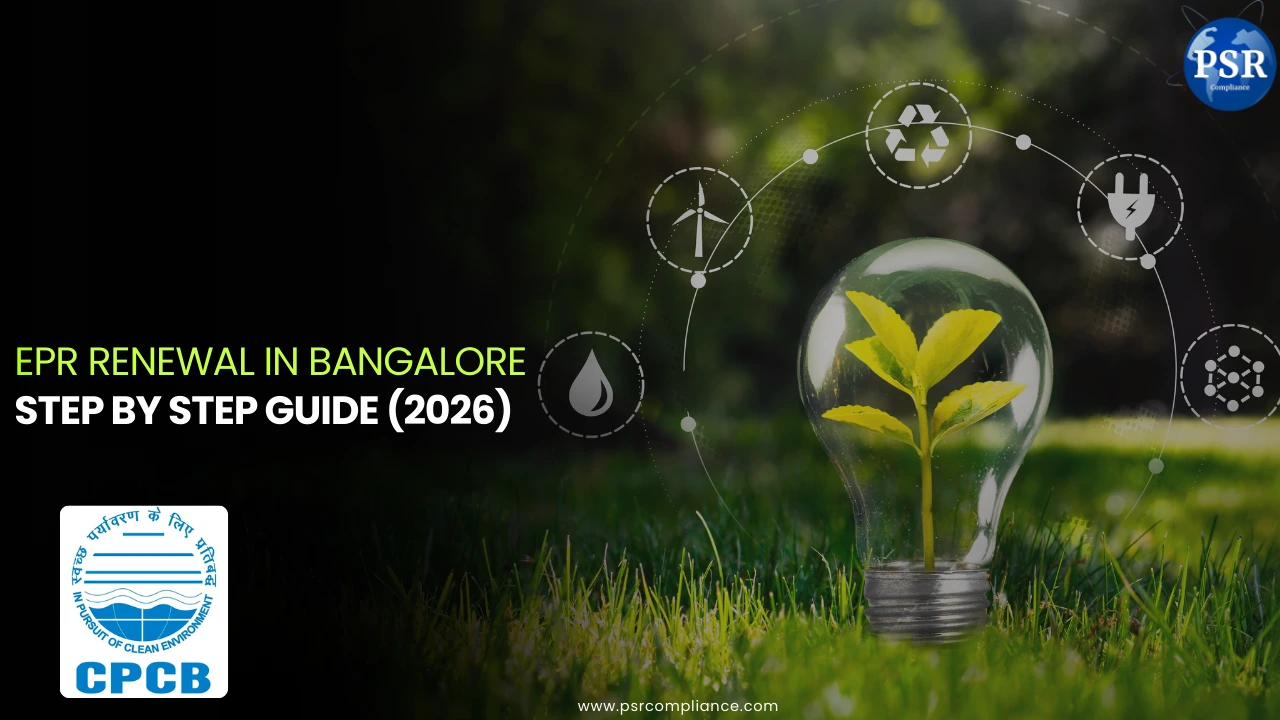
EPR Renewal in Bangalore (2026): Complete Guide for Businesses
If your business deals with plastic packaging, electronics, batteries, or imported products in Bangalore, you must follow EPR rules to continue operating legally. Many companies get their EPR certificate but forget that it must be renewed every year. Missing renewal can lead to penalties, account suspension on government portals, and even business stoppage.
This guide explains EPR Renewal in Bangalore (2026) in simple language—what it is, why it is important, required documents, step-by-step process, advantages, and how PSR Compliance can help you.
What is EPR?
EPR full form is Extended Producer Responsibility.
It is a legal responsibility under Indian environmental laws that makes producers, importers, and brand owners responsible for the collection, recycling, and proper disposal of waste generated from their products.
If your business is involved in:
- Plastic packaging
- Electronic goods (E-waste)
- Batteries
- Tyres
- You must obtain and renew your EPR certificate every year.
Why EPR Renewal is Important in Bangalore
Bangalore is a major hub for:
➞ Electronics manufacturing
➞ Startups and e-commerce
➞ Plastic packaging units
➞ Import/export businesses
Due to increased pollution and strict environmental monitoring, authorities regularly review compliance.
If your EPR certificate expires:
▪ Your company may be flagged on CPCB/SPCB portals
▪ Online marketplaces may stop listing your products
▪ Heavy penalties can be imposed
▪ Business operations can be legally restricted
Types of EPR Covered Under Renewal
Depending on your business category, your renewal may apply to:
1. EPR Plastic
For businesses using plastic packaging for products such as food, FMCG, cosmetics, pharma, and logistics.
2. EPR for E-Waste
For manufacturers, importers, and brand owners of:
- Electronics
- IT equipment
- Consumer appliances
3. EPR Battery
For producers and importers of:
- Lithium-ion batteries
- Automotive batteries
- Portable batteries
Each category requires separate compliance and reporting.
Advantages of EPR Renewal in Bangalore (2026)
Renewing your EPR on time offers several business and legal benefits:
✔ Legal Protection
Keeps your business compliant with CPCB and Karnataka State Pollution Control Board (KSPCB) rules.
✔ Avoids Heavy Penalties
Prevents fines, notices, and blacklisting from government portals.
✔ Business Continuity
Ensures uninterrupted sales on Amazon, Flipkart, and B2B platforms that require valid EPR certificates.
✔ Builds Brand Trust
Shows that your company follows environmental responsibility and sustainability.
✔ Supports Green Business Goals
Helps in meeting ESG and sustainability targets demanded by investors and corporate clients.
Who Needs EPR Renewal?
You must renew EPR if you are:
➤ A manufacturer
➤ An importer
➤ A brand owner
➤ An e-commerce seller
A business using plastic packaging, electronics, or batteries
If you operate in Bangalore, renewal is compulsory under 2026 environmental guidelines.
Documents Required for EPR Renewal
To renew your EPR certificate in Bangalore, you generally need:
→ Existing EPR Certificate
→ Company Incorporation Certificate / GST
→ PAN of the company
→ Product and packaging details
→ Waste generation data for the previous year
→ Recycling or waste management agreements
→ Annual return reports
→ Authorized signatory details
Step-by-Step Process for EPR Renewal in Bangalore (2026)
Here is the simplified process:
Step 1: Compliance Review
Your existing EPR data, waste reports, and recycling records are checked for errors or missing details.
Step 2: Data Preparation
We prepare:
- Annual waste return
- Category-wise recycling targets
- Proof of recycling or waste processing
Step 3: Portal Submission
Application is filed on the official CPCB/SPCB portal using your registered account.
Step 4: Authority Review
The pollution control board reviews the application and may raise queries.
Step 5: Approval & Certificate Issuance
Once approved, your renewed EPR certificate is issued and remains valid for the next period.
Common Mistakes Businesses Make
❌ Missing renewal deadlines
❌ Uploading incorrect waste data
❌ Not maintaining recycler agreements
❌ Confusing plastic, battery, and e-waste categories
❌ Assuming registration is “one-time”
These mistakes can lead to rejection or legal action.
How PSR Compliance Helps with EPR Renewal in Bangalore
At PSR Compliance, we handle your EPR from start to finish:
🗸 Category identification (EPR plastic, EPR battery, EPR e-waste)
🗸 Data review and compliance correction
🗸 Portal filing and follow-ups
🗸 Query handling with authorities
🗸 On-time certificate delivery
🗸 Ongoing compliance support
FAQs
Who needs to renew their EPR authorization?
Producers, importers, brand owners, recyclers, and refurbishers dealing with e-waste, plastic, batteries, or tyres must renew their EPR authorization to remain legally compliant.
When should EPR renewal be applied for?
EPR renewal should be applied for 60 to 90 days before the authorization expiry date to prevent operational or regulatory disruptions.
What is the validity period of an EPR certificate?
EPR certificate validity varies by waste type: e-waste (5 years), plastic packaging (1 year), and batteries & tyres (5 years).
Where is EPR renewal application submitted?
EPR renewal applications are submitted online through the Central Pollution Control Board (CPCB) EPR portal for the relevant waste category.
What documents are required for EPR authorization renewal?
EPR renewal requires the existing certificate, updated sales or import data, recycler agreements, proof of target fulfilment, return filings, and valid CTO where applicable.
What are the fees for EPR renewal?
The EPR renewal fee is generally the same as the initial registration fee, plus an annual processing fee of approximately 25%.
What do authorities check during the EPR renewal process?
Authorities verify past EPR target compliance, recycler agreements, return filings, and adherence to current waste management rules.