Tue, Jun 16 2026
Utkarsh Sharma
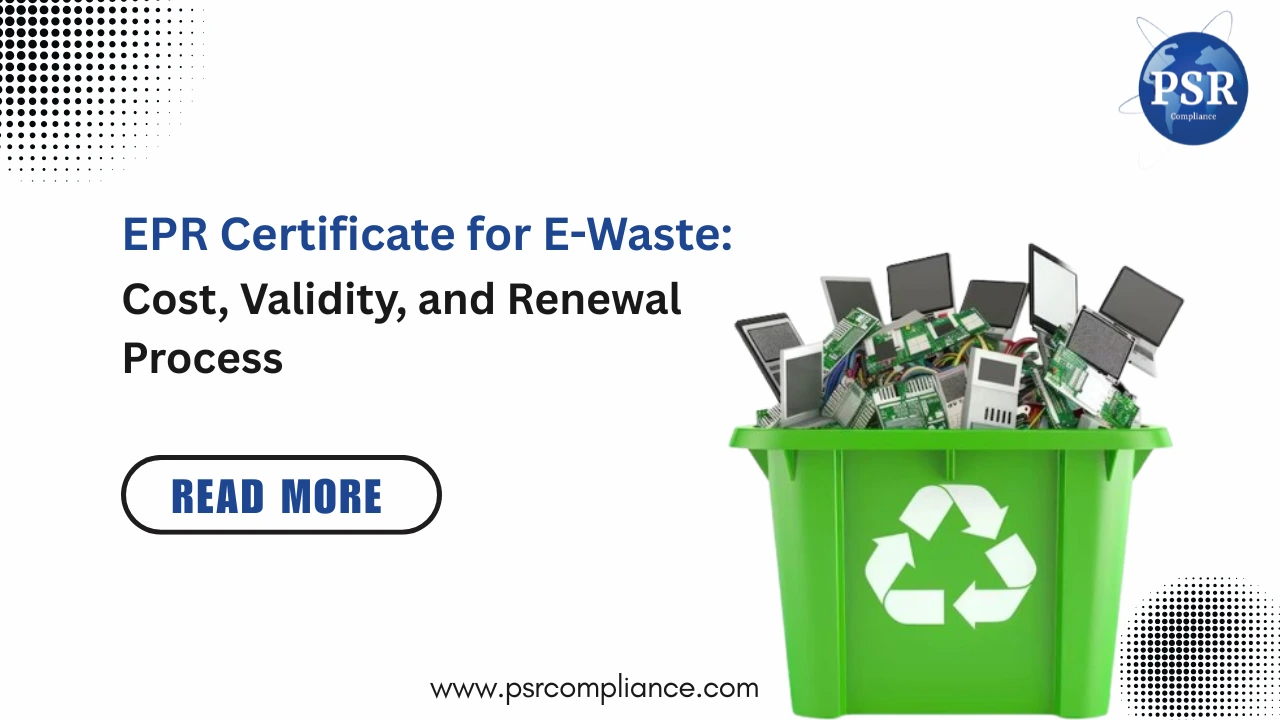
EPR Certificate for E-Waste: Cost, Validity, and Renewal Process
Electronic waste is growing rapidly in India. Old mobile phones, laptops, computers, printers, batteries, televisions, and other electronic products are discarded every day. If this waste is not handled properly, it can harm the environment and human health. This is why the government has introduced rules for e waste management and made Extended Producer Responsibility (EPR) compliance mandatory for many businesses.
An EPR Certificate for E-Waste helps ensure that producers, importers, and manufacturers take responsibility for collecting and recycling electronic waste generated from their products. If your business deals with electrical or electronic equipment, understanding the cost, validity, and renewal process of an EPR Certificate is important.
In this guide, we explain everything in simple language.
What is an EPR Certificate for E-Waste?
An EPR Certificate is an authorization related to electronic waste management under the guidelines of the Central Pollution Control Board (CPCB). It confirms that a business has fulfilled its responsibility towards the collection and recycling of e waste generated from its products.
The certificate is mainly required for businesses that manufacture, import, sell, or market electronic and electrical products in India.
The objective is to encourage responsible e waste management and reduce the environmental impact of discarded electronics.
Why is EPR Registration Important?
Electronic products contain materials that can be reused and recycled. Without proper disposal methods, these products can create pollution and waste valuable resources.
Some key benefits of EPR Registration include:
Compliance with government regulations
Support for sustainable waste disposal
Improved brand reputation
Better environmental responsibility
Encouragement of organized recycling of e waste
Reduced environmental pollution
Businesses that follow proper e waste management practices also gain greater trust from customers and stakeholders.
Who Needs EPR Registration for E-Waste?
The following entities generally require e waste registration under EPR guidelines:
Manufacturers
Companies that manufacture electrical and electronic equipment.
Importers
Businesses importing electronic products into India for sale or distribution.
Brand Owners
Organizations selling products under their own brand name, even if manufacturing is outsourced.
Online Sellers
E-commerce businesses dealing with electronic products may also need compliance depending on their business model.
If your business places electronic products in the Indian market, you should check whether epr registration is applicable to your operations.
Products Covered Under EPR for E-Waste
Many electronic and electrical products fall under EPR regulations, including:
| S. No. | Product Category | Examples |
|---|---|---|
| 1 | Mobile Devices | Mobile Phones, Smartphones |
| 2 | Computers & IT Equipment | Computers, Laptops, Desktops |
| 3 | Display Devices | Televisions, Monitors |
| 4 | Printing Equipment | Printers, Scanners |
| 5 | Networking Equipment | Routers, Modems, Switches |
| 6 | Lighting Products | LED Bulbs, LED Lights, LED Fixtures |
| 7 | Security Equipment | CCTV Cameras, Surveillance Systems |
| 8 | Portable Power Devices | Power Banks, Chargers |
| 9 | Batteries | Rechargeable Batteries, Battery Packs |
| 10 | Home Appliances | Refrigerators, Air Conditioners, Washing Machines, Microwaves |
| 11 | Communication Equipment | Networking Devices, Telecom Equipment |
These products generate e waste at the end of their lifecycle and require responsible disposal and recycling.
Documents Required for EPR Registration
The exact documents may vary depending on the type of business. However, commonly required documents include:
| Document | Purpose |
|---|---|
| GST Certificate | Business identification |
| PAN Card | Tax identification |
| IEC Certificate (for importers) | Import activities |
| Company Registration Documents | Legal proof of business |
| Product Details | Information about electronic products |
| Authorized Signatory Documents | Verification purposes |
| EPR Plan | Waste collection and recycling strategy |
Keeping these documents ready can help speed up the registration process.
What is the Cost of an EPR Certificate for E-Waste?
One of the most common questions businesses ask is about the cost of obtaining an EPR Certificate.
The cost generally depends on several factors:
Type of Business
Manufacturers, importers, and brand owners may have different compliance requirements.
Product Category
The number and type of electronic products being registered can affect the overall cost.
Quantity of Products
Businesses introducing larger quantities of products into the market may require additional compliance measures.
Professional Assistance
Many businesses choose consultants for documentation, application filing, and compliance support.
CPCB Compliance Requirements
Government fees and compliance obligations may vary depending on business operations and applicable regulations.
Because each case is different, the total cost can vary significantly. Businesses should obtain a professional assessment for an accurate estimate.
Validity of an EPR Certificate
The validity period of an EPR Certificate depends on the applicable rules and approval granted by the concerned authority.
Generally, businesses must continue to comply with all EPR obligations throughout the validity period. Simply obtaining the certificate is not enough.
Organizations are expected to:
Maintain records
Meet collection targets
Support recycling of e waste
Submit required reports
Follow CPCB guidelines
Failure to maintain compliance can lead to regulatory issues even if the certificate remains valid.
Responsibilities After Receiving an EPR Certificate
Obtaining an electronic waste certificate is only the first step. Businesses also have ongoing responsibilities.
Collection of E-Waste
Companies must establish systems for collecting discarded products.
Record Maintenance
Accurate records of product sales, collection, and recycling activities should be maintained.
Recycling Support
Collected waste should be sent to authorized recyclers.
Reporting Requirements
Periodic reports may need to be submitted to demonstrate compliance.
Awareness Programs
Many organizations also educate customers about proper disposal methods and responsible managing e waste practices.
Renewal Process for EPR Certificate
Businesses must ensure timely renewal of their authorization to avoid compliance issues.
The renewal process generally includes the following steps:
Step 1: Review Existing Compliance
Before renewal, businesses should verify that all previous compliance obligations have been fulfilled.
Step 2: Update Business Information
Any changes in company details, product categories, or operational structure should be updated.
Step 3: Prepare Required Documents
Updated documentation may be required during renewal.
Common documents include:
Business registration documents
Compliance reports
Product information
Recycling records
Previous authorization details
Step 4: Submit Renewal Application
The renewal application is submitted through the appropriate regulatory platform along with supporting documents.
Step 5: Verification Process
Authorities review the application and verify compliance records.
Step 6: Approval and Renewal
Once approved, the authorization is renewed and the business can continue its operations in compliance with regulations.
Starting the renewal process early can help avoid delays.
Common Mistakes to Avoid During Renewal
Many businesses face delays because of avoidable errors.
Some common mistakes include:
Missing documents
Incorrect product information
Delayed application submission
Incomplete compliance records
Failure to meet collection targets
Inaccurate reporting
Proper planning helps ensure a smoother renewal process.
Benefits of Timely EPR Certificate Renewal
Renewing your authorization on time offers several advantages:
Continuous Compliance
Avoid interruptions in business operations.
Reduced Legal Risk
Stay compliant with applicable regulations.
Better Business Reputation
Demonstrate commitment to environmental responsibility.
Smooth Market Operations
Continue selling products without regulatory concerns.
Sustainable Growth
Support long-term e waste management initiatives and environmental protection.
Why Choose PSR Compliance?
Obtaining EPR Registration can be a complex process involving documentation, application filing, and compliance requirements. At PSR Compliance, we simplify the entire process and provide end-to-end support to help your business achieve compliance smoothly and efficiently.
✔ Expert EPR Registration Support
✔ CPCB Portal Registration Assistance
✔ Documentation Preparation & Verification
✔ EPR Application Filing Support
✔ Quick and Hassle-Free Process
✔ End-to-End Compliance Guidance
✔ Renewal and Ongoing Compliance Assistance
Whether you are a manufacturer, importer, or brand owner, our team helps you navigate every stage of the EPR Registration process with professional guidance and timely support. From preparing documents to obtaining approval and managing ongoing compliance, we ensure a seamless experience for your business.
Ready to obtain your EPR Certificate for E-Waste? Contact PSR Compliance today and let our experts help you complete the registration process quickly and efficiently.
📞 Call Us: 8796104190
📧 Email: support@psrcompliance.com
Conclusion
The EPR Certificate for E-Waste plays a vital role in ensuring responsible handling and disposal of electronic products in India. Businesses involved in manufacturing, importing, or selling electronic goods must understand the requirements related to cost, validity, and renewal.
By following proper e waste management practices and maintaining timely compliance, organizations can contribute to a cleaner environment while avoiding regulatory challenges. Investing in proper e waste registration, collection systems, and recycling efforts not only supports legal compliance but also strengthens a company's commitment to sustainability.
If you need assistance with EPR Registration, documentation, compliance management, or renewal support, professional guidance can help simplify the process and ensure smooth approval.
Frequently Asked Questions (FAQs)
Businesses often have questions about EPR Registration, compliance requirements, certificate validity, renewal procedures, and the overall process of e waste management. Below are answers to some of the most commonly asked questions that can help you better understand EPR compliance for electronic waste in India.
1. What is an EPR Certificate for E-Waste?
An EPR Certificate for E-Waste is an authorization issued under EPR guidelines that allows producers, importers, and brand owners to fulfill their responsibility for collecting and recycling electronic waste generated from their products.
2. Who needs EPR Registration for E-Waste in India?
Manufacturers, importers, brand owners, and businesses that sell electronic or electrical equipment in India generally require EPR Registration to comply with environmental regulations.
3. What is the cost of obtaining an EPR Certificate?
The cost of obtaining an EPR Certificate depends on factors such as business type, product category, compliance requirements, and professional assistance required during the registration process.
4. How long is an EPR Certificate valid?
The validity of an EPR Certificate depends on the approval granted by the concerned authority. Businesses must continue meeting all compliance obligations during the validity period.
5. How can I renew my EPR Certificate for E-Waste?
Businesses can renew their EPR Certificate by submitting a renewal application, updating required documents, providing compliance records, and completing the verification process before approval.
6. What documents are required for EPR Registration?
Commonly required documents include GST registration, PAN card, company incorporation documents, IEC certificate for importers, product details, authorized signatory documents, and an EPR plan.
7. Which products are covered under EPR for E-Waste?
Products such as mobile phones, laptops, computers, televisions, printers, CCTV cameras, routers, batteries, LED products, and other electronic equipment are generally covered under EPR regulations.
8. Why is e waste management important for businesses?
Proper e waste management helps reduce pollution, conserve resources, increase recycling rates, and ensure environmentally responsible disposal of electronic products.
9. What happens if a company does not obtain EPR Registration?
Failure to obtain EPR Registration may lead to compliance issues, regulatory actions, restrictions on business operations, and penalties under applicable environmental laws.
10. How does EPR support the recycling of e waste?
EPR encourages businesses to collect discarded electronic products and send them to authorized recyclers, promoting responsible recycling of e waste and reducing environmental impact.