Fri, Jun 19 2026
Utkarsh Sharma
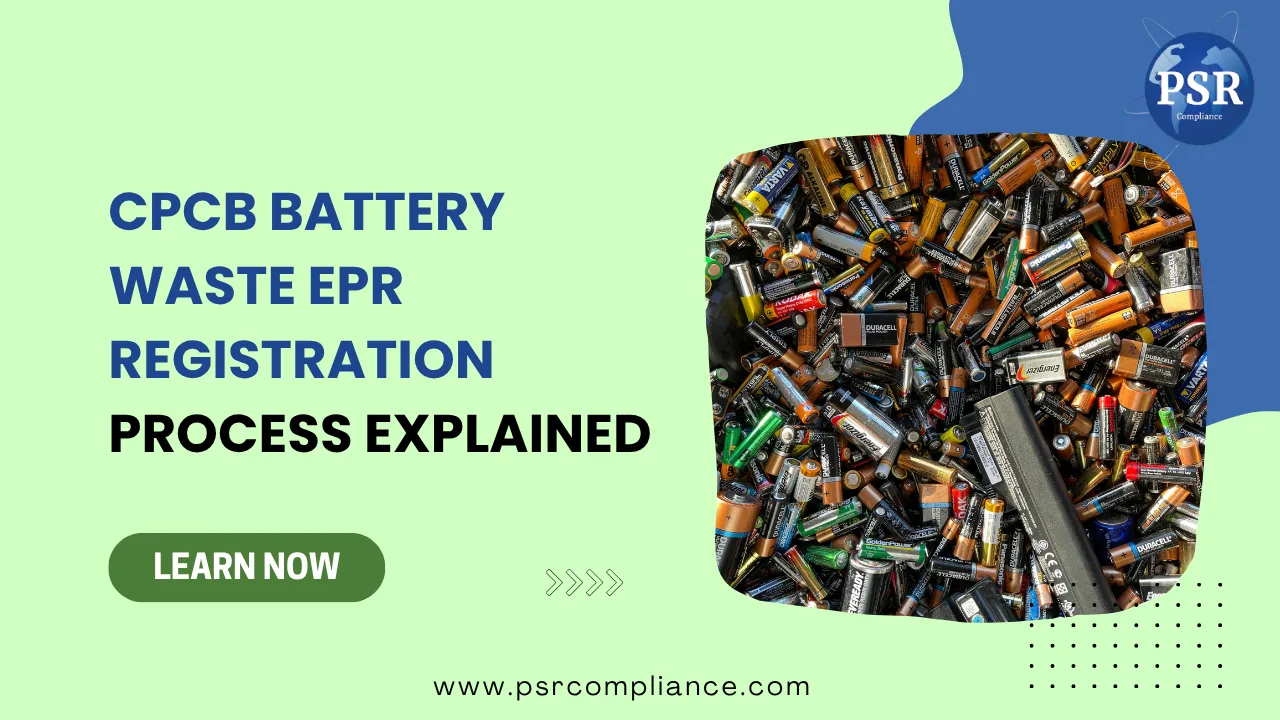
CPCB Battery Waste EPR Registration Process Explained 2026
With the implementation of the Battery Waste Management Rules 2022, businesses dealing with batteries are required to take responsibility for the collection, recycling, and proper disposal of battery waste. To ensure compliance, eligible entities must obtain Battery Waste EPR Registration through the Central Pollution Control Board (CPCB).
Many businesses are aware of the requirement but are often confused about the registration process. Questions such as who needs registration, where to apply, what documents are required, and how long the process takes are common.
This guide explains the complete CPCB Battery Waste EPR Registration process in simple language so businesses can understand the requirements and complete the registration smoothly.
What is Battery Waste EPR Registration?
Extended Producer Responsibility (EPR) is a framework that makes businesses responsible for managing the battery waste generated from the products they introduce into the market.
Under the Battery Waste Management Rules 2022, producers, importers, manufacturers, recyclers, and refurbishers are required to register on the CPCB portal and fulfill their waste management obligations.
The registration helps authorities track battery waste generation, collection, recycling, and recovery activities across the country.
Who Needs Battery Waste EPR Registration?
Battery Waste EPR Registration is generally required for:
➡️ Battery Producers
➡️ Battery Importers
➡️ Battery Manufacturers
➡️ Battery Recyclers
➡️ Battery Refurbishers
If your business places batteries or battery-containing products in the Indian market, you may need to register and comply with EPR requirements.
Eligibility for CPCB EPR Portal Registration
Businesses involved in manufacturing, importing, selling, recycling, or refurbishing products covered under Extended Producer Responsibility (EPR) regulations are generally required to register on the CPCB EPR Portal. The registration helps ensure that businesses take responsibility for the collection, recycling, and environmentally sound management of waste generated from their products.
The following entities are typically eligible for CPCB EPR Portal Registration:
▶ Producers
▶ Importers
▶ Brand Owners (PIBOs)
▶ E-Waste Producers
▶ Battery Producers and Importers
▶ Plastic Waste Producers
▶ Recyclers
▶ Refurbishers
▶ Waste Processors
If your business introduces regulated products into the Indian market or participates in the waste management chain, obtaining CPCB EPR registration may be a mandatory compliance requirement.
Why is CPCB Registration Important?
Obtaining registration is not just a legal requirement. It also helps businesses:
- Demonstrate environmental responsibility
- Avoid compliance issues
- Participate in organized waste management systems
- Maintain regulatory compliance
- Build trust with customers and stakeholders
Businesses operating without the required registration may face regulatory action and compliance challenges.
Types of Batteries Covered Under Battery Waste Management Rules
The Battery Waste Management Rules 2022 apply to various types of batteries used in daily life and industrial operations. These include:
- Portable Batteries – Used in mobile phones, laptops, cameras, and other electronic devices.
- Automotive Batteries – Used in cars, motorcycles, and other vehicles.
- Industrial Batteries – Used in telecom, UPS systems, data centers, and energy storage.
- Electric Vehicle (EV) Batteries – Used in electric cars, scooters, bikes, and buses.
- Lithium-Ion Batteries – Commonly found in smartphones, laptops, and EVs.
- Lead-Acid Batteries – Used in vehicles, inverters, and industrial equipment.
- Nickel-Based Batteries – Used in rechargeable consumer and industrial devices.
- Battery Packs – Multiple battery cells combined into a single unit.
Businesses dealing with these batteries must comply with applicable EPR requirements under the Battery Waste Management Rules.
Step-by-Step CPCB Battery Waste EPR Registration Process
Step 1: Determine Your Business Category
The first step is identifying your role under the Battery Waste Management Rules 2022.
You may fall into one of the following categories:
- Producer
- Importer
- Manufacturer
- Recycler
- Refurbisher
The registration requirements may vary slightly depending on your business category.
Step 2: Gather Required Documents
Before starting the application, businesses should prepare all necessary documents.
Commonly required documents include:
- PAN Card
- GST Certificate
- Business Registration Certificate
- Address Proof
- Authorized Signatory Details
- IEC Certificate (for importers)
- Product and Battery Information
Keeping documents ready in advance helps avoid delays during the application process.
Step 3: Create an Account on the CPCB Portal
The next step is registering on the official CPCB online platform.
Applicants need to:
- Create a user account
- Provide business information
- Verify contact details
- Set login credentials
Once the account is created, businesses can access the registration dashboard.
Step 4: Fill Out the Application Form
After logging into the portal, applicants need to complete the registration form.
The form generally requires:
- Business details
- Category of applicant
- Product information
- Battery details
- Operational information
- Authorized representative details
It is important to ensure that all information matches the supporting documents.
Step 5: Upload Supporting Documents
The portal requires applicants to upload relevant documents for verification.
Before uploading:
- Check document clarity
- Ensure information is accurate
- Verify document validity
- Use the correct file formats
Incomplete or incorrect uploads may result in additional queries from authorities.
Step 6: Review and Submit the Application
Before final submission, carefully review all information entered in the application.
Check:
- Business name
- Address details
- Product information
- Authorized signatory information
- Uploaded documents
A final review helps minimize errors and reduces the chances of delays.
Step 7: Application Verification by CPCB
After submission, the CPCB reviews the application and supporting documents.
During this stage, authorities may:
- Verify business details
- Review uploaded documents
- Request clarification if needed
- Seek additional information
Applicants should regularly monitor their portal account for updates.
Step 8: Respond to Queries (If Any)
Sometimes authorities may raise observations or seek clarification.
Common reasons include:
- Missing documents
- Incorrect information
- Address mismatches
- Incomplete product details
Timely responses help speed up the approval process.
Step 9: Receive Battery Waste EPR Registration
Once the application is approved, the registration certificate is issued through the portal.
The business can then legally operate under the applicable EPR framework and fulfill its compliance obligations.
Common Challenges During Registration
Many businesses face delays because of avoidable mistakes.
Some common issues include:
Incomplete Documentation
Missing documents are one of the leading causes of application delays.
Incorrect Business Information
Differences between GST records, PAN records, and application details can trigger clarification requests.
Wrong Category Selection
Selecting an incorrect applicant category can affect the registration process.
Poor Quality Document Uploads
Unreadable or incomplete documents often require resubmission.
Tips for a Smooth Registration Process
To avoid delays and improve approval chances:
✅ Keep all documents updated.
✅ Verify business information before submission.
✅ Use clear scanned copies.
✅ Maintain accurate battery-related records.
✅ Respond quickly to CPCB queries.
✅ Review the application carefully before final submission.
Proper preparation can make the registration process much faster and simpler.
How Long Does Battery Waste EPR Registration Take?
The approval timeline depends on:
- Completeness of the application
- Accuracy of submitted documents
- Response time to CPCB queries
- Verification process requirements
Applications with complete and accurate information are generally processed more efficiently.
Why Choose PSR Compliance for Battery Waste EPR Registration?
Navigating Battery Waste EPR compliance can be time-consuming, especially for businesses unfamiliar with CPCB procedures. PSR Compliance provides complete support throughout the registration process.
Our Services Include:
✔ Documentation Support
✔ CPCB Portal Registration Assistance
✔ Application Filing Support
✔ Compliance Guidance
✔ Query Resolution Assistance
✔ End-to-End Registration Management
With expert assistance, businesses can focus on their operations while ensuring compliance requirements are handled efficiently.
📞 Call: 8796104190
📧 Email: support@psrcompliance.com
Conclusion
The Battery Waste Management Rules 2022 have made Battery Waste EPR Registration an important compliance requirement for businesses involved in manufacturing, importing, recycling, refurbishing, or selling batteries.
Understanding the registration process in advance can help businesses avoid delays, prepare accurate documentation, and achieve compliance smoothly. By following the correct steps and maintaining proper records, businesses can complete their registration efficiently and contribute to responsible battery waste management.
Frequently Asked Questions (FAQs)
1. Who is required to obtain Battery Waste EPR Registration?
Producers, importers, manufacturers, recyclers, and refurbishers dealing with batteries may need to register under the applicable regulations.
2. Where can businesses apply for Battery Waste EPR Registration?
Applications are submitted through the CPCB online portal designated for EPR compliance activities.
3. What documents are required for registration?
Common documents include PAN, GST certificate, business registration proof, address proof, and product-related information.
4. Can CPCB raise queries after application submission?
Yes. Authorities may request clarification or additional documents during the verification process.
5. What happens after registration approval?
Once approved, businesses receive their registration certificate and can fulfill their EPR compliance obligations under the applicable rules.
6. Is Battery Waste EPR Registration mandatory for importers?
Yes, importers dealing with batteries are generally required to comply with registration requirements.
7. How can businesses avoid delays during registration?
Submitting accurate information, maintaining complete documentation, and responding promptly to CPCB queries can help ensure a smoother approval process.