Wed, Jul 15 2026
Raju Karn
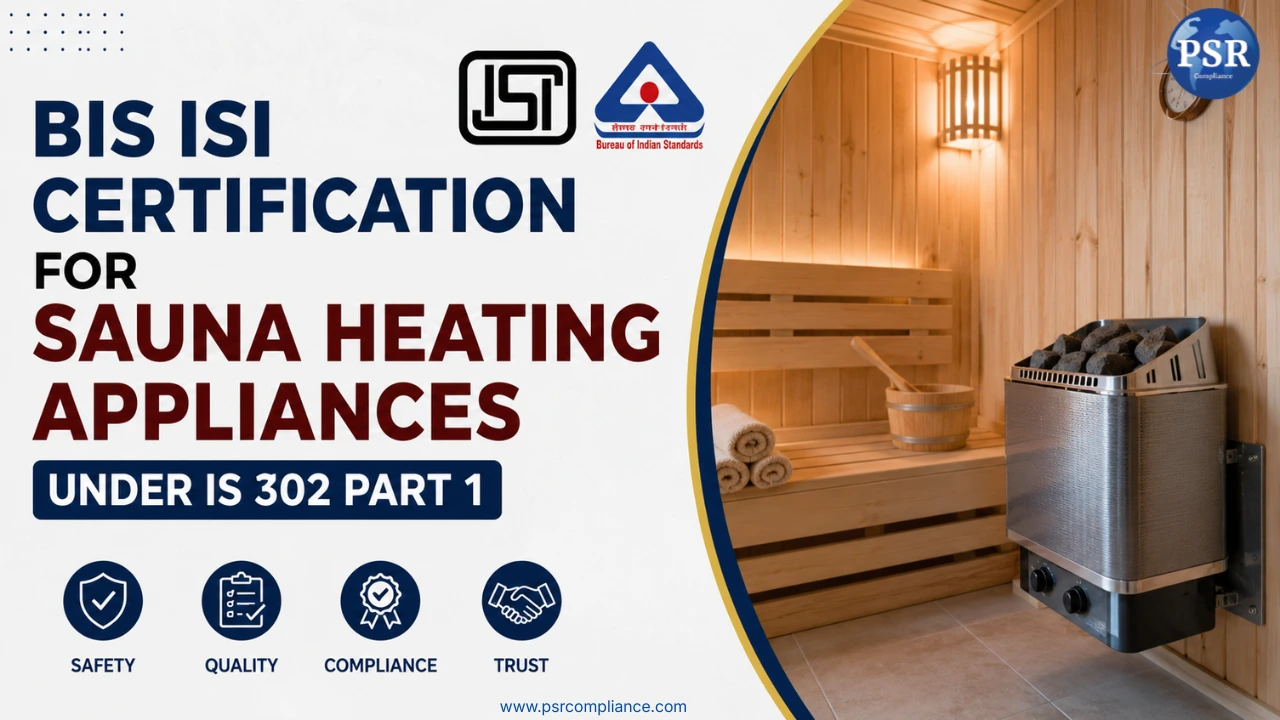
BIS ISI Certification for Sauna Heating Appliances Under IS 302 Part 1
Sauna heating appliances have become an essential part of modern wellness and luxury spaces across India. They are widely installed in hotels, resorts, spas, gyms, wellness centres, clubs, premium villas, apartments, and healthcare facilities where customers expect a relaxing and comfortable experience. As the wellness industry continues to grow, the demand for high-quality sauna equipment is also increasing rapidly.
Although many people see a sauna heater as a premium comfort product, it is actually a high-temperature electrical appliance. It operates continuously in enclosed spaces where heat levels remain extremely high for long periods. Because users remain close to the appliance while it is running, electrical safety becomes just as important as heating performance.
To improve consumer safety, the Government of India has included sauna heating appliances under the Safety of Household, Commercial and Similar Electrical Appliances (Quality Control) Order. As per the notification, these products must comply with IS 302 (Part 1):2024 and carry a valid BIS ISI Mark before they can be manufactured, imported, or sold in India.
For general enterprises, the mandatory implementation date is 1 October 2026, while small and micro enterprises receive extended timelines. However, businesses should begin certification well before the deadline because project buyers, hotel chains, and wellness developers increasingly ask for BIS compliance during procurement itself.
Why Sauna Heating Appliances Need BIS Certification
A sauna heater generates intense heat inside a closed room where users sit for extended periods. Unlike ordinary household appliances that operate for only a few minutes, sauna heaters often run continuously during business hours in hotels, gyms, and wellness centres.
Most electric sauna heaters contain several electrical and heating components working together, including heating elements, thermostats, electrical wiring, temperature sensors, control panels, protective housings, mounting brackets, heating chambers, safety cut-off systems, and power supply connections. Every component must function safely under high temperatures.
If the appliance is poorly designed or manufactured without proper safety controls, it can lead to overheating, electrical shock, insulation failure, fire hazards, burns, wiring damage, or inaccurate temperature control. In commercial wellness facilities, these failures can create serious safety risks for customers and damage the reputation of the business operating the equipment.
This is exactly why BIS certification is mandatory. It confirms that the product has been tested according to Indian electrical safety standards and that the manufacturer follows a controlled quality management system capable of producing safe products consistently.
Why Premium Buyers Prefer Certified Products
Hotels, luxury resorts, spas, wellness centres, and premium homeowners invest significant amounts in sauna rooms because customer safety directly affects their brand reputation.
Before approving a supplier, procurement teams increasingly ask for documents proving regulatory compliance. A supplier offering uncertified products may lose projects even if their prices are competitive.
The BIS Standard Mark provides confidence that the equipment has undergone proper safety testing under Indian standards. It demonstrates that the manufacturer has met nationally accepted quality requirements rather than simply claiming product safety.
For many commercial buyers, the ISI Mark has become a minimum requirement rather than an added advantage.
What IS 302 (Part 1):2024 Covers
IS 302 (Part 1):2024 specifies the general safety requirements applicable to household, commercial, and similar electrical appliances operating up to 250V for single-phase appliances and 415V for other appliances.
The standard applies to many commercial electrical appliances used in hotels, shops, spas, wellness centres, and similar environments, including sauna heating equipment and infrared cabins.
Its primary objective is to minimise electrical hazards by establishing requirements for insulation, temperature control, construction quality, protection against electric shock, mechanical strength, and safe operation during continuous use.
The standard does not apply to specialised industrial machinery, medical equipment, or appliances intended to be used without appropriate supervision.
Why Certification Becomes a Business Advantage
Imagine a luxury resort opening a new wellness wing. Construction is complete, interiors are finished, and sauna rooms are ready for installation.
Everything appears on schedule until the procurement department requests BIS compliance documents from equipment suppliers.
One supplier cannot provide BIS certification because they planned to apply later.
Another supplier immediately submits BIS licence details, product specifications, testing reports, and compliance documents.
The project owner chooses the second supplier because certified products reduce legal risk, improve customer safety, and simplify project approvals.
This situation is becoming increasingly common throughout India's hospitality industry.
Certification is no longer simply about regulatory compliance. It directly influences purchasing decisions and helps businesses secure larger commercial projects.
Who Needs BIS Certification?
Businesses involved with sauna heating appliances should carefully evaluate whether their products fall under the Quality Control Order.
This certification is especially important for:
- Indian sauna heater manufacturers
- Foreign manufacturers exporting sauna equipment to India
- Sauna appliance importers
- Spa equipment suppliers
- Wellness equipment manufacturers
- Hotel and resort equipment vendors
- Gym and club equipment suppliers
- Premium home wellness brands
- Interior project contractors
- Commercial wellness solution providers
- Private-label sauna equipment brands
- E-commerce sellers of sauna heating appliances
Even businesses that only import finished products remain responsible for ensuring BIS compliance before placing products on the Indian market.
Products Covered Under the QCO
Businesses should carefully review every product model they manufacture, import, or sell to determine whether it falls under the scope of the Quality Control Order. Products commonly covered include various types of electrically operated sauna equipment and related heating systems used in residential, commercial, and wellness environments.
| Products Covered Under the QCO |
|---|
| Electric Sauna Heating Appliances |
| Wall-Mounted Sauna Heaters |
| Floor-Mounted Sauna Heaters |
| Sauna Heating Units with Integrated Controls |
| Sauna Control Systems Sold with Heaters |
| Infrared Sauna Heating Panels |
| Infrared Sauna Cabins |
| Commercial Sauna Heating Equipment |
| Spa Heating Appliances |
| Wellness Room Heating Equipment |
| Imported Sauna Heating Appliances |
| Private-Label Sauna Heating Products |
Different models may have different electrical ratings, heating capacities, control systems, installation methods, and construction designs. Therefore, each model should be reviewed individually before planning BIS certification.
BIS Testing Requirements for Sauna Heating Appliances
Obtaining BIS certification is much more than submitting an application. Before a sauna heating appliance receives the ISI Mark, it must successfully pass a series of mandatory safety tests specified under IS 302 (Part 1):2024. These tests are designed to verify that the appliance can operate safely under normal as well as abnormal conditions.
The mandatory safety tests generally include:
- Earth Continuity Test
- Electric Strength Test
- Functional Performance Test
- Protection Against Electric Shock
- Earthing Verification
- Leakage Current Test at Operating Temperature
- General Leakage Current Test
- Temperature Rise Test
- Insulation Resistance Test
- Stability and Mechanical Strength Test
Depending on the product design, BIS-recognised laboratories may also perform additional optional tests, including:
- Moisture Resistance Test
- Rust Resistance Test
- Overload Protection Test
- Transformer Protection Test
- Terminal Safety Test
- Transient Overvoltage Test
These tests ensure that the appliance remains electrically safe even after continuous operation in high-temperature and humid environments.
Why BIS Certification Supports Premium Brand Positioning
Customers purchasing wellness products are not simply paying for comfort. They are investing in safety, reliability, and long-term performance. The same applies to hotels, luxury resorts, premium residential projects, and commercial wellness centres.
A certified sauna heating appliance immediately creates confidence among buyers because it demonstrates compliance with nationally accepted safety standards. Instead of competing only on price, certified manufacturers compete on trust and product quality.
For premium buyers, safety certification often becomes a deciding factor during supplier selection.
BIS certification can help businesses secure:
- Hotel procurement contracts
- Resort development projects
- Spa chain installations
- Gym and wellness centre projects
- Luxury residential installations
- Interior designer recommendations
- Dealer confidence
- Government and institutional tenders
- Better marketplace credibility
- Stronger brand positioning
Rather than being viewed as another electrical appliance, an ISI-certified sauna heater becomes a premium product backed by verified safety standards.
Common Mistakes That Delay BIS Certification
Many businesses wait until customers ask for BIS certification before beginning the application process. Unfortunately, this often leads to delayed projects, postponed shipments, and missed sales opportunities.
Some of the most common reasons for delay include:
- Incorrect model numbering
- Missing technical specifications
- Incomplete electrical ratings
- Weak product labels
- Poorly prepared installation manuals
- Missing safety warnings
- Incomplete factory documents
- Incorrect manufacturing process details
- Poor quality control documentation
- Importing products before certification planning
Most of these issues are easy to resolve if businesses begin preparing their documentation early.
Documents Required for BIS ISI Certification
Manufacturers and importers should keep all technical and legal documents ready before submitting the BIS application. Proper documentation not only speeds up the approval process but also reduces the chances of receiving BIS queries later.
The commonly required documents include:
- Company Registration Certificate
- Factory Address Proof
- Product Specification Sheet
- Product Model List
- Electrical Rating Details
- Brand or Trademark Certificate
- Manufacturing Process Flow Chart
- Quality Control Plan
- Testing Equipment List
- Manufacturing Machinery Details
- Product Label Artwork
- User Manual
- Installation Manual
- Electrical Safety Instructions
- Product Photographs
- Factory Layout (where applicable)
For sauna heating appliances, installation manuals should clearly explain electrical connections, ventilation requirements, safe spacing from surrounding materials, operating temperatures, maintenance procedures, and emergency precautions.
Why Businesses Should Start Early
Many companies assume they have enough time because the compliance deadline is still months away. In reality, BIS certification involves product testing, documentation, factory inspection, application review, and licence approval—all of which require careful planning.
Testing laboratories may experience heavy workloads as the implementation deadline approaches, causing unnecessary delays. Manufacturers who begin early enjoy smoother approvals, better production planning, and uninterrupted product launches.
Importers benefit even more by starting early because overseas manufacturers often need additional time to prepare technical files according to Indian BIS requirements.
Businesses that complete certification ahead of the deadline will be better positioned to secure hotel projects, wellness installations, dealer partnerships, and institutional orders without last-minute compliance pressure.
Benefits of Obtaining BIS Certification Early
Businesses that complete BIS certification before the compliance deadline enjoy several long-term commercial advantages.
Some of the biggest benefits include:
- Legal permission to manufacture, import, and sell products across India.
- Improved customer confidence through the BIS Standard Mark.
- Higher acceptance among hotels, spas, gyms, wellness centres, and premium residential projects.
- Better opportunities to participate in government and institutional tenders.
- Stronger dealer and distributor confidence.
- Easier listing on e-commerce marketplaces.
- Reduced project approval delays.
- Better brand reputation.
- Competitive advantage over uncertified products.
- Improved long-term business growth.
Instead of treating BIS certification as a regulatory burden, successful businesses use it as a powerful marketing and trust-building tool.
Get Expert Help with BIS ISI Certification for Sauna Heating Appliances
Need assistance with BIS ISI Certification under IS 302 (Part 1):2024 for sauna heating appliances? PSR Compliance provides complete end-to-end support—from product applicability assessment and documentation to testing coordination, factory inspection, BIS application filing, and final licence approval.
👉 Ensure faster approvals and stress-free compliance with expert guidance.
📞 +91 8796104190
Frequently Asked Questions (FAQs)
1. Is BIS certification mandatory for sauna heating appliances?
Yes. Sauna heating appliances covered under the Quality Control Order must comply with IS 302 (Part 1):2024 and obtain a valid BIS ISI licence before being manufactured, imported, or sold in India.
2. Which standard applies to sauna heating appliances?
These products must comply with IS 302 (Part 1):2024, which specifies safety requirements for household, commercial, and similar electrical appliances.
3. Who needs BIS certification for sauna heaters?
Indian manufacturers, foreign manufacturers, importers, private-label brands, distributors, hotel equipment suppliers, spa equipment vendors, and wellness equipment companies all require BIS certification if their products fall under the notified category.
4. What is the implementation date for general enterprises?
For general enterprises, the mandatory implementation date is 1 October 2026. Small and micro enterprises have extended compliance timelines as notified by the Government.
5. What tests are conducted during BIS certification?
Products are tested for earth continuity, electric strength, leakage current, protection against electric shock, insulation, functional performance, temperature rise, and other electrical safety requirements specified under IS 302 (Part 1):2024.
6. What documents are required for BIS certification?
Common documents include company registration certificates, factory address proof, product specifications, model list, electrical ratings, trademark documents, manufacturing process, quality control plan, testing equipment details, product labels, installation manuals, and safety instructions.
7. Can imported sauna heating appliances be sold without BIS certification?
No. Imported products covered under the Quality Control Order cannot be legally imported or sold in India without obtaining the required BIS certification.
8. How long does the BIS certification process take?
The timeline depends on product testing, documentation, factory inspection, and BIS review. Starting early helps businesses avoid delays before the mandatory compliance deadline.
9. Can one BIS licence cover multiple sauna heater models?
In many cases, similar product variants may be covered under one licence. However, BIS determines eligibility based on product design, specifications, ratings, and construction.
10. Why should businesses start BIS certification early?
Beginning early allows enough time for laboratory testing, document preparation, factory inspection, and BIS approval while avoiding project delays, shipment issues, and last-minute compliance pressure.
11. How can PSR Compliance help with BIS certification?
PSR Compliance provides complete BIS consultancy services, including applicability assessment, document preparation, testing coordination, factory inspection support, BIS application filing, query resolution, and licence approval assistance for sauna heating appliances.