Fri, Jun 19 2026
Raju Karn
BIS Certification for Helmet in India: Complete Guide (2026)
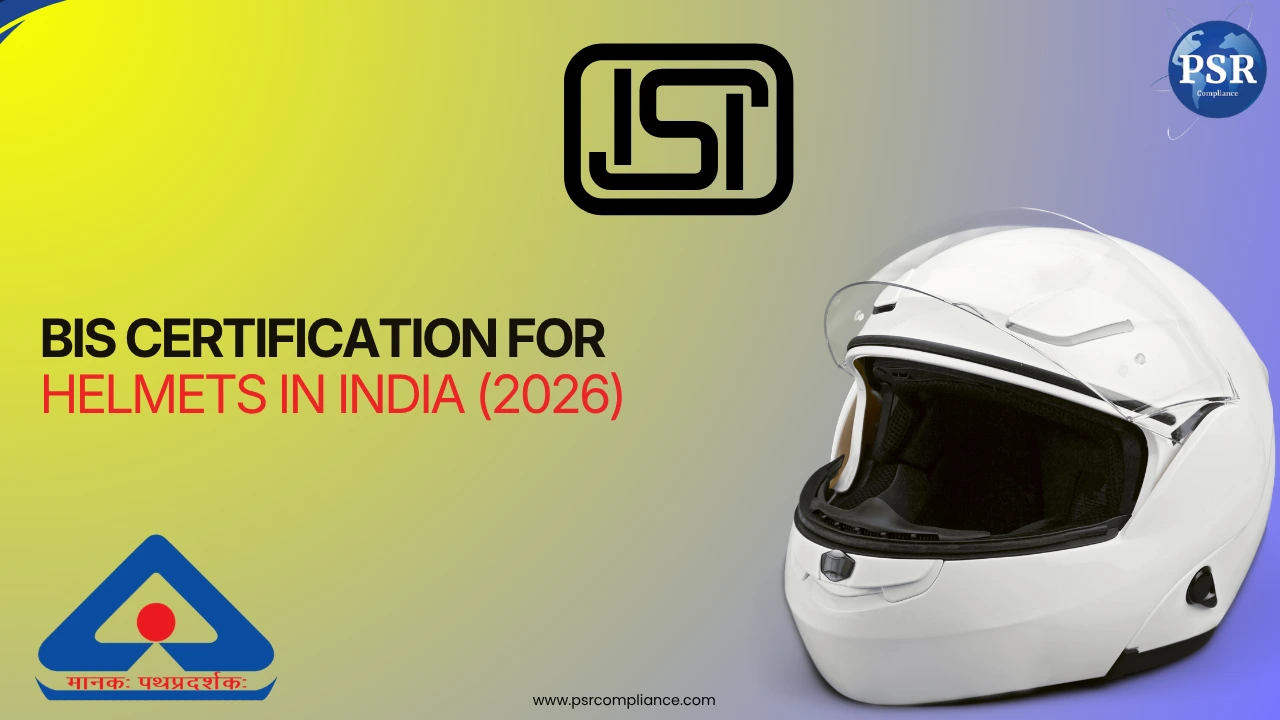
Helmets play a critical role in protecting riders from serious head injuries during road accidents. In India, millions of two-wheeler riders depend on helmets every day for their safety. To ensure that helmets sold in the market meet safety and quality requirements, the Government of India has made BIS Certification for Helmets mandatory.
Manufacturers and importers cannot legally sell helmets in India without complying with the applicable BIS standards and obtaining the required certification. Helmets that meet BIS requirements are allowed to carry the ISI Mark, which indicates that the product has been tested and approved according to Indian safety standards.
This guide explains everything you need to know about BIS Certification for Helmets in India, including applicable standards, certification process, testing requirements, documents, benefits, and compliance obligations.
What is BIS Certification for Helmet?
BIS Certification for Helmet is a certification issued by the Bureau of Indian Standards (BIS) to confirm that a helmet complies with the prescribed Indian safety standards.
The certification verifies that the helmet has successfully passed quality and safety tests and is suitable for use by consumers.
After certification, manufacturers can use the ISI Mark on their helmets, demonstrating compliance with BIS requirements.
Is BIS Certification Mandatory for Helmets in India?
Yes.
BIS Certification is mandatory for protective helmets intended for two-wheeler riders in India.
Manufacturers, importers, and sellers must ensure that helmets comply with the applicable BIS standard before they are placed on the market.
Selling non-certified helmets can attract penalties and regulatory action.
Which BIS Standard Applies to Helmets?
Motorcycle helmets are generally required to comply with:
IS 4151
IS 4151 specifies the safety and performance requirements for protective helmets used by two-wheeler riders.
The standard includes requirements related to:
- Impact resistance
- Retention system strength
- Penetration resistance
- Shock absorption
- Construction quality
- Field of vision
- Labeling requirements
Compliance with IS 4151 helps ensure rider safety during accidents.
Why is BIS Certification Important for Helmets?
Helmet certification helps ensure that only safe and quality products reach consumers.
• Improves Road Safety
Certified helmets provide better protection during accidents.
• Ensures Product Quality
Testing verifies that helmets meet minimum quality standards.
• Builds Consumer Trust
Customers prefer products carrying the ISI Mark.
• Supports Regulatory Compliance
Manufacturers can legally sell certified products in India.
• Reduces Safety Risks
Quality testing helps identify defects before products enter the market.
Types of Helmets Covered Under BIS Certification
| Category | Coverage Under BIS Certification |
|---|---|
| Motorcycle riders | Helmets designed for motorcycle users to ensure impact protection and safety compliance |
| Scooter riders | Helmets used for scooter commuters, typically lightweight protective designs |
| Moped riders | Helmets for low-speed two-wheeler users, meeting basic safety requirements |
| Two-wheeler passengers | Helmets intended for pillion riders on any motorized two-wheeler |
Helmet Designs Covered
| Helmet Type | Description / Coverage Note |
|---|---|
| Full-face helmets | Provide full head, chin, and face protection; widely used for maximum safety |
| Open-face helmets | Cover head and sides but leave face exposed; common for city riding |
| Modular helmets | Convertible helmets with flip-up chin guard; used for flexible riding needs |
| Half-face helmets | Partial coverage helmets; included only if they meet applicable BIS safety requirements |
Who Needs BIS Certification for Helmets?
▪ Helmet Manufacturers
Indian manufacturers must obtain BIS certification before selling helmets in India.
▪ Helmet Importers
Imported helmets must comply with BIS requirements before entering the Indian market.
▪ Foreign Manufacturers
Foreign manufacturers must obtain BIS approval under the applicable certification scheme to export helmets to India.
▪ Brand Owners
Businesses selling helmets under their own brand name must ensure compliance with BIS regulations.
BIS Certification Process for Helmet Manufacturers
The BIS certification process generally involves several stages.
Step 1: Application Submission
The manufacturer submits an application to BIS along with the required documents.
Step 2: Documentation Review
BIS reviews the submitted information and supporting documents.
Step 3: Product Testing
Helmet samples are tested in a BIS-recognized laboratory.
Step 4: Factory Inspection
BIS may conduct an inspection of the manufacturing facility.
Step 5: Evaluation
BIS evaluates the test reports and inspection findings.
Step 6: Grant of License
Upon successful compliance, BIS grants the certification license.
Step 7: Use of ISI Mark
The manufacturer can legally apply the ISI Mark on certified helmets.
Documents Required for BIS Certification for Helmet
Manufacturers typically need to provide:
| Document | Purpose |
|---|---|
| Business Registration Certificate | Business verification |
| Factory Address Proof | Manufacturing location verification |
| Manufacturing Process Details | Production assessment |
| Product Specifications | Product evaluation |
| Testing Reports | Compliance verification |
| Quality Control Documents | Quality assurance review |
| Trademark Certificate (if applicable) | Brand ownership verification |
| Authorized Signatory Documents | Application authorization |
Additional documents may be required depending on the product and certification route.
Testing Requirements for Helmets
Before certification, helmets must undergo testing to verify compliance with safety standards.
➝ Impact Absorption Test
Checks the helmet's ability to absorb impact energy.
➝ Penetration Resistance Test
Evaluates protection against sharp objects.
➝ Retention System Test
Tests the strength of chin straps and fastening systems.
➝ Rigidity Test
Measures the structural strength of the helmet shell.
➝ Field of Vision Test
Ensures adequate visibility for riders.
➝ Shock Absorption Test
Verifies protection against sudden impact forces.
These tests help ensure that certified helmets provide reliable protection during use.
What is the ISI Mark on Helmets?
The ISI Mark is a certification symbol issued by BIS.
It indicates that:
✓ The helmet complies with Indian standards.
✓ The product has been tested.
✓ The manufacturer holds a valid BIS license.
✓ Quality requirements are being maintained.
Consumers should always look for the ISI Mark before purchasing a helmet.
Benefits of BIS Certification for Helmet Manufacturers
▪ Legal Market Access
Certification allows manufacturers to sell products legally in India.
▪ Increased Customer Confidence
Consumers trust certified products.
▪ Better Brand Reputation
Quality-certified products enhance business credibility.
▪ Competitive Advantage
Certified products often perform better in the marketplace.
▪ Improved Product Quality
Testing and compliance improve manufacturing standards.
Consequences of Selling Non-Certified Helmets
Businesses selling helmets without the required BIS certification may face:
⚠️ Regulatory action
⚠️ Product seizure
⚠️ Financial penalties
⚠️ Market restrictions
⚠️ Legal proceedings
Compliance is therefore essential for manufacturers and importers.
Tips for Buying a Safe Helmet
Consumers should:
- ➤ Check for the ISI Mark.
- ➤ Verify product labeling.
- ➤ Purchase from reliable sellers.
- ➤ Inspect helmet condition before use.
- ➤ Replace damaged helmets immediately.
A quality helmet can significantly improve rider safety.
How PSR Compliance Can Help
Obtaining BIS Certification for helmets involves documentation, testing, compliance verification, and coordination with BIS authorities.
PSR Compliance assists businesses with:
- ✔️ BIS Certification Support
- ✔️ Documentation Assistance
- ✔️ Product Testing Coordination
- ✔️ Application Filing Support
- ✔️ Compliance Guidance
- ✔️ Certification Management
Our experts help manufacturers and importers complete the certification process efficiently and accurately.
Conclusion
BIS Certification for Helmets is an important requirement that helps ensure rider safety and product quality in India. Helmets must comply with the applicable BIS standard and obtain certification before being sold in the market.
For manufacturers, importers, and brand owners, compliance with BIS requirements is not only a legal obligation but also a valuable step toward building customer trust and delivering safer products. As road safety awareness continues to grow, certified helmets will remain essential for protecting riders and promoting responsible manufacturing practices.
Need Help with BIS Certification for Helmets?
Need assistance with BIS Certification, ISI Mark approval, product testing, or compliance requirements for helmets? PSR Compliance provides end-to-end support for manufacturers and importers.
👉 Avoid delays, certification issues, and compliance risks with expert guidance.
📞 8796104190
📧 support@psrcompliance.com
Frequently Asked Questions (FAQs)
1. Is BIS certification mandatory for helmets in India?
Yes. All two-wheeler helmets sold, manufactured, or imported in India must have BIS certification and carry the ISI Mark.
2. Which BIS standard applies to motorcycle helmets?
Motorcycle and two-wheeler helmets must comply with IS 4151:2015, the Indian Standard for protective helmets.
3. Can helmets be sold in India without an ISI Mark?
No. Selling non-ISI-certified helmets is not permitted and may result in penalties and regulatory action.
4. Are DOT, ECE, or SNELL-certified helmets legal in India?
DOT, ECE, or SNELL certifications alone are not sufficient. Helmets must also obtain BIS certification to be legally sold in India.
5. How can I check if a helmet's ISI Mark is genuine?
You can verify the BIS licence number and IS 4151 marking through the BIS Care mobile application.
6. Who needs BIS certification for helmets?
Helmet manufacturers, importers, foreign manufacturers, and brand owners selling helmets in India must obtain BIS certification.
7. What is the ISI Mark on a helmet?
The ISI Mark indicates that the helmet complies with BIS safety standards and has been certified for sale in India.
8. How long does it take to get BIS certification for helmets?
The BIS certification process generally takes around 12 to 26 weeks, depending on testing, documentation, and approval timelines.
9. What tests are conducted for BIS helmet certification?
Helmets are tested for impact absorption, penetration resistance, retention system strength, rigidity, and overall safety performance.
10. Can foreign manufacturers obtain BIS certification for helmets?
Yes. Foreign manufacturers can apply for BIS certification and must comply with applicable BIS requirements before exporting helmets to India.
11. What is the cost of obtaining BIS certification for helmets?
The total cost varies based on testing requirements, product variants, and certification fees, typically ranging from ₹70,000 to ₹2.75 lakh.
12. What happens if a manufacturer sells non-certified helmets?
Manufacturers or importers selling non-certified helmets may face penalties, product seizure, legal action, and restrictions on market access.