Sat, Jul 04 2026
Raju Karn
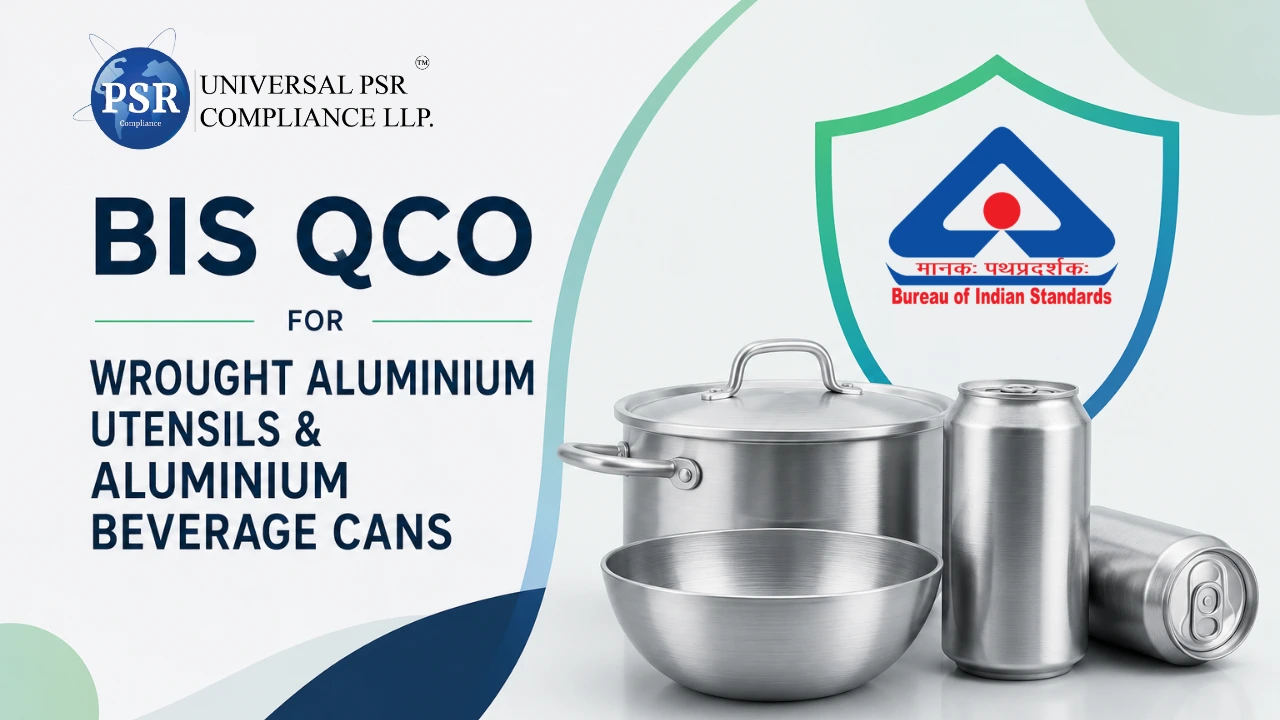
BIS Certification for Wrought Aluminium Utensils & Beverage Cans under the QCO 2026
A cookware seller once said, "It is just an aluminium utensil. Customers buy it because it is lightweight, affordable, and useful. Why would certification become such a big issue?" That is exactly where many businesses make a costly mistake.
Products like aluminium utensils and beverage cans may appear simple, but they play an essential role in everyday life. They move from factories to warehouses, retailers, restaurants, hotels, beverage companies, and finally to consumers. Until now, businesses mainly focused on product quality, design, durability, pricing, and market demand. However, the introduction of the Cookware, Utensils and Cans for Foods and Beverages (Quality Control) Order, 2026 changes the entire compliance landscape.
Under this Quality Control Order (QCO), covered products can no longer be manufactured, imported, or sold without meeting the prescribed Indian Standards and obtaining a valid BIS licence. For general enterprises, the mandatory implementation date is 1 October 2026, while small enterprises receive time until 1 January 2027 and micro enterprises until 1 April 2027. Instead of asking whether the rule will apply, businesses should now ask whether their products, manufacturing facilities, documentation, and supply chains will be fully prepared before the compliance deadline arrives.
Understanding the Cookware, Utensils and Cans for Foods and Beverages QCO, 2026
The Government of India has introduced the Cookware, Utensils and Cans for Foods and Beverages (Quality Control) Order, 2026 to improve product quality and consumer safety across the cookware and food packaging industry. The order makes BIS certification mandatory for specified products before they can legally enter the Indian market.
Currently, the order covers two important product categories:
- Wrought Aluminium Utensils – IS 1660:2024
- Aluminium Cans for Beverages – IS 14407:2023
Manufacturers and importers dealing in these products must ensure compliance with the applicable Indian Standard and obtain the BIS Standard Mark (ISI Mark) through a valid licence issued by the Bureau of Indian Standards. Once the implementation date becomes effective, these products become regulated items, making compliance an essential requirement rather than an optional quality improvement.
Why This Quality Control Order Is Important for Businesses
Many companies still believe that BIS certification is only a regulatory formality handled by the compliance department. In reality, it directly affects business growth, supply chain continuity, customer confidence, and market access.
Today, distributors, organised retailers, institutional buyers, government purchasers, hotels, restaurants, beverage manufacturers, and even online marketplaces increasingly expect products to comply with mandatory quality standards. Failure to obtain certification can delay imports, disrupt manufacturing schedules, affect dealer relationships, and create unnecessary complications during product launches. Businesses that prepare early can avoid these risks while positioning themselves as reliable suppliers in an increasingly compliance-driven market.
BIS Certification for Wrought Aluminium Utensils under IS 1660:2024
Wrought aluminium utensils continue to be one of the most widely used cookware categories across India. From households and roadside eateries to hotels, hostels, hospitals, catering businesses, restaurants, commercial kitchens, and institutional food service operations, these utensils remain popular because they are lightweight, durable, economical, and easy to maintain.
Since these products come into direct contact with food every day, maintaining consistent manufacturing quality is essential. Poor material quality, uneven thickness, weak finishing, or inadequate manufacturing controls can reduce product performance and negatively affect consumer confidence. Under the new QCO, all covered wrought aluminium utensils must comply with IS 1660:2024 and carry the BIS Standard Mark before being sold in India.
The regulation affects a wide range of businesses, including aluminium utensil manufacturers, cookware brands, private-label companies, wholesalers, importers, hotel and catering suppliers, organised retailers, e-commerce sellers, and distributors. Products manufactured exclusively for export remain outside the scope of the order, but any product intended for the domestic Indian market must satisfy the prescribed BIS requirements before commercial sale.
Why Early Compliance Can Become a Competitive Advantage
Many businesses view certification only as a legal obligation, but it can also become a significant commercial advantage. Buyers today increasingly prefer suppliers who demonstrate quality, consistency, and regulatory compliance rather than those competing only on price.
Whether supplying restaurants, hotels, distributors, institutional buyers, or retail chains, businesses with BIS-certified products often inspire greater confidence during procurement decisions. Early certification also reduces last-minute disruptions, prevents shipment delays, supports smoother product launches, and strengthens long-term relationships with dealers and commercial buyers. Instead of waiting for the compliance deadline, manufacturers and importers who begin planning early can position themselves ahead of competitors who postpone certification until the last moment.
BIS Certification for Aluminium Cans for Beverages under IS 14407:2023
Although an aluminium beverage can may appear to be nothing more than packaging, it is actually one of the most important components in the beverage industry. Every soft drink, energy drink, fruit juice, carbonated beverage, and ready-to-drink product depends on packaging that is strong, hygienic, leak-proof, and capable of protecting the contents throughout transportation, storage, and retail distribution. A single packaging failure can result in product spoilage, customer complaints, financial losses, and damage to brand reputation.
Recognizing the importance of quality and consumer safety, the Cookware, Utensils and Cans for Foods and Beverages (Quality Control) Order, 2026 makes BIS certification mandatory for Aluminium Cans for Beverages under IS 14407:2023. This requirement applies to aluminium can manufacturers, beverage companies, packaging suppliers, importers, private-label beverage brands, breweries, contract filling units, distributors, and FMCG businesses. Since beverage production depends heavily on uninterrupted packaging supplies, obtaining BIS certification early helps businesses avoid production delays, shipment issues, and disruptions in their supply chain.
How the 2026 QCO Differs from the Earlier Order
Many businesses assume that the 2026 Quality Control Order is simply an extension of the previous notification. However, the latest order introduces important changes that manufacturers and importers should understand before planning their compliance strategy.
The Cookware, Utensils and Cans for Foods and Beverages (Quality Control) Order, 2026 replaces the earlier Cookware and Utensils (Quality Control) Order, 2025. Under the revised notification, the Government has specifically notified Wrought Aluminium Utensils (IS 1660:2024) and Aluminium Cans for Beverages (IS 14407:2023). At the same time, certain standards that were included under the earlier order are no longer covered, including IS 14756:2024 for Stainless Steel Utensils, IS 13983:1994 for Stainless Steel Sinks, and IS 18427:2024 covering Three-piece Round Open-top Metal Cans for Foods and Beverages. Businesses should therefore review the latest notification carefully rather than relying on compliance planning based on the previous QCO.
Who Should Start Preparing Now?
Although the Quality Control Order directly mentions manufacturers, its impact extends across the entire supply chain. Compliance planning should not be limited to production units alone, as many other businesses may also be affected once BIS certification becomes mandatory.
The notification is particularly relevant for aluminium utensil manufacturers, aluminium beverage can manufacturers, cookware brands, beverage companies, importers, wholesalers, private-label manufacturers, packaging suppliers, distributors, retailers, hotel and catering suppliers, institutional procurement companies, e-commerce sellers, and export-oriented businesses supplying products within India. Even businesses that do not manufacture products themselves should verify whether the products they procure or sell comply with the applicable Indian Standards before the implementation date.
Products Covered Under the QCO
Businesses should carefully review their product portfolio to determine whether any of their products fall within the scope of the Cookware, Utensils and Cans for Foods and Beverages (Quality Control) Order, 2026. The following table provides an overview of the major product categories covered under the notification.
| Category | Products Covered |
|---|---|
| Wrought Aluminium Utensils | Wrought Aluminium Utensils, Aluminium Cooking Pots, Aluminium Saucepans, Aluminium Frying Pans, Aluminium Handis, Aluminium Kadhai, Aluminium Bowls, Aluminium Cooking Containers |
| Aluminium Beverage Packaging | Aluminium Beverage Cans, Beverage Packaging Cans, Soft Drink Aluminium Cans, Juice Cans, Energy Drink Aluminium Cans, Empty Aluminium Food and Beverage Containers |
Important: Every product model should be reviewed individually because differences in design, dimensions, manufacturing methods, electrical or structural specifications, and intended use may affect BIS certification planning. Businesses with multiple product lines should begin product mapping early to avoid delays during the BIS application process.
Documents Required for BIS Certification
Preparing documentation well before filing the BIS application can save businesses significant time during the approval process. Incomplete or inconsistent documents often lead to unnecessary queries, delays in product testing, and longer approval timelines. Businesses should therefore organise all technical and commercial records before beginning the certification process.
Generally, manufacturers need to prepare company registration documents, factory address proof, product specification sheets, model lists, brand or trademark documents, manufacturing process flow, quality control plans, testing equipment details, machinery information, product label drafts, packaging artwork, and other technical records required by BIS. Having these documents ready from the beginning makes the certification process much smoother and reduces the chances of application rejection or repeated clarification requests.
Common Mistakes That Delay Certification
Many manufacturers believe that BIS certification becomes important only when the implementation deadline is close. In reality, most delays happen because businesses postpone planning until the last moment. By the time they start collecting documents, arranging testing, or preparing the factory for inspection, valuable weeks or even months have already been lost.
Some of the most common issues include incomplete technical documentation, incorrect or inconsistent product labels, changing model numbers during the application process, weak quality control documentation, missing testing equipment details, poor factory preparation, incomplete manufacturing records, and importing products before verifying BIS applicability. Businesses that identify and resolve these issues early generally experience a much faster certification process with fewer compliance challenges.
Why BIS Certification Is More Than a Legal Requirement
Many businesses view BIS certification simply as a regulatory obligation. However, in today's competitive market, certification has become an important business advantage. Buyers increasingly prefer suppliers who can demonstrate compliance with recognised quality standards because it reduces procurement risks and improves confidence in the products they purchase.
A BIS-certified product also strengthens relationships with distributors, organised retailers, institutional buyers, hotels, restaurants, beverage companies, and government procurement agencies. It supports smoother market access, improves brand credibility, reduces supply chain interruptions, and positions the business as a reliable long-term supplier. Instead of seeing certification as an additional cost, businesses should view it as an investment in customer trust and sustainable growth.
How a BIS Consultant Can Simplify the Process
The BIS certification process involves much more than submitting an application. Businesses need to determine product applicability, identify the correct Indian Standard, prepare technical documentation, coordinate product testing, organise factory inspections, review labels and packaging, respond to BIS queries, and ensure continued compliance after obtaining the licence.
A professional BIS consultant helps manage each stage of this process efficiently. From documentation review and application filing to testing coordination, factory readiness, query handling, and licence approval, expert guidance can significantly reduce delays and compliance risks. For importers, consultant support becomes even more valuable because overseas manufacturers may not be familiar with Indian BIS requirements or documentation standards.
Final Takeaway
The Cookware, Utensils and Cans for Foods and Beverages (Quality Control) Order, 2026 marks an important shift for India's cookware and food packaging industry. With Wrought Aluminium Utensils under IS 1660:2024 and Aluminium Cans for Beverages under IS 14407:2023 now covered under mandatory BIS certification, businesses can no longer treat compliance as an afterthought.
Whether you manufacture, import, distribute, or sell these products, early preparation will help you avoid unnecessary disruptions, protect your supply chain, strengthen buyer confidence, and maintain uninterrupted market access. Start by reviewing your product range, identifying applicable standards, organising technical documents, preparing your factory, and planning your BIS certification well before the implementation deadline. Businesses that prepare today will be in a much stronger position than those waiting until compliance becomes urgent.
Get Expert Help with BIS Certification for Aluminium Utensils & Beverage Cans
Need assistance with BIS Certification for Wrought Aluminium Utensils under IS 1660:2024 or Aluminium Cans for Beverages under IS 14407:2023? PSR Compliance offers complete end-to-end assistance—from applicability assessment and documentation to product testing, factory inspection, BIS application filing, and licence approval.
👉 Ensure faster approvals and stress-free BIS compliance with expert guidance.
📞 +91 8796104190
📧 support@psrcompliance.com
Frequently Asked Questions (FAQs)
1. Is BIS certification mandatory for wrought aluminium utensils?
Yes. Under the Cookware, Utensils and Cans for Foods and Beverages (Quality Control) Order, 2026, wrought aluminium utensils covered under IS 1660:2024 must obtain BIS certification before they can be manufactured, imported, or sold in India after the applicable implementation date.
2. Which aluminium beverage cans require BIS certification?
Empty aluminium beverage cans intended for the Indian market must comply with IS 14407:2023 and carry a valid BIS Standard Mark. However, finished food or beverage products imported into India already packed inside aluminium cans are exempt from this QCO.
3. What is the implementation date for the QCO?
For general enterprises, the Quality Control Order becomes effective on 1 October 2026. Small enterprises must comply by 1 January 2027, while micro enterprises have until 1 April 2027.
4. Can existing stock be sold after the implementation date?
Yes. Eligible stock manufactured or imported before the implementation date may continue to be sold for up to six months, subject to the conditions specified in the notification and submission of a Chartered Accountant-certified stock declaration.
5. Who should apply for BIS certification?
The manufacturer is generally responsible for obtaining the BIS licence. However, importers, private-label brands, distributors, beverage companies, cookware brands, and retailers should also verify that the products they sell comply with the applicable BIS standards.
6. Which documents are generally required for BIS certification?
Typical documents include company registration details, factory address proof, product specifications, model lists, manufacturing process details, quality control plans, machinery details, testing equipment information, trademark documents, product labels, and other technical documents required by BIS.
7. Can products imported for research and development be exempt?
Yes. Products imported exclusively for research, testing, or product development may qualify for exemption, provided they satisfy the conditions mentioned under the Quality Control Order and are not sold commercially.
8. Why should businesses start the certification process early?
Early planning helps businesses complete documentation, testing, factory inspection, and BIS approval without affecting production schedules, imports, dealer commitments, or product launches. It also reduces the risk of last-minute compliance delays after the QCO becomes mandatory.