



Just send us your questions or concerns by starting a new case &
we will give you the help you need. Start Here...
CPCB Update
Thu, Sep 03 2026
Raju Karn
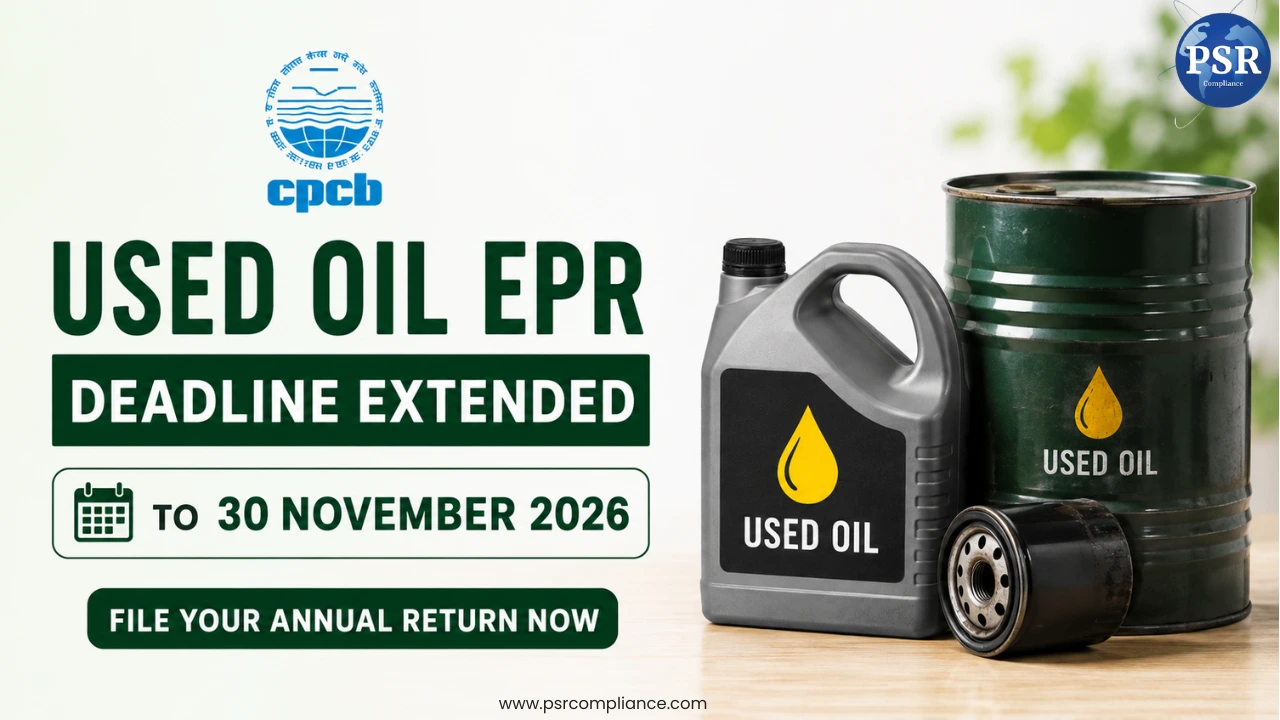
Used Oil EPR Deadline Extended to 30 November 2026 – File Your Annual Return Now
The Ministry of Environment, Forest and Climate Change (MoEFCC) has extended the deadline for filing the Used Oil EPR Annual Return for FY 2025–26. Businesses covered under the framework now have until 30 November 2026 to complete the applicable annual return filing. The extension is particularly relevant for producers and recyclers that need additional time to verify their compliance information, reconcile records and address discrepancies on the centralized EPR portal.
The Used Oil EPR framework was introduced through amendments to the Hazardous and Other Wastes (Management and Transboundary Movement) Rules and came into effect from 1 April 2024. The framework aims to ensure the environmentally sound collection, recycling and management of used oil by placing defined responsibilities on businesses covered by the EPR provisions.
What Is Used Oil EPR?
Extended Producer Responsibility (EPR) for Used Oil is a regulatory mechanism under which specified businesses have responsibilities for ensuring the environmentally sound management and recycling of used oil. The framework covers applicable producers and recyclers and establishes requirements relating to registration, EPR fulfilment, certificates, record maintenance and annual reporting.
Under the system, applicable producers are required to fulfil their EPR obligations through the prescribed mechanism, while registered recyclers play an important role in recycling used oil and generating the relevant EPR certificates. The objective is to create a traceable system in which used oil is managed through authorized channels instead of being improperly disposed of.
What Has Changed in 2026?
The major change is the extension of the FY 2025–26 Used Oil EPR Annual Return filing deadline. The earlier deadline was 30 June 2026, while the revised deadline is now 30 November 2026. This gives applicable producers and recyclers additional time to compile, verify and reconcile their compliance information before completing the annual return.
| Particular | Earlier | Revised |
|---|---|---|
| Financial Year | FY 2025–26 | FY 2025–26 |
| Compliance | Used Oil EPR Annual Return | Used Oil EPR Annual Return |
| Earlier Deadline | 30 June 2026 | — |
| Revised Deadline | — | 30 November 2026 |
| Applicable Stakeholders | Producers & Recyclers | Producers & Recyclers |
The extension should not be considered a removal or relaxation of the underlying Used Oil EPR obligations. Businesses should use the additional time to complete their compliance records, verify portal information and ensure that the Annual Return is submitted within the revised timeline.
Who Needs to File the Used Oil EPR Annual Return?
The current deadline extension is relevant to producers and recyclers covered under the Used Oil EPR framework for FY 2025–26. Businesses should first determine whether their activities fall within the applicable definitions and requirements before proceeding with their annual compliance.
Producers covered by the framework may include entities involved in the manufacture or import of applicable base oil or lubrication oil, while recyclers are entities involved in the recycling of used oil under the prescribed regulatory framework. The exact obligations can vary according to the entity's category and activities, so businesses should review their registration and compliance status carefully.
What Are the Key Responsibilities of Producers?
Applicable producers are required to register through the prescribed EPR system and fulfil their EPR obligations in accordance with the applicable rules. Their compliance activities can include maintaining relevant production or import records, purchasing or utilizing applicable EPR certificates, maintaining supporting documentation and filing the required Annual Return.
Producers should also ensure that the information reported through the EPR portal is consistent with their internal business records. Any mismatch between production or import information, EPR obligations, certificates and portal data should be identified and resolved before the Annual Return is finally submitted.
What Should Businesses Check Before Filing?
Before filing the FY 2025–26 Annual Return, businesses should review their Used Oil EPR registration details and reconcile the data used for calculating their compliance obligations. Producers should verify relevant production or import records, while recyclers should review their recycling quantities and associated records. Businesses should also verify EPR certificates and ensure that the information available on the portal matches their supporting documents.
A proper reconciliation should cover relevant invoices, production records, import records, EPR certificates, recycling records and portal information. Completing this review before filing can help businesses identify discrepancies early and reduce the risk of errors in their Annual Return.
Why Is Data Reconciliation Important?
Used Oil EPR compliance is increasingly dependent on accurate digital records and information submitted through the centralized EPR portal. A business may have completed its underlying compliance activity but still face difficulties if the figures or supporting information reported on the portal do not match its internal records.
For this reason, businesses should follow a simple compliance process: review their records, reconcile the data, correct discrepancies, prepare the Annual Return and complete the filing. The additional time provided until 30 November 2026 can be particularly useful for businesses that have large volumes of transactions or records that need to be verified before submission.
What Does the Deadline Extension Mean for Businesses?
The extension provides eligible businesses with additional time to complete their FY 2025–26 compliance, particularly where technical or operational difficulties have affected data compilation and reconciliation. However, businesses should not interpret the extension as a suspension of Used Oil EPR requirements. Registration, EPR fulfilment, record keeping and annual reporting obligations continue to apply wherever the framework is applicable.
Businesses that have not yet completed their Annual Return should therefore use the extended period to review their compliance position, verify their EPR obligations and certificates, reconcile portal data and prepare the required information. Starting early is especially important because any discrepancies or missing records may require additional time to resolve.
What Happens If the Annual Return Is Not Filed?
The Used Oil EPR framework contains reporting and compliance requirements for entities covered by its provisions, including Annual Return filing. Failure to meet applicable requirements can result in compliance issues and may expose a business to regulatory action under the applicable environmental regulations.
The revised deadline of 30 November 2026 should therefore be treated as an important compliance date. Businesses should retain the filing acknowledgement and relevant supporting records after completing the Annual Return so that they have proper evidence of their compliance activities.
Used Oil EPR Annual Return Compliance Checklist
Businesses can use the following checklist before completing their FY 2025–26 Annual Return:
- Verify Used Oil EPR registration details.
- Confirm the applicable business category.
- Review FY 2025–26 production, import or recycling data.
- Calculate and verify the applicable EPR obligation.
- Check relevant EPR certificates and transaction records.
- Reconcile portal information with internal records.
- Verify invoices and supporting documents.
- Resolve discrepancies before submission.
- Prepare and review the Annual Return.
- Complete filing within the revised deadline.
- Keep the acknowledgement and supporting records safely.
Why Businesses Should Not Wait Until 30 November 2026
Although the revised deadline provides additional time, businesses should avoid leaving the filing process until the final days. Missing documents, data discrepancies, incorrect quantities or portal-related problems can require additional time to investigate and resolve, particularly when several records need to be reconciled.
A better approach is to begin the compliance review now and complete the process in stages: data collection, reconciliation, verification, correction and final filing. This gives businesses a better opportunity to identify and address issues before the revised deadline.
How PSR Compliance Can Help With Used Oil EPR
Managing Used Oil EPR compliance involves more than simply completing an online form. Businesses need to understand their applicable requirements, organize their records, verify EPR obligations and ensure that the information submitted through the portal is accurate and properly supported.
PSR Compliance can assist businesses with Used Oil EPR registration, Annual Return preparation, compliance review, data reconciliation, EPR certificate-related compliance and portal filing assistance. If your FY 2025–26 Annual Return is still pending, our team can help you review the applicable requirements and prepare your compliance information before the 30 November 2026 deadline.
Conclusion
The extension of the Used Oil EPR Annual Return deadline from 30 June 2026 to 30 November 2026 gives applicable producers and recyclers additional time to complete their FY 2025–26 compliance. However, the extension should not be viewed as a relaxation of the underlying EPR requirements. Businesses should review their registration, reconcile production, import or recycling data, verify EPR certificates and supporting documents, resolve discrepancies and complete the Annual Return within the revised timeline.
If your Used Oil EPR Annual Return for FY 2025–26 is still pending, now is the right time to begin the compliance review rather than waiting for the final deadline. Proper preparation can help reduce filing errors and ensure that your compliance records are complete and consistent.
Need Help With Used Oil EPR Annual Return Filing?
Get professional assistance from PSR Compliance for Used Oil EPR Registration, Annual Return Filing, Data Reconciliation and Compliance Support.
📞 +91 8796104190
📧 support@psrcompliance.com
Frequently Asked Questions
1. What is the new Used Oil EPR Annual Return deadline for FY 2025–26?
The revised deadline for the applicable FY 2025–26 Used Oil EPR Annual Return is 30 November 2026.
2. What was the earlier deadline?
The earlier deadline was 30 June 2026. The deadline for the specified FY 2025–26 Annual Return has now been extended to 30 November 2026.
3. Who is covered by the deadline extension?
The extension is applicable to producers and recyclers covered under the Used Oil EPR framework for FY 2025–26.
4. Why has the Used Oil EPR deadline been extended?
The extension has been provided in view of operational and technical challenges related to compiling and reconciling compliance data on the centralized EPR portal.
5. Does the extension remove Used Oil EPR obligations?
No. The extension changes the filing timeline for the specified Annual Return. Applicable registration, EPR fulfilment, record keeping and reporting requirements continue to apply.
6. What should producers check before filing?
Producers should verify their EPR registration, production or import data, applicable EPR obligation, EPR certificates, portal information and supporting records before submitting the Annual Return.
7. What should recyclers check before filing?
Recyclers should verify their relevant recycling quantities, transaction records, EPR-related information and portal data to ensure that the Annual Return contains accurate information.
8. Can businesses wait until 30 November 2026?
Businesses have until the revised deadline, but waiting until the last day is not recommended. Early preparation provides sufficient time to resolve documentation gaps, data mismatches or portal-related issues.
9. Is Used Oil EPR mandatory?
Entities falling within the scope of the Used Oil EPR provisions must comply with the applicable requirements, including registration, EPR fulfilment and reporting obligations.
10. Can PSR Compliance help with Used Oil EPR Annual Return filing?
Yes. PSR Compliance can assist with Used Oil EPR registration, compliance review, Annual Return preparation, data reconciliation, documentation review and filing support.