
Just send us your questions or concerns by starting a new case &
we will give you the help you need. Start Here...
Maharsahtra FDA Update
Tue, Jul 21 2026
Raju Karn
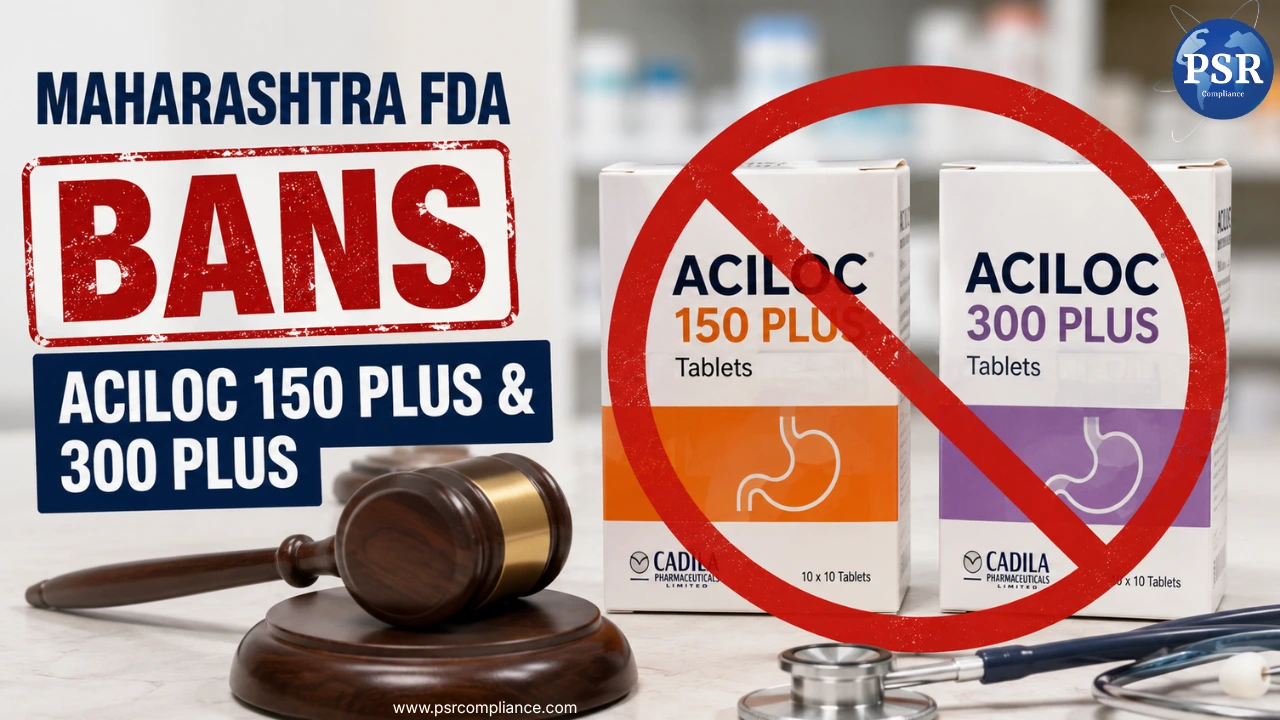
Maharashtra FDA Bans Aciloc 150 Plus & 300 Plus: Complete Update (2026)
The Maharashtra Food and Drug Administration (FDA) has taken strict regulatory action against Cadila Pharmaceuticals Ltd. by banning the sale and ordering the recall of Aciloc 150 Plus and Aciloc 300 Plus. The regulator also recalled the existing Aciloc 150 and Aciloc 300 stocks from the market due to concerns over misleading packaging and the risk of medication errors.
According to the Maharashtra FDA, the packaging of the Plus variants closely resembled the original Aciloc products, even though the medicines contain different active pharmaceutical ingredients (APIs). This similarity could lead doctors, pharmacists, and patients to mistakenly dispense or consume the wrong medicine. Around ₹2.45 crore worth of inventory has reportedly been seized during the enforcement action.
This article explains why the Maharashtra FDA banned these medicines, the difference between Ranitidine and Famotidine, the potential impact on the pharmaceutical industry, and what healthcare professionals, distributors, and consumers should know.
What Happened?
The Maharashtra FDA issued an order prohibiting the sale and directing the recall of the following medicines manufactured by Cadila Pharmaceuticals Ltd.:
- Aciloc 150 Plus
- Aciloc 300 Plus
- Aciloc 150
- Aciloc 300
The regulator stated that although the Plus variants contained a different active ingredient, they were marketed with packaging that looked almost identical to the original products. The only noticeable difference was the addition of a small "+" symbol.
The FDA considered this practice misleading because it could easily result in the wrong medicine being prescribed, dispensed, or consumed.
Why Did Maharashtra FDA Ban Aciloc Plus?
The primary reason behind the regulatory action is patient safety.
The FDA observed that both medicines looked nearly identical despite having different pharmaceutical compositions. Such similarity increases the possibility of:
- Prescription errors by doctors
- Dispensing mistakes by pharmacists
- Patients unknowingly consuming a different medicine
- Confusion during emergency treatment
- Incorrect continuation of previous prescriptions
Healthcare regulators require medicines with different formulations to have sufficiently distinct branding and packaging to reduce medication errors.
Difference Between Aciloc and Aciloc Plus
Although both medicines are used to reduce stomach acid, they contain different active pharmaceutical ingredients.
| Product | Active Ingredient | Purpose |
|---|---|---|
| Aciloc 150 / 300 | Ranitidine | Acid suppression |
| Aciloc 150 Plus / 300 Plus | Famotidine | Acid suppression |
While both medicines belong to the class of acid-reducing drugs (H2 receptor blockers), Ranitidine and Famotidine are different APIs and should not be confused simply because of similar brand names or packaging.
Why Packaging Similarity Is a Serious Issue
Medicine packaging is an important part of patient safety.
When products with different formulations have nearly identical:
- Brand names
- Colours
- Font styles
- Box designs
- Label layouts
the chances of medication errors increase significantly.
A pharmacist may accidentally hand over the wrong medicine, or a patient may assume the medicines are identical because they appear the same.
For this reason, regulators closely monitor pharmaceutical labelling and packaging practices.
Impact on the Pharmaceutical Industry
The Maharashtra FDA's action sends a strong message to pharmaceutical manufacturers about the importance of compliant branding and packaging.
Manufacturers should ensure that:
- Different formulations are clearly distinguishable.
- Packaging complies with regulatory guidelines.
- Brand extensions do not create confusion.
- Product artwork reflects the actual formulation.
- Patient safety remains the highest priority.
Companies introducing new variants should carefully evaluate whether the product's appearance could mislead healthcare professionals or consumers.
What Does This Mean for Pharmacies and Distributors?
Retail pharmacies, wholesalers, and distributors should:
- Stop selling the affected products if covered by the recall.
- Follow instructions issued by the manufacturer or regulatory authorities regarding returned stock.
- Verify inventory to identify affected batches.
- Avoid dispensing medicines that are part of the recall process.
- Inform healthcare professionals where necessary.
Proper inventory management and regulatory compliance help avoid legal complications.
Advice for Patients
If you are currently using Aciloc or Aciloc Plus, do not stop your medication without consulting your doctor.
Instead:
- Check the medicine name carefully.
- Confirm the prescribed formulation with your doctor.
- Purchase medicines only from licensed pharmacies.
- Report any suspected adverse reaction to your healthcare provider.
Patients should always rely on medical advice before changing or discontinuing prescribed treatment.
Regulatory Importance of Drug Labelling
Drug labelling is governed by various pharmaceutical regulations to ensure medicines are safe and easily identifiable.
Regulators expect manufacturers to maintain:
- Accurate product information
- Clear differentiation between formulations
- Proper warnings and instructions
- Non-misleading packaging
- Compliance with applicable drug laws
Failure to comply may result in product recalls, penalties, suspension of sales, or other regulatory actions.
How the Investigation Started
The action did not happen out of nowhere. It began with a routine inspection by the Maharashtra FDA in Amravati, where officials first noticed that Cadila Pharmaceuticals had introduced the "Plus" variants with a different active ingredient while keeping the packaging nearly unchanged.
Following this, the FDA carried out further inspections on 9 and 10 July 2026 at the company's carrying and forwarding agent (CFA) warehouses in Pune, Nagpur, and Bhiwandi (Thane district). It was during these inspections that the ₹2.45 crore worth of stock was seized.
FDA Commissioner Tukaram Mundhe stated that any brand-name confusion leading to a doctor, pharmacist, or patient receiving the wrong medicine is a matter of serious public health concern, and that compliance with branding and labelling norms must remain a top priority.
What's Next
The FDA has said that further investigation is underway, and legal action may be initiated against the company under the Drugs and Cosmetics Act, 1940, depending on the outcome.
Conclusion
The Maharashtra FDA's decision to ban the sale and recall Aciloc 150 Plus and Aciloc 300 Plus highlights the critical role of clear pharmaceutical labelling and patient safety. Even when medicines are intended for similar therapeutic purposes, differences in active ingredients require distinct branding and packaging to minimise the risk of medication errors.
For pharmaceutical manufacturers, this serves as an important reminder to ensure that product presentation complies with regulatory expectations. For healthcare professionals and patients, it reinforces the need to verify medicines carefully before prescribing, dispensing, or consuming them.
As India's pharmaceutical regulations continue to evolve, maintaining compliance with labelling, packaging, licensing, and quality standards remains essential for protecting public health.
Need Pharmaceutical Regulatory Compliance Assistance?
If your pharmaceutical company requires assistance with Drug License, CDSCO Registration, Manufacturing License, Import License, Labelling Compliance, or other regulatory approvals, PSR Compliance offers end-to-end compliance support across India.
📞 Call: +91 8796104190
📧 Email: support@psrcompliance.com
🌐 Website: https://www.psrcompliance.com
Frequently Asked Questions (FAQs)
Why did the Maharashtra FDA ban Aciloc 150 Plus and Aciloc 300 Plus?
The Maharashtra FDA banned the sale and ordered the recall because the Plus variants had packaging that closely resembled the original Aciloc products despite containing different active pharmaceutical ingredients, increasing the risk of medication errors.
What is the difference between Aciloc and Aciloc Plus?
Aciloc 150 and 300 contain Ranitidine, while Aciloc 150 Plus and 300 Plus contain Famotidine. Although both are used to reduce stomach acid, they are different medicines.
How much inventory was seized?
According to the regulatory action, approximately ₹2.45 crore worth of inventory was seized during the enforcement process.
Should patients stop taking Aciloc immediately?
Patients should not discontinue any prescribed medicine without consulting their doctor. They should verify which formulation has been prescribed and seek medical advice if they have concerns.
What lessons can pharmaceutical companies learn from this action?
Manufacturers should ensure that medicines with different formulations have clearly distinguishable names, packaging, and labelling to reduce the risk of confusion and comply with regulatory requirements.