Fri, Mar 06 2026
Raju Karn
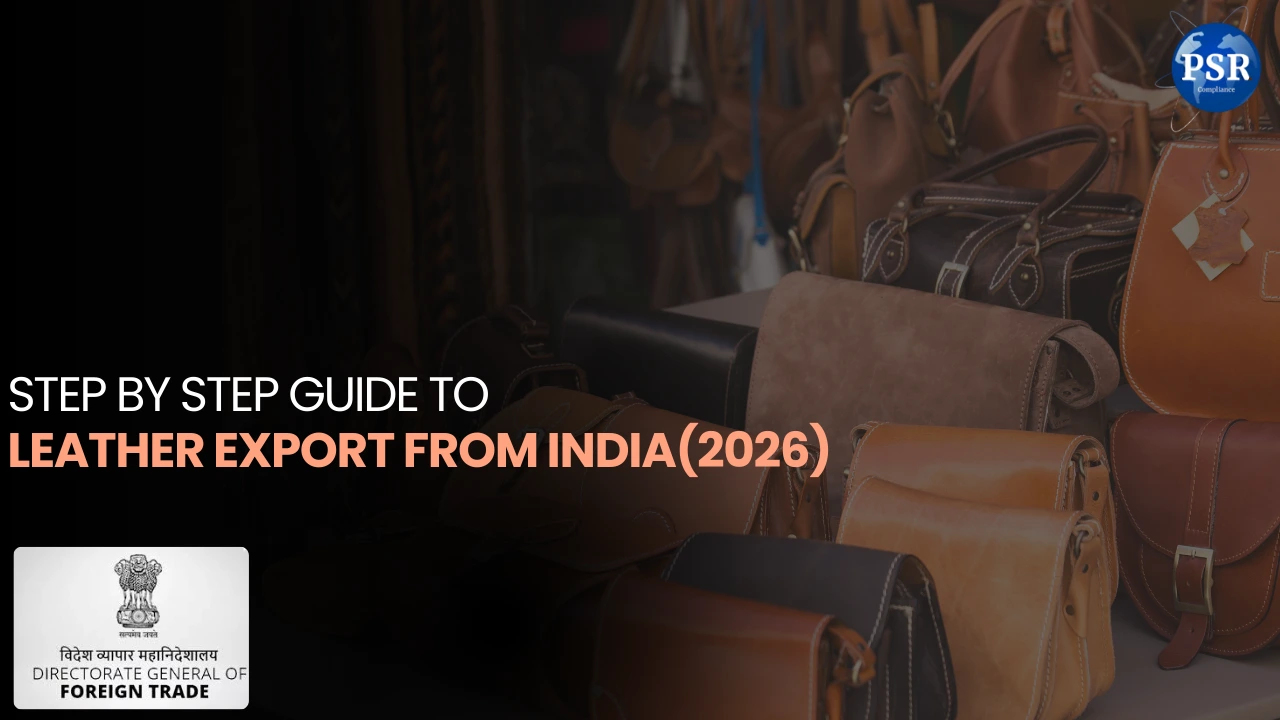
Complete Guide to Leather Export from India in 2026
India has been one of the largest suppliers of leather and leather products to global markets for decades. From handmade leather goods to finished leather garments and footwear, leather export from India plays a major role in the country’s export economy.
However, many entrepreneurs and manufacturers who want to enter the export business often struggle to understand how leather export actually works, which licenses are required, and which authorities regulate the sector.
This guide explains everything you need to know about leather export in India in 2026, including regulations, registration requirements, export process, documents, and practical insights for businesses planning to export leather products internationally.
Overview of Leather Export Industry in India
India is among the top leather exporters in the world, supplying products to major markets such as the United States, Germany, the United Kingdom, Italy, and France.
The Indian leather industry exports a wide range of products, including:
➤ Finished leather
➤ Leather footwear
➤ Leather garments
➤ Leather bags and accessories
➤ Saddlery and harness items
➤ Leather gloves
According to recent leather export data, India exports billions of dollars worth of leather products every year. Cities such as Kanpur, Chennai, Agra, Kolkata, and Noida have become major manufacturing hubs.
Why Leather Export from India Is Growing
There are several reasons why India leather export continues to grow steadily.
1. Strong Manufacturing Base
India has a large network of leather processing units and manufacturers capable of producing both raw and finished leather goods.
2. Skilled Workforce
Traditional leather craftsmanship combined with modern manufacturing techniques makes Indian leather products competitive in global markets.
3. Government Support
The government supports exporters through policies, export incentives, and industry organizations like the Leather Export Promotion Council.
4. Global Demand
Demand for high-quality leather products such as shoes, jackets, belts, and handbags continues to grow worldwide.
What Is the Leather Export Promotion Council (LEPC)?
The Leather Export Promotion Council (LEPC) is the main body that promotes and regulates leather exports from India.
LEPC was established by the Government of India to:
- Promote Indian leather products in international markets
- Support exporters with market insights and trade data
- Organize international trade fairs and exhibitions
- Assist businesses with export procedures and compliance
For businesses involved in leather export India, membership with the Leather Export Promotion Council is usually required to obtain export benefits.
Registrations Required for Leather Export in India
Before starting a leather export business, companies must obtain several registrations and approvals.
1. Business Registration
You must first register your business as one of the following:
▪ Private Limited Company
▪ LLP (Limited Liability Partnership)
▪ Partnership Firm
▪ Proprietorship
This allows you to legally operate as an exporter.
2. Import Export Code (IEC)
The Import Export Code (IEC) is issued by the Directorate General of Foreign Trade (DGFT).
Without IEC, no company can export goods from India.
The IEC acts as the primary identification number for exporters and importers.
3. RCMC Certificate
Exporters must obtain the Registration Cum Membership Certificate (RCMC) from the appropriate Export Promotion Council.
For leather exporters, the Leather Export Promotion Council issues the RCMC certificate.
This certificate allows exporters to:
▪ Participate in export promotion programs
▪ Claim government export benefits
▪ Access industry support and guidance
4. GST Registration
GST registration is required for businesses involved in the supply and export of goods.
Exporters can claim GST refunds on exported products, which helps reduce overall costs.
Types of Leather Products Exported from India
India exports a wide variety of leather goods.
Some of the most common exported products include:
Finished Leather
Processed leather used for manufacturing footwear, garments, and accessories.
Leather Footwear
India is one of the largest exporters of leather footwear worldwide.
Leather Garments
Jackets, coats, and fashion apparel made from leather are highly popular in international markets.
Leather Accessories
Products like belts, handbags, wallets, and purses are widely exported.
Saddlery and Harness Products
These products are commonly exported to European markets.
Step-by-Step Process to Start Leather Export from India
Starting a leather export business involves several structured steps.
Step 1: Market Research
Identify which countries import the type of leather products you manufacture.
Understand buyer preferences, pricing trends, and quality standards.
Step 2: Register Your Business
Set up a legal entity and obtain required registrations such as PAN and GST.
Step 3: Obtain IEC Certificate
Apply for the Import Export Code through the DGFT portal.
Step 4: Apply for RCMC from LEPC
Register with the Leather Export Promotion Council to obtain the RCMC certificate.
This registration connects your business to the leather export industry network.
Step 5: Find International Buyers
You can connect with buyers through:
International trade fairs
Export promotion events
Online B2B platforms
Trade delegations organized by export councils
Step 6: Arrange Logistics and Shipping
Exporters must coordinate with freight forwarders, shipping companies, and customs authorities to send goods internationally.
Documents Required for Leather Export
To complete export transactions, businesses must maintain proper documentation.
Important documents include:
→ Import Export Code (IEC)
→ RCMC certificate
→ GST registration
→ Commercial invoice
→ Packing list
→ Bill of lading or airway bill
→ Certificate of origin
→ Export declaration
These documents are required for customs clearance and international trade compliance.
Major Leather Export Hubs in India
India has several well-known leather manufacturing clusters.
Some of the major leather export hubs include:
➜ Kanpur – Known for saddlery and leather goods
➜ Chennai – Large leather processing and footwear manufacturing hub
➜ Agra – Famous for leather footwear exports
➜ Kolkata – Major leather processing center
➜ Noida – Home to many modern leather export houses
Several businesses, including leather export houses in Noida, supply products to international fashion brands.
Challenges in Leather Export Business
Although the leather export industry offers great opportunities, businesses also face certain challenges.
Environmental Compliance
Leather processing requires strict environmental regulations related to waste management and pollution control.
Quality Standards
International buyers expect high-quality products and strict compliance with global standards.
Global Competition
Countries such as Vietnam, China, and Bangladesh are strong competitors in leather exports.
Market Fluctuations
Demand for leather products can vary depending on global economic conditions.
Real Life Example
A small manufacturing company, Shivam Leather Crafts Pvt. Ltd. based in Noida, Uttar Pradesh, wanted to start exporting finished leather bags and accessories to buyers in Italy and Germany. Although the company had good product quality, they were unable to move forward because they did not have the required export registrations like Import Export Code (IEC) and RCMC from the Leather Export Promotion Council. Due to a lack of knowledge about export compliance, their first international order was getting delayed.
At this stage, PSR Compliance guided the company through the complete process. The team helped them obtain their IEC registration, assisted in applying for the RCMC certificate from the Leather Export Promotion Council, and ensured all documentation was correctly submitted. Within a few weeks, Shivam Leather Crafts received the required approvals and successfully shipped its first export order. With the support of PSR Compliance, the company was able to enter the international leather market smoothly and start building long-term relationships with overseas buyers.
Planning to start a leather export business from India but unsure about the registrations and approvals?
PSR Compliance can help you with IEC registration, RCMC certification, and complete export compliance support. Our experts make the process simple so you can focus on growing your export business.
📞 Call PSR Compliance today at 8796104190 and get professional assistance to start your leather export journey smoothly.
FAQs
1. What are the major leather products exported from India?
India mainly exports leather footwear, footwear components, leather garments, and accessories such as bags and belts.
2. Which countries import the most leather from India?
The largest importers of Indian leather products include the USA, Germany, the UK, Italy, and France.
3. Which country is the biggest buyer of Indian leather exports?
The United States is the largest importer of Indian leather products, accounting for around 17% of total exports.
4. Why is the leather industry important for India’s economy?
The leather sector is among India’s top ten foreign exchange earning industries due to strong global demand.
5. What documents are required to export leather from India?
Exporters need an IEC, GST registration, and an RCMC from the Council for Leather Exports.
6. What is the future growth of the leather export market in India?
India’s leather export market is expected to reach around USD 25.48 billion by 2030 with a projected 7.7% CAGR.
7. How can businesses start a leather export business in India?
Businesses can start by obtaining an IEC, registering with the Council for Leather Exports, and selling globally through platforms like Amazon Global Selling.
8. What drives global demand for Indian leather products?
Demand for Indian leather exports is mainly driven by the global fashion, footwear, and automotive industries.
9. What challenges does the Indian leather export industry face?
The industry faces challenges such as high labor costs, infrastructure limitations, and competition from China, Vietnam, and Bangladesh.
10. Are there trade agreements that benefit Indian leather exports?
Yes, trade agreements like the India-EU FTA help reduce tariffs on Indian leather exports to European markets.