
Just send us your questions or concerns by starting a new case &
we will give you the help you need. Start Here...
ISO Certification
Thu, Aug 20 2026
Raju Karn
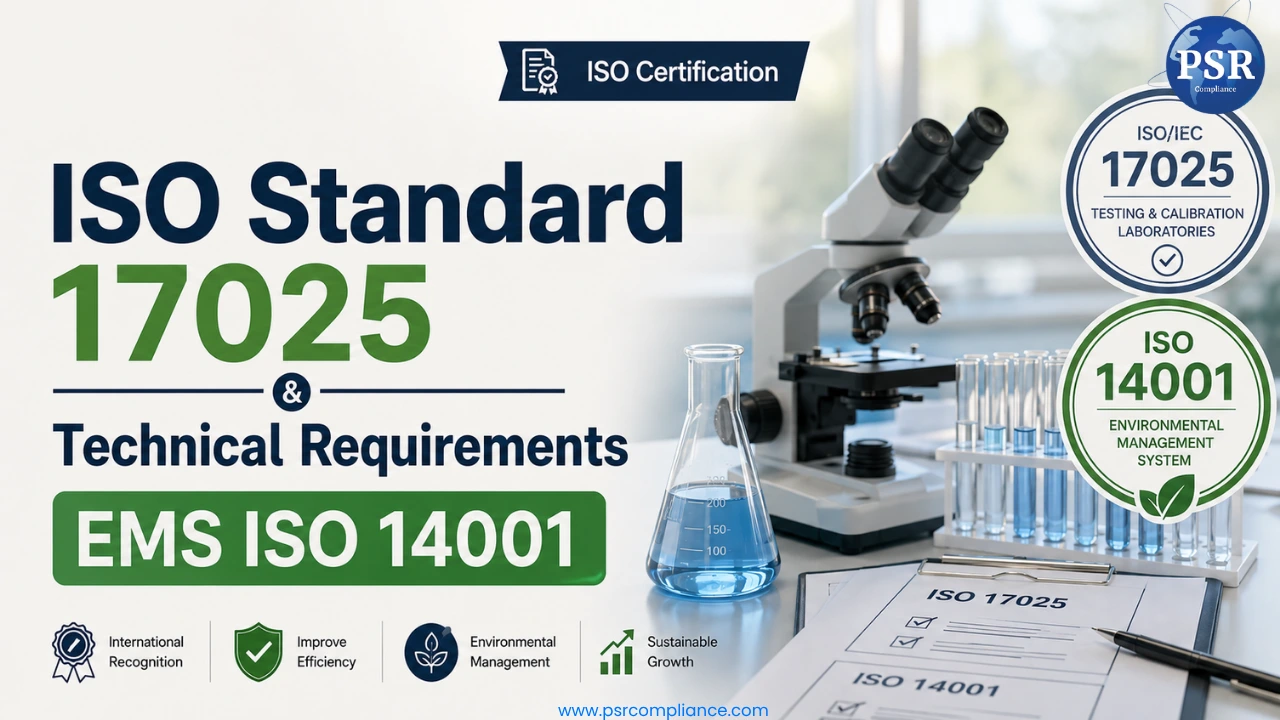
ISO 17025 Technical Requirements & ISO 14001 EMS for Testing Laboratories
For a testing laboratory, accuracy is the foundation of trust. A test report is not just a piece of paper-it can influence product safety, manufacturing decisions, regulatory approvals, and major business contracts. This is why laboratories need strong systems to prove that their testing methods, equipment, staff, and results can be trusted. The ISO/IEC 17025 standard focuses on the technical competence of testing and calibration laboratories. It helps laboratories demonstrate that they can produce reliable and consistent results.
But technical competence is only one part of running a modern laboratory. Laboratories that handle chemicals, biological materials, hazardous waste, plastics, electronic waste, or other environmentally sensitive materials also need to manage their environmental impact. This is where ISO 14001 Environmental Management System (EMS) becomes important.
By combining ISO/IEC 17025 with an effective ISO 14001 Environmental Management System, laboratories can strengthen technical credibility, improve environmental controls, reduce operational risks, and become more attractive to large corporate clients.
Why Technical Competence Is a Commercial Goldmine
In the testing business, the main product is the test result. If that result is inaccurate, the consequences can be serious.
A wrong laboratory result could contribute to a defective product entering the market, an unsafe material being approved, or a manufacturing decision being based on incorrect information. Because of these risks, large businesses often prefer laboratories that can demonstrate recognised technical competence.
The ISO Standard 17025 technical requirements help laboratories establish systems for competent personnel, suitable equipment, reliable testing methods, controlled conditions, and accurate reporting.
The Commercial Benefit
A technically competent laboratory can build greater confidence among customers and business partners. Instead of competing only on price, the laboratory can compete on:
- Accuracy of test results
- Technical competence
- Reliable reporting
- Traceable measurements
- Consistent testing processes
- Strong quality controls
- Customer confidence
For industries such as pharmaceuticals, food, automotive, chemicals, construction, and manufacturing, reliable laboratory data can be extremely valuable.
Decoding ISO Standard 17025 Technical Requirements
ISO/IEC 17025 establishes requirements that laboratories need to follow to demonstrate their competence in testing and calibration activities.
The technical requirements focus on whether a laboratory has the right people, suitable equipment, controlled facilities, reliable methods, and proper systems for handling test items and producing valid results.
Here are five important technical areas every laboratory needs to manage.
1. Personnel Competence
A laboratory cannot depend on equipment alone. Skilled and competent people are essential for obtaining reliable results.
Laboratories should ensure that technicians, samplers, analysts, and quality personnel have the necessary education, training, skills, and experience for their assigned activities.
- Important records may include:
- Education and qualification records
- Training records
- Competency assessments
- Authorisation for specific testing activities
- Ongoing performance monitoring
- Records of relevant experience
The objective is simple: the person performing the test must be competent to perform it correctly.
2. Facilities and Environmental Conditions
The laboratory environment can directly affect test results.
For example, temperature, humidity, dust, vibration, electromagnetic interference, contamination, or other environmental conditions can influence certain testing activities.
Therefore, laboratories may need to monitor and control conditions such as:
- Temperature
- Humidity
- Dust and contamination
- Ventilation
- Lighting
- Vibration
- Electromagnetic interference
The exact controls depend on the type of testing being performed.
A laboratory testing sensitive materials cannot treat its testing area like an ordinary office. The environment must support the accuracy and reliability of the testing process.
3. Equipment and Metrological Traceability
Laboratory results are only as reliable as the equipment used to produce them.
Testing and measuring equipment should be suitable for its intended purpose and properly maintained, calibrated, or verified where required.
Metrological traceability is particularly important because it helps establish a documented relationship between a measurement result and an appropriate reference through an unbroken chain of calibrations.
A proper equipment management system should cover:
- Equipment identification
- Calibration requirements
- Maintenance schedules
- Verification activities
- Equipment status
- Handling of defective equipment
- Calibration records
- Measurement traceability
If equipment is found to be defective or outside specified requirements, the laboratory needs a controlled process to prevent unreliable results from being reported.
4. Method Validation
A laboratory must have confidence that its testing methods are suitable for their intended purpose.
Where standard methods are used, the laboratory needs to ensure that the method is appropriate and properly implemented.
When a laboratory develops or modifies a testing method, method validation becomes important. Validation provides evidence that the method can achieve the required performance under specified conditions.
Depending on the test, validation may consider factors such as:
- Accuracy
- Precision
- Selectivity
- Detection limits
- Repeatability
- Reproducibility
- Measurement uncertainty
A properly validated method gives customers greater confidence in the results.
5. Handling of Test Items
Client samples must be properly identified and controlled from receipt through testing and final reporting.
A laboratory should have processes to prevent:
- Sample mix-ups
- Contamination
- Damage
- Deterioration
- Incorrect storage
- Loss of identification
A strong sample management system can include unique sample IDs, labels, records, storage conditions, and controlled movement of samples within the laboratory.
Why Laboratories Need an Environmental Management System ISO 14001
An Environmental Management System (EMS) provides a structured way for an organisation to identify, control, monitor, and improve its environmental performance.
For a laboratory, the EMS can cover activities related to:
- Chemical use
- Hazardous waste
- Water consumption
- Energy consumption
- Waste segregation
- Chemical storage
- Emergency preparedness
- Environmental legal requirements
- Resource efficiency
- Environmental monitoring
ISO 14001 can therefore complement ISO/IEC 17025 by addressing environmental risks alongside technical and quality requirements.
Facilities and Environmental Conditions Under ISO 17025
Laboratory facilities are not simply physical spaces. They can directly influence the validity of testing results.
For example, extreme temperature may affect certain material testing activities, while poor hygiene or uncontrolled ventilation could create contamination risks in microbiological testing.
What Should Laboratories Consider?
Environmental Monitoring:
Depending on the testing activity, laboratories may need suitable systems to monitor temperature, humidity, dust, pressure, or other relevant environmental parameters.
Cross-Contamination Prevention:
Testing areas should be appropriately designed and controlled to reduce the risk of contamination between incompatible activities.
Access Control:
Sensitive testing areas may require controlled access to protect samples, equipment, personnel, and testing conditions.
The controls should always be appropriate to the laboratory's specific activities and risks.
The Environmental Risk of Laboratory Operations
Laboratories can generate several types of waste during routine operations.
- Common examples include:
- Chemical waste
- Biological waste
- Contaminated laboratory materials
- Used plastics
- Broken glass
- Batteries and electronic waste
- Packaging waste
- Wastewater
An EMS helps the organisation identify these environmental aspects and establish suitable controls.
For example, a laboratory may create procedures for waste segregation, storage, authorised disposal, emergency response, chemical handling, and environmental monitoring.
Equipment and Metrological Traceability: Why It Matters
Equipment management is one of the most important areas for any testing laboratory.
| Technical Requirement | What It Means for the Laboratory | Business Benefit |
|---|---|---|
| Equipment Maintenance | Equipment is maintained according to defined requirements. | Reduces unexpected breakdowns and testing delays. |
| Calibration | Measuring equipment is calibrated or verified as required. | Improves confidence in measurement results. |
| Defective Equipment Control | Equipment that is unsuitable is identified and controlled. | Helps prevent unreliable data from being used. |
| Metrological Traceability | Measurement results are linked to appropriate references through a documented chain. | Strengthens confidence in laboratory measurements. |
| Equipment Records | Calibration, maintenance, and status information is documented. | Makes audits and equipment management easier. |
Good equipment management is not only an audit requirement. It can also protect a laboratory from unnecessary downtime, disputed results, and loss of customer confidence.
How ISO 17025 and ISO 14001 Can Help Laboratories Win Contracts
Large organisations increasingly evaluate suppliers using multiple criteria. Technical capability is important, but environmental responsibility can also influence supplier selection.
A laboratory working with major manufacturers, exporters, pharmaceutical companies, automotive businesses, or infrastructure companies may encounter customer requirements relating to:
- Laboratory competence
- Quality management
- Environmental performance
- Waste management
- Legal compliance
- Sustainability
- Risk management
- Documentation and traceability
This is where having both ISO/IEC 17025 competence and ISO 14001 environmental management can strengthen the laboratory's commercial position.
Key Elements of an EMS ISO 14001 for Laboratories
A laboratory developing an ISO 14001 Environmental Management System should consider the environmental aspects of its operations and establish suitable controls.
Important elements include:
Environmental Policy
The organisation should establish an environmental policy that reflects its activities, environmental responsibilities, and commitment to continual improvement.
Identification of Environmental Aspects
The laboratory should identify activities that can interact with the environment, such as chemical use, waste generation, energy consumption, water use, and emissions.
Legal and Compliance Obligations
Applicable environmental laws, regulations, permits, and other compliance obligations should be identified and monitored.
Environmental Objectives
The laboratory can establish measurable objectives for improving environmental performance.
Examples may include:
- Reducing energy consumption
- Reducing laboratory waste
- Improving waste segregation
- Reducing water consumption
- Improving chemical storage controls
- Operational Controls
Procedures and controls should be established for activities that can create significant environmental impacts.
Emergency Preparedness
Laboratories handling chemicals and hazardous materials should prepare for potential emergencies such as spills, leaks, fires, or accidental releases.
Monitoring and Measurement
Relevant environmental performance indicators should be monitored to determine whether objectives are being achieved.
Management Review and Continual Improvement
Management should periodically review the EMS and identify opportunities for improvement.
ISO 17025 and ISO 14001: What's the Difference?
| Factor | ISO/IEC 17025 | ISO 14001 |
|---|---|---|
| Main Focus | Laboratory competence | Environmental management |
| Applies To | Testing and calibration laboratories | Organisations across different sectors |
| Key Objective | Reliable and valid test/calibration results | Improved environmental performance |
| Major Areas | Personnel, equipment, methods, facilities, samples, reporting | Environmental aspects, compliance, objectives, operational controls |
| Business Value | Builds confidence in laboratory results | Demonstrates systematic environmental management |
| Typical Benefit | Supports laboratory credibility and recognition | Supports environmental responsibility and risk management |
These standards address different needs, but they can complement each other when implemented appropriately.
Laboratory Compliance Checklist
Laboratory owners can use the following checklist to review their current systems:
Personnel Audit: Does every technician have documented training, competency records, and authorisation for assigned tests?
Environment Check: Are relevant testing conditions such as temperature and humidity properly monitored?
Calibration Routine: Is measuring equipment calibrated or verified as required?
Method Validation: Are testing methods suitable for their intended purpose, with validation performed where required?
Sample Tracking: Can every client sample be identified and traced throughout the testing process?
Quality Control: Does the laboratory use suitable quality control and proficiency testing activities?
Report Integrity: Are reports clear, accurate, and compliant with applicable reporting requirements?
Waste Management: Are chemical, biological, plastic, glass, and electronic wastes properly identified and controlled?
Legal Compliance: Are applicable environmental compliance obligations identified and monitored?
EMS Review: Does management regularly review environmental performance and improvement opportunities?
Strengthen Your Laboratory with ISO 17025 & ISO 14001
Build confidence in your laboratory's technical competence while creating a structured approach to environmental management. PSR Compliance provides professional consultancy and documentation support for laboratories working toward ISO/IEC 17025 and ISO 14001 requirements.
Get guidance on documentation, implementation, compliance requirements, and certification preparation.
Contact PSR Compliance
📞 Call: +91 8796104190
📧 Email: support@psrcompliance.com
Frequently Asked Questions
Is ISO 17025 mandatory for all testing laboratories in India?
No. ISO/IEC 17025 certification or accreditation is not automatically mandatory for every laboratory. However, it can be essential where customers, regulators, tenders, or industry requirements require recognised laboratory competence.
What are the main technical requirements of ISO 17025?
The key areas include personnel competence, suitable facilities and environmental conditions, equipment management, metrological traceability, testing methods, method validation, handling of test items, quality control, and reporting of results.
Why is ISO 14001 useful for testing laboratories?
ISO 14001 helps laboratories systematically manage environmental aspects such as chemical use, hazardous waste, energy consumption, water use, and other environmental impacts associated with laboratory operations.
Can a laboratory have both ISO 17025 and ISO 14001?
Yes. The two standards address different areas. ISO/IEC 17025 focuses on laboratory competence and reliable testing or calibration results, while ISO 14001 focuses on environmental management. They can complement each other when implemented appropriately.
What documents are generally required for an ISO 14001 EMS?
The documentation depends on the laboratory's activities and environmental risks. It may include the environmental policy, environmental aspects and impacts, compliance obligations, objectives, operational controls, emergency procedures, monitoring records, internal audit records, and management review records.
How much does ISO 14001 certification cost in India?
There is no single fixed cost. The total cost can depend on the organisation's size, scope, number of locations, complexity of activities, existing EMS, implementation requirements, and certification body audit fees.
How long is ISO 14001 certification valid?
An ISO 14001 certificate is generally issued for a three-year certification cycle, subject to successful surveillance audits and continued conformity with the applicable requirements.
Can PSR Compliance help with ISO 17025 and ISO 14001 certification?
Yes. PSR Compliance can provide consultancy and documentation support for businesses and laboratories seeking ISO-related compliance and certification assistance.