Sat, Mar 07 2026
Raju Karn
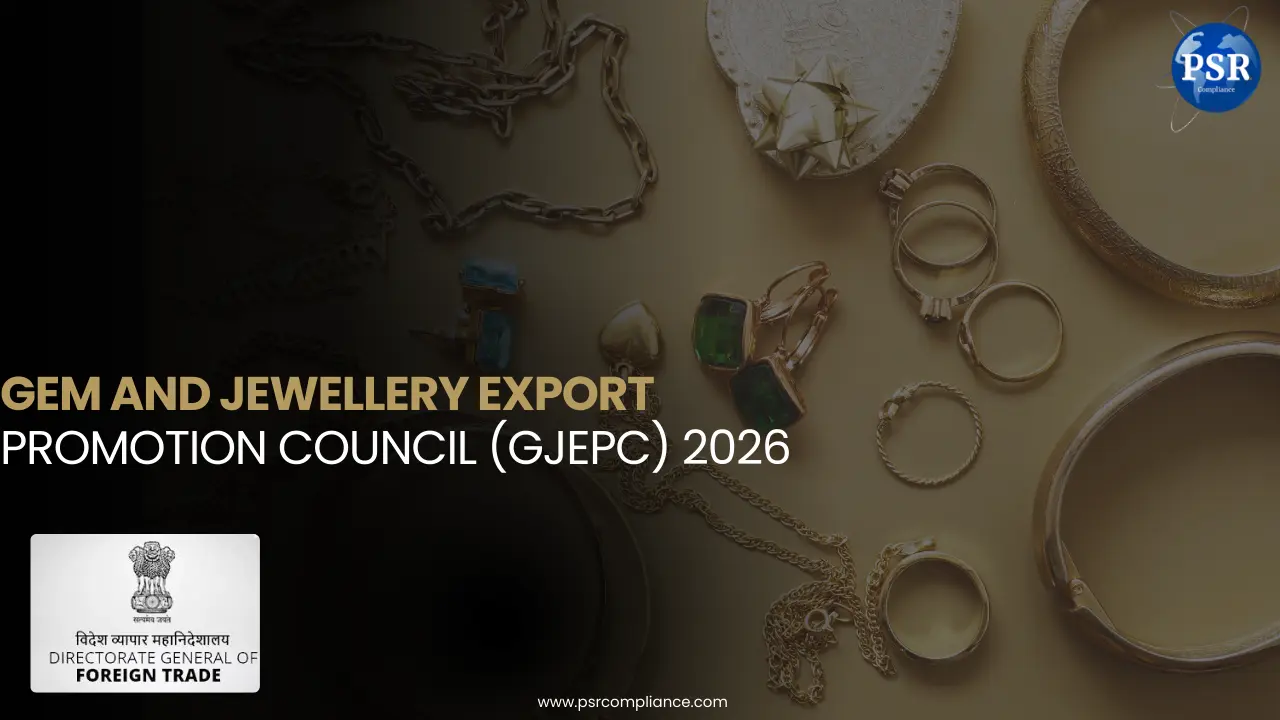
Gem and Jewellery Export Promotion Council (GJEPC) 2026 – Step by Step Guide for Exporters
In cities like Jaipur, Surat, Mumbai, and Delhi, thousands of businesses are involved in making and selling jewellery. Some companies deal in gold jewellery, diamonds, gemstones, and artificial jewellery, while others manufacture jewellery for international markets. Many of these businesses eventually want to start jewellery export from India because global demand for Indian jewellery is very strong.
However, when businesses start planning exports, they often learn that they need membership from the Gem and Jewellery Export Promotion Council (GJEPC). Without this registration, exporters may face difficulties in getting government support, export benefits, and international trade opportunities.
This guide explains in simple language what the Gem and Jewellery Export Promotion Council is, why exporters need it, the registration process, required documents, and how it helps jewellery exporters grow internationally.
What is Gem and Jewellery Export Promotion Council (GJEPC)?
The Gem and Jewellery Export Promotion Council (GJEPC) is an organization supported by the Government of India that helps promote gems and jewellery export from India.
It works under the Ministry of Commerce and Industry and supports businesses involved in:
● Diamonds
● Precious stones
● Gold jewellery
● Silver jewellery
● Artificial jewellery
● Gemstone products
The main goal of the Gems and Jewellery Export Promotion Council is to help Indian exporters connect with international markets and grow the country’s jewellery export industry.
Today, India is one of the largest exporters of gems and jewellery in the world, and GJEPC plays a major role in supporting exporters.
Why is GJEPC Important for Jewellery Exporters?
When businesses plan jewellery export from India, they need proper government recognition.
The Gem and Jewellery Export Promotion Council helps exporters by providing:
➤ Export industry support
➤ Government export schemes
➤ International trade opportunities
➤ Market information
➤ Participation in global exhibitions
Membership in the council also provides an RCMC certificate (Registration Cum Membership Certificate), which is required for many export benefits.
Types of Jewellery Export Businesses in India
Businesses involved in India gems and jewellery export usually operate in different segments.
Diamond Exporters
Companies dealing in diamond cutting, polishing, and exporting finished diamonds.
Precious Jewellery Exporters
Businesses exporting gold, silver, platinum, and gemstone jewellery.
Artificial Jewellery Exporters
Many companies in cities like Jaipur and Delhi export artificial jewellery from India to global fashion markets.
Gemstone Exporters
Businesses exporting natural gemstones such as emeralds, rubies, and sapphires.
Each category plays an important role in India’s jewellery export industry.
Who Should Apply for GJEPC Membership?
Any business involved in gem and jewellery export should apply for membership in the Gem and Jewellery Export Promotion Council.
Common businesses that require this registration include:
➜ Jewellery manufacturers exporting products
➜ Diamond traders and exporters
➜ Artificial jewellery exporters
➜ Gemstone exporters
➜ Jewellery wholesalers involved in exports
➜ Export companies dealing in precious metals and stones
Even small businesses in Jaipur’s jewellery market or Surat’s diamond industry often apply for this membership when they start exporting internationall
Advantages of GJEPC Registration
Getting registered with the Gems and Jewellery Export Promotion Council provides several benefits.
Government Recognition
Exporters become officially recognized members of the jewellery export industry.
Access to International Markets
Members get opportunities to participate in global trade shows and exhibitions.
Export Promotion Support
The council helps businesses expand their jewellery export from India.
Market Information
Exporters receive updates on global market trends and demand.
Export Incentives
Members can access government export schemes and benefits.
These advantages help businesses grow faster in international markets.
State-wise GJEPC Export Base in India (2026 Guide)
| State | Major Gem & Jewellery Hub | Export Activity / Specialization |
|---|---|---|
| Maharashtra | Mumbai | Diamond trading, polished diamonds, major export documentation hub |
| Gujarat | Surat, Ahmedabad | Diamond cutting & polishing, lab-grown diamonds, largest manufacturing base |
| Rajasthan | Jaipur | Colored gemstones, traditional jewellery, handcrafted export items |
| Tamil Nadu | Chennai | Gold jewellery manufacturing, export processing units |
| West Bengal | Kolkata | Handcrafted gold jewellery, antique designs, gemstone trading |
| Delhi NCR | Delhi, Noida, Gurgaon | Jewellery showrooms, export offices, design and trading hub |
| Uttar Pradesh | Noida, Kanpur | Jewellery designing units, small-scale manufacturing and export support |
| Karnataka | Bengaluru | Diamond and gold jewellery design, IT-based jewellery tech support |
| Telangana | Hyderabad | Pearl jewellery (Hyderabad pearls), diamond trading, export centres |
| Madhya Pradesh | Indore | Emerging jewellery manufacturing and gemstone processing |
Documents Required for GJEPC Registration
To apply for Gem and Jewellery Export Promotion Council membership, businesses usually need:
→ Import Export Code (IEC)
→ PAN card of the company
→ GST registration certificate
→ Business registration documents
→ Bank certificate or cancelled cheque
→ Company address proof
→ Director or partner identity proof
Additional documents may be required depending on the business type.
GJEPC Registration Process
Step 1 – Obtain Import Export Code (IEC)
The first step in the GJEPC registration process is to obtain an Import Export Code (IEC). This code is issued by the Directorate General of Foreign Trade (DGFT) and is necessary for any business that wants to import or export goods from India. Without this code, international trade is not allowed. The business must apply online by providing basic company details and required documents. Once approved, the IEC is issued and remains valid for a lifetime.
Step 2 – Create an Account on GJEPC Portal
After getting the IEC, the exporter must create an account on the official portal of the Gem and Jewellery Export Promotion Council. This account is needed to access all registration services online. During registration, basic details such as company name, contact information, and IEC number must be entered carefully to complete the signup process.
Step 3 – Submit Application
Once the account is created, the exporter fills out the online application form. This form includes detailed information about the business, such as company profile, type of jewellery products, and export activities. The exporter also uploads important documents like GST registration, business proof, and IEC certificate. These documents help the council verify the authenticity of the business.
Step 4 – Pay Membership Fee
After submitting the application, the exporter must pay the required membership fee. This payment is necessary to process the application further. It confirms the intention of the business to become a member of the Gem and Jewellery Export Promotion Council.
Step 5 – Verification and Approval
In this final step, the council checks all the details and documents provided in the application. This process is called verification. If everything is correct, the application is approved and the Registration-Cum-Membership Certificate (RCMC) is issued. This certificate confirms that the exporter is an official member of the Gem and Jewellery Export Promotion Council and is allowed to legally export gem and jewellery products from India.
Problems Businesses Face Without GJEPC Membership
Some exporters try to operate without registering with the Gem and Jewellery Export Promotion Council, which can create difficulties.
Common problems include:
☒ Missing export promotion benefits
☒ Limited access to international trade fairs
☒ Difficulty claiming government export schemes
☒ Lack of industry recognition
☒ Fewer networking opportunities
Because of this, most serious exporters prefer obtaining GJEPC membership before starting export operations.
GJEPC Registration Fee, Timeline, and Validity
Registration Fee
The membership fee depends on the type and size of the exporting company.
Small exporters usually pay lower fees compared to large export houses.
Approval Timeline
The registration process typically takes around:
7 to 15 working days
if all documents are submitted correctly.
Validity
The RCMC certificate issued by the Gem and Jewellery Export Promotion Council generally requires periodic renewal according to export regulations.
Real-Life Example
A jewellery manufacturing company named Raj Gems & Jewellery Pvt. Ltd., Jaipur planned to start exporting gemstone jewellery to buyers in Dubai and the United States. Although the company had strong production capacity, they were not familiar with export registrations required for the jewellery industry.
The company contacted PSR Compliance for assistance. The team helped them complete the Gem and Jewellery Export Promotion Council registration, submit the required documents, and obtain the RCMC certificate. After receiving membership, Raj Gems & Jewellery Pvt. Ltd. was able to connect with international buyers and start jewellery export from India smoothly.
Need Help with GJEPC Registration?
Planning to start gem and jewellery export from India but not sure how to complete the registration process?
PSR Compliance helps exporters obtain GJEPC registration, export licenses, and government approvals quickly and smoothly.
If you need assistance with Gem and Jewellery Export Promotion Council membership, our experts are ready to guide you.
📞 Call PSR Compliance: 7065883416
Our team will help you complete the process correctly so you can focus on growing your export business.
FAQs
1. What are the main products exported in the Indian gem and jewellery industry?
India mainly exports cut and polished diamonds, lab-grown diamonds, gold jewellery, silver jewellery, and coloured gemstones. These products are in high demand in global markets because of India’s strong cutting, polishing, and craftsmanship skills, especially in diamond processing and traditional jewellery making.
2. Which countries import the most gems and jewellery from India?
The top countries that import gems and jewellery from India include the USA, Hong Kong, UAE, Belgium, Israel, Thailand, and Japan. These countries are major trading hubs for diamonds and jewellery, and they buy large quantities due to strong demand and established trade networks.
3. How can a business start exporting gems and jewellery from India?
To start exporting gems and jewellery, a business must first obtain an Import Export Code (IEC) from DGFT. After that, it needs to register with the Gem and Jewellery Export Promotion Council (GJEPC) to get membership and an RCMC certificate. The exporter must also complete registration on the ICEGATE portal for customs clearance. Once these steps are completed, the business can legally start exporting.
4. Why are lab-grown diamonds important for India’s jewellery exports?
Lab-grown diamonds are becoming very important because they are cheaper, eco-friendly, and in high global demand. India is a major producer of these diamonds, and they have increased export volumes significantly, reaching around 25 million carats annually. This helps India strengthen its position in the global diamond market.
5. Can gems and jewellery be exported from India through courier services?
Yes, gems and jewellery can be exported through authorized courier services. The Central Board of Indirect Taxes and Customs (CBIC) allows this facility so that small and medium exporters can easily send their products abroad. However, exporters must follow customs rules and proper documentation.
6. Which city is famous for gemstone processing and exports in India?
Jaipur is widely known as the leading hub for coloured gemstone processing and exports in India. The city has skilled artisans who specialize in cutting and polishing gemstones, making it one of the most important centres for the global gemstone trade.
7. What is the export target for India’s gem and jewellery industry?
The Indian government has set an export target of approximately USD 45.7 billion for the gem and jewellery sector. This target reflects the country’s strong growth potential in diamonds, gold jewellery, and coloured gemstones in international markets.
8. What government support is available for gem and jewellery exporters?
The government supports exporters by funding infrastructure like common production and processing centres. In some cases, it provides up to 90% of the setup cost. This support helps small and medium businesses improve production quality and compete in global markets.
9. What are the major challenges in the Indian gem and jewellery industry?
The major challenges include limited training facilities for skilled workers, uneven labour distribution in some regions, and irregular work opportunities for artisans. These issues can affect productivity and make it difficult for some small businesses to maintain consistent growth in exports.