Mon, Jul 27 2026
Raju Karn
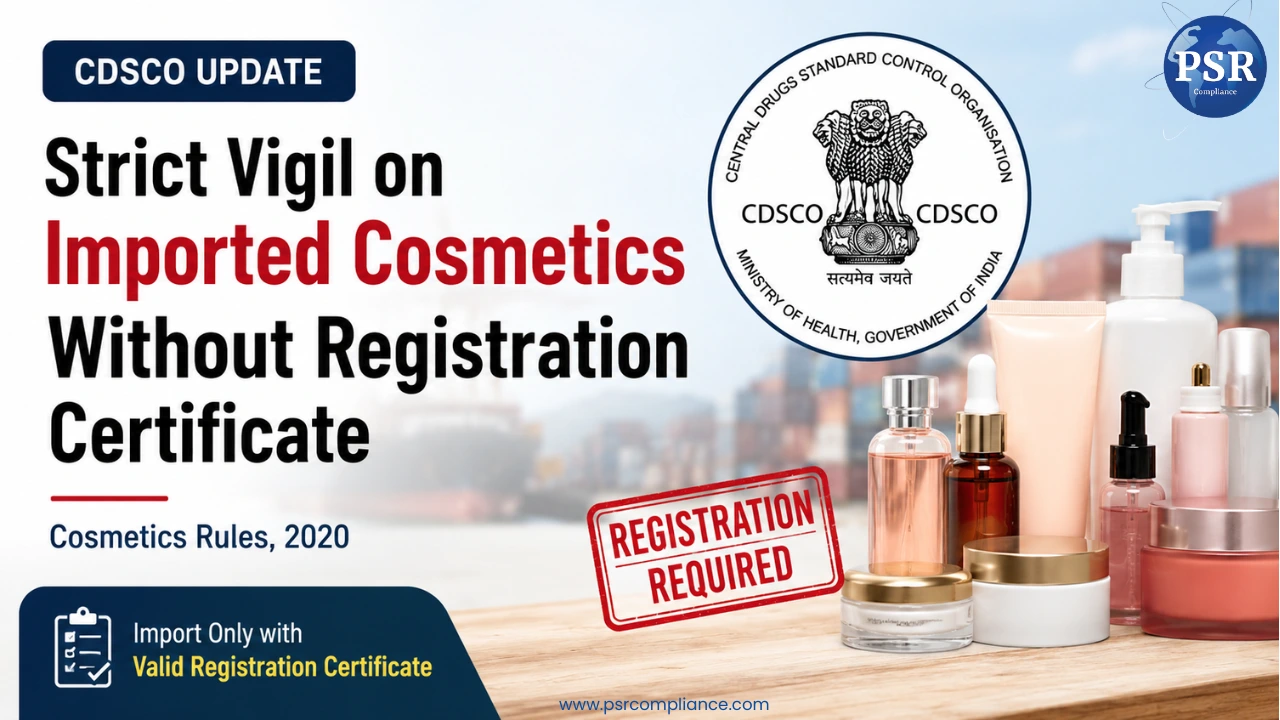
CDSCO Orders Strict Vigil on Imported Cosmetics Without Registration Certificate (2026)
Imported cosmetics are becoming increasingly popular in India, with consumers purchasing international skincare, makeup, hair care, perfumes, and beauty products through retail stores and online marketplaces. However, before these products can be legally sold in India, they must comply with the Cosmetics Rules, 2020 and obtain the required registration from the Central Drugs Standard Control Organisation (CDSCO). To strengthen compliance, CDSCO has issued a new circular directing State Licensing Authorities (SLAs), CDSCO Zonal Offices, Sub-Zonal Offices, and Port Offices to maintain strict vigilance against imported cosmetic products that are being sold without a valid Registration Certificate. This step aims to prevent the sale of unregistered cosmetics and ensure that only legally approved products reach Indian consumers.
This latest update is important for cosmetic importers, distributors, wholesalers, retailers, e-commerce sellers, and international cosmetic brands doing business in India. Companies importing cosmetic products should immediately verify their compliance status to avoid regulatory action.
In this article, we explain the latest CDSCO circular, who it applies to, why it was issued, the legal requirements for imported cosmetics, possible consequences of non-compliance, and the steps businesses should take to remain compliant.
What is the Latest CDSCO Circular About?
The Central Drugs Standard Control Organisation (CDSCO) has observed that several imported cosmetic products are reportedly being marketed and sold in India without obtaining the mandatory Registration Certificate required under the Cosmetics Rules, 2020.
To address this issue, CDSCO has instructed regulatory authorities across the country to increase inspections and maintain stricter surveillance over imported cosmetics available in the Indian market.
The circular directs:
- State Licensing Authorities (SLAs)
- CDSCO Zonal Offices
- CDSCO Sub-Zonal Offices
- Port Offices
to monitor imported cosmetic products and take appropriate action wherever violations are identified.
The objective is to improve regulatory compliance, strengthen consumer safety, and prevent the sale of cosmetics that have not completed the prescribed registration process.
Why Has CDSCO Issued This Circular?
Imported cosmetics are regulated because they come directly into contact with consumers and may affect their health and safety.
CDSCO issued this circular after noticing that some imported cosmetic products were allegedly entering the Indian market without completing the required registration process. Such products may bypass regulatory verification, making it difficult for authorities to confirm whether they meet India's safety and quality standards.
Through this advisory, CDSCO intends to:
- Improve compliance with the Cosmetics Rules, 2020.
- Prevent the sale of unregistered imported cosmetics.
- Strengthen inspections across India.
- Ensure that imported cosmetic products entering India are legally approved.
- Protect consumers from non-compliant products.
The circular also reminds businesses that regulatory compliance is not optional but a legal requirement before imported cosmetics are marketed in India.
What Does Rule 12(1) of the Cosmetics Rules, 2020 Say?
The latest circular specifically refers to Rule 12(1) of the Cosmetics Rules, 2020.
According to this provision, no cosmetic product can be imported into India unless it has been granted a valid Registration Certificate by the Central Licensing Authority or an authorised officer appointed for this purpose.
In simple words, before any imported cosmetic reaches Indian consumers, it must first complete the registration process prescribed under the Cosmetics Rules.
Without this registration, importing or selling the cosmetic product may lead to regulatory action by the concerned authorities.
Who Needs to Comply with This Update?
The latest CDSCO circular affects almost every business involved in the import and sale of cosmetic products.
This includes:
- Cosmetic importers
- International cosmetic manufacturers
- Foreign cosmetic brands
- Indian distributors
- Cosmetic wholesalers
- Cosmetic retailers
- Beauty product suppliers
- Online marketplaces
- E-commerce sellers
- Cosmetic trading companies
Even businesses importing cosmetic products in small quantities should ensure that the required registration has been obtained before placing products on the Indian market.
What is an Imported Cosmetics Registration Certificate?
An Imported Cosmetics Registration Certificate is an approval issued by the Central Licensing Authority under CDSCO that allows a cosmetic product manufactured outside India to be legally imported and marketed within the country.
The registration process enables the regulatory authority to examine important aspects of the product, such as:
- Product details
- Manufacturing information
- Ingredients
- Labelling requirements
- Safety information
- Manufacturing facility details
- Compliance with applicable Indian regulations
Only after successful registration can imported cosmetic products be legally introduced into the Indian market.
Key Instructions Issued by CDSCO
The latest circular contains several important directions for regulatory authorities.
1. Strengthened Market Surveillance
State Licensing Authorities and CDSCO field offices have been instructed to strengthen market inspections and identify imported cosmetics being sold without valid registration.
Authorities may inspect retail outlets, warehouses, distributors, and other points in the supply chain to verify compliance.
2. Increased Vigilance at Ports
Port Officers have also been instructed to maintain strict vigilance over imported cosmetic consignments entering India.
This means authorities are expected to closely monitor imports and identify cosmetic products that do not possess the required Registration Certificate before they enter the domestic market.
3. Enforcement Against Non-Compliant Products
Where imported cosmetic products are found without the required registration, the concerned authorities may initiate regulatory action as permitted under the applicable legal provisions.
This reinforces CDSCO's intention to improve compliance throughout the cosmetic import sector.
Why This Update Matters for Cosmetic Businesses
Many businesses assume that if a cosmetic product is approved in another country, it can automatically be sold in India. However, this is not correct.
India has its own regulatory framework under the Cosmetics Rules, 2020, and imported cosmetic products must comply with Indian requirements before entering the market.
The latest circular clearly shows that regulatory authorities are now placing greater emphasis on enforcement. Businesses that ignore registration requirements may face unnecessary compliance risks, supply chain disruptions, and enforcement action.
For importers and distributors, this is the right time to review all imported cosmetic products and ensure that every product has the necessary approvals before continuing sales.
What Can Happen if Imported Cosmetics Are Sold Without Registration?
The latest CDSCO circular clearly indicates that regulatory authorities have been directed to strengthen monitoring and take appropriate action wherever imported cosmetics are found without a valid Registration Certificate.
Depending on the nature of the violation and applicable legal provisions, businesses may face:
- Seizure of imported cosmetic products
- Detention of consignments at ports
- Regulatory inspections
- Suspension of product distribution
- Legal proceedings under applicable laws
- Financial losses due to business interruption
- Damage to business reputation
For importers, even a single non-compliant product can delay shipments and affect the entire supply chain. Therefore, verifying registration before import is always the safest approach.
Documents Generally Required for Imported Cosmetics Registration
While the exact documentation may vary depending on the product and manufacturer, businesses are generally required to submit:
- Details of the foreign manufacturer
- Product formulation and ingredient information
- Product labels and artwork
- Manufacturing licence issued in the country of origin
- Free Sale Certificate (where applicable)
- Power of Attorney
- Importer details
- Manufacturing site information
- Product specifications
- Declaration of compliance
- Supporting technical documents required by CDSCO
Submitting complete and accurate documents helps reduce processing delays and improves the chances of smooth approval.
What Should Cosmetic Importers Do Now?
In light of the latest CDSCO advisory, importers should immediately review their compliance status instead of waiting for inspections.
Verify Existing Registrations
Ensure every imported cosmetic product has a valid Registration Certificate before it is marketed or distributed in India.
Review Product Portfolio
Prepare a list of all imported cosmetic products and identify whether any products require fresh registration or renewal.
Check Product Labels
Verify that product labels comply with the Cosmetics Rules, 2020 and contain all mandatory declarations.
Maintain Proper Documentation
Keep copies of Registration Certificates, import documents, invoices, and regulatory records readily available for inspection.
Train Internal Compliance Teams
Businesses managing multiple imported brands should ensure that procurement, regulatory, and sales teams understand the latest compliance requirements.
Seek Professional Guidance
If there is any uncertainty regarding product registration or regulatory obligations, consult experienced regulatory professionals before importing additional products.
Compliance Checklist for Cosmetic Importers
Use this simple checklist to review your compliance:
✔ Verify Registration Certificate validity.
✔ Confirm manufacturer details.
✔ Review imported product list.
✔ Check product labels.
✔ Maintain regulatory records.
✔ Monitor renewal dates.
✔ Verify imported consignments before clearance.
✔ Conduct periodic compliance audits.
Following this checklist can help businesses reduce compliance risks and avoid unnecessary regulatory issues.
Why This Update is Important for the Cosmetics Industry
The latest CDSCO circular is more than just another regulatory notice. It signals that authorities are increasing enforcement across the cosmetic supply chain.
For genuine businesses that already follow regulatory requirements, this move creates a more transparent and fair market by discouraging the sale of unregistered products.
For businesses that have not yet completed the registration process, the circular serves as an important reminder to regularise their products before regulatory inspections become more frequent.
Ultimately, stronger compliance benefits manufacturers, importers, retailers, and consumers by improving confidence in cosmetic products sold in India.
How PSR Compliance Can Help
Obtaining an Imported Cosmetics Registration Certificate involves technical documentation, regulatory knowledge, and proper coordination with CDSCO.
PSR Compliance provides complete support for:
- Imported Cosmetics Registration
- CDSCO Cosmetics Registration
- Documentation preparation
- Product compliance review
- Regulatory consultation
- Import compliance guidance
- Registration renewal assistance
- Ongoing regulatory support
Our team helps businesses understand regulatory requirements and complete the registration process efficiently while ensuring compliance with the latest CDSCO guidelines.
Conclusion
The latest CDSCO circular highlights the Government's increasing focus on ensuring that only properly registered imported cosmetic products are available in the Indian market. By directing State Licensing Authorities, CDSCO Zonal Offices, and Port Offices to strengthen surveillance, the regulator has made it clear that compliance with the Cosmetics Rules, 2020 is a legal requirement, not a formality.
Importers, distributors, retailers, and international cosmetic brands should review their product portfolio, verify the validity of Registration Certificates, and maintain complete regulatory documentation. Taking timely action today can help businesses avoid future compliance issues, protect their reputation, and continue operating smoothly in India's growing cosmetics market.
Frequently Asked Questions (FAQs)
1. What is the latest CDSCO circular about?
CDSCO has directed regulatory authorities to strengthen surveillance against imported cosmetics being sold without a valid Registration Certificate.
2. Is a Registration Certificate mandatory for imported cosmetics?
Yes. Imported cosmetics must comply with the registration requirements under the Cosmetics Rules, 2020 before being sold in India.
3. Which authority issues the Registration Certificate?
The Registration Certificate is issued by the Central Licensing Authority under CDSCO.
4. Who is affected by this circular?
The circular applies to cosmetic importers, distributors, retailers, online sellers, and international cosmetic brands operating in India.
5. What is Rule 12(1) of the Cosmetics Rules, 2020?
Rule 12(1) states that imported cosmetic products must obtain the required Registration Certificate before they can be imported into India.
6. Can unregistered imported cosmetics be sold in India?
No. Imported cosmetic products should have the required Registration Certificate before they are marketed or sold in India.
7. What documents are generally required for imported cosmetics registration?
Common documents include manufacturer details, product labels, formulation information, manufacturing licence, importer details, and supporting regulatory documents.
8. What can happen if imported cosmetics are found without registration?
Authorities may initiate regulatory action, including inspections, detention of consignments, seizure of products, or other actions permitted under applicable laws.
9. Why has CDSCO increased surveillance?
The regulator aims to improve compliance, strengthen consumer safety, and prevent the sale of unregistered imported cosmetic products.
10. Can PSR Compliance assist with Imported Cosmetics Registration?
Yes. PSR Compliance provides end-to-end assistance for Imported Cosmetics Registration, CDSCO documentation, regulatory consultation, and ongoing compliance support.