
Just send us your questions or concerns by starting a new case &
we will give you the help you need. Start Here...
CPCB
Wed, Jul 22 2026
Raju Karn
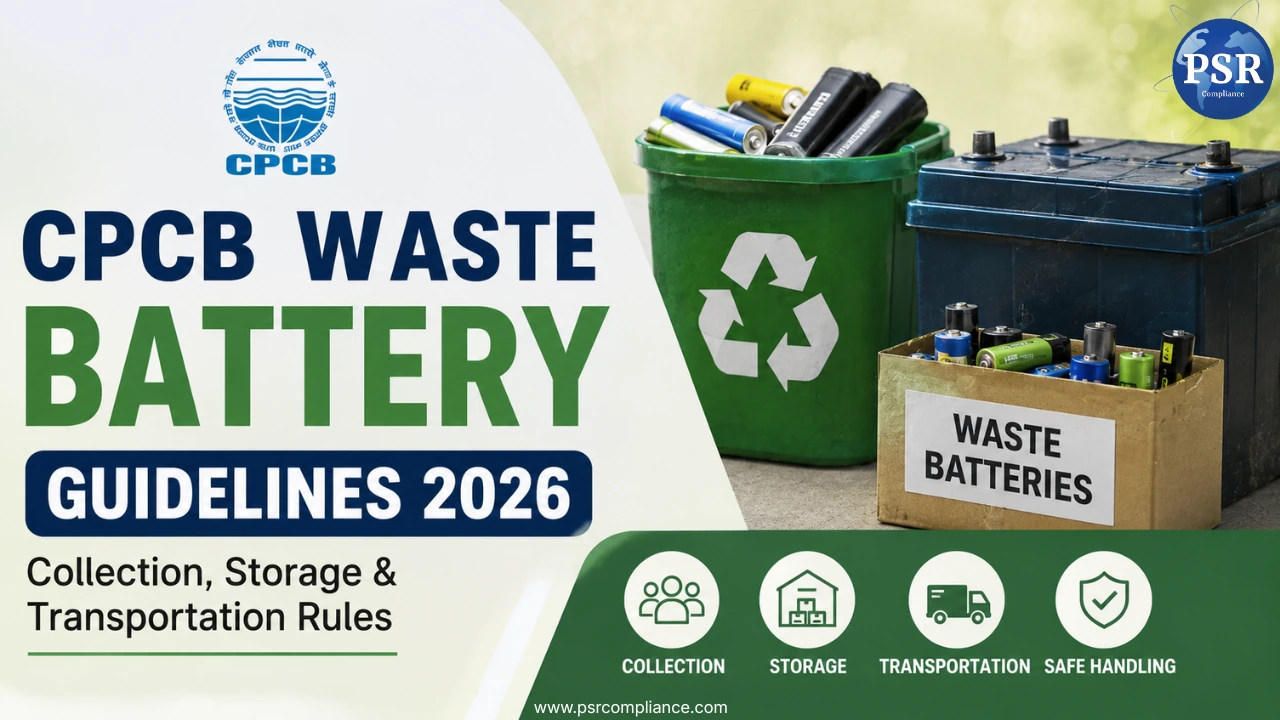
CPCB Waste Battery Guidelines 2026: Collection, Storage & Transportation Rules
The CPCB Waste Battery Guidelines have introduced detailed procedures for the collection, storage, packaging, and transportation of waste batteries across India. These guidelines have been issued to ensure environmentally safe handling of waste batteries while supporting the implementation of the Battery Waste Management Rules, 2022. They provide clear responsibilities for producers, recyclers, refurbishers, collection centres, transporters, and dealers involved in battery waste management.
With the rapid growth of electric vehicles, lithium-ion batteries, lead-acid batteries, and portable electronic devices, battery waste generation in India is increasing significantly. Improper storage or transportation can result in fire hazards, chemical leakage, environmental pollution, and safety risks. Therefore, the Central Pollution Control Board (CPCB) has released comprehensive operational guidelines to standardize battery handling practices.
In this article, you'll learn about the latest CPCB guidelines, who must comply, storage requirements, transportation rules, safety precautions, documentation requirements, and how businesses can remain compliant in 2026.
What are the CPCB Waste Battery Guidelines?
The Central Pollution Control Board (CPCB) has issued operational guidelines to ensure the safe collection, storage, packaging, and transportation of waste batteries generated across India.
The objective of these guidelines is to:
- Promote environmentally sound battery waste management.
- Reduce risks associated with hazardous battery waste.
- Prevent fire, leakage, and contamination.
- Improve collection and recycling efficiency.
- Support Extended Producer Responsibility (EPR) implementation under the Battery Waste Management Rules, 2022.
The guidelines apply to every stage of battery waste handling before recycling or refurbishment.
Who Needs to Follow These Guidelines?
The CPCB guidelines apply to various stakeholders involved in battery waste management, including:
- Battery manufacturers
- Producers
- Importers
- Brand owners
- Collection centres
- Dealers
- Recyclers
- Refurbishers
- Waste battery transporters
- Bulk consumers
- Dismantlers
Every entity handling waste batteries must ensure compliance with CPCB requirements and applicable environmental regulations.
Why Are These Guidelines Important?
Battery waste contains hazardous materials such as lead, lithium, nickel, cadmium, cobalt, and corrosive electrolytes. Improper handling may result in:
- Fire accidents
- Chemical leakage
- Soil contamination
- Water pollution
- Worker injuries
- Environmental damage
The CPCB guidelines aim to minimize these risks through standardized handling procedures.
Types of Batteries Covered
The guidelines cover different categories of waste batteries, including:
- Portable batteries
- Lithium-ion batteries
- Used Lead Acid Batteries (ULAB)
- Electric Vehicle (EV) batteries
- Automotive batteries
- Industrial batteries
- Mixed battery waste
Each category requires specific storage and transportation methods depending on its chemical composition and associated hazards.
CPCB Guidelines for Battery Collection Centres
Collection centres play a critical role in the Battery Waste Management ecosystem.
According to the guidelines, collection centres should:
- Store batteries safely until dispatch.
- Segregate different battery types.
- Prevent mixing of incompatible batteries.
- Protect batteries from rain, heat, and moisture.
- Ensure safe loading and unloading practices.
- Maintain proper records of battery receipts and dispatch.
Collection centres should also provide adequate safety measures for workers handling waste batteries.
CPCB Guidelines for Storage of Waste Batteries
Proper storage is one of the most important aspects of battery waste management.
Businesses should ensure that:
Store Batteries According to Type
Different battery chemistries should not be mixed unnecessarily.
Examples include:
- Lead-acid batteries
- Lithium-ion batteries
- Mixed battery waste
- Industrial batteries
Each category should have designated storage areas.
Keep Storage Areas Dry
Storage facilities should protect batteries from:
- Rain
- Water exposure
- Direct sunlight
- Excessive humidity
- Extreme temperatures
These precautions reduce deterioration and fire risks.
Prevent Physical Damage
Waste batteries should never be:
- Dropped
- Crushed
- Punctured
- Exposed to mechanical impact
Damaged batteries can leak hazardous chemicals or ignite.
Use Appropriate Storage Containers
The CPCB recommends suitable containers depending on battery type, including plastic boxes, drums, pallets, and other protective packaging systems. Storage methods vary according to battery chemistry and size.
CPCB Guidelines for Transportation of Waste Batteries
Transportation is another critical stage where battery waste must be handled carefully.
The guidelines recommend that transport arrangements should minimize environmental risks associated with battery movement. Transportation must comply with applicable legal requirements under the Battery Waste Management Rules and the Hazardous and Other Wastes (Management and Transboundary Movement) Rules, 2016.
Key transportation practices include:
- Do not mix waste batteries with other materials.
- Protect battery terminals from short circuits.
- Use suitable packaging to prevent damage.
- Prevent exposure to conductive materials and liquids.
- Secure batteries properly inside transport vehicles.
- Protect batteries from rain and adverse weather.
- Handle batteries carefully during loading and unloading.
Special Guidelines for Lithium-Ion Batteries
Lithium-ion batteries require additional precautions because of their fire risk.
The CPCB recommends:
- Prevent short circuits during transport.
- Keep batteries away from heat sources.
- Protect against mechanical damage.
- Maintain low State of Charge (SoC) during transportation where applicable.
- Use appropriate packaging and insulation.
These measures reduce the possibility of thermal runaway and fire.
Guidelines for Used Lead Acid Batteries
Lead-acid batteries require careful handling because they may contain corrosive acid.
The guidelines recommend:
- Transport batteries in an upright position.
- Use leak-proof vehicles.
- Use sealed, acid-resistant containers.
- Prevent acid leakage.
- Secure batteries properly during transportation.
Fire Safety Measures
The CPCB emphasizes fire safety during transportation.
Transport vehicles carrying waste batteries should have:
- Fire extinguishers
- Proper securing arrangements
- Leak-proof flooring where applicable
- Emergency response preparedness
Documentation and Record Keeping
Businesses involved in battery waste management should maintain detailed records of:
- Battery type
- Quantity
- Date of receipt
- Storage method
- Dispatch details
- Destination facility
The guidelines also include formats for maintaining hazardous waste records and accident reporting to regulatory authorities.
Benefits of Following CPCB Guidelines
Compliance offers several advantages:
- Improved environmental protection
- Reduced fire and accident risks
- Better workplace safety
- Legal compliance
- Smooth transportation
- Enhanced recycling efficiency
- Stronger EPR compliance
- Reduced regulatory penalties
Consequences of Non-Compliance
Failure to comply with CPCB guidelines and Battery Waste Management Rules may lead to:
- Regulatory action
- Environmental penalties
- Suspension of authorizations
- Legal proceedings
- Damage to business reputation
Businesses should regularly review CPCB notifications and update their internal compliance procedures.
How PSR Compliance Can Help
Battery waste regulations continue to evolve, making compliance increasingly important for producers, importers, recyclers, and collection centres.
PSR Compliance assists businesses with:
- Battery Waste EPR Registration
- CPCB Compliance
- EPR Authorization
- Environmental Compliance
- Waste Management Documentation
- Regulatory Consultation
- Compliance Audits
Our experts help businesses meet all applicable legal requirements while ensuring smooth regulatory approvals.
Conclusion
The latest CPCB Waste Battery Guidelines provide a structured framework for the safe collection, storage, packaging, and transportation of waste batteries in India. These guidelines strengthen the implementation of the Battery Waste Management Rules, 2022 and promote responsible environmental practices across the battery lifecycle.
Manufacturers, producers, importers, recyclers, refurbishers, transporters, and collection centres should carefully implement these requirements to reduce environmental risks, improve worker safety, and maintain regulatory compliance. Early compliance not only helps avoid penalties but also supports sustainable battery recycling and resource recovery in India.
Frequently Asked Questions (FAQs)
1. What are the CPCB Waste Battery Guidelines?
The CPCB Waste Battery Guidelines provide rules for the safe collection, storage, packaging, and transportation of waste batteries in India.
2. Who must follow the CPCB Waste Battery Guidelines?
Producers, manufacturers, importers, recyclers, refurbishers, collection centres, dealers, transporters, and bulk consumers must comply with these guidelines.
3. Which batteries are covered under the guidelines?
The guidelines cover lithium-ion, lead-acid, EV, portable, automotive, industrial, and other waste batteries.
4. Why are these guidelines important?
They help prevent fire hazards, chemical leakage, environmental pollution, and ensure safe battery recycling.
5. How should waste batteries be stored?
Waste batteries should be stored in a dry, covered, secure area and segregated according to battery type.
6. What are the transportation requirements for waste batteries?
Waste batteries should be properly packaged, protected from damage, secured during transit, and transported safely.
7. What records should businesses maintain?
Businesses should maintain records of battery collection, storage, transportation, dispatch, and recycling activities.
8. What happens if businesses do not comply?
Non-compliance may result in environmental penalties, legal action, and regulatory enforcement by CPCB or SPCB.
9. Are the CPCB Waste Battery Guidelines mandatory?
Yes. They support the implementation of the Battery Waste Management Rules, 2022 and should be followed by applicable entities.
10. How can PSR Compliance help?
PSR Compliance assists with Battery EPR Registration, CPCB compliance, documentation, environmental approvals, and regulatory consultancy.