Just send us your questions or concerns by starting a new case &
we will give you the help you need. Start Here...
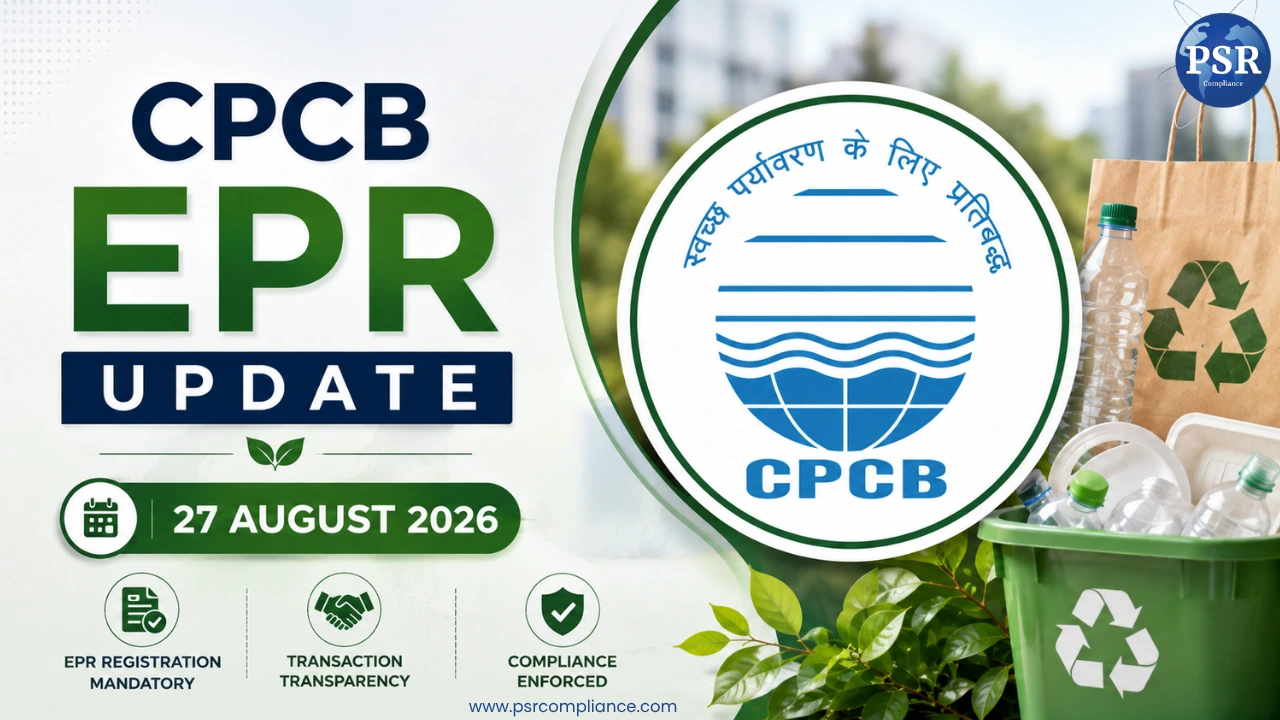
CPCB Update
Sat, Aug 29 2026
Raju Karn
CPCB Makes Common EPR Registration Mandatory: Plastic Businesses Must Act Now
The Central Pollution Control Board (CPCB) has issued an important public notice dated 27 August 2026 regarding mandatory registration on the Common Extended Producer Responsibility (EPR) Portal for entities covered under the Plastic Waste Management (PWM) Rules, 2016, as amended. The latest CPCB direction is significant for businesses involved in plastic packaging, plastic raw materials, manufacturing, importing, selling, brand ownership, and plastic waste processing. According to the public notice, entities covered under the applicable EPR provisions must obtain registration on the Common EPR Portal before carrying out relevant business activities. CPCB has also identified transactions taking place with unregistered entities and stated that the declaration and recording of purchase and sale transactions with unregistered entities will be discontinued on the portal, subject to specified exceptions.
This development makes CPCB EPR registration and supply-chain compliance more important than ever for businesses operating in the regulated plastic ecosystem. Businesses that have not yet reviewed their registration status, or that regularly purchase from or sell to other entities covered by the EPR framework, should assess their compliance position and understand how the latest CPCB direction may affect their operations.
What Has CPCB Announced on 27 August 2026?
CPCB has established the Common Extended Producer Responsibility (CEPR) Portal for Plastic Packaging under the Plastic Waste Management Rules, 2016 and the applicable EPR Guidelines. The latest public notice reinforces the registration requirement for entities covered under the applicable provisions of the EPR framework. One of the most important directions is that entities covered under Clause 6.1 shall not carry out business without obtaining the required registration through the Common EPR Portal.
CPCB has also observed that some businesses are conducting purchase and sale transactions with entities that have not obtained the required registration. To address this issue, CPCB is strengthening the transaction-based reporting mechanism on the Common EPR Portal. This means that businesses should now look beyond their own registration and also pay attention to the compliance status of relevant suppliers, buyers, and other entities involved in regulated plastic transactions.
What Is the Biggest Change for Businesses?
The biggest practical change relates to transactions with unregistered entities. CPCB has stated that the declaration and recording of purchase and sale transactions with unregistered entities will be discontinued on the Common EPR Portal, subject to the exceptions specified in the public notice. This makes registration status increasingly important for businesses that depend on compliant suppliers, customers, manufacturers, importers, or processors.
In practical terms, companies should ask two important questions: Is my business properly registered on the Common EPR Portal? and Are the relevant businesses I purchase from or sell to properly registered? For businesses with large supply chains, this can become an important procurement, sales, and regulatory compliance checkpoint.
Who Needs Registration on the Common EPR Portal?
The latest CPCB notice applies to different categories of entities covered by the applicable EPR provisions. Businesses should identify their correct category and determine their registration obligations instead of assuming that the requirements apply only to large plastic manufacturers or packaging companies.
1. Producers
Producers covered under the EPR framework are required to obtain registration where applicable. Importantly, the latest notice specifically refers to micro and small enterprises within the applicable Producer category. Therefore, smaller businesses should not assume that EPR registration is relevant only for large companies.
2. Importers
Importers dealing with plastic packaging and applicable plastic raw materials are covered by the registration requirements where the EPR provisions apply to their activities. Businesses importing plastic packaging or relevant plastic materials should review their activities, identify their applicable EPR category, and verify whether they have completed the required CPCB registration.
3. Brand Owners
Brand Owners dealing with plastic packaging are also covered under the applicable EPR framework. They should ensure that their registration details and EPR-related information are properly maintained on the Common EPR Portal and that their packaging-related compliance obligations are being managed correctly.
4. Manufacturers
The applicable framework also covers manufacturers of plastic raw materials and relevant products made from compostable or biodegradable plastics. Manufacturers should therefore verify their business category and registration requirements rather than assuming that only producers of conventional plastic packaging are affected.
5. Sellers
The notice also identifies Sellers (S) within the categories covered by the registration requirements. This is important because the CPCB's latest approach places greater emphasis on transaction-level visibility and compliance within the regulated plastic supply chain.
6. Plastic Waste Processors
Plastic Waste Processors (PWPs) are another important category under the EPR framework. Businesses involved in activities such as recycling, waste-to-energy, waste-to-oil, and industrial composting may fall within the applicable registration requirements and should ensure that their registration and operational records remain accurate.
Why Is CPCB Focusing on Transactions With Unregistered Entities?
The latest public notice indicates that CPCB has identified transactions taking place with entities that have not obtained the required registration. This creates a compliance gap because the EPR system is designed to track relevant activities and obligations through the centralized portal. By strengthening transaction reporting and restricting the recording of transactions involving unregistered entities, CPCB is moving toward greater traceability across the plastic packaging and waste-management supply chain.
For businesses, this means EPR compliance should not be treated as an isolated registration exercise. Companies may need to consider the compliance status of relevant suppliers, buyers, and other business partners, particularly where their transactions are required to be reported through the Common EPR Portal.
Can a Business Continue Without CPCB EPR Registration?
For entities covered under the applicable provisions of Clause 6.1, the CPCB public notice states that they shall not carry out business without obtaining the required registration through the Common EPR Portal. Businesses that fall within the relevant categories and have not yet completed registration should therefore review their position without unnecessary delay.
However, businesses should first determine their exact regulatory category and applicable requirements. Not every business that deals with a plastic-related product will necessarily have identical obligations, so companies should assess their activities against the Plastic Waste Management Rules, applicable EPR Guidelines, and CPCB directions.
What Happens to Transactions With Unregistered Entities?
CPCB has stated that the declaration and recording of purchase and sale transactions with unregistered entities will be discontinued on the Common EPR Portal, subject to the exceptions mentioned in the public notice. This can make registration status particularly important for businesses that depend on transactions with other entities covered by the EPR framework.
Businesses should therefore review their EPR category, registration status, supplier registration status, buyer registration status, transaction type, and any applicable CPCB exception before entering or reporting relevant transactions. The exact impact can depend on the category of the entities involved and the nature of the transaction.
How Can This Affect Your Business?
The latest CPCB direction can create practical compliance and commercial risks for businesses operating within the plastic packaging supply chain. If a business is required to be registered but remains unregistered, its customers or business partners may face difficulties in recording relevant transactions through the Common EPR Portal. This could create additional compliance concerns when registered businesses assess their vendors and counterparties.
The development may also increase supply-chain compliance checks. Companies purchasing plastic packaging, plastic raw materials, or other covered materials may need to review the registration status of relevant suppliers, while businesses selling to registered entities may also need to ensure that their own registration and transaction information is in order. Increased portal-based monitoring can also lead to greater regulatory scrutiny of EPR records, targets, certificates, and annual reporting.
What Should Businesses Do After the 27 August 2026 CPCB Notice?
Businesses covered under the Plastic Waste Management Rules should take a proactive approach instead of waiting for a compliance problem. The following steps can help businesses review their position:
Step 1: Check Whether EPR Registration Applies
First, determine whether your business falls under any applicable category, such as:
- Producer
- Importer
- Brand Owner
- Manufacturer
- Seller
- Plastic Waste Processor
The exact category should be determined based on the nature of the business and the applicable CPCB requirements.
Step 2: Verify Your Common EPR Portal Registration
If registration is applicable, verify whether your business has obtained the required registration through the Common EPR Portal. Businesses that already have registration should also ensure that their details remain accurate and up to date.
Step 3: Review Your Suppliers
Create a list of suppliers involved in plastic packaging, plastic raw materials, or other relevant materials. Where applicable, verify whether those suppliers have the required CPCB registration so that future transactions do not create avoidable compliance issues.
Step 4: Review Your Buyers and Customers
Businesses should also review the compliance status of relevant buyers and customers, particularly where transactions need to be declared or recorded through the EPR Portal. This can help identify potential issues before they affect routine business operations.
Step 5: Identify Unregistered Counterparties
Identify suppliers or buyers that may fall under the applicable CPCB registration requirements but have not yet registered. Where appropriate, businesses should communicate with such counterparties and take steps to understand whether registration is required before continuing relevant transactions.
Step 6: Review EPR Records
Businesses should ensure that their transaction records, EPR targets, EPR certificates, annual return information, and registration details are accurate and properly maintained. Maintaining consistent records can make future reporting and regulatory review easier.
Step 7: Monitor CPCB Updates
The Common EPR Portal is becoming increasingly important for plastic EPR compliance. Businesses should regularly monitor CPCB notifications, public notices, and portal updates for changes affecting registration, transactions, targets, certificates, and annual returns.
Common EPR Portal: Why It Matters
The Common EPR Portal provides a centralized mechanism for managing plastic packaging EPR compliance. It supports important processes relating to registration, transaction reporting, EPR obligations, and other compliance activities. CPCB's latest direction further strengthens the importance of the portal by connecting registration status with transaction reporting.
Businesses operating in the plastic packaging ecosystem should therefore treat the portal as an important part of their ongoing regulatory compliance process rather than simply a place to obtain an initial registration. Maintaining accurate information and completing applicable reporting requirements can help businesses remain prepared as CPCB continues to strengthen digital monitoring.
Is This Only Applicable to Large Companies?
No. One important aspect of the 27 August 2026 public notice is its reference to micro and small enterprises within the applicable Producer category. This means that an MSME should not automatically assume that its smaller business size removes it from the applicable EPR registration requirements.
At the same time, the exact obligation depends on the business category and the applicable provisions. MSMEs involved in plastic packaging or related activities should therefore assess their specific EPR applicability and determine whether CPCB registration is required for their business.
What About Plastic Waste Processors?
Plastic Waste Processors are an important part of the plastic EPR ecosystem. PWPs involved in recycling, waste-to-energy, waste-to-oil, and industrial composting activities may be required to maintain registration under the applicable framework. Their role is particularly important because plastic waste processing and EPR certificate generation are connected to the broader compliance ecosystem.
For these businesses, maintaining accurate registration, processing, transaction, and reporting information is important. Any discrepancy in records can create difficulties when businesses undertake EPR-related reporting or when their activities are reviewed through the regulatory system.
Is CPCB EPR Registration a One-Time Compliance?
Businesses should understand that registration is not necessarily the end of EPR compliance. Depending on the applicable category and requirements, businesses may have continuing responsibilities relating to EPR targets, plastic packaging declarations, transactions, EPR certificates, annual returns, record keeping, and compliance reporting.
For this reason, businesses should establish an ongoing EPR compliance process instead of treating registration as a one-time formality. Regularly reviewing portal information, transaction records, targets, certificates, and annual returns can help businesses remain prepared for future CPCB requirements.
Key Takeaways From the CPCB Public Notice
| CPCB Update | What Businesses Should Do |
|---|---|
| Registration is mandatory for covered entities | Check applicability and obtain registration |
| Producers including applicable MSMEs are covered | Do not assume small size means exemption |
| Importers are covered | Review plastic packaging/raw material activities |
| Brand Owners are covered | Verify EPR registration and compliance |
| Manufacturers are covered | Check applicable category and registration |
| Sellers are covered | Review registration obligations |
| PWPs are covered | Maintain valid registration and records |
| Transactions with unregistered entities are being restricted on the portal | Verify suppliers and buyers |
| Transaction reporting is being strengthened | Maintain accurate transaction records |
| CPCB requires compliance from covered entities | Do not delay the registration review |
Conclusion
The 27 August 2026 CPCB Public Notice is an important compliance development for businesses operating in India's plastic packaging and plastic waste ecosystem. The development is particularly relevant for Producers, Importers, Brand Owners, Manufacturers, Sellers, Plastic Waste Processors, and applicable Micro & Small Enterprises that fall within the relevant EPR provisions.
CPCB has reinforced the requirement for covered entities to obtain registration through the Common EPR Portal and has moved to strengthen transaction-based monitoring by discontinuing the declaration and recording of purchases and sales with unregistered entities, subject to the exceptions specified in the notice. For businesses, the next step should not simply be obtaining an EPR registration certificate. Companies should also review their suppliers, buyers, transaction records, EPR targets, certificates, and annual compliance requirements.
If your business deals with plastic packaging or plastic waste and you are unsure whether CPCB EPR registration applies to you, it is better to assess your compliance position now rather than wait for a regulatory notice or transaction-related issue.
Need Help With CPCB EPR Registration?
CPCB is strengthening compliance monitoring for businesses covered under the Plastic Waste Management Rules. If you need help with CPCB EPR registration, Common EPR Portal compliance, EPR targets, documentation, or annual return filing, the experts at PSR Compliance can assist you.
📞 Call: +91 8796104190
📧 Email: support@psrcompliance.com
Frequently Asked Questions About the CPCB EPR Update
1. What did CPCB announce on 27 August 2026?
CPCB issued a public notice reinforcing mandatory registration on the Common EPR Portal for entities covered under the applicable provisions of the Plastic Waste Management Rules and EPR framework. The notice also addresses transactions with unregistered entities on the EPR Portal.
2. Who needs CPCB EPR registration?
Depending on the applicable provisions, registration requirements can cover Producers, Importers, Brand Owners, Manufacturers, Sellers, and Plastic Waste Processors (PWPs). Micro and small enterprises covered under the relevant Producer category should also assess their registration requirements.
3. Can an unregistered entity continue business under the EPR framework?
For entities covered under the applicable provisions of Clause 6.1, CPCB's notice states that they shall not carry out business without obtaining the required registration through the Common EPR Portal. Businesses should first confirm their specific category and applicability.
4. What is changing for transactions with unregistered entities?
CPCB has stated that the declaration and recording of purchase and sale transactions with unregistered entities will be discontinued on the Common EPR Portal, subject to the exceptions specified in the public notice.
5. Are MSMEs also affected by this CPCB EPR update?
Yes, applicable Micro and Small Enterprises are specifically relevant to the latest notice. An MSME should not assume that its size automatically exempts it from EPR registration requirements.
6. Do Plastic Waste Processors need CPCB registration?
Plastic Waste Processors covered by the applicable EPR framework are required to obtain registration. This can include processors involved in activities such as recycling, waste-to-energy, waste-to-oil, and industrial composting, subject to the applicable requirements.
7. Is CPCB EPR registration a one-time compliance?
Registration is an important part of EPR compliance, but applicable businesses may also have continuing obligations relating to EPR targets, transactions, certificates, annual returns, record keeping, and other reporting requirements.
8. What should businesses do after the 27 August 2026 CPCB notice?
Businesses should first check their EPR applicability and registration status, then review relevant suppliers and buyers, verify transaction records, and ensure that their EPR targets, certificates, and annual return requirements are properly managed.
9. How can PSR Compliance help with CPCB EPR registration?
PSR Compliance can assist businesses with CPCB EPR registration, documentation, Common EPR Portal support, EPR compliance management, target-related requirements, and annual return filing.