
Just send us your questions or concerns by starting a new case &
we will give you the help you need. Start Here...
CPCB
Wed, Jul 22 2026
Raju Karn
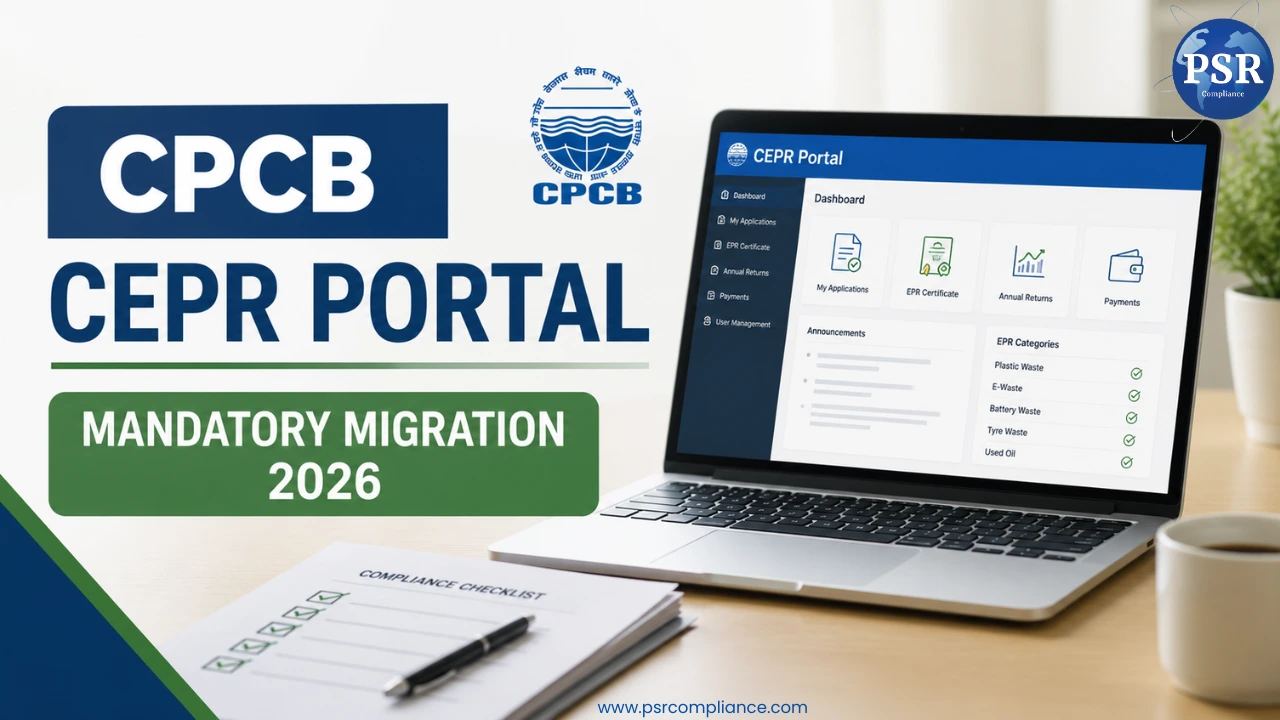
CPCB Common EPR (CEPR) Portal: Mandatory Migration Guide for Existing EPR Registrations (2026)
he Common EPR CEPR Portal is one of the biggest compliance updates introduced by the Central Pollution Control Board (CPCB) in 2026. CPCB has started implementing a mandatory Single Sign-On (SSO) system through the Common EPR (CEPR) Portal, replacing the existing category-wise login system used for various Extended Producer Responsibility (EPR) registrations.
This migration affects businesses registered under Plastic Waste EPR, E-Waste EPR, Battery Waste EPR, Tyre Waste EPR, and Used Oil EPR. Existing EPR registration holders should not treat this as a simple login update. The migration directly impacts future EPR filings, annual returns, amendments, renewals, authorization management, and EPR certificate trading.
If businesses fail to migrate correctly or ignore data mismatches, they may face delays in compliance activities, rejected filings, and interruptions in their regulatory obligations. This guide explains everything you need to know about the new Common EPR CEPR Portal, its impact, migration process, compliance risks, and how businesses can prepare for a smooth transition.
What is the Common EPR (CEPR) Portal?
The Common EPR (CEPR) Portal is a centralized online compliance platform developed by the Central Pollution Control Board (CPCB) to manage multiple EPR registrations through a Single Sign-On (SSO) system.
Instead of maintaining separate login credentials for different waste categories, businesses can now manage all eligible EPR registrations from a single account.
The objective is to improve compliance monitoring, simplify reporting, and create a unified digital platform for Extended Producer Responsibility obligations.
Why Has CPCB Introduced the CEPR Portal?
The previous system required businesses to maintain separate portals, separate login credentials, and different compliance schedules for each EPR category.
The new CEPR Portal has been introduced to:
- Simplify EPR compliance.
- Reduce duplicate registrations.
- Improve data accuracy.
- Enable centralized monitoring.
- Streamline annual filings.
- Improve transparency.
- Strengthen digital compliance management.
The new system is expected to make EPR management easier for both businesses and regulators.
Which EPR Categories Are Covered?
The Common EPR Portal currently covers:
- Plastic Packaging Waste
- E-Waste
- Battery Waste
- Waste Tyres
- Used Oil
Businesses registered under one or more of these categories will eventually be required to manage their compliance through the CEPR Portal.
Who Needs to Migrate?
Migration applies to:
- Producers
- Importers
- Brand Owners (PIBOs)
- Manufacturers
- Recyclers
- Refurbishers
- Collection Agencies
- Waste Processors
- Authorized EPR Registration Holders
Even businesses with only one active EPR registration should review their migration status.
Major Changes Under the CEPR Portal
The biggest change is the implementation of a Single Sign-On (SSO) system.
Businesses will gradually move away from maintaining separate login IDs for each waste category.
The portal also aims to integrate:
- Registration management
- Annual returns
- Compliance filings
- Renewal applications
- Amendment requests
- EPR Certificate Management
- Credit trading activities
Why Existing EPR Registration Holders Should Act Now
Many businesses assume that migration can be completed later.
However, delaying migration could create serious compliance issues when filing deadlines arrive.
Businesses should verify:
- Registration details
- Company information
- Authorized users
- Category mapping
- Existing approvals
- Compliance status
Completing these checks early helps avoid future disruptions.
Major Compliance Risks During Migration
1. Existing Login IDs May Be Discontinued
Older category-wise login systems are expected to be phased out as the CEPR Portal becomes fully operational.
Businesses should not rely solely on previous login credentials.
2. Data Mismatches Can Delay Compliance
Incorrect information during migration may create issues in:
- Annual returns
- Amendments
- Renewals
- Registration updates
Even small differences in company details may require correction before further compliance activities.
3. Multi-Category Businesses Face Higher Risk
Organizations registered under multiple waste categories often maintain different teams and login credentials.
Without proper coordination, businesses may overlook certain registrations during migration.
4. Renewals May Be Delayed
If migration remains incomplete, businesses may experience delays while:
- Renewing EPR registrations
- Updating company details
- Filing compliance reports
Timely migration helps prevent unnecessary interruptions.
5. EPR Credit Trading Could Be Affected
Businesses participating in EPR Certificate or credit trading should ensure that migration is completed correctly.
Any mismatch in registration data may affect future transactions.
Step-by-Step CEPR Migration Process
Migrating to the Common EPR (CEPR) Portal is more than creating a new login. Businesses should carefully verify their registration details to ensure uninterrupted compliance across all applicable EPR categories. Follow these steps for a smooth migration:
Step 1: Review Your Existing EPR Registrations
Start by preparing a list of all your active EPR registrations. Check whether your business is registered under Plastic Waste, E-Waste, Battery Waste, Tyre Waste, Used Oil, or multiple categories. This helps ensure that no registration is missed during the migration process.
Step 2: Verify Company Information
Review your company's registered details, including the legal entity name, CIN, GSTIN, PAN, registered address, email ID, and mobile number. Ensure that all information matches your official records to avoid migration errors.
Step 3: Verify Authorized Signatory Details
Confirm that the authorized signatory's name, designation, email address, mobile number, and identification details are correct. Any outdated or incorrect information should be updated before initiating the migration.
Step 4: Map All Applicable EPR Categories
If your business holds registrations under multiple EPR categories, verify that each category is correctly linked to your organization. Proper category mapping helps manage all compliance obligations through a single CEPR account.
Step 5: Update Missing or Incorrect Information
Before completing the migration, correct any incomplete or inaccurate details found in your registration records. Even minor discrepancies can delay approvals, filings, renewals, or future amendments.
Step 6: Complete the CEPR Portal Migration
Log in to the Common EPR (CEPR) Portal and complete the migration process by following the instructions provided by CPCB. Submit all required information and supporting documents, if applicable.
Step 7: Verify Account Activation
After submitting the migration request, confirm that your CEPR account has been successfully activated. Ensure that all linked EPR registrations are visible and accessible through the new Single Sign-On (SSO) dashboard.
Step 8: Test the Portal Before Your Next Filing
Before your next compliance deadline, log in to the CEPR Portal and verify that you can access filing modules, renewal options, amendment requests, and EPR certificate management features. Completing this final check helps prevent technical issues during important compliance activities.
Documents Businesses Should Keep Ready
During migration, businesses may require:
- PAN Card
- GST Certificate
- CIN or Business Registration
- Existing EPR Registration Certificates
- Authorized Signatory Details
- Contact Information
- Email ID
- Mobile Number
- Digital Signature (if applicable)
Keeping these documents ready can speed up the migration process.
Benefits of Migrating Early
Early migration offers several advantages:
- Smooth compliance management
- Reduced filing delays
- Better data accuracy
- Easier account management
- Faster renewals
- Improved compliance tracking
- Reduced regulatory risk
Common Mistakes Businesses Should Avoid
Avoid these common mistakes:
- Waiting until the filing deadline.
- Ignoring data mismatches.
- Using outdated login credentials.
- Forgetting one or more EPR categories.
- Not updating authorized users.
- Delaying document verification.
These errors can delay compliance activities.
How PSR Compliance Can Help
Migrating to the Common EPR (CEPR) Portal requires careful verification of registration details and compliance records.
PSR Compliance assists businesses with:
- CEPR Portal Migration
- Plastic Waste EPR Registration
- Battery Waste EPR Registration
- E-Waste EPR Registration
- Tyre Waste EPR
- Used Oil EPR
- EPR Renewal
- Annual Return Filing
- Amendment Applications
- CPCB Compliance Support
Our experts ensure smooth migration while minimizing compliance risks.
Conclusion
The introduction of the Common EPR (CEPR) Portal marks a significant step towards simplifying Extended Producer Responsibility (EPR) compliance in India. By bringing multiple waste categories under a single platform, CPCB aims to improve transparency, reduce administrative burden, and streamline regulatory processes.
Businesses should not delay the migration process. Verifying registration details, completing account migration, and resolving any data mismatches before upcoming filing or renewal deadlines will help avoid unnecessary compliance issues. Early preparation ensures uninterrupted EPR compliance and smoother management of future obligations across all applicable waste categories.
Frequently Asked Questions (FAQs)
1. What is the Common EPR (CEPR) Portal?
The Common EPR (CEPR) Portal is a centralized CPCB platform that allows businesses to manage multiple EPR registrations through a Single Sign-On (SSO) system.
2. Who needs to migrate to the CEPR Portal?
All businesses holding EPR registrations for Plastic Waste, E-Waste, Battery Waste, Tyre Waste, or Used Oil should complete the CEPR Portal migration.
3. Is CEPR Portal migration mandatory?
Yes. CPCB has introduced the Common EPR Portal to streamline EPR compliance, and eligible registration holders should complete the migration.
4. Which EPR categories are covered under the CEPR Portal?
The portal currently covers Plastic Packaging Waste, E-Waste, Battery Waste, Waste Tyres, and Used Oil.
5. What happens if I do not migrate to the CEPR Portal?
Failure to migrate may delay EPR filings, renewals, amendments, certificate management, and other compliance activities.
6. What documents are required for CEPR Portal migration?
Businesses may need their existing EPR Registration Certificate, PAN, GST, CIN, authorized signatory details, and updated company information.
7. Can one CEPR account manage multiple EPR registrations?
Yes. The Single Sign-On system allows businesses to manage multiple eligible EPR categories through one account.
8. Can incorrect company information affect migration?
Yes. Incorrect or mismatched company details may delay migration and impact future compliance filings and renewals.
9. What are the benefits of the Common EPR Portal?
The CEPR Portal simplifies compliance by providing centralized login access, easier filing management, improved data accuracy, and better compliance tracking.
10. How can PSR Compliance help with CEPR Portal migration?
PSR Compliance assists businesses with CEPR Portal migration, EPR registration updates, document verification, renewals, amendments, and complete CPCB compliance support.