Tue, Jan 20 2026
Raju Karn
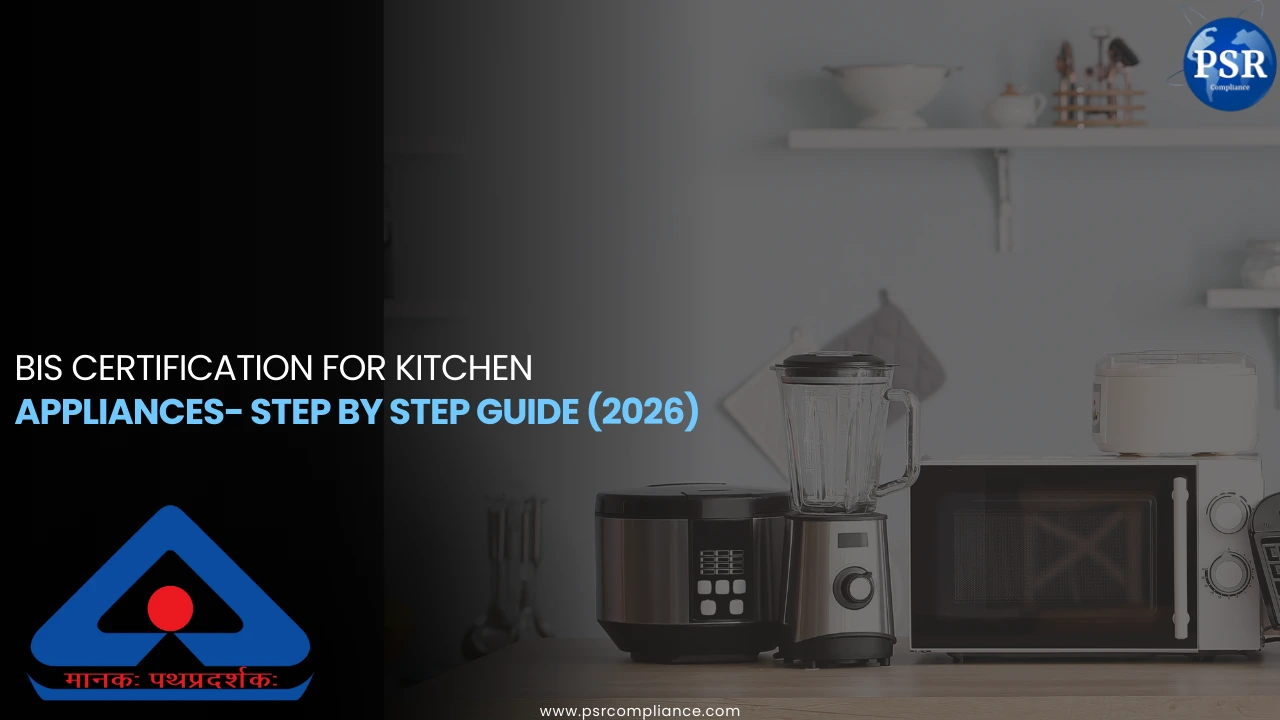
BIS Certification for Kitchen Appliances: Process & Cost 2026
If you manufacture, import, or sell kitchen appliances in India, then BIS certification is something you must be aware of, and the rules just got a lot more relevant. In simple terms, BIS approval confirms that your products are safe to use and meet the quality standards set by the Indian government. Kitchen appliances have actually been under mandatory BIS certification since 2018, but the scope is expanding significantly: the Safety of Household, Commercial and Similar Electrical Appliances (Quality Control) Order, 2026 comes into force on October 1, 2026, bringing 90+ appliance categories, including ovens, cooking ranges, fryers, coffee makers, grinders, food processors, and juicers, under mandatory certification requirements. Without this certification, these appliances cannot be legally sold in the Indian market, and businesses may face issues during import, manufacturing, or sales.
In this blog, we explain BIS Certification for Kitchen Appliances in 2026 in very simple language. Whether you are a business owner, startup, or trader, this guide will help you understand what BIS is, why it's required, which specific appliances are newly covered under the 2026 expansion, and how the certification process works, without any confusion or technical terms.
What is BIS Certification?
BIS stands for Bureau of Indian Standards, which is the national body in India responsible for setting quality and safety rules for products. When a product gets BIS certification, it means it has been tested and approved as per Indian standards. In simple words, it shows that the product is safe to use, works properly, and follows all the rules made by the government for quality and performance.
For kitchen appliances, BIS certification is very important because these products are used daily in homes and involve electricity and heat. Without proper standards, they can cause safety risks. BIS makes sure that such products are reliable and safe for customers.
BIS certification means:
• Your product follows Indian safety standards
• It is safe for regular household use
• It meets government-approved quality and performance rules
It helps protect people from:
• Electric shocks during use
• Fire hazards caused by faulty appliances
• Poor-quality materials that can break or fail easily
Why BIS Certification is Important for Kitchen Appliances
Kitchen appliances are used every day, often near water, heat, and children.
Because of this, the government makes BIS certification mandatory for many products.
BIS certification:
▸Ensures consumer safety
▸Builds trust in your brand
▸Allows legal sale in India
▸Prevents penalties and product seizure
Selling without BIS approval can lead to:
▸Heavy fines
▸Stock seizure
▸Ban on sales
▸Damage to brand reputation
Which Kitchen Appliances Need BIS Certification?
In 2026, many common kitchen appliances come under mandatory BIS CRS (Compulsory Registration Scheme).
Some examples include:
➜ Electric kettles
➜ Induction cooktops
➜ Microwave ovens
➜ Mixer grinders
➜ Toasters
➜ Electric rice cookers
➜ Food processors
➜ Electric chimneys (selected models)
The list may expand, so checking BIS rules before launch is important.
BIS Certification for Kitchen Appliances
| Product | BIS Standard | Certification Requirement |
|---|---|---|
| Electric Mixer Grinder | IS 302 (Part 2/Sec 14) | Mandatory BIS Certification |
| Electric Kettle | IS 302 (Part 2/Sec 15) | Mandatory BIS Certification |
| Microwave Oven | IS 302 (Part 2/Sec 25) | Mandatory BIS Certification |
| Induction Cooktop | IS 302 (Part 2/Sec 6) | Mandatory BIS Certification |
| Toaster | IS 302 (Part 2/Sec 9) | Mandatory BIS Certification |
| Rice Cooker | IS 302 (Part 2/Sec 15) | Mandatory BIS Certification |
| Blender | IS 302 (Part 2/Sec 14) | Mandatory BIS Certification |
| Food Processor | IS 302 (Part 2/Sec 14) | Mandatory BIS Certification |
| Electric Pressure Cooker | IS 302 (Part 2/Sec 15) | Mandatory BIS Certification |
| Electric Oven / OTG | IS 302 (Part 2/Sec 9) | Mandatory BIS Certification |
| Coffee Maker | IS 302 (Part 2/Sec 15) | Mandatory BIS Certification |
| Electric Frying Pan | IS 302 (Part 2/Sec 15) | Mandatory BIS Certification |
| Sandwich Maker | IS 302 (Part 2/Sec 9) | Mandatory BIS Certification |
| Electric Juicer | IS 302 (Part 2/Sec 14) | Mandatory BIS Certification |
| Hand Blender | IS 302 (Part 2/Sec 14) | Mandatory BIS Certification |
| Electric Grill / Tandoor | IS 302 (Part 2/Sec 9) | Mandatory BIS Certification |
What is BIS CRS?
BIS CRS means Compulsory Registration Scheme.
Under CRS:
Products must be tested in BIS-recognized labs
▪ Registration is done online
▪ Manufacturer name and registration number must appear on the product
Only manufacturers can apply for BIS CRS registration.
Who Needs BIS Certification for Kitchen Appliances?
You need BIS certification if you are:
➤ A manufacturer in India
➤ A foreign manufacturer selling in India
➤ An importer of kitchen appliances
➤ A brand owner selling appliances under your name
Foreign manufacturers must appoint an Authorized Indian Representative (AIR).
Documents Required for BIS Certification
Here are the main documents, explained simply:
→ Product test report from BIS-recognized lab
→ Factory registration documents
→ Brand trademark certificate
→ Authorization letter (if applicable)
→ Manufacturing flow chart
→ Critical component details
→ Undertaking and declarations
Step-by-Step BIS Certification Process
Getting BIS certification is a simple step-by-step process, but each step must be done carefully to avoid delays or rejection. The main idea is to make sure the product is safe, tested properly, and meets Indian standards before it is sold in the market.
Step 1: Product Testing
First, a sample of the kitchen appliance is sent to a BIS-approved laboratory in India. Here, the product is tested for safety, performance, and quality. This step ensures that the appliance will not cause any harm during normal use.
Step 2: Online Application
After testing, the manufacturer needs to apply for BIS certification through the official BIS online portal. In this step, basic company and product details are submitted to start the registration process.
Step 3: Document Upload
Next, all required documents are uploaded on the portal. This includes company details, product specifications, test reports, and other supporting papers. It is important that all documents are correct and complete.
Step 4: BIS Review
Once the application is submitted, BIS officials review everything carefully. They check the test reports and documents to ensure the product meets all required standards. If anything is missing, they may ask for clarification or additional information.
Step 5: Registration Granted
If everything is in order, BIS approves the application and issues the registration certificate. After this, the product can be legally manufactured, imported, or sold in the Indian market.
How Long Does BIS Certification Take?
Usually:
- 4 to 6 weeks, if documents and test reports are correct
- Delays happen due to incorrect labeling or missing details
Validity of BIS Certification
- BIS CRS registration is valid for 2 years
- It must be renewed before expiry
- Non-renewal can stop product sales
Get Expert Help with BIS Certification for Kitchen Appliances
Need BIS Certification for kitchen appliances in India? PSR Compliance can help with product evaluation, applicable IS standards, documentation, laboratory testing, BIS application filing, and certification support.
📞 Call: +91 8796104190
📧 Email: support@psrcompliance.com
FAQs on BIS Certification for Kitchen Appliances
Is BIS certification mandatory for all kitchen appliances in India?
BIS certification is mandatory for kitchen appliances covered under applicable Quality Control Orders (QCOs). The exact requirement depends on the product category and applicable notification.
Which kitchen appliances require BIS certification?
Covered products may include mixers, grinders, toasters, ovens, electric kettles, coffee makers, dishwashers, and food processors, among other notified kitchen appliances.
What is the deadline for BIS compliance for kitchen appliances?
According to the information provided, the QCO 2025 has phased deadlines of March 19, 2026, for general manufacturers, June 19, 2026, for small enterprises, and September 19, 2026, for micro enterprises.
How long does the BIS certification process take for kitchen appliances?
For domestic manufacturers, the process typically takes 4–8 weeks. For foreign manufacturers, it may take up to 180 days, depending on inspection and documentation requirements.
Can foreign kitchen appliance brands obtain BIS certification?
Yes. Foreign manufacturers can apply for BIS certification and must appoint an Authorized Indian Representative (AIR) in India to coordinate the application and BIS requirements.
What happens if kitchen appliances are sold without BIS certification?
Products covered by mandatory BIS requirements may face restrictions on sale, seizure, penalties, and other legal action for non-compliance.
What is the BIS certification process for kitchen appliances?
The process generally includes product identification, testing at a BIS-recognized laboratory, document preparation, application submission, factory inspection, and grant of the BIS license.
Which BIS standard is applicable to electrical kitchen appliances?
The information provided identifies IS 302 (Part 1): 2024 as the applicable safety standard for household and similar electrical appliances. The specific applicable standard should be checked for each product category.