Just send us your questions or concerns by starting a new case &
we will give you the help you need. Start Here...
BIS Certification
Tue, May 26 2026
Raju Karn
BIS Certification for Gas, Oil and Solid Fuel Burning Appliances (2026)
In India, many homes, hotels, restaurants, factories, and shops use machines that run on fuels like gas, oil, coal, wood, pellets, and other solid fuels. These fuels are used in everyday work such as cooking food, heating water, running kitchens, and doing different types of industrial work.
These machines use fire, heat, and burning fuel, so they can be dangerous if they are not made or used safely. A small fault can sometimes cause accidents. To keep people safe, the Government of India and the Bureau of Indian Standards (BIS) have made safety rules more important in 2026 for all fuel-based appliances. This guide will explain these rules in a very simple way so that business owners, manufacturers, importers, and traders can understand them easily.
What is BIS Certification?
BIS stands for Bureau of Indian Standards. It is a government organisation in India that makes rules for product safety and quality. Before many products are sold in the market, BIS checks them to make sure they are safe for people to use and are made properly. This helps stop low-quality or unsafe products from reaching customers.
BIS looks at things like product safety, quality, performance, and whether it follows Indian safety standards. If a product passes all the required tests, it gets approval from BIS. After this, the product can show the ISI Mark or BIS Standard Mark. These marks help people easily understand that the product is tested and safe to use.
What are Gas, Oil and Solid Fuel Burning Appliances?
Gas, oil, and solid fuel burning appliances are machines that produce heat or energy by burning different types of fuel. These fuels can be gas like LPG, liquid fuels like oil or diesel, or solid fuels like wood, coal, and pellets. People use these appliances in daily life as well as in large industries to get heat for cooking, heating, and other work.
These appliances are very common in homes, restaurants, hotels, factories, and industrial kitchens. You will often see them in gas stoves, LPG burners, oil heaters, diesel heating systems, wood or coal stoves, pellet-based machines, and large commercial kitchen burners. They help in cooking food, heating spaces, and running industrial heating processes.
Common Types of Fuel-Based Appliances
| Type of Appliance | Fuel Used | Common Use |
|---|---|---|
| Gas Stove | LPG / Natural Gas | Cooking in homes and restaurants |
| Gas Burner | LPG / CNG | Industrial heating and kitchens |
| Oil Heater | Diesel / Oil | Space heating in factories |
| Diesel Heating System | Diesel | Large industrial heating work |
| Wood Stove | Wood | Rural cooking and heating |
| Coal Furnace | Coal | Industrial heat generation |
| Pellet Burner | Biomass Pellets | Eco-friendly heating systems |
| Commercial Kitchen Burner | Gas / LPG | Hotels and large kitchens |
These appliances are widely used because they give strong heat and are suitable for both small and large-scale work.
Why BIS Certification is Important for Fuel Burning Appliances
Fuel-burning appliances work with gas, oil, wood, coal, or similar fuels to produce heat. Because they involve fire and fuel, even a small mistake in design or manufacturing can become dangerous. Unsafe products may lead to problems like gas leakage, fire accidents, explosions, overheating, smoke issues, and harmful emissions that affect health and safety.
That is why BIS certification is important. It makes sure the product is properly tested and safe to use before it reaches the market. BIS checks important safety factors like fuel handling, heating performance, build quality, and overall reliability. In simple terms, it helps ensure that the product will work safely in real-life use.
BIS certification helps in:
• Ensuring safe product design and manufacturing
• Checking proper and controlled fuel usage
• Maintaining stable and safe heating performance
• Reducing chances of accidents and failures
• Improving overall product quality and reliability
Is BIS Certification Mandatory in India?
In India, BIS certification is mandatory for many regulated products. This means some fuel-burning appliances cannot be legally sold in the market without BIS approval. The goal is to make sure only safe and standard-quality products are available to customers.
However, it is not the same for all products. The requirement depends on:
- ➜ The type of product
- ➜ Applicable Indian standards
- ➜ Government rules called Quality Control Orders (QCOs)
Because these rules are updated from time to time, manufacturers and importers should always check the latest BIS notifications before selling or importing fuel-based appliances in India.
Common Products Covered Under BIS Compliance
BIS compliance is required for many products that use gas, oil, or solid fuels. These products are widely used in homes, restaurants, hotels, and industries. Since they work with fire and heat, they must follow strict safety rules to reduce risks and ensure safe usage.
Some common products that usually come under BIS rules include gas cooking appliances like stoves and burners, LPG-based appliances, oil-fired heating systems, industrial burners, and commercial kitchen equipment. Solid fuel-based units like wood, coal, or pellet heating systems may also be included depending on their use and design.
Common BIS-covered products include:
➤ Gas cooking appliances (gas stoves, burners)
➤ LPG-operated appliances
➤ Commercial gas stoves used in hotels and kitchens
➤ Fuel-burning heating equipment
➤ Industrial burners used in factories
➤ Oil-fired heating systems
➤ Solid fuel heating units (wood, coal, pellet-based systems)
Different products follow different Indian Standards, so the applicable BIS rule depends on the type, design, and usage of the appliance.
Why Safety Standards are Becoming Stricter in 2026
In 2026, India is focusing more on safety because many products today use gas, oil, electricity, and other fuels. These products can be risky if they are not made or tested properly. To protect people, the government is making safety rules stronger so that only safe and good-quality products are sold in the market.
The main goal is to improve fire safety, protect consumers, and stop low-quality products from entering India. Authorities are also paying more attention to imported goods, product labeling, safety testing, fuel performance, and manufacturing quality. This helps make sure that every product follows proper standards before reaching customers.
Key focus areas in 2026:
▪ Fire safety in homes and industries
▪ Better consumer protection
▪ Control of low-quality or unsafe products
▪ Stronger fuel and electrical safety checks
▪ Improved industrial compliance rules
Because of these changes, businesses now need to follow BIS rules more carefully and ensure full compliance before selling or importing products in India.
Step-by-Step Process for BIS Certification
Getting BIS certification is a step-by-step process where each stage is important. The main aim is to make sure the product is safe, tested properly, and made according to Indian standards before it is sold in the market. Below is the simple explanation of how the full process works.
Step 1: Identify the Correct BIS Standard
The first and most important step is to understand which Indian Standard applies to your product. Every product has a specific rule or standard under BIS.
At this stage, you need to check:
- Which BIS (Indian Standard) number applies to your product
- Whether your product needs mandatory certification or not
- Which certification scheme is required for approval
This step is very important because if the product is classified wrongly, it can cause delays or even rejection in the approval process.
Step 2: Product Testing in BIS-Approved Lab
After identifying the correct standard, the product must be tested in a BIS-recognized laboratory. This testing checks whether the product is safe and performs properly under real conditions.
The lab usually tests:
- Fuel safety and proper burning
- Gas leakage protection
- Heating performance and stability
- Combustion safety
- Quality of materials used
- Temperature and heat resistance
- Fire safety features
If the product passes all tests successfully, the lab issues an official test report, which is needed for the next steps.
Step 3: Prepare All Required Documents
Next, businesses need to collect and prepare all necessary documents. These documents help BIS understand the company, product, and manufacturing process.
Common documents required:
- Business registration certificate
- Factory license
- GST registration certificate
- Product specifications sheet
- Technical drawings of the product
- User manual or instruction guide
- Laboratory test report
- Manufacturing process details
- Product label or packaging design
- Trademark authorization (if applicable)
For imported products or foreign manufacturers, additional documents may also be required.
Step 4: Submit BIS Application Online
Once documents are ready, the application is submitted through the official BIS online portal. This is where all product and company details are officially recorded.
The application includes:
- Manufacturer details
- Factory address and information
- Product category and model details
- Technical documents
- Test reports from the lab
If any information is missing or incorrect, the application may get delayed, so accuracy is very important.
Step 5: Factory Inspection by BIS Officers
In many cases, BIS officers visit the manufacturing unit for inspection. This step helps them confirm that the product is being made properly and consistently.
During inspection, they may check:
- Manufacturing process and workflow
- Quality control systems
- Testing equipment used in the factory
- Safety and production standards
This step ensures that the company can maintain the same product quality for all units produced.
Step 6: BIS Certification Approval and ISI Mark
If all steps are completed successfully and everything meets BIS requirements, the certification is approved.
After approval:
- The manufacturer receives the BIS license
- The product can legally use the ISI Mark
- The product is allowed to be sold in the Indian market
The ISI mark shows that the product is tested, safe, and follows Indian safety standards.
What is the ISI Mark?
The ISI Mark is a certification symbol issued by the Bureau of Indian Standards (BIS) that indicates a product has been tested and meets the required Indian safety, quality, and performance standards. It is used on a wide range of products to assure that they are manufactured according to approved guidelines and are safe for use.
For customers, the ISI Mark provides a sense of trust and reliability. It helps buyers feel confident that the product they are purchasing is safe, properly tested, and less likely to fail or cause harm during use. This mark also gives assurance that the product has passed strict quality checks.
For businesses, the ISI Mark strengthens legal compliance and ensures that their products meet mandatory regulatory standards wherever applicable. It also improves product credibility in the market, making it easier for customers, retailers, and institutions to accept and prefer their products over non-certified alternatives.
Why Importers Should Be Careful in 2026
In 2026, India is tightening compliance checks for imported products to ensure safety and quality standards are properly followed. Customs authorities may verify BIS licenses, product labeling, test reports, manufacturer details, and other required compliance documents before allowing clearance.
If proper compliance is not maintained, shipments may get delayed, rejected at customs, or become difficult to sell in the Indian market. This can lead to financial loss and business disruptions for importers.
not this long
Common Mistakes Businesses Make
Many businesses face delays because of small but avoidable errors.
Wrong Product Classification
- Selecting the wrong Indian Standard can delay approval
Incomplete Documents
- Missing paperwork leads to queries and delays
Testing from Unauthorized Labs
- Only BIS-recognized lab reports are accepted
Incorrect Product Labeling
- Improper labeling may cause non-compliance issues
Ignoring Import Compliance
- Imported products without BIS approval may face customs problems
How PSR Compliance Can Help
PSR Compliance helps businesses with:
- BIS Certification
- ISI Mark Registration
- Product Testing Support
- Technical Documentation
- Import Compliance
- Regulatory Consultation
Need help with BIS Certification for fuel burning appliances?
Contact PSR Compliance at support@psrcompliance.com or call +91 87961 04190 for complete assistance.
FAQs – BIS Certification for Gas, Oil & Solid Fuel Burning Appliances (IS 302 Part 1: 2024)
Q1. Which products are covered under BIS certification for gas, oil, and solid fuel burning appliances?
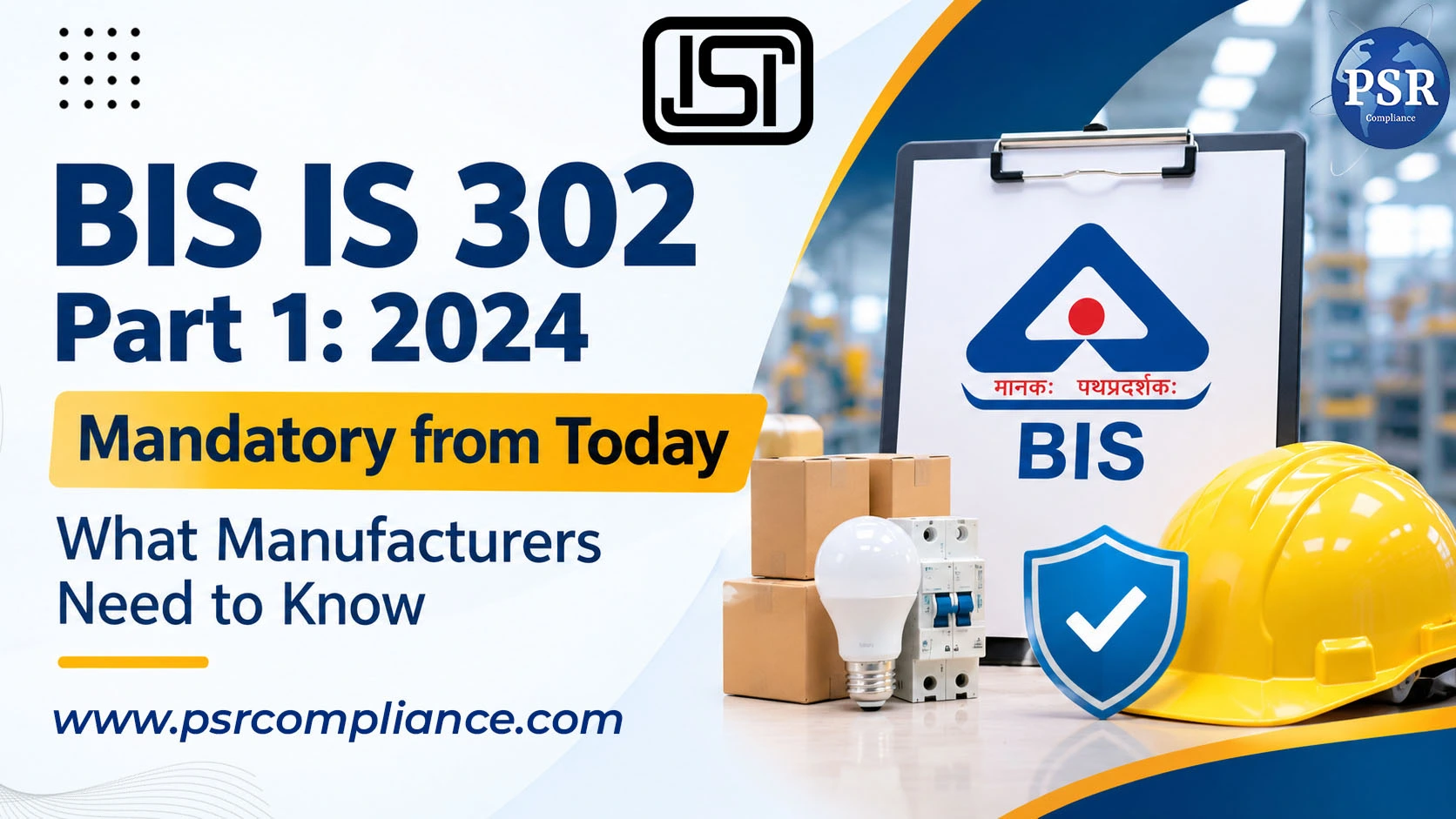
This certification covers household, commercial, and similar appliances that use gas, oil, or solid fuels and have electrical connections. It is mainly governed by IS 302 (Part 1): 2024, along with specific product standards like IS 4246 for LPG stoves and IS 17153 for PNG stoves.
Q2. Is BIS certification mandatory for these appliances in India?
Yes. BIS certification with the ISI Mark is legally mandatory under Quality Control Orders (QCOs). No manufacturer or importer is allowed to sell, manufacture, or distribute these appliances in India without BIS approval.
Q3. Do foreign manufacturers also need BIS certification?
Yes. Foreign manufacturers must obtain BIS certification under the Foreign Manufacturers Certification Scheme (FMCS) before exporting products to India. The process includes factory inspection, product testing, and approval, and may take up to 180 days.
Q4. Where are these appliances tested for BIS certification?
Testing is conducted only in BIS-recognized or approved laboratories. These tests ensure safety parameters like gas soundness, ignition stability, thermal efficiency, flashback prevention, and emission safety are properly verified.
Q5. What is the process to get BIS certification?
Manufacturers must apply online through the BIS portal, submit technical documents, and undergo factory inspection. After successful testing and verification, BIS issues the certification license allowing use of the ISI Mark.
Q6. How long is BIS certification valid?
The BIS certification is generally valid for 1 to 5 years, depending on the license type. Manufacturers must complete periodic renewals and audits to keep the certification active.
Q7. How can consumers verify BIS-certified products?
Consumers can verify ISI-marked products using the BIS Care App, where they can check the license number, manufacturer details, and product authenticity before purchase.