

Just send us your questions or concerns by starting a new case &
we will give you the help you need. Start Here...
CCTV Registration
Mon, Feb 02 2026
Raju Karn
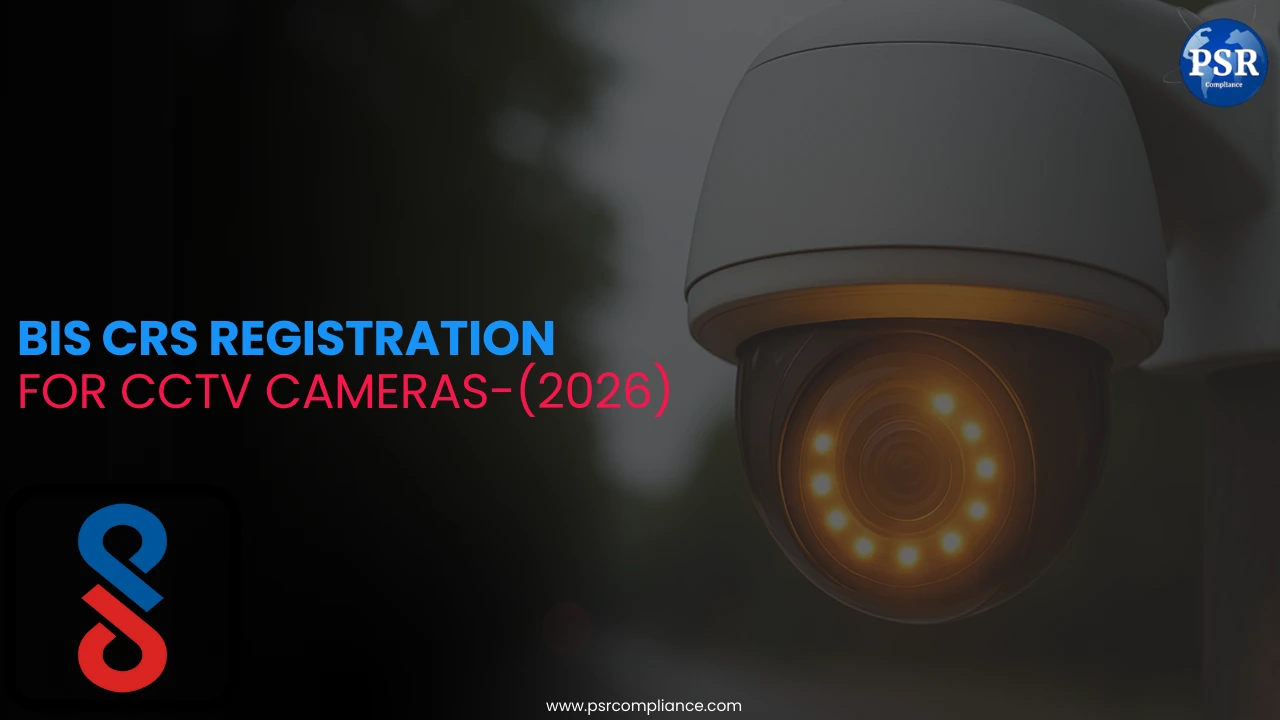
BIS CRS Registration for CCTV Cameras in India – Complete Guide (2026)
If you deal with CCTV cameras in India, whether you manufacture them, import them, or sell them, BIS registration is something you cannot ignore. In the past few years, the government has made the rules much stricter to make sure that only safe and standard-quality products are available in the market. Because of this, many businesses face problems like their shipments getting stuck at customs or their CCTV products being removed from online platforms when they are not BIS certified.
The main issue is not that the rules are hidden, but that they are difficult to understand for many business owners. BIS CCTV registration is simply a way to prove that your product meets Indian safety and quality standards. In this article, we will explain everything in a very simple way, so you can clearly understand what BIS registration means, why it is required in 2026, and how it affects your business without using any complex legal language.
What Does BIS CCTV Registration Actually Mean?
In simple terms, BIS CCTV registration means your CCTV product has been checked and approved under India’s Compulsory Registration Scheme (CRS).
Once a product is registered:
- It meets Indian safety rules
- It has been tested in a government-approved lab
- It gets a unique registration number
- That number must be printed on the product and the box
If a CCTV camera is sold or imported without this registration, it is treated as illegal.
This is where businesses usually face trouble:
- Goods get stuck at ports
- Online listings are removed
- Notices or penalties are issued under the BIS Act
So yes, if you are selling or importing CCTV products in India, BIS registration is mandatory.
Who Is Responsible for BIS CCTV Registration?
Different people are involved, but the responsibility is clear.
● Indian manufacturers
If you make CCTV products in India, registration is your responsibility.
● Foreign manufacturers
Foreign brands must appoint an Authorized Indian Representative (AIR). The AIR handles all communication with BIS.
● Importers
Importers must ensure the product already has BIS registration before shipment arrives in India
Which CCTV Products Come Under BIS CRS?
Most surveillance equipment falls under BIS CRS. This includes:
➤ Regular CCTV cameras
➤ IP and network cameras
➤ DVR and NVR systems
➤ Smart surveillance cameras
➤ CCTV kits with monitors
➤ Power adapters supplied with CCTV units
In many cases, each model needs approval. Sometimes, similar models can be grouped together, but that depends on technical similarity and BIS acceptance.
New Rules You Cannot Ignore – ER01 Requirement
Earlier, BIS registration mainly checked electrical safety. That has changed.
From 2024 onwards, BIS introduced ER01 (Essential Requirements). These rules focus on cybersecurity. The idea is simple: CCTV cameras should not become a security risk themselves.
From April 9, 2025 onwards, BIS approves CRS applications for CCTV cameras only if ER-01 requirements are complied with.
This means your CCTV device must:
➜ Prevent unauthorised access
➜ Protect video and data properly
➜ Follow basic cyber safety practices
If a product fails ER01 checks, the application may stay pending or get deferred.
Why BIS CCTV Registration Is Mandatory
This is not optional. It is required by law.
Here’s why it matters in real life:
Legal compliance
CCTV cameras are notified under CRS orders. Selling without BIS registration is a violation.
Customs clearance
Unregistered products are often stopped at ports. Clearance becomes difficult and costly.
Online sales
Marketplaces now ask for BIS details before allowing CCTV listings.
Customer trust
Registered products are tested. Buyers feel safer purchasing compliant equipment.
BIS Standards Applied to CCTV Products
Each CCTV component follows a specific Indian Standard. Some common ones are:
➝ CCTV Cameras and IP Cameras – IS 13252 (Part 1)
➝ DVR and NVR Systems – IS 13252 (Part 1)
➝ Surveillance Monitors – IS 616
➝ Power Adapters – IS 13252 (Part 1)
If a CCTV kit includes multiple parts, each part may need separate compliance.
How BIS CCTV Registration Works
Step 1: Product Testing
First, a sample of your CCTV product is sent to a BIS-approved lab in India. In this lab, the product is tested to check its safety, quality, and performance. This step makes sure the product is safe to use and meets Indian standards.
Step 2: Document Preparation
Next, you need to prepare all the required documents. This includes company details, product information, test reports, and authorization papers. Everything is checked and kept ready before applying.
Step 3: Online Application
After that, you submit the application on the BIS CRS portal. Once the form is filled and submitted, you get an application reference number for tracking your request.
Step 4: BIS Review
Now BIS will check your application and documents. If something is missing or not clear, they may ask you to provide more details or make corrections.
Step 5: Registration Approval
If everything is correct, BIS approves your application and gives you a registration number. After this, your CCTV product can be legally sold or imported in India.
Documents You Will Need
Many applications get delayed simply because some documents are missing or not properly prepared. To avoid this, it’s best to keep everything ready in advance.
You will usually need:
→ A test report issued by a BIS-approved laboratory
→ Company registration documents
→ Proof of brand ownership or an authorisation letter from the brand owner
→ Authorized Indian Representative (AIR) appointment letter, if the brand is from outside India
→ Product user manuals and basic technical specifications
→ Final packaging and label design showing product details
→ Required declarations and affidavits as per BIS format
Having these documents in order helps the application move faster and reduces back-and-forth with BIS.
BIS Marking and Label Rules
Once your BIS registration is approved, the product must show the BIS Standard Mark properly. This mark should be printed or displayed on the CCTV device itself and also on its packaging.
The registration number must be clear and easy to read. Even small mistakes in marking or missing details can create issues during inspections or at customs, even if the registration is already approved.
Validity and Renewal
BIS registration is generally valid for two years. Before it expires, you need to apply for renewal to continue selling the product legally.
In most cases, fresh testing is not required unless there is a change in product design or technical specifications. If renewal is delayed, sales and imports may be stopped until compliance is restored.
What Happens If You Ignore BIS Rules?
Ignoring BIS requirements can lead to serious problems. Products without valid registration may be seized by authorities, and fines can be imposed.
Online marketplaces can remove listings, and distributors may stop working with your brand due to compliance risks. Following BIS rules helps protect your business, reputation, and long-term growth.
Need Help with BIS CCTV Registration?
If you’re unsure about testing, documents, or whether your CCTV product needs BIS approval, it’s better to get clarity before moving ahead.
📞 Talk to the compliance team at PSR Compliance: 8796104190
We’ll review your product details, explain the exact requirements, and guide you step by step so you can avoid delays, rejections, or compliance issues.
FAQs on BIS CCTV Registration
1. Which CCTV products require BIS registration
CCTV cameras, DVRs, and NVRs are mandatory under BIS CRS.
2. Is separate BIS registration required for each CCTV brand
Yes, each brand needs a separate registration, though similar models can be grouped as a series.
3. Is BIS certification required for CCTV power adapters
Yes, CCTV power adapters must have BIS certification if supplied or sold separately.
4. Who can apply for BIS registration for CCTV
Only manufacturers can apply; foreign manufacturers must appoint an Authorized Indian Representative (AIR).
5. What documents are required for BIS CCTV registration
BIS lab test report, CDF/CCL, brand authorization, AIR letter, ISO certificate, and user manual.
6. What is the ER-01 security requirement for CCTV
All CCTV cameras must comply with ER-01 security norms tested by STQC-approved labs.
7. How long is BIS registration for CCTV valid
BIS CCTV registration is valid for two years and is renewable.
8. When should BIS renewal for CCTV be applied
Renewal should be submitted at least one month, or up to 90 days, before expiry.
9. How long does the BIS CCTV registration process take
Approval usually takes 15–30 days after submission, excluding testing time.
10. What happens if CCTV products are sold without BIS registration
Selling or importing non-registered CCTV products can lead to seizure and penalties under the BIS Act.