Sat, Mar 14 2026
Raju Karn
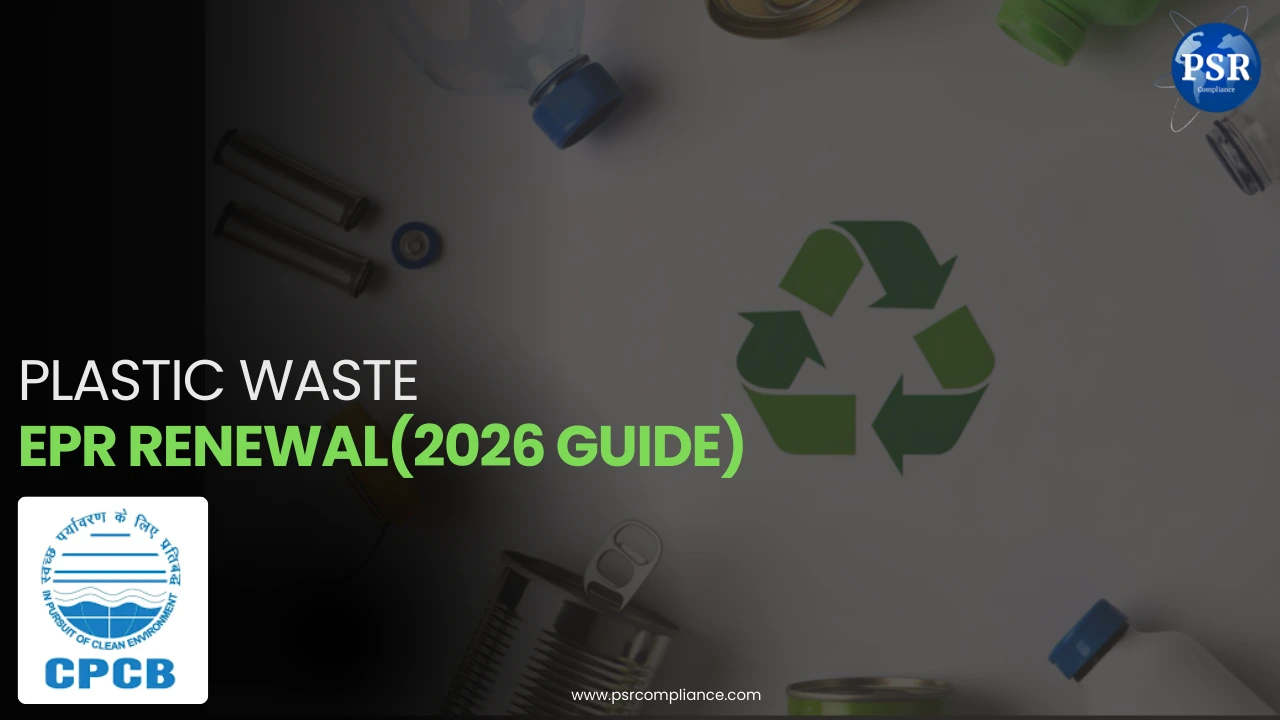
Plastic Waste EPR Renewal for Food & Beverage Brands (2026)
Food and beverage companies in India use a large amount of plastic packaging every day. From snack packets and beverage bottles to food containers and delivery packaging, plastic is widely used to protect and transport products. Because of this, the government has introduced strict rules under Plastic Waste Management Rules, 2016 that require companies to take responsibility for the plastic waste they introduce into the market.
This responsibility is known as Extended Producer Responsibility (EPR). If your business manufactures, imports, or sells packaged food and beverages, you must register for Plastic Waste EPR and renew your registration before it expires. Without renewal, companies may face penalties or even restrictions on selling their products.
This guide explains Plastic Waste EPR renewal for food and beverage brands in 2026, including the process, documents, compliance requirements, and how businesses can stay compliant.
What is Plastic Waste EPR?
Plastic Waste EPR stands for Extended Producer Responsibility for plastic packaging waste.
Under this system, companies that introduce plastic packaging into the market are responsible for collecting, recycling, or processing an equivalent amount of plastic waste.
Businesses that must comply include:
● Food manufacturers
● Beverage companies
● Packaged food brands
● Importers of packaged food products
● E-commerce food sellers
●Restaurants selling packaged products
These businesses are categorized as Producers, Importers, and Brand Owners (PIBOs) under the **Central Pollution Control Board EPR system.
Why EPR Renewal is Important for Food and Beverage Brands
Getting EPR registration once is not enough. Businesses must renew their EPR certificate before the validity expires.
If renewal is not done on time, companies may face several problems.
Some major risks include:
➜ Penalties from pollution control authorities
➜ Suspension of EPR registration
➜ Difficulty selling products on marketplaces
➜ Legal issues under environmental regulations
For food and beverage brands that sell products across India, maintaining valid EPR registration is essential for smooth business operations.
Which Food and Beverage Businesses Need EPR Renewal
Many businesses in the food industry are covered under Plastic Waste EPR.
This includes companies involved in:
➤ Packaged snack production
➤ Soft drink and beverage manufacturing
➤ Bottled water brands
➤ Dairy product packaging
➤ Frozen food packaging
➤ Food delivery brands with plastic packaging
Even small brands selling packaged products through online marketplaces must follow EPR rules if they introduce plastic packaging into the market.
Types of Plastic Packaging Used by Food Brands
Food and beverage companies typically use different categories of plastic packaging.
Some common examples include:
Flexible Plastic Packaging (Category II)
▪ Snack packets
▪ Chips wrappers
▪ Bread bags
▪ Sauce sachets
Rigid Plastic Packaging (Category I)
▪ Water bottles
▪ Soft drink bottles
▪ Food storage containers
Multi-layered Packaging (Category III)
▪ Chocolate wrappers
▪ Instant food packets
▪ Beverage cartons with plastic layers
Each category has separate recycling targets and compliance requirements.
When Should You Renew Plastic Waste EPR
Companies should apply for EPR renewal before the existing certificate expires.
Generally:
- EPR certificates are issued for one year or according to the authorization period.
- Renewal should ideally be started 60–90 days before expiry.
Early renewal helps avoid disruption in business operations.
Documents Required for EPR Renewal
Food and beverage companies must provide updated information during the renewal process.
Some commonly required documents include:
→ Existing EPR registration certificate
→Company PAN and GST details
→ Packaging data for the previous financial year
→ Plastic category details
→ Agreement with authorized recyclers or waste processors
→ Annual returns submitted on the EPR portal
Providing accurate data helps authorities verify compliance quickly.
Step-by-Step Plastic Waste EPR Renewal Process
The renewal process is usually done through the CPCB EPR portal.
The general steps include:
1. Log in to the official EPR portal of the Central Pollution Control Board.
2. Select the EPR renewal option.
3. Update packaging data and plastic category details.
4. Upload documents related to recycling and waste management.
5. Submit agreements with authorized recyclers or Producer Responsibility Organizations (PROs).
6. Pay the applicable government fees.
7. Submit the application for verification.
After verification by the authorities, the renewed EPR certificate is issued.
Recycling Targets for Food and Beverage Brands
Under current regulations, companies must ensure that a certain percentage of plastic packaging is recycled.
For many plastic categories, the recycling targets are increasing every year.
Typical targets include:
➝ 30% recycling target (2024–25)
➝ 40% recycling target (2025–26)
➝ 50% recycling target (2026–27)
➝ 60% recycling target (2027 onwards)
Food brands must work with recyclers to meet these targets.
Challenges Food Brands Face in EPR Compliance
Many food and beverage companies struggle with EPR compliance.
Some common challenges include:
⚠ Tracking the amount of plastic packaging introduced in the market
⚠ Finding authorized recyclers
⚠ Managing documentation and reports
⚠ Understanding recycling categories
Because of these challenges, many companies prefer to work with compliance experts.
Real Example of Plastic Waste EPR Renewal
A packaged snack company called CrunchyBite Foods Pvt. Ltd. sells potato chips and snack products across multiple states in India. The company uses flexible plastic wrappers for its products, which fall under Category II plastic packaging.
When their EPR registration was about to expire, the company approached PSR Compliance for assistance. The team helped them update their plastic packaging data, connect with authorized recyclers, and submit the EPR renewal application on the CPCB portal. With proper documentation and recycling certificates, the company successfully renewed its Plastic Waste EPR registration and continued selling its products without any compliance issues.
Need Help with Plastic Waste EPR Renewal?
If your food or beverage brand needs assistance with Plastic Waste EPR renewal, professional support can make the process much easier.
PSR Compliance provides end-to-end assistance for EPR renewal, including documentation, recycler coordination, and application filing so your business remains fully compliant with environmental regulations.
📞 Call: 8796104190
📧 Email: support@psrcompliance.com
FAQs
1. How long is a new EPR registration valid?
A new EPR registration for plastic packaging is valid for 1 year, while a renewed registration is valid for 3 years.
2. When should PIBOs apply for EPR renewal?
Renewal applications must be submitted 4 months before the current registration expires.
3. How is EPR renewal done?
EPR renewal is completed online through the CPCB EPR portal (eprplastic.cpcb.gov.in).
4. What is required for the EPR renewal process?
The process involves filing updated usage data, evidence of target fulfillment, and payment of renewal fees.
5. How much does EPR renewal cost?
The renewal fee matches the initial registration fee, ranging from ₹10,000 for <1000 TPA to ₹50,000 for high plastic volumes.
6. Are annual returns required for EPR compliance?
Yes, registered entities must file annual returns by June 30th of the following financial year.
7. What documents are needed for EPR renewal?
Required documents include existing registration certificate, updated plastic consumption data, annual returns, agreements with PWPs/PROs, and audited CA-certified data if needed.
8. What happens if the renewal deadline is missed?
Missing the deadline can lead to registration cancellation, fines, and suspension of business operations.
9. Are small F&B brands exempt from EPR renewal?
Micro and small brands may be exempt, but stricter rules may apply depending on operations.
10. Can online marketplaces refuse unrenewed products?
Yes, online platforms often suspend listings of brands without a valid, renewed EPR certificate.
11. What is the 4th Amendment to the PWM Rules?
It introduced a centralized portal and mandatory EPR certification for PIBOs with defined plastic categories.
12. Is compliance mandatory for 2026?
Yes, all PIBOs must maintain accurate, verifiable documentation on the centralized portal for smooth operations.