
Just send us your questions or concerns by starting a new case &
we will give you the help you need. Start Here...
FSSAI Licence
Tue, Aug 18 2026
Raju Karn
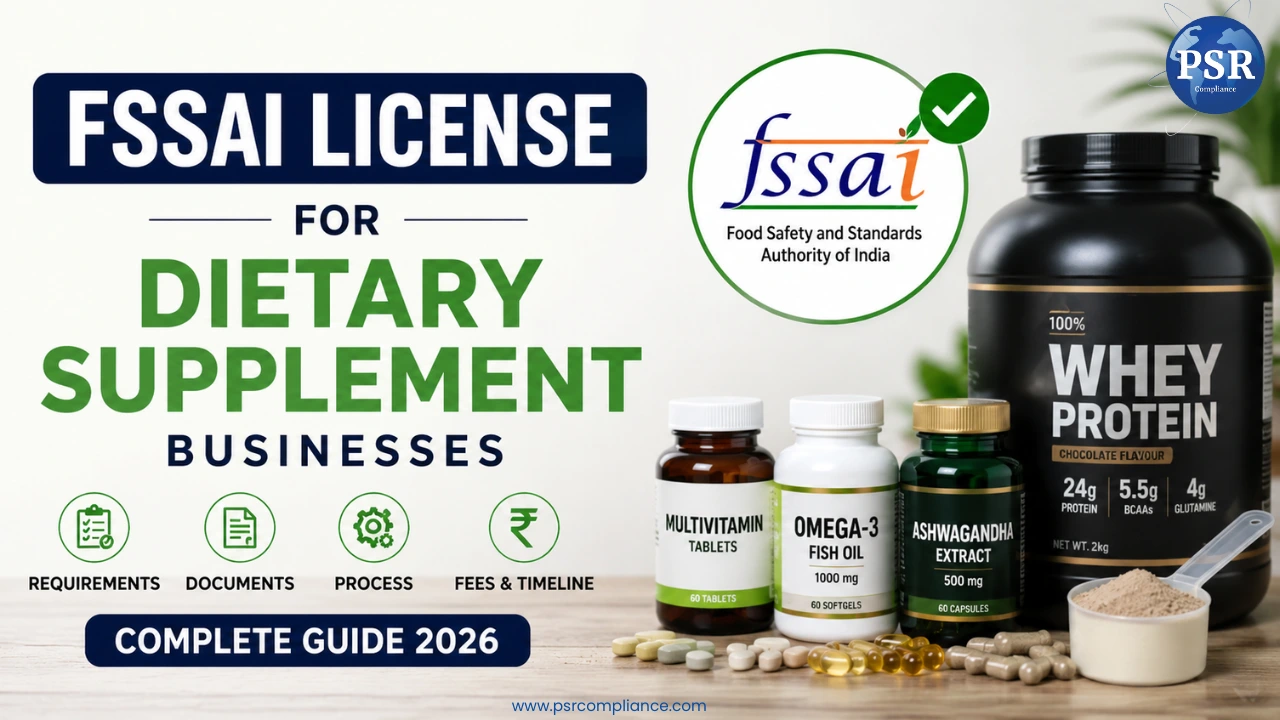
FSSAI License for Dietary Supplement Businesses in India (2026)
Starting a dietary supplement brand in India requires more than a good product formula and attractive packaging. Whether you manufacture protein powder, sell multivitamins, operate an online supplement store, or market products manufactured by a third party, you need to understand the applicable FSSAI licensing and product-compliance requirements.
FSSAI regulates health supplements and related categories under its food-safety framework. The applicable requirements can depend on the product category, ingredients, business activity, manufacturing arrangement, and claims made on the label.
Important 2026 update: From 1 April 2026, FSSAI revised the general turnover thresholds: Registration applies up to ₹1.5 crore, State License applies above ₹1.5 crore and up to ₹50 crore, and Central License applies above ₹50 crore, subject to category-specific requirements that may require a particular license irrespective of turnover.
What Is a Dietary Supplement Under FSSAI?
Dietary or health supplements are products intended to supplement the normal diet by providing nutrients or other permitted substances with a nutritional or physiological purpose. FSSAI's framework covers categories including health supplements, nutraceuticals, foods for special dietary use, foods for special medical purposes, probiotic foods, prebiotic foods, specialty foods containing botanicals, and novel foods.
Common products in the supplement market include:
- Protein powders such as whey, plant protein and casein
- Multivitamin and mineral tablets
- Iron and calcium supplements
- Herbal and botanical formulations
- Probiotic and prebiotic products
- Sports nutrition products such as BCAAs and L-carnitine
- Other products falling within the applicable health supplement or nutraceutical category
Because these products are consumed for nutritional or physiological purposes, businesses need to pay close attention to permitted ingredients, product composition, dosage, labeling and claims before launching them in India.
FSSAI License Classification for Dietary Supplement Businesses
The applicable FSSAI registration or license is determined by the business activity and the revised turnover thresholds effective from 1 April 2026. The general classification is:
| FSSAI Category | Annual Turnover from 1 April 2026 | General Application |
|---|---|---|
| FSSAI Registration | Up to ₹1.5 crore | Small eligible food businesses |
| State FSSAI License | Above ₹1.5 crore to ₹50 crore | Medium food businesses |
| Central FSSAI License | Above ₹50 crore | Large food businesses |
FSSAI's revised order specifically states that these thresholds came into effect on 1 April 2026. However, turnover is not the only factor. Certain businesses or activities may require a Central License because of their category or nature of operation.
For dietary supplement businesses, the correct category and operational activity should therefore be checked before applying rather than selecting a license only on the basis of turnover.
Who Needs an FSSAI License for Dietary Supplements?
An FSSAI registration or license may be required if you are:
- Manufacturing dietary powders, capsules or tablets
- Marketing supplements under your own brand through contract manufacturing
- Selling packaged supplements through your own website
- Selling supplements through e-commerce marketplaces
- Operating a retail supplement or nutrition store
- Distributing packaged dietary supplements
- Importing health supplements or nutraceutical products
- Manufacturing or marketing products covered under the applicable health supplement and nutraceutical regulations
If you outsource manufacturing, the licensing position of both the manufacturer and the brand owner/marketer should be properly assessed. The product label, business activity and contractual arrangement should also be consistent with the applicable FSSAI requirements.
Why Is FSSAI Compliance Important for Supplement Brands?
FSSAI compliance is important because supplement businesses deal directly with products intended for human consumption. A business operating without the required registration or license can face regulatory action, while non-compliant formulations, labels or claims can create additional problems.
For an online supplement brand, compliance also matters commercially. Marketplaces, distributors, retailers and other business partners may ask for food-license and product-compliance documents before onboarding products. A compliant setup can therefore make it easier to build trust and expand across online and offline channels.
Key Benefits of FSSAI Compliance
- Legal operation of the food business
- Better consumer confidence
- Easier onboarding with distributors and marketplaces
- Stronger documentation for business expansion
- Reduced risk of regulatory action
- Better control over product labeling and claims
Basic Requirements Before Applying for an FSSAI Supplement License
Before submitting an application, businesses should review the product and business model carefully.
1. Product Formula Verification
Check whether the ingredients and their quantities comply with the applicable FSSAI requirements. A product should not be launched simply because the same ingredient is permitted in another country.
2. Label and Claim Review
The label should comply with applicable food-labeling requirements. Supplement businesses should also avoid presenting a food product as a medicine or making unsupported disease-treatment or cure claims.
3. Manufacturing Compliance
If you manufacture the supplement yourself, the manufacturing premises and applicable hygiene and food-safety requirements must be addressed. If you use a contract manufacturer, verify that the manufacturer has the appropriate FSSAI authorization for its activity and product category.
Documents Required for FSSAI License for Dietary Supplements
The exact documents depend on the nature of the business and the license category. Common documents may include:
- Business incorporation certificate, partnership deed or proprietorship documents
- PAN and identity/address proof of proprietor, partners or directors
- Proof of business premises
- GST documents, where applicable
- Manufacturing unit layout or blueprint, where applicable
- Product and ingredient details
- Food product/category details
- Product specifications and supporting documents
- Contract manufacturing agreement, where applicable
- Proposed packaging and label artwork
- List of products to be manufactured, marketed, distributed or sold
For supplement businesses, it is particularly important to prepare the product formulation and label information correctly because licensing alone does not automatically establish that every formulation or claim is compliant.
Step-by-Step Process to Get an FSSAI License for Supplements
Step 1: Identify Your Business Activity
First determine whether you are a manufacturer, marketer, relabeller, distributor, retailer, importer or another type of food business operator. Your operational activity affects the application.
Step 2: Classify the Product
Identify whether your product falls under health supplements, nutraceuticals or another applicable food category. FSSAI's health-supplement framework covers multiple functional-food categories, so product classification should be done carefully.
Step 3: Review Ingredients and Claims
Review the formulation, ingredient quantities, nutritional information and proposed claims against the applicable FSSAI requirements. This step is especially important for products containing botanicals, vitamins, minerals or other functional ingredients.
Step 4: Prepare the Documents
Collect the business documents, premises proof, product information, manufacturing details and label artwork required for your particular application.
Step 5: Apply Through FoSCoS
Submit the applicable FSSAI registration or license application through the FoSCoS system with the required details and documents.
Step 6: Respond to Queries or Inspection Requirements
Depending on the application and business activity, FSSAI authorities may scrutinize the documents or conduct an inspection of the manufacturing premises.
Step 7: Receive the FSSAI Registration or License
After the application is approved, the business receives the applicable FSSAI registration/license. The license details should then be used correctly on applicable product labels and business documentation.
FSSAI License for Protein Powder Businesses
Protein powders are among the most common products sold by supplement brands. Businesses manufacturing, marketing, distributing or selling protein products should first establish the correct food category and applicable licensing requirements.
If you manufacture protein powder yourself, your manufacturing premises and product category need to be covered appropriately. If a third-party manufacturer produces the protein powder for your brand, both the manufacturing arrangement and the brand's role should be correctly reflected in the compliance documentation.
Do not assume that having an FSSAI license automatically approves every protein formulation or marketing claim. Product composition, labeling and claims must separately comply with the applicable requirements.
FSSAI License for Online Supplement Stores
Running an online supplement store does not remove your food-safety obligations. If you sell packaged dietary supplements through your own website or an e-commerce marketplace, you should ensure that the business has the appropriate FSSAI registration/license and that the products and labels comply with applicable requirements.
Before listing products, keep your FSSAI details, invoices, product information, labels and manufacturer/marketer documentation organized. This can help reduce compliance issues during marketplace onboarding or regulatory checks.
FSSAI License for Supplement Marketers and Relabellers
Many supplement brands do not own manufacturing facilities. Instead, they work with contract manufacturers and sell products under their own brand names.
In such cases, the business should identify its correct FSSAI operational role and maintain appropriate documentation with the contract manufacturer. The agreement, product details, label information and licensing records should be consistent.
This is particularly important when the brand controls the packaging and marketing but another company manufactures the product.
Common Mistakes Dietary Supplement Businesses Should Avoid
1. Choosing the License Only on Turnover
The revised turnover thresholds are important, but certain activities and categories can have specific licensing requirements. Always assess the business activity as well as turnover.
2. Launching a Product Before Checking the Formula
An ingredient being legally sold in another country does not automatically mean that the same formulation is compliant in India.
3. Making Medicinal or Disease Claims
Food supplements should not be marketed in a manner that improperly presents them as medicines or makes unsupported claims to cure, treat or prevent diseases.
4. Ignoring Label Compliance
The packaging should be reviewed for applicable declarations, nutritional information, warnings, claims and other mandatory requirements.
5. Assuming the Manufacturer's License Covers the Brand Automatically
A contract manufacturer having an FSSAI license does not mean the brand can ignore its own applicable food-business obligations.
6. Using Outdated FSSAI Turnover Limits
The old ₹12 lakh / ₹20 crore thresholds should not be used for a 2026 article without qualification. The general revised thresholds took effect from 1 April 2026: ₹1.5 crore for Registration, above ₹1.5 crore to ₹50 crore for State License, and above ₹50 crore for Central License.
Real-Life Compliance Lesson: Why Product Claims Matter
Supplement businesses can face regulatory action when products are marketed with claims that go beyond what is permitted for food products. FSSAI's framework distinguishes health supplements and nutraceuticals from drugs, and the applicable regulations are intended to establish requirements for composition, safety and labeling.
For this reason, a supplement brand should review the formula, ingredient status, dosage, label and advertising claims together before launching a product. Getting only the FSSAI license while overlooking product-level compliance can still expose the business to regulatory problems.
How PSR Compliance Can Help With FSSAI Supplement Licensing
Launching a supplement brand involves more than submitting an online license application. You need to identify the correct business activity, understand the applicable product category, prepare documents, review labels and ensure that the proposed product fits the applicable FSSAI framework.
PSR Compliance can assist businesses with FSSAI registration and licensing, product-category assessment, documentation, application support and compliance guidance for dietary supplement businesses.
Get Help With Your FSSAI Supplement License
Planning to manufacture, market or sell protein powder, vitamins, herbal supplements, nutraceuticals or other dietary supplements in India?
Get professional assistance from PSR Compliance to identify the applicable FSSAI requirements and prepare your application correctly.
📞 Call: 8796104190
📧 Email: support@psrcompliance.com
Frequently Asked Questions
Q1. Is an FSSAI license mandatory for selling protein powder online?
Yes. Businesses selling packaged protein powder and other food supplements commercially must comply with applicable FSSAI registration or licensing requirements. The correct category depends on the nature and scale of the business.
Q2. Can I sell dietary supplements under my own brand using a contract manufacturer?
Yes. Many brands use contract manufacturers. However, the manufacturer and brand owner's respective food-business activities should be correctly assessed, and the applicable licensing and documentation should be maintained.
Q3. What FSSAI license is required for a supplement business in 2026?
From 1 April 2026, the general turnover thresholds are Registration up to ₹1.5 crore, State License above ₹1.5 crore up to ₹50 crore, and Central License above ₹50 crore. Category-specific requirements can also affect the applicable license.
Q4. Do online supplement stores need FSSAI registration?
Yes. Selling food supplements online does not exempt a business from FSSAI requirements. The appropriate registration or license should be obtained based on the business activity and applicable criteria.
Q5. Can dietary supplements make claims about curing diseases?
Businesses should not market food supplements as medicines or make unsupported disease-treatment, cure or prevention claims. Claims must comply with the applicable FSSAI framework.
Q6. What documents are required for an FSSAI supplement license?
Common documents include business registration details, identity and address proof, premises proof, product information, manufacturing details, label artwork and contract-manufacturing documents where applicable.
Q7. Does a contract manufacturer's FSSAI license cover my supplement brand?
Not automatically. The manufacturer's license relates to its own licensed activity. A brand owner or marketer should separately assess its applicable FSSAI obligations.
Q8. How long does an FSSAI supplement license take?
Processing time depends on the application, document completeness, business activity, queries and whether an inspection is required. Therefore, businesses should avoid relying on a fixed approval period.
Q9. Can a gym sell packaged protein supplements?
A gym that commercially sells packaged food or dietary supplements must comply with the applicable FSSAI requirements for its food-business activity.
Q10. How can I verify an FSSAI license number online?
An FSSAI registration/license can be checked through the official FSSAI/FoSCoS system using the relevant license or registration details.