Mon, Mar 09 2026
Raju Karn
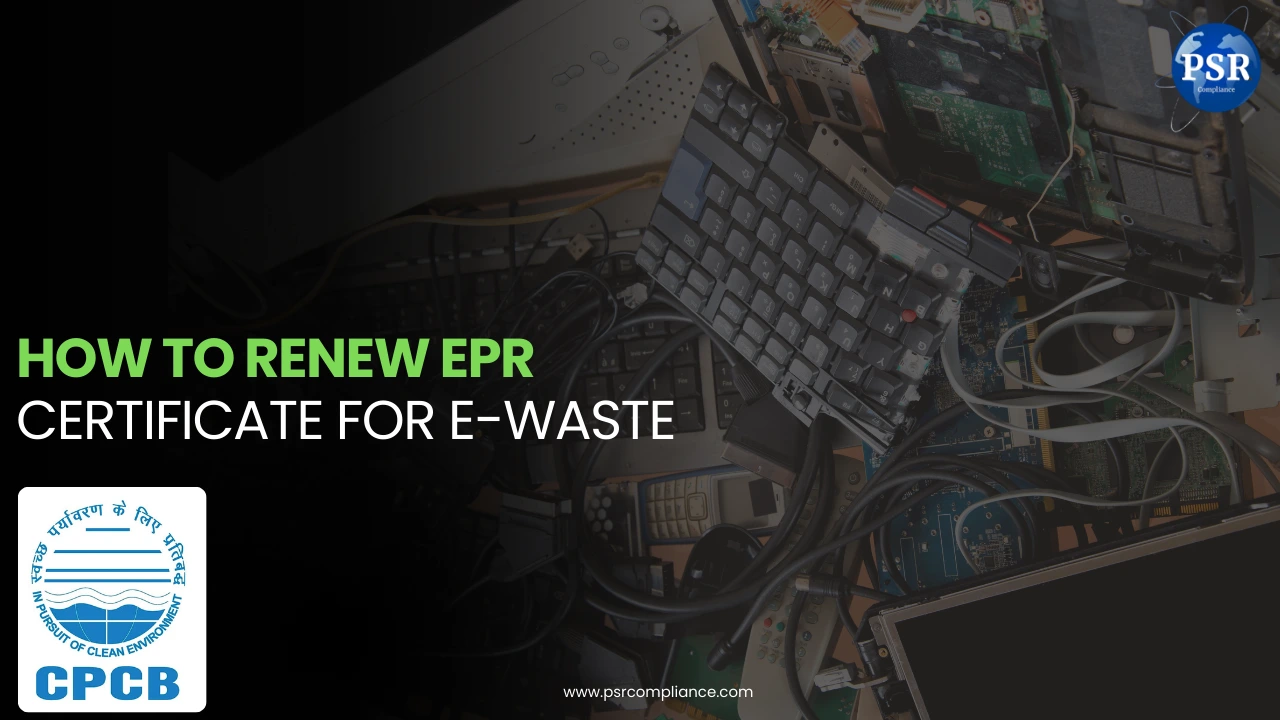
How to Renew EPR Certificate for E-Waste Management (2026 Guide)
If your business manufactures, imports, sells, or refurbishes electronic products in India, you have probably already heard about EPR. Many companies complete their EPR registration once and then forget that the EPR certificate has a validity period and must be renewed on time.
When the renewal date approaches, businesses often get confused about the process, documents, timelines, and what happens if the EPR renewal is delayed.
This guide explains the EPR certificate renewal process for e-waste management in 2026 in simple language -the way business owners actually want to understand it.
What is EPR in E-Waste Management?
EPR (Extended Producer Responsibility) is an environmental policy that makes producers responsible for the collection, recycling, and safe disposal of electronic waste generated from their products.
Under India's E-Waste Management Rules, companies that introduce electronic products into the market must ensure that the waste generated from those products is properly managed.
EPR registration is issued through the Central Pollution Control Board (CPCB) via the official EPR portal.
Once approved, the business receives an EPR certificate, which legally allows them to sell electronic products in India while complying with environmental regulations.
Why EPR Renewal is Necessary
An EPR certificate is not permanent. It is issued for a limited validity period and must be renewed before it expires.
Renewal is necessary for several reasons:
1. Legal Compliance
Operating without a valid EPR certificate can lead to penalties under environmental laws.
2. Continued Market Operations
Manufacturers and importers cannot legally sell electronic goods in India if their EPR authorization has expired.
3. Environmental Responsibility
Renewal ensures the company continues to meet its recycling targets and waste management obligations.
4. Avoiding Business Disruption
Many e-commerce platforms and distributors now require a valid EPR certificate before allowing product listings.
Types / Categories Under EPR for E-Waste
Businesses must renew their EPR authorization depending on the category they fall into.
● Producer
Companies that manufacture and sell electronic products under their own brand.
● Importer
Businesses importing electronic goods or components into India.
● Brand Owner
Companies selling electronics under their brand name but manufactured by a third party.
● Refurbisher
Businesses that repair or refurbish used electronic products for resale.
Each category must maintain valid EPR registration and renewal to operate legally.
Who Should Apply for EPR Renewal?
EPR renewal is required for:
➤ Electronics manufacturers
➤ Electronic product importers
➤ Online electronic product sellers
➤ Brand owners of electrical goods
➤ Electronic refurbishers
➤ Businesses selling batteries, IT equipment, or consumer electronics
If your company sells products like laptops, mobile phones, televisions, or other electronic equipment, you likely require EPR certificate renewal.
Advantages of EPR Registration and Renewal
Maintaining a valid EPR certificate offers several benefits.
➜ Legal Business Operations
It ensures your company complies with India's environmental laws.
➜ Market Trust
Distributors, marketplaces, and partners prefer working with compliant companies.
➜ Environmental Contribution
Proper e-waste recycling helps reduce environmental damage.
➜ Access to Government Platforms
Many compliance systems and procurement portals require valid EPR authorization.
➜ Brand Reputation
Consumers are increasingly supporting environmentally responsible businesses.
Documents Required for EPR Renewal
Businesses generally need the following documents during EPR certificate renewal:
→ Existing EPR certificate
→ PAN card of the company
→ GST registration certificate
→ Company incorporation documents
→ Product details and categories
→ Recycling agreement with authorized recycler
→ EPR annual return records
→ Waste collection and recycling reports
→Authorized signatory documents
Sometimes additional documents may be requested depending on product categories.
EPR Renewal Process (Step-by-Step)
The EPR renewal process usually follows these steps:
Step 1: Login to the EPR Portal
Access the CPCB EPR portal using your registered credentials.
Step 2: Submit Renewal Application
Choose the EPR renewal option and update company details, product categories, and recycling arrangements.
Step 3: Upload Documents
Upload updated compliance documents and annual return reports.
Step 4: Recycling Target Verification
Authorities verify whether the company has fulfilled its previous recycling obligations.
Step 5: Application Review
The regulatory authority reviews the renewal request.
Step 6: Approval and New Certificate
Once approved, the renewed EPR certificate is issued with an updated validity period.
Problems Businesses Face Without EPR Renewal
Ignoring EPR renewal can create serious business issues.
⚠ Legal Penalties
Authorities may impose fines or environmental penalties.
⚠ Product Sales Ban
Businesses may be restricted from selling electronic products.
⚠ E-Commerce Listing Removal
Online marketplaces may remove non-compliant sellers.
⚠ Import Restrictions
Customs authorities may block shipments of electronic products.
⚠ Reputation Damage
Non-compliance can harm business credibility.
Government Fees, Timeline, and Validity
Government Fees
Fees depend on:
- Product category
- Turnover
- Quantity of electronics introduced in the market
Processing Time
EPR renewal usually takes:
30 to 60 working days depending on documentation and verification.
Validity
A renewed EPR certificate typically remains valid for 5 years, after which renewal is required again.
Businesses should apply for renewal before the certificate expires to avoid disruptions.
Real-Life Example
A Noida-based electronics importer, GreenTech Imports Pvt. Ltd., imports laptops and sells them through various online marketplaces in India. The company obtained its EPR certificate in 2021 through the Central Pollution Control Board (CPCB) as required under India’s e-waste management rules. As the certificate approached its expiry in 2026, the company contacted PSR Compliance to complete the EPR renewal process and ensure their compliance documents were updated.
Without timely EPR renewal, e-commerce platforms could suspend product listings because environmental compliance is mandatory for electronics sellers. With the assistance of PSR Compliance, the company successfully renewed its EPR certificate, allowing GreenTech Imports Pvt. Ltd. to continue selling laptops without legal issues or interruptions to its business operations.
Need Help with EPR Renewal?
If your EPR certificate is about to expire or you need help with EPR registration or renewal, getting the right guidance can make the process much easier and faster.
PSR Compliance helps manufacturers, importers, and brand owners complete their EPR renewal process smoothly in accordance with the regulations of the Central Pollution Control Board (CPCB).
Our experts assist businesses with:
☑ Filing EPR renewal applications on the CPCB portal
☑ Preparing and reviewing compliance documents
☑ Coordinating with authorized e-waste recyclers
☑ Ensuring your company meets all CPCB compliance requirements
With the right support, you can renew your EPR certificate without delays and keep your electronics business running smoothly.
📞 Contact PSR Compliance: 8796104190
Get professional support and complete your EPR renewal without compliance worries.
FAQs
What is the validity period of an E-Waste EPR certificate in India?
Under the E-Waste (Management) Rules, 2022, an EPR registration is generally valid for five years from the date of approval.
When should a company apply for EPR renewal?
Businesses must apply for EPR renewal at least 120 days before the expiry of their existing certificate.
Where can companies apply for E-Waste EPR renewal in India?
EPR renewal applications must be submitted online through the Central Pollution Control Board portal at eprewastecpcb.in.
What is the first step in the EPR renewal process?
The first step is to log in to the CPCB EPR portal using the company’s existing registration credentials.
Which form is used for EPR renewal application?
Companies must submit Form-1 on the CPCB portal when applying for E-Waste EPR renewal.
How long does CPCB take to approve EPR renewal?
The CPCB generally reviews and approves EPR renewal applications within 30 to 120 days after submission.
What documents are required for E-Waste EPR renewal?
Common documents include the existing EPR certificate, CA-certified sales data, annual returns, recycler agreements, and company registration details.
Is filing annual returns mandatory for EPR renewal?
Yes, companies must submit quarterly and annual returns on the CPCB portal to qualify for EPR renewal approval.
Why are recycler agreements required for EPR renewal?
Valid agreements with authorized recyclers or Producer Responsibility Organizations (PROs) prove that the company meets its recycling obligations.
What happens if EPR renewal is not completed on time?
Failure to renew the certificate may lead to suspension of EPR authorization and environmental penalties.
Can businesses sell electronics without a valid EPR certificate?
No, companies cannot legally import, manufacture, or sell electronic products in India without a valid EPR authorization.
What additional documents are required for recycler EPR renewal?
Recyclers must also submit Consent to Establish (CTE), Consent to Operate (CTO), and hazardous waste authorization from the State Pollution Control Board.