Tue, Jul 28 2026
Raju Karn
COS-1 vs COS-2: What's the Real Difference in CDSCO Cosmetic Import Registration?
Importing cosmetics into India requires compliance with the Cosmetics Rules, 2020 and the regulations issued by the Central Drugs Standard Control Organisation (CDSCO). One of the most common mistakes made by importers is misunderstanding the cosmetic import registration process itself — specifically, confusing the application with the certificate they eventually receive. Many businesses, especially first-time importers, mix up COS-1 and COS-2, often assuming both are forms they need to fill out and submit. This misunderstanding can delay approvals, increase processing time, or create unnecessary confusion during customs clearance.
If you are planning to import skincare products, makeup, perfumes, hair care products, or other cosmetics into India, understanding the difference between COS-1 and COS-2 is essential. In this guide, we explain what each one actually is — one is an application, the other is a certificate - compare their purpose, highlight common filing mistakes, and help you understand exactly where each one fits into the registration journey.
What is COS-1 Form?
COS-1 is the application form used to apply for the registration of cosmetics intended for import into India. It is submitted online through the CDSCO Sugam Portal by the importer or an authorised Indian agent before importing cosmetic products into the country.
The COS-1 application contains important information about the cosmetic product, manufacturer, manufacturing site, authorised agent, product category, ingredients, and supporting documents. CDSCO reviews the information submitted in COS-1 before deciding whether the product satisfies the requirements under the Cosmetics Rules, 2020.
Filing COS-1 does not grant any permission to import. It only starts the review process.
What is COS-2 ?
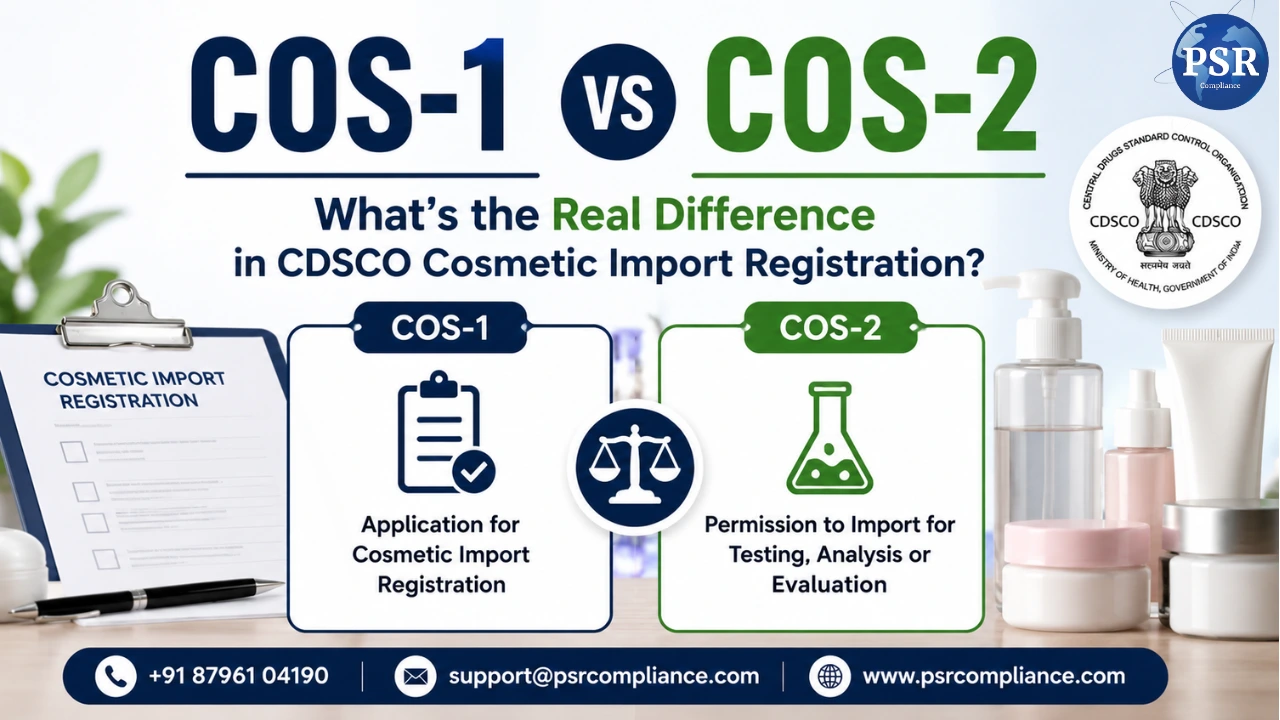
COS-2 is not an application form. It is the Registration Certificate issued by CDSCO after the successful evaluation and approval of the COS-1 application. Once the authority is satisfied that all regulatory requirements have been fulfilled, it grants the registration through Form COS-2.
In simple words, COS-1 is used to apply, while COS-2 is issued after approval. Importers sometimes mistakenly believe they need to submit both forms, whereas COS-2 is generated only after CDSCO approves the application. You never fill out or submit COS-2 — you receive it.
COS-2 is valid for five years from the date of issue, after which it must be renewed.
COS-1 vs COS-2: Quick Comparison
| Particular | COS-1 | COS-2 |
|---|---|---|
| Purpose | Application for cosmetic import registration | Registration Certificate issued after approval |
| Who uses it? | Importer or authorised Indian agent | Issued by CDSCO |
| Stage | Before approval | After approval |
| Submitted by | Applicant | CDSCO |
| Required for | Applying for import registration | Legal permission to import; proof of approved registration |
| Validity | Not applicable (one-time application) | 5 years from date of issue |
This comparison clearly shows that both forms serve completely different purposes during the cosmetic import registration process.
When Should You File COS-1?
You should file COS-1 whenever you plan to import a cosmetic product into India for the first time and registration is required under the applicable regulations. The application should be submitted before importing or marketing the cosmetic product in India.
Generally, COS-1 is filed when:
- Importing new cosmetic products.
- Registering a foreign cosmetic manufacturer.
- Appointing an authorised Indian agent.
- Applying for cosmetic import registration.
- Introducing additional cosmetic product categories requiring registration.
Submitting a complete and accurate COS-1 application helps reduce delays during the approval process.
When Do You Receive COS-2?
You do not file COS-2. It is issued by CDSCO only after your COS-1 application has been examined and approved. The certificate confirms that the cosmetic products mentioned in the application are legally registered for import into India according to the applicable regulations.
Importers should keep the COS-2 certificate safely because it serves as official proof of cosmetic import registration and is required during customs clearance, inspections, or regulatory verification. Without it, a shipment cannot legally enter India, even if the COS-1 application was submitted correctly.
Common Mistakes Importers Make
Many cosmetic importers face delays simply because they misunderstand the role of COS-1 and COS-2. Most of these mistakes occur when businesses apply without understanding the complete registration process.
Some common mistakes include:
- Assuming COS-2 is a second application form they need to fill out.
- Filing incomplete COS-1 applications.
- Uploading incorrect supporting documents.
- Providing inconsistent manufacturer information.
- Missing mandatory declarations.
- Applying without appointing an authorised Indian agent where required.
- Importing products before COS-2 has actually been issued.
Understanding the purpose of each form can help avoid unnecessary delays and repeated queries from CDSCO.
What Happens If You File the Wrong Form or Skip a Step?
Misunderstanding COS-1 and COS-2 can delay your cosmetic import registration and increase the chances of receiving queries from CDSCO. Since COS-1 is the application form and COS-2 is the registration certificate issued after approval, confusing their sequence can create real problems during the registration process.
Filing an incomplete application or importing before COS-2 is granted may lead to:
- Delay in registration approval.
- Additional clarification requests from CDSCO.
- Re-submission of documents.
- Increased processing time.
- Goods being held or seized at customs.
- Delay in importing cosmetic products into India.
Understanding the registration process before applying can save both time and effort.
Documents Required for Filing COS-1
Before submitting your application, make sure all supporting documents are complete and accurate. Missing or incorrect documentation is one of the most common reasons for delays in cosmetic import registration.
Generally, the following documents are required:
- Manufacturer's details.
- Product information.
- Product labels and artwork.
- Free Sale Certificate (where applicable).
- Power of Attorney or Authorisation Letter.
- Ingredient details.
- Product specifications.
- Manufacturing site information.
- Declaration and supporting regulatory documents.
CDSCO may request additional documents depending on the product category and the specific application.
How to Avoid Rejection During Cosmetic Import Registration
Many application rejections occur because applicants focus only on completing the form without checking whether the information provided is accurate and consistent. Small mistakes in product details, manufacturer information, or uploaded documents can lead to avoidable delays.
You can improve the chances of successful registration by following these best practices:
- Use the correct application form.
- Verify all product information before submission.
- Upload clear and valid documents.
- Ensure consistency across all supporting documents.
- Review the application before final submission.
- Track your COS-2 validity period to avoid a lapse.
- Seek professional guidance if you are unsure about the process.
A carefully prepared application reduces unnecessary queries and speeds up the approval process.
Why Understanding COS-1 and COS-2 is Important
Knowing the difference between COS-1 and COS-2 helps importers avoid one of the most common compliance mistakes in cosmetic registration. Since both forms are connected to the same registration process, many first-time applicants incorrectly assume that both forms need to be submitted separately.
In reality, COS-1 starts the registration process, while COS-2 confirms that the registration has been approved and legally permits import. Understanding this distinction allows businesses to complete the registration process correctly and avoid unnecessary delays before importing cosmetic products into India.
Why Choose PSR Compliance?
Applying for cosmetic import registration requires careful documentation and proper understanding of CDSCO requirements. At PSR Compliance, our experts help cosmetic importers complete the registration process accurately and guide them through every stage of the application — from filing COS-1 correctly to tracking your COS-2 renewal timeline.
Our services include:
- ✅ Cosmetic Import Registration Assistance
- ✅ CDSCO Regulatory Consultation
- ✅ Documentation Support
- ✅ Application Filing Assistance
- ✅ Compliance Review
- ✅ End-to-End Regulatory Guidance
Whether you are importing skincare products, perfumes, makeup, or personal care products, our team helps you complete the registration process efficiently and avoid costly delays.
Conclusion
Understanding the difference between COS-1 and COS-2 is essential for every cosmetic importer planning to bring products into the Indian market. COS-1 is the application form submitted to CDSCO for cosmetic import registration, while COS-2 is the registration certificate issued after the application has been approved. Confusing these two forms — or assuming both need to be filed — is one of the most common mistakes made by first-time importers.
Before submitting your application, make sure you understand the purpose of each form, prepare the required documents carefully, and verify all information. A well-prepared application not only reduces delays but also helps ensure smoother approval and faster market entry for your cosmetic products.
FAQs
1. What is the main difference between COS-1 and COS-2?
COS-1 is the application form you submit to CDSCO to request cosmetic import registration. COS-2 is the Registration Certificate CDSCO issues to you once that application is reviewed and approved. One is a request, the other is the approval.
2. Do I need to fill out COS-2 separately after submitting COS-1?
No. COS-2 is not something you fill out or submit. It is generated and issued by CDSCO automatically once your COS-1 application is approved.
3. Can I import my cosmetic products while my COS-1 application is still under review?
No. You cannot legally import a product until COS-2 has been issued. Importing before receiving your COS-2 certificate can lead to your shipment being held or seized at customs.
4. How long does it take to get COS-2 after filing COS-1?
The timeline depends on how complete and accurate your COS-1 application is. Applications with missing documents or inconsistent information take longer, since CDSCO raises queries that need to be resolved before approval.
5. Is COS-2 valid forever once issued?
No. COS-2 is valid for five years from the date of issue. You need to renew it before expiry to continue importing the product legally.
6. What documents are required to file COS-1?
Common requirements include manufacturer details, product ingredient lists, product labels, a Free Sale Certificate, Power of Attorney or authorisation letter, product specifications, and manufacturing site information. Additional documents may be requested depending on the product category.
7. Who can file COS-1 — the foreign manufacturer or the Indian importer?
COS-1 is typically filed by the importer or an authorised Indian agent on behalf of the foreign manufacturer. If you're a foreign brand, you'll need to appoint an Indian agent to manage this filing.
8. What happens if I submit an incomplete COS-1 application?
Incomplete or inconsistent applications usually result in a query from CDSCO, requiring you to resubmit documents or provide clarification. This adds to your overall processing time and delays your COS-2 certificate.
9. Can one COS-2 certificate cover multiple products?
No. Registration is granted per product, along with its specific pack sizes and variants. Each new product or variant generally needs its own registration coverage.
10. What should I do if my COS-2 certificate is about to expire?
Track your five-year validity period closely and initiate the renewal process well in advance. Letting your COS-2 lapse means you lose legal permission to import that product until it's renewed.