Sat, Jun 13 2026
Raju Karn
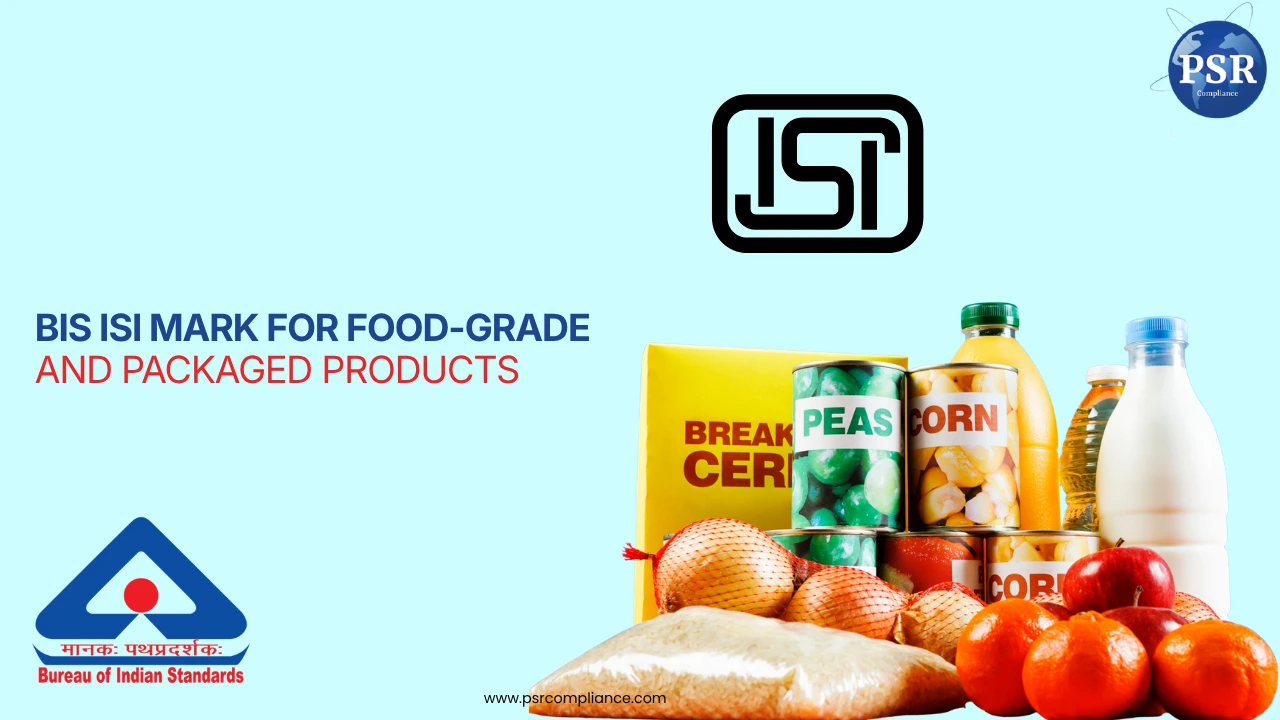
BIS ISI Mark for Food-Grade and Packaged Products
Every day, millions of Indians buy packaged food, bottled water, and food-grade containers without knowing if they are truly safe. Substandard packaging can leak harmful chemicals into food. Poor quality bottled water can carry bacteria. Fake or low-quality products flood the market, putting consumers at serious risk. This is a real and growing problem, and the Indian government has taken strong steps to fix it through the Bureau of Indian Standards (BIS) and its ISI Mark certification system.
The solution is simple but powerful. When a product carries the ISI Mark, it means a government-approved authority has tested it, inspected the factory, and confirmed that the product meets India's safety and quality standards. For food-grade and packaged products specifically, this mark is not just a badge of honour, for many products it is the law. Whether you are a manufacturer of packaged drinking water, food-grade plastic containers, milk cans, or edible oil packaging, the BIS ISI Mark is your ticket to legal, trusted, and profitable business in India. This guide breaks down everything you need to know, in plain and simple language.
What is the BIS ISI Mark?
BIS stands for Bureau of Indian Standards. It is India's official body that sets quality and safety rules for products sold in the country. The ISI Mark (Indian Standards Institute Mark) is the symbol given to products that pass BIS testing and meet Indian Standards (IS codes).
When a food-grade or packaged product carries the ISI Mark, it tells the buyer: "This product has been tested. It is safe. It meets government standards." The ISI Mark is issued under what is called Scheme I of BIS certification. It is one of the oldest and most trusted quality marks in India.
Who Needs BIS ISI Certification for Food-Grade and Packaged Products?
If your business makes, imports, or sells any of the following, you very likely need BIS ISI certification :
Food and Beverage Manufacturers :
• Packaged drinking water and mineral water producers
• Packaged natural mineral water brands
• Milk and dairy product manufacturers using standardised containers
Packaging Material Manufacturers:
• Manufacturers of food-grade plastic containers, bottles, and pouches
• Makers of PET bottles used for water, juices, and soft drinks
• Producers of HDPE and LDPE packaging used in food storage
• Manufacturers of aluminium foil used for food wrapping
• Steel and tin containers used for edible oils, ghee, and spices
Equipment and Utensil Manufacturers :
• Stainless steel utensils and cookware
• Pressure cookers
• Food processing equipment that contacts food directly
• LPG cylinders (indirectly linked to food preparation safety)
Other Related Categories :
• Manufacturers of drinking water treatment systems
• Water storage tanks (HDPE water tanks used in homes and food businesses)
• Food colour and additive manufacturers
• Salt producers (iodised salt has specific BIS standards)
If your product falls under a Quality Control Order (QCO) issued by the Indian government, getting the ISI Mark is not optional, it is mandatory by law.
Key Products and Their Indian Standards (IS Codes)
| Product Category | Indian Standard (IS Code) |
|---|---|
| Packaged Drinking Water | IS 14543 |
| Packaged Natural Mineral Water | IS 13428 |
| Food Grade PET Bottles | IS 14252 |
| Stainless Steel Utensils | IS 14756 |
| Pressure Cookers | IS 2347 |
| HDPE Tanks (Water Storage) | IS 12701 |
| Iodised Salt | IS 7224 |
| Aluminium Foil for Food Use | IS 4580 |
| Edible Vegetable Oils (Certain Types) | Covered under separate QCOs |
FSSAI vs BIS : What is the Difference?
This is one of the most common questions from food business owners. Here is a simple explanation :
| Aspect | FSSAI | BIS |
|---|---|---|
| Full Form | Food Safety and Standards Authority of India | Bureau of Indian Standards |
| Regulates | Food safety, ingredients, hygiene, labelling, and additives | Product quality, packaging, containers, and specified food products |
| Focus Area | What is inside the food package | The package itself and specific regulated products |
| Main Objective | Ensure food is safe for consumption | Ensure products meet Indian quality and safety standards |
| Applicable To | Food manufacturers, processors, distributors, and sellers | Manufacturers of products covered under relevant Indian Standards and QCOs |
| Certification Type | FSSAI Registration or License | BIS ISI Certification |
| Authority | Ministry of Health & Family Welfare | Ministry of Consumer Affairs, Food & Public Distribution |
Benefits of Getting BIS ISI Certification
Getting certified is not just about following rules. It brings real advantages :
➜ Legal Right to Sell
For products under QCOs, you cannot legally manufacture or sell without the ISI Mark. Certification keeps your business safe from legal action.
➜ Consumer Trust
Customers and retailers recognise the ISI Mark. It signals reliability, which can directly improve your sales.
➜ Better Market Access
Government tenders, institutional buyers, and large retail chains often require BIS certified products. Without it, you miss these opportunities.
➜ Quality Improvement
The certification process forces you to build better internal quality controls, which reduces wastage and defects in production.
➜ Export Potential
An ISI Mark shows international buyers that your product meets recognised standards, making exports easier.
➜ Protection Against Fake Goods
Your certified products are registered in the BIS database, making it harder for counterfeit products to imitate your brand without consequences.
➜ MSME Benefits
Small manufacturers with BIS certification enjoy better access to government schemes, loans, and support programmes..
Eligibility for BIS ISI Certification
Before applying, make sure you qualify :
▸ Only manufacturers with an actual production facility in India are eligible for the ISI Mark under Scheme I
Traders, distributors, and retailers cannot apply on their own
▸ A separate application is needed for each product and each factory location
▸ The factory must have qualified quality control staff
▸ The factory must have either in-house testing equipment or documented access to a BIS-approved laboratory
All production must happen at the same declared unit, from raw material to final packaging (outsourcing needs prior BIS approval)
The BIS ISI Certification Process : Step by Step
Step 1: Find Your IS Code
Identify the correct Indian Standard that applies to your product. You can check the BIS website (bis.gov.in) or consult a certified BIS consultant.
Step 2: Set Up Your Factory for Compliance
Your production unit must meet the requirements laid out in the relevant Product Manual issued by BIS. This includes machinery, testing equipment, and trained staff.
Step 3: Get Your Product Pre-Tested
Send product samples to a BIS-recognised laboratory for testing. This is required before you apply. Make sure the test report confirms your product meets the IS standard.
Step 4: Submit Your Application Online
Apply on the BIS Manak Online portal (manakonline.in). Fill in details about your company, factory, product, and upload all required documents along with the applicable fees.
Step 5: Factory Inspection
BIS officials will visit your manufacturing unit. They will check your machinery, production process, quality control systems, and testing facilities. Be fully prepared with documentation and clean, compliant operations.
Step 6: Product Sample Testing
Inspectors may collect fresh product samples during the factory visit and send them to a BIS-approved lab for independent testing.
Step 7: License Grant
If everything passes, BIS grants you the ISI Mark license. You can now legally print the ISI Mark on your product along with your CM/L number (your unique license code).
The Normal Procedure takes around 60 to 65 days. The Simplified Procedure (for products with pre-tested lab reports) takes about 35 to 40 days.
Documents Required
Keep these documents ready before applying :
→ Completed BIS application form (Form V or VI)
→ Business registration certificate (GST, Udyam/MSME registration)
→ Factory license or municipal trade license
→ Layout plan of the manufacturing premises
→ List of manufacturing machinery and testing equipment
→ Manufacturing process flowchart
→ Calibration certificates for testing instruments
→ Test report from a BIS-recognised laboratory
→ Details of in-house quality control staff
→ Raw material purchase invoices
→ Photographs of the product and its packaging
→ Declaration of conformity to Indian Standards
→ Power of Attorney or authorisation letter
Cost of BIS ISI Certification
Costs vary based on product category and factory size, but here is a general idea :
- Application Fee : ₹1,000
- Factory Inspection Charges : approximately ₹7,000 per day
- Annual License Fee : ₹1,000
- Marking Fee : Based on production volume and product type
- Laboratory Testing Charges : Varies by product (typically ₹10,000 to ₹50,000 or more)
- Total Estimated Range : ₹50,000 to ₹2,00,000 depending on product complexity
MSMEs may be eligible for reduced charges under government schemes.
Validity and Renewal
A BIS ISI license is initially granted for one year. After that, it can be renewed for up to five years at a time. BIS also conducts surprise surveillance inspections during the license period to ensure continued compliance. If quality drops or rules are violated, the license can be suspended or cancelled.
Penalties for Non-Compliance
Not having the ISI Mark for a mandated product is a serious offence under the BIS Act 2016. Manufacturing or selling a QCO-notified product without the ISI Mark can lead to a fine of up to ₹2 lakh for the first offence, while repeated violations may result in imprisonment of up to two years along with additional fines. Products may be seized and recalled from the market, and misusing the ISI Mark on an uncertified product is treated as fraud, attracting even stricter penalties. In severe cases, your business registration can also be cancelled. The government regularly conducts market surveillance and enforcement raids to identify violators, making the risk of non-compliance both real and increasingly significant.
Conclusion
The BIS ISI Mark for food-grade and packaged products is more than a government requirement, it is a promise to your customers that what you make is safe, tested, and trustworthy. With India's Quality Control Orders expanding rapidly to cover more product categories every year, getting certified early puts your business ahead of competitors and protects you from legal trouble. Whether you make bottled water, food-grade containers, cooking utensils, or packaging materials, BIS ISI certification is a smart and necessary investment in the future of your business.
Get Expert Help for BIS ISI Certification
Need help with BIS ISI Certification? PSR Compliance provides fast and hassle-free support for documentation, testing, and approval.
👉 Get your certification done quickly and correctly
📞 +91 8796104190
📧 support@psrcompliance.com
FAQs
Can a small home-based food business apply?
No. A proper, registered manufacturing unit is required. Home kitchens do not qualify.
Is the ISI Mark the same as FSSAI?
No. These are two different certifications from two different authorities. Many food businesses need both.
What happens if my product fails testing?
You must fix the issue and retest before BIS will grant the license. This is why factory readiness before applying matters.
Do I need a separate license for each product?
Yes. Each product and each factory location requires a separate BIS license.
Can a consultant help me apply?
Yes. BIS certified consultants can handle documentation, coordinate lab testing, and help prepare for factory inspection, saving you time and reducing errors.