Fri, Jul 03 2026
Raju Karn
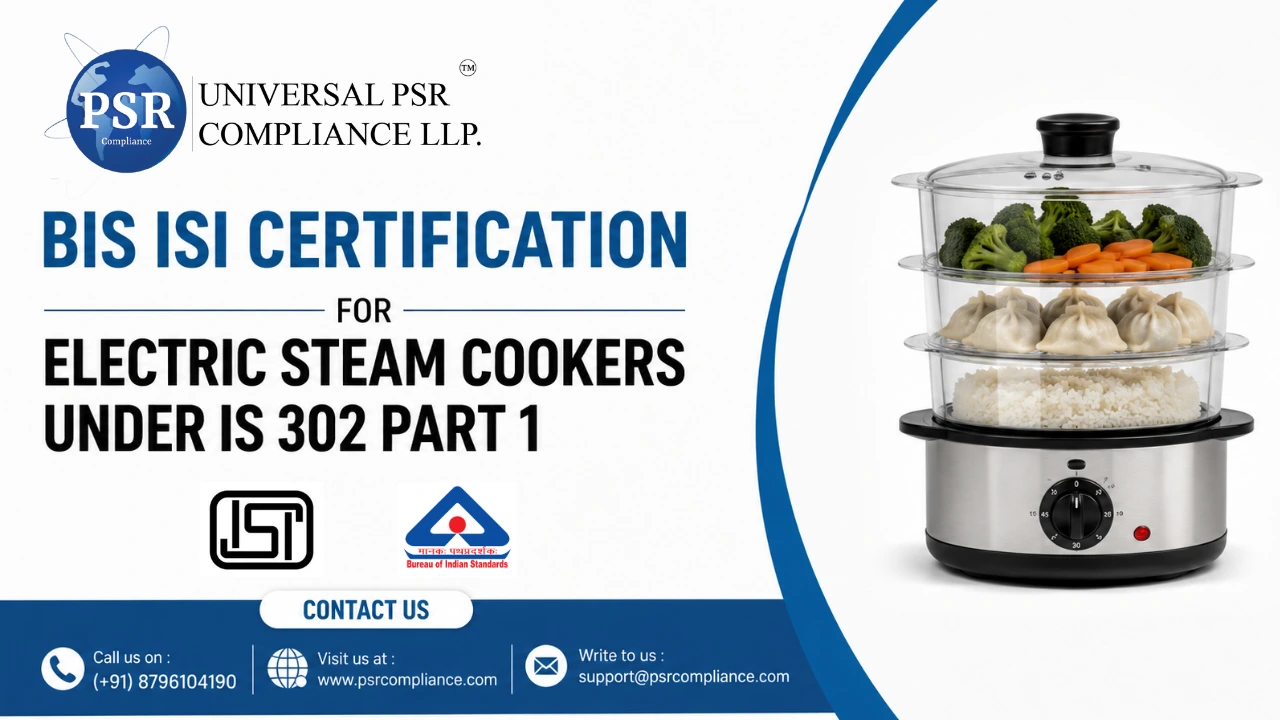
BIS ISI Certification for Electric Steam Cookers Under IS 302 Part
Electric steam cookers have quietly become a kitchen favorite in homes, restaurants, catering units, hostels, and community kitchens across India. People love them because they cook food faster, healthier, and with far less mess than traditional cooking methods. It feels like a simple and harmless appliance.
However, what many buyers and sellers overlook is that an electric steam cooker combines high heat, steam pressure, and electricity inside one compact appliance. This combination makes electrical safety extremely important. Under the Safety of Household, Commercial and Similar Electrical Appliances Quality Control Order, electric steam cookers must comply with IS 302 (Part 1): 2024, which aligns with IEC 60335-1:2020. From 19 March 2026, obtaining BIS ISI Certification became mandatory for general enterprises. Without a valid BIS licence and the ISI Mark, electric steam cookers cannot be manufactured, imported, or sold in India.
Why This Suddenly Matters So Much
Think about what happens inside an electric steam cooker during operation. It heats water to generate steam, builds pressure, and manages the entire process using electrical components packed into a compact unit. If any of these components are poorly designed or manufactured, they can create serious hazards such as overheating, electrical leakage, fire, or pressure-related failures that may injure the user.
This is exactly why the Government of India has brought electric steam cookers under the BIS certification framework. Rather than being just another regulatory requirement, the objective is to ensure that every appliance placed on the market meets essential electrical safety standards and provides reliable protection for consumers in homes as well as commercial kitchens.
The Risk Is Hidden Inside the Product
An electric steam cooker may appear safe from the outside, but its actual safety depends on the quality of its internal components.
It may include:
- Heating element
- Water tank or steaming chamber
- Thermostat
- Switches
- Internal wiring
- Plug and power cord
- Control board
- Steam outlet
- Plastic or stainless-steel body
- Safety cut-off system
If the product is poorly designed or manufactured, users may face electric shock, overheating, steam burns, water leakage, short circuits, plastic melting, or heating failure. In commercial environments such as hostels, cloud kitchens, or catering units where these appliances operate continuously, even a minor defect can result in equipment failure, customer injuries, operational losses, and significant brand damage. BIS ISI Certification helps ensure that the product has been tested for Indian electrical safety requirements and that the manufacturer maintains consistent quality across every unit.
What IS 302 (Part 1): 2024 Covers
IS 302 (Part 1): 2024 applies to much more than household electric steam cookers. The standard covers household appliances operating on single-phase power up to 250V, along with commercial and semi-commercial appliances operating up to 480V, including certain DC and battery-operated variants where applicable.
The objective is to establish a single safety benchmark for all manufacturers, whether the appliance is manufactured in India or imported. This ensures that homes, restaurants, hotels, hostels, catering businesses, and institutional kitchens receive products that meet uniform electrical safety requirements.
What the BIS Certification Process Involves
Obtaining BIS ISI Certification for electric steam cookers is a structured process under Scheme-I of the BIS Conformity Assessment Regulations. Businesses must submit a complete application along with technical documentation, after which the product undergoes testing at a BIS-recognized laboratory. Once the product successfully meets the applicable requirements, BIS officials conduct a factory inspection to verify manufacturing processes, quality control systems, testing facilities, and production consistency before granting the licence.
The product is generally evaluated for several important safety parameters, including:
- Protection against electric shock
- Heating performance
- Abnormal operation safety
- Input power and current verification
- Insulation resistance
- Leakage current
- Pressure safety
- Mechanical strength
- Durability
- Stability
Each test is designed to identify possible safety failures before the product reaches consumers.
The Commercial Reason to Start Early
Many businesses view BIS certification only as a legal obligation. In reality, for electric steam cookers, it is also an important business strategy. Delaying certification can directly affect product launches, imports, marketplace approvals, dealer confidence, and institutional sales.
Businesses may face:
- Product launch delays
- Marketplace listing restrictions
- Import shipment issues
- Dealer hesitation
- Packaging rework
- Failed sample testing
- User manual corrections
- Bulk buyer rejection
Kitchen appliances experience peak demand during festive seasons, wedding seasons, and large e-commerce sales. Completing the BIS process well in advance helps businesses capitalize on these high-demand periods without unnecessary compliance-related delays.
BIS Implementation Timeline for Electric Steam Cookers
The implementation timeline differs based on the size of the enterprise.
- General Enterprises: 19 March 2026
- Small Enterprises: 19 June 2026
- Micro Enterprises: 19 September 2026
The phased implementation provides additional time for smaller businesses to complete product testing, documentation, factory inspections, and licensing. Nevertheless, businesses should begin preparations early to avoid last-minute bottlenecks.
Why BIS Certification Is a Business Opportunity
Many businesses see certification purely as a regulatory expense. In reality, it has become an important competitive advantage. Retailers, distributors, institutional buyers, and e-commerce platforms increasingly prefer certified products because they reduce legal and safety risks.
BIS-certified electric steam cookers can help businesses achieve:
- Greater customer confidence
- Better dealer acceptance
- Easier marketplace approvals
- Stronger institutional sales
- Hotel and catering project opportunities
- Smoother import clearance
- Improved brand credibility
- Better export opportunities through internationally aligned safety standards
Instead of being viewed as a compliance burden, BIS certification can become an important part of a brand's quality and trust-building strategy.
What Happens If You Skip BIS Certification?
Selling uncertified electric steam cookers after the applicable enforcement date can result in serious legal and commercial consequences. Under the Bureau of Indian Standards Act, 2016, authorities may impose financial penalties, seize non-compliant products, initiate legal action, and prohibit businesses from manufacturing, importing, or selling covered products.
Beyond legal action, businesses also risk losing distributors, institutional customers, online marketplace approvals, and long-term customer trust.
Electric Steam Cookers Are Part of a Larger Compliance Initiative
Electric steam cookers are not the only appliances covered under the latest Quality Control Order. Several other household and commercial electrical appliances are also required to comply with IS 302 (Part 1): 2024, including electric coffee makers, microwave ovens, tumbler dryers, and many other kitchen appliances.
Businesses dealing with multiple electrical appliances should review their complete product portfolio together instead of handling compliance separately for each product category.
Final Takeaway
Electric steam cookers have become an essential appliance in both domestic and commercial kitchens because they make cooking healthier, faster, and more efficient. However, because they combine electricity, steam, and pressure within a single appliance, they also require strict electrical safety compliance.
For manufacturers, importers, distributors, private-label brands, and commercial kitchen equipment suppliers, BIS ISI Certification under IS 302 (Part 1): 2024 is no longer optional—it is a legal requirement and a valuable business asset. Starting the certification process early by preparing documentation, testing products, reviewing labels, and ensuring factory readiness can help businesses avoid delays while strengthening customer confidence and market competitiveness.
Get Expert Help with BIS ISI Certification for Electric Steam Cookers
Need assistance with BIS ISI Certification under IS 302 (Part 1): 2024 for electric steam cookers? PSR Compliance provides complete end-to-end support—from documentation and application filing to product testing, factory inspection, and final BIS licence approval.
👉 Ensure faster approvals and hassle-free compliance with expert guidance.
📞 +91 8796104190
📧 support@psrcompliance.com
Frequently Asked Questions (FAQs)
1. Is BIS ISI Certification mandatory for electric steam cookers?
Yes. Electric steam cookers covered under the Quality Control Order (QCO) must comply with IS 302 (Part 1): 2024 and obtain a valid BIS licence with the ISI Mark before they can be manufactured, imported, or sold in India.
2. Which Indian Standard applies to electric steam cookers?
Electric steam cookers must conform to IS 302 (Part 1): 2024, which specifies the general safety requirements for household, commercial, and similar electrical appliances.
3. Who needs BIS Certification for electric steam cookers?
Indian manufacturers, foreign manufacturers, importers, private-label brands, distributors, wholesalers, retailers, and e-commerce sellers dealing with covered electric steam cookers should ensure BIS compliance.
4. What documents are required for BIS ISI Certification?
Commonly required documents include company registration certificates, factory details, product specifications, model lists, electrical ratings, manufacturing process details, quality control documents, product labels, user manuals, and testing information.
5. What tests are conducted during BIS certification?
Electric steam cookers are generally tested for protection against electric shock, heating performance, abnormal operation, insulation resistance, leakage current, pressure safety, mechanical strength, durability, and overall electrical safety.
6. Can imported electric steam cookers be sold in India without BIS Certification?
No. Imported electric steam cookers covered under the QCO must obtain BIS Certification before they can be legally imported, distributed, or sold in the Indian market.
7. Why should businesses start the BIS certification process early?
Starting early helps businesses avoid testing delays, factory inspection issues, import clearance problems, packaging changes, marketplace restrictions, and missed sales opportunities during peak demand seasons.
8. How can PSR Compliance help with BIS ISI Certification?
PSR Compliance offers complete assistance, including product applicability assessment, documentation, testing coordination, BIS application filing, factory inspection preparation, query handling, licence approval, and ongoing compliance support.