Mon, Jun 15 2026
Raju Karn
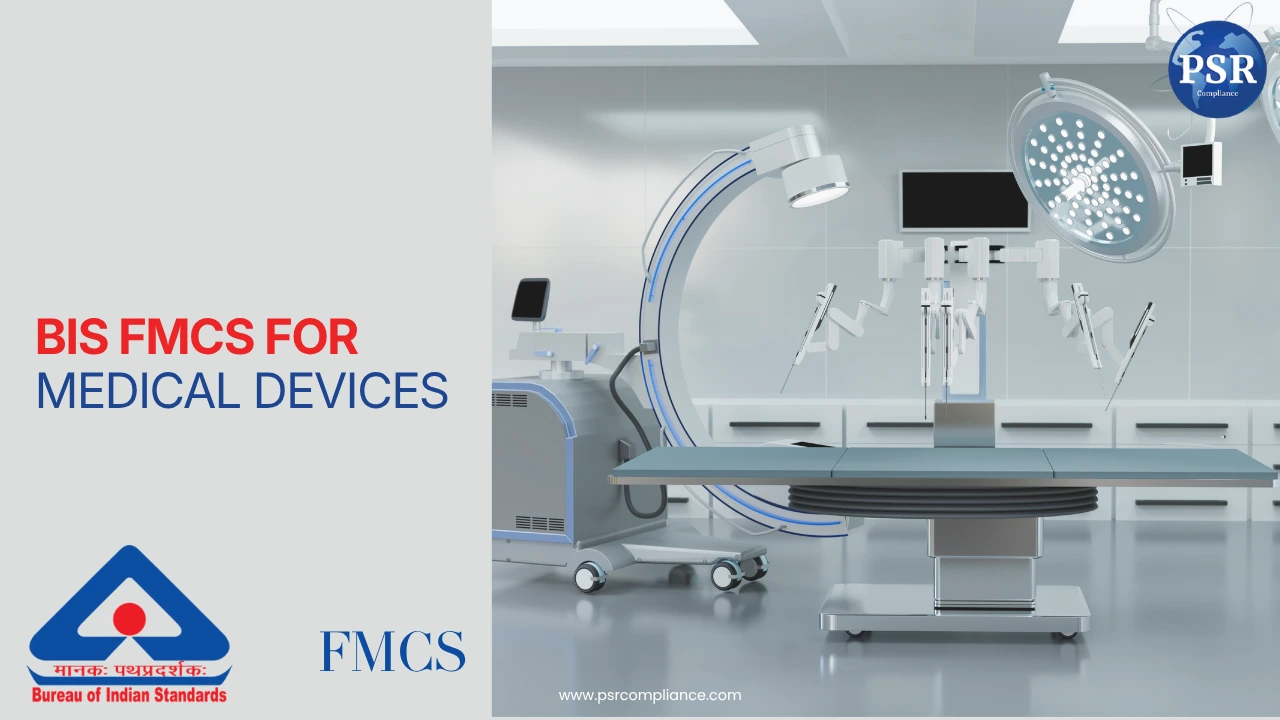
BIS FMCS for Medical Devices : Everything You Need to Know
What Is BIS FMCS and Why Does It Matter?
If you are a foreign company that makes medical devices and wants to sell them in India, there is one certificate you absolutely cannot ignore, the BIS FMCS Certificate. BIS stands for Bureau of Indian Standards. It is India's national body that sets product quality and safety rules. It works under the Ministry of Consumer Affairs.
FMCS stands for Foreign Manufacturers Certification Scheme. This is the special path created by BIS specifically for companies that manufacture products outside India but want to sell those products inside India.
In simple words, BIS FMCS is like a quality passport that a foreign medical device maker must get before their product is allowed into the Indian market. Without this certification, your product cannot legally be sold, imported, or distributed in India. Period.
Who Needs BIS FMCS Certification?
BIS FMCS is meant for foreign manufacturers, companies or factories located outside India that produce goods they want to sell in India.
If you are an Indian company, you apply under a different scheme called ISI Mark Certification. But if your manufacturing unit is overseas, FMCS is your route.
Here is who specifically needs BIS FMCS for medical devices:
● Foreign companies manufacturing medical devices that fall under India's mandatory BIS compliance list
● Importers bringing in medical equipment from overseas brands (the foreign manufacturer must hold the certificate)
● OEM (Original Equipment Manufacturer) companies based outside India
● Any overseas business selling electrical or electronic medical equipment in India
Which Products and Sectors Need BIS FMCS?
This is one of the most searched questions and rightly so. BIS compliance in India is not just for medical devices. However, for this guide, we focus on the medical and healthcare sector.
The following types of medical devices and equipment are covered under mandatory BIS standards:
Medical Imaging Equipment
- MRI Machines
- CT Scan Units
- PET Scan Machines
- X-Ray Equipment (diagnostic and therapeutic)
Patient Monitoring and Life Support
- Cardiac Monitors / ECG Machines
- Pulse Oximeters
- Infusion Pumps
- Ventilators and Respiratory Equipment
- Defibrillators
Surgical and Electrosurgical Devices
- Electrosurgical Units (ESUs)
- Surgical Lamps / OT Lights
- Laser Surgical Equipment
Diagnostic Laboratory Equipment
- Blood Analyzers
- Biochemistry Analyzers
- Hematology Analyzers
- PCR Machines and Diagnostic Kits (selected categories)
General and Physical Medical Equipment
- Electronic Weighing Machines (used in hospitals)
- Patient Beds with Electronic Controls
- Dental Equipment
- Veterinary Medical Devices
Power and Charging Products Used in Healthcare
- Power Banks used with medical equipment
- Power Adapters for medical-grade devices
- Laptop Chargers used in clinical/diagnostic settings
Note: Even non-medical categories like power banks (BIS CRS registration), power adapters (BIS CRS), and laptop chargers (BIS CRS) require BIS certification in India if they are sold here. For medical-grade versions of these products, FMCS applies.
By December 2025, over 214 medical device categories are expected to fall under mandatory BIS certification scope in India.
BIS FMCS vs. ISI vs. CRS – What's the Difference?
| Parameter | BIS FMCS | ISI Certification | BIS CRS Registration |
|---|---|---|---|
| Full Form | Foreign Manufacturers Certification Scheme | Indian Standards Institute Certification | Compulsory Registration Scheme |
| Applicable To | Foreign manufacturers located outside India | Indian manufacturers located in India | Manufacturers of notified electronic and IT products |
| Target Products | Medical devices, industrial products, and other mandatory BIS products manufactured overseas | Products manufactured within India requiring mandatory BIS certification | Electronics and electrical products such as power banks, power adapters, LED lights, and laptop chargers |
| Factory Location | Outside India | Inside India | India or Overseas |
| Factory Inspection Required | Yes | Yes | No |
| Product Testing Required | Yes, through BIS-recognized laboratories | Yes, through BIS-recognized laboratories | Yes, through BIS-recognized laboratories |
| Certification Mark Granted | ISI Mark | ISI Mark | CRS Registration Number (R-number) |
| Indian Representative Required | Yes, Authorized Indian Representative (AIR) is mandatory | No | Yes, for foreign manufacturers |
| Factory Audit by BIS | Mandatory overseas factory inspection | Mandatory factory inspection in India | Not required |
| Typical Timeline | 5–6 months | 3–6 months | 2–6 weeks |
| Suitable For | Foreign medical device manufacturers and overseas product makers entering the Indian market | Indian manufacturers seeking BIS certification | Electronic and IT products notified under CRS regulations |
| Examples | MRI machines, CT scanners, ventilators, diagnostic equipment | Cement, steel products, packaged drinking water, domestic appliances | Power banks, power adapters, laptop chargers, LED products, mobile phones |
Step-by-Step BIS FMCS Application Process
Step 1: Identify Applicable Indian Standards
Check which IS (Indian Standard) number applies to your device. For example, electrical safety for medical equipment may fall under IS/IEC 60601 series.
Step 2: Fill and Submit the Application
Log in to the BIS online portal (Manakonline). Select FMCS under the certification tab. Fill in your company details, product details, and manufacturing unit information.
Step 3: Product Sample Testing
Send samples of your medical device to a BIS-recognized laboratory in India. These labs test for safety, performance, electromagnetic compatibility (EMC/EMI), and other relevant standards. The lab must hold ISO/IEC 17025 accreditation and valid BIS recognition.
Step 4: Factory Inspection Overseas
A BIS-appointed inspector will visit your manufacturing facility abroad. They will check:
Production processes and flow
Quality control systems
Testing equipment and calibration records
In-house testing capability
Step 5: Review of Test Reports
BIS reviews your product test reports and factory inspection findings. If everything meets Indian Standards, they move to the next step.
Step 6: Pay License Fee
Submit the applicable license fee via the BIS portal. Fees vary by product category.
Step 7: Pay Performance Bank Guarantee
Foreign manufacturers are required to submit a performance bank guarantee. This ensures ongoing compliance after certification is granted.
Step 8: Pay Minimum Marking Fee
Pay the minimum annual marking fee, which covers the cost of displaying the ISI mark on your product.
Step 9: FMCS Certificate Issued
Once all steps are complete and approved, BIS issues the FMCS License. Your product can now carry the ISI mark and be legally sold in India.
Total Timeline: The complete process usually takes 5 to 6 months, depending on your product category and lab testing schedule.
Documents Required for BIS FMCS Certification
Keep the following documents ready before you apply:
→ Factory registration documents of the overseas manufacturing unit
→ Laboratory test reports from a BIS-recognized testing lab
→ Quality control procedures of the manufacturing premises
→ Testing facilities details at your factory
→ In-house manufacturing and outsourcing agreements
→ ISO 13485 certificate (Quality Management System for medical devices)
→ Reference country approval certificate (CE mark, FDA clearance, etc.)
→ Product technical file including specifications, design details, labeling, and intended use
→ Authorization letter from manufacturer to the Indian agent
→ Indian agent nomination form and contact details
→ Risk analysis documentation
→ Manufacturing process flow chart (raw material to finished product)
Benefits of Getting BIS FMCS Certification
Why should a foreign company go through the effort of getting BIS FMCS? Here are the key benefits:
Legal Market Entry
Without FMCS, your product cannot be legally imported or sold in India. Certification gives you complete legal access to one of the world's largest and fastest-growing healthcare markets.
ISI Mark on Your Product
Once certified, you can display the ISI Mark — India's most recognized quality mark. This builds immediate trust with hospitals, clinics, and procurement officers.
Consumer and Institutional Trust
Indian hospitals and government buyers strongly prefer products with BIS compliance. It directly improves your sales and tender eligibility.
Stronger CDSCO Application
BIS test reports significantly strengthen your submissions to the Central Drugs Standard Control Organisation (CDSCO), which handles medical device licensing in India.
Global Credibility
Having BIS FMCS alongside CE or FDA certifications demonstrates multi-market compliance and boosts your brand's international reputation.
Eligibility for Public Procurement
Government hospitals, AIIMS, ESIC, and state health departments require BIS certification for vendor empanelment and tenders.
Reduces Risk of Product Recalls
Since products go through rigorous testing, manufacturing defects are caught early — protecting patients and your brand.
Post-Approval Requirements
Getting the certificate is not the end, it is the beginning of ongoing compliance. Here is what you must do after receiving your BIS FMCS certificate:
Validity and Renewal
BIS FMCS certificates are valid for 2 years. You must apply for renewal before expiry through the BIS portal.
Surveillance Inspections
BIS may conduct random surveillance inspections of your overseas facility to ensure production quality has not dropped.
Batch Testing / Market Surveillance
BIS may pick up random samples from the Indian market and send them for testing. Your product must always pass.
Maintain Quality Records
Keep all calibration certificates, testing records, production logs, and quality control documents updated and accessible for audits.
Report Changes to BIS
If you make any significant changes to your product design, manufacturing process, or facility, you must inform BIS immediately. Failing to do so can lead to suspension of your license.
Annual Marking Fee Payment
You must pay the annual minimum marking fee every year to maintain your right to display the ISI mark.
Keep Indian Agent Updated
Your Indian agent's details must remain accurate and active. Any change in the Indian agent must be updated with BIS promptly.
Penalties for Non-Compliance
This is critical. Non-compliance with BIS regulations is not just a business problem, it can become a legal problem.
Under the Bureau of Indian Standards Act, 2016, the following penalties apply:
Selling Products Without BIS Certification (When Mandatory)
Imprisonment of up to 2 years and/or a fine of up to ₹2 lakh, or five times the value of goods, whichever is higher.
Using the ISI Mark Without a Valid License
This is considered misuse of a government mark. It can result in heavy fines and criminal prosecution.
Importing Non-Certified Goods
Customs authorities can seize the entire consignment. Clearance will not be given until valid BIS certification is presented.
Failure to Report Product Changes
BIS can suspend or cancel your license immediately. Re-application from scratch would be required.
Supplying Substandard Certified Products
If BIS surveillance testing finds your product fails standards despite having a certificate, your license can be cancelled and legal action initiated.
The bottom line is that BIS compliance in India is not optional. Non-compliance carries financial, legal, and reputational consequences that can shut down your entire India business.
Conclusion
BIS FMCS certification is the gateway for any foreign medical device manufacturer to enter and grow in India's healthcare market. It is not just a legal requirement, it is proof that your product meets Indian safety standards and is safe for patients.
From imaging equipment and surgical devices to diagnostic lab tools and medical-grade power accessories, the scope of BIS compliance in India continues to grow every year. Whether you are already selling in India or planning to, securing your BIS FMCS certification should be your first step.
The process takes time — but with the right documentation, the right lab partner, and expert guidance, it is very much achievable.
Get Expert Help for BIS FMCS Certification
Need assistance with BIS FMCS Certification for medical devices? PSR Compliance offers end-to-end support for documentation, product testing, factory inspections, and BIS approval.
👉 Simplify your BIS FMCS certification process with expert guidance
📞 +91 8796104190
📧 support@psrcompliance.com
(FAQs)
Q1. Is BIS FMCS mandatory for all medical devices sold in India?
Yes, for devices listed under mandatory BIS standards, FMCS certification is compulsory for all foreign manufacturers. By 2025, this covers 214+ device categories.
Q2. Can CDSCO approval replace BIS FMCS?
No. CDSCO handles regulatory and clinical licensing, while BIS handles safety and quality standards. Both are separate and both may be required.
Q3. How long does the FMCS process take?
Typically 5 to 6 months, depending on product complexity, lab testing schedules, and inspector availability.
Q4. What is the validity of BIS FMCS certification?
BIS FMCS certificates are valid for 2 years and must be renewed on time.
Q5. Do Indian importers need to do anything separately?
The certification must be held by the foreign manufacturer. However, the Indian importer is responsible for ensuring the product they import has valid BIS certification.
Q6. Can BIS lab test reports be used for international submissions?
Yes, if the lab is accredited under ISO/IEC 17025 and operates under the ILAC MRA (Mutual Recognition Arrangement) framework.
Q7. What happens if I import a medical device without BIS FMCS?
The product will be treated as non-compliant. Customs can seize the shipment, and you may face legal penalties.
Q8. Is ISO 13485 required for BIS FMCS?
Yes, ISO 13485 (Quality Management System for medical devices) is one of the key documents required for the BIS FMCS application.