Mon, Jun 15 2026
Utkarsh Sharma
BIS Certification Requirements for Startups Launching Electronic Products in India
India's electronics market is growing rapidly, creating exciting opportunities for startups developing innovative products such as smartwatches, LED lights, CCTV cameras, power banks, mobile accessories, and smart home devices. However, before launching these products in the Indian market, startups must ensure compliance with mandatory regulatory requirements.
One of the most important requirements is obtaining BIS certification for electronics product categories covered under the Compulsory Registration Scheme (CRS) of the Bureau of Indian Standards (BIS).
Many startups focus heavily on product development, marketing, and funding but often overlook compliance requirements. This mistake can result in delayed product launches, customs clearance issues, penalties, and even product recalls.
This guide explains everything startups need to know about BIS certification requirements before launching electronic products in India.
What is BIS Certification?
BIS certification is a quality and safety certification issued by the Bureau of Indian Standards, India's national standards body.
The certification ensures that products comply with Indian safety, quality, and performance standards before being sold in the market.
For electronic and IT products, BIS operates the Compulsory Registration Scheme (CRS), under which manufacturers must register their products before sale, import, or distribution in India.
The primary objective of BIS certification is to:
- Ensure consumer safety
- Improve product quality
- Prevent substandard products from entering the market
- Promote trust in electronic products
- Maintain compliance with Indian regulations
Why is BIS Certification Important for Startups?
For startups, launching a product quickly is important. However, entering the market without proper certification can create serious business risks.
Legal Compliance
Many electronic products cannot be sold legally in India without BIS approval. Non-compliance may lead to regulatory action and product seizures.
Market Credibility
Consumers prefer products that meet recognized safety standards. BIS registration improves customer confidence and brand reputation.
Smooth Import Process
Startups importing products from overseas manufacturers need BIS registration to clear customs smoothly.
Investor Confidence
Investors often evaluate regulatory compliance before funding hardware and electronics startups.
Reduced Business Risks
Proper certification minimizes the risk of legal disputes, recalls, and regulatory penalties.
Which Electronic Products Require BIS Certification?
The Indian government has made BIS registration mandatory for several electronic and IT products.
Some commonly registered products include:
LED Lighting Products
Startups manufacturing or importing LED lighting solutions often require bis certification for led lights before selling them in India.
Examples include:
- LED lamps
- LED modules
- LED control gear
- LED lighting systems
Smart Watches
Wearable technology startups launching smart devices may require bis certification for smart watch products depending on product specifications and applicable standards.
CCTV Cameras
Security technology companies manufacturing surveillance equipment frequently need bis certification for cctv camera products before entering the market.
Other Electronic Products
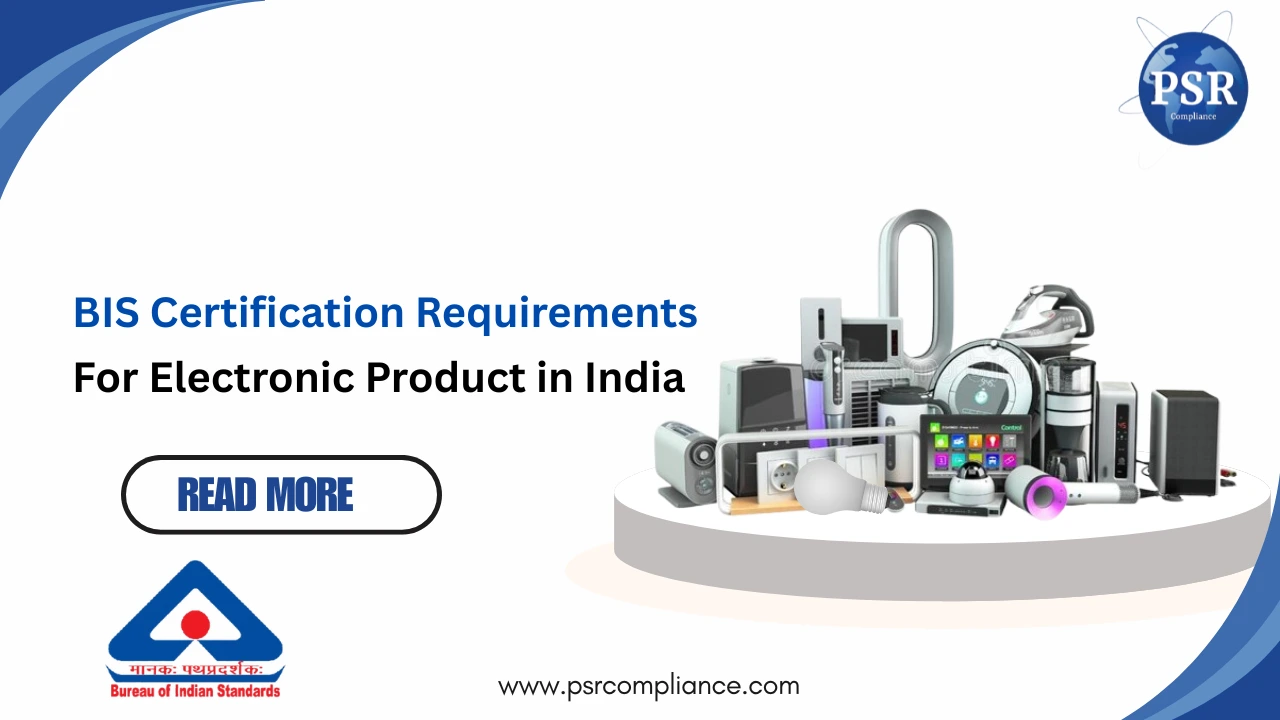
Several categories fall under bis certification for electronics items, including:
- Mobile phones
- Power banks
- Wireless keyboards
- Laptops
- Tablets
- Smart speakers
- Smart home devices
- USB chargers
- Electronic displays
- Set-top boxes
- Audio equipment
The BIS CRS list is regularly updated, making it important for startups to verify whether their product category is covered.
Major Electronics Manufacturing Cities in India
India has emerged as a global electronics manufacturing hub, with several cities contributing significantly to the production of smartphones, consumer electronics, telecom equipment, semiconductors, and industrial electronic products. These manufacturing clusters play a vital role in supporting the country's growing electronics industry and E-Waste management ecosystem.
| City | State | Major Electronic Products |
| Noida | Uttar Pradesh | Mobile phones, LED TVs, laptops, consumer electronics |
| Greater Noida | Uttar Pradesh | Smartphones, semiconductors, electronic components |
| Bengaluru | Karnataka | IT hardware, telecom equipment, semiconductors, aerospace electronics |
| Chennai | Tamil Nadu | Mobile phones, consumer electronics, telecom equipment |
| Hyderabad | Telangana | Electronic hardware, semiconductor manufacturing, defense electronics |
| Pune | Maharashtra | Automotive electronics, industrial electronics |
| Mumbai | Maharashtra | Consumer electronics, electronic trading and distribution |
| Ahmedabad | Gujarat | Electronic components, industrial electronics |
| Gandhinagar | Gujarat | Semiconductor and electronics manufacturing |
| Surat | Gujarat | LED lighting products, electrical equipment |
| Kolkata | West Bengal | Consumer electronics, electrical goods |
| Delhi | Delhi | Electronic assembly, distribution, trading |
| Faridabad | Haryana | Electronic components, industrial electronics |
| Gurugram | Haryana | Telecom equipment, consumer electronics |
| Mohali | Punjab | Semiconductor design, electronics manufacturing |
| Mysuru | Karnataka | Defense electronics, communication equipment |
Who Needs BIS Certification?
A common misconception is that only large manufacturers need certification.
In reality, BIS registration applies to:
Indian Manufacturers
Companies manufacturing electronic products within India.
Foreign Manufacturers
Overseas manufacturers exporting products to India.
Startup Brands
Even if manufacturing is outsourced, startups selling products under their own brand may need to ensure compliance.
Importers
Businesses importing electronic goods into India must ensure products possess valid BIS registration.
BIS Certification Requirements for Startups
Before applying, startups should understand the key requirements involved in the certification process.
1. Product Identification
The first step is identifying whether the product falls under the mandatory BIS CRS category.
Different products are covered under different Indian Standards (IS standards).
2. Product Testing
The product must be tested in a BIS-recognized laboratory.
Testing verifies:
- Electrical safety
- Performance parameters
- Product reliability
- Compliance with applicable standards
The testing report serves as a critical document during the registration process.
3. Manufacturer Information
BIS registration is generally granted to the manufacturer rather than the importer or seller.
The application requires:
- Manufacturing unit details
- Factory address
- Production information
- Quality control procedures
4. Technical Documentation
Startups must prepare technical documents, including:
- Product specifications
- Circuit diagrams
- Product labels
- User manuals
- Test reports
5. Authorized Indian Representative (AIR)
Foreign manufacturers must appoint an Authorized Indian Representative (AIR) to coordinate with BIS authorities.
Documents Required for BIS Certification
The documentation requirements may vary depending on the product category and manufacturer location.
Commonly required documents include:
- Company registration certificate
- Manufacturing license
- Factory address proof
- Trademark certificate (if available)
- Product specifications
- Product photographs
- User manual
- Test reports
- Brand authorization letter
- Identity and address proof of authorized signatory
Accurate documentation significantly reduces approval delays.
Step-by-Step BIS Certification Process for Startups
Obtaining BIS Registration for electronic products is an essential step for startups planning to manufacture, import, or sell electronic devices in India. The certification process ensures that products comply with Indian safety and quality standards under the BIS Compulsory Registration Scheme (CRS). Understanding each step can help startups avoid delays and achieve faster market entry.
Step 1: Identify the Applicable Indian Standard (IS Standard)
The first step in the BIS process is determining whether your product falls under the mandatory BIS certification category. Different electronic products are governed by different Indian Standards (IS). For example, LED lights, smartwatches, CCTV cameras, power banks, laptops, and mobile phones may have separate standards and testing requirements.
Startups should carefully verify the applicable standard for their product before beginning the certification process. Choosing the wrong standard can lead to application rejection, additional testing costs, and delays in product launch.
Step 2: Product Testing at a BIS-Recognized Laboratory
Once the applicable standard has been identified, product samples must be submitted to a BIS-recognized laboratory for testing. The laboratory evaluates the product based on safety, performance, reliability, and quality requirements specified in the relevant Indian Standard.
The testing process may include:
- Electrical safety testing
- Performance evaluation
- Reliability assessment
- Component verification
- Quality compliance checks
After successful testing, the laboratory issues a test report, which is one of the most important documents required for BIS registration.
Step 3: Prepare Technical and Legal Documentation
Accurate documentation is critical for a successful BIS application. Startups must gather all required technical and legal documents before submitting the application.
Commonly required documents include:
- Company registration certificate
- Manufacturing license
- Factory address proof
- Product specifications
- Product photographs
- User manuals
- Circuit diagrams
- Trademark certificate (if applicable)
- BIS test report
- Authorization letters
Proper documentation helps reduce the chances of queries, objections, and application delays.
Step 4: Submit the Online BIS Application
After completing product testing and document preparation, the applicant must submit the BIS certificate application through the official BIS online portal. All required information, technical details, and supporting documents must be uploaded accurately.
During this stage, applicants should carefully review the application to ensure that all details match the testing report and supporting documents.
Step 5: BIS Review and Verification
Once the application is submitted, BIS officials review the documents and laboratory test reports. The authority verifies whether the product complies with the applicable Indian Standard and whether the submitted information is complete and accurate.
This stage is crucial because any inconsistencies or missing information may result in delays or requests for clarification.
Step 6: Clarification and Query Resolution
In some cases, BIS may seek additional information or clarification regarding the product, manufacturing process, or submitted documents. Startups must respond promptly to these queries to avoid unnecessary delays.
Common reasons for clarification requests include:
- Incomplete documentation
- Incorrect product classification
- Missing authorization letters
- Technical discrepancies in test reports
Timely responses can significantly improve the approval timeline.
Step 7: BIS Registration Approval
After successful verification of the application, BIS grants registration for the product under the applicable scheme. The manufacturer receives a unique BIS Registration Number that confirms compliance with Indian quality and safety standards.
This registration allows the product to be legally manufactured, imported, distributed, and sold in the Indian market.
Step 8: Product Marking and Market Launch
After receiving approval, the manufacturer can display the BIS Standard Mark and Registration Number on the product, packaging, labels, and user manuals as required.
The BIS mark serves as proof that the product complies with Indian standards and provides assurance to consumers regarding safety and quality. Once the marking requirements are fulfilled, startups can confidently launch their products in the Indian market.
Common Challenges Faced by Startups
Many startups encounter obstacles during certification.
Lack of Awareness
Founders often begin manufacturing without understanding compliance requirements.
Incorrect Product Classification
Selecting the wrong standard can delay approvals.
Incomplete Documentation
Missing documents frequently cause application rejections.
Testing Delays
Laboratory testing timelines may affect product launch schedules.
Multiple Product Variants
Different models may require separate evaluations depending on specifications.
BIS Registration Cost for Electronic Products in India
The cost of BIS registration for electronic products varies depending on the product category, testing requirements, number of models, and whether the manufacturer is located in India or overseas. Startups should budget for testing fees, government charges, documentation, and compliance support to ensure a smooth registration process.
| Cost Component | Estimated Cost (₹) |
|---|---|
| Product Testing in BIS-Recognized Lab | ₹25,000 – ₹1,50,000+ |
| BIS Application Fee | ₹1,000 per application |
| Annual Registration Fee | As per BIS norms |
| Documentation & Technical Preparation | ₹5,000 – ₹25,000 |
| Authorized Indian Representative (AIR) Charges (For Foreign Manufacturers) | ₹20,000 – ₹1,00,000+ |
| Compliance Consultancy Support | Varies by product and complexity |
| Product Retesting (If Required) | Additional charges applicable |
Penalties for Selling Non-Compliant Products
Selling regulated electronic products without BIS registration can result in:
- Product seizures
- Import restrictions
- Regulatory penalties
- Legal action
- Product recalls
- Reputation damage
For startups building a new brand, these issues can significantly impact growth and customer trust.
How PSR Compliance Can Help
Navigating BIS regulations can be challenging for startups, especially first-time manufacturers and importers.
PSR Compliance assists businesses with:
- Product category identification
- BIS applicability assessment
- Documentation support
- Testing coordination
- Application filing
- Compliance consulting
- Registration management
- End-to-end BIS certification assistance
With professional guidance, startups can focus on innovation while ensuring regulatory compliance.
📞 Call: 8796104190
📧 Email: support@psrcompliance.com
Conclusion
Obtaining BIS registration for electronics product categories is a critical step for startups planning to launch electronic devices in India. Whether your business is introducing LED lighting solutions, smart wearables, CCTV cameras, or other electronic products, compliance with BIS regulations helps ensure legal market access, customer trust, and long-term business success.
By understanding the certification process, preparing documentation correctly, and planning compliance activities early, startups can avoid delays and launch products confidently. Investing in BIS compliance today can protect your brand, strengthen customer confidence, and support sustainable growth in India's competitive electronics market.
Frequently Asked Questions (FAQs)
1. Is BIS certificate mandatory for all electronic products?
No. BIS certification is mandatory only for products covered under the BIS Compulsory Registration Scheme (CRS) and other notified categories.
2. Can a startup apply for BIS certification?
Yes. Startups, manufacturers, importers, and brand owners can initiate the certification process depending on the product category and business model.
3. How long does BIS certificate take?
The timeline depends on product testing, documentation quality, and application review. Proper preparation can significantly reduce delays.
4. Is BIS certification required for imported electronics?
Yes. Imported electronic products covered under mandatory regulations must have valid BIS registration before being sold in India.
5. Do LED lights require BIS certification?
Yes. Certain LED lighting products require bis certification for led lights under applicable BIS standards.
6. Is BIS registration required for smartwatches?
Depending on the product category and applicable standards, bis certification for smart watch devices may be required.
7. Do CCTV cameras need BIS certification?
Many surveillance products may require bis certificate for cctv camera compliance before market entry.
8. What documents are required for BIS registration?
Typical requirements include test reports, company registration documents, manufacturing details, technical specifications, and authorization documents.
9. Can one BIS certificate cover multiple products?
Not always. Different product categories or significant model variations may require separate registrations.
10. Why should startups seek professional compliance support?
Expert guidance helps reduce errors, avoid delays, improve approval chances, and streamline the entire certification process.