Mon, Jun 15 2026
Raju Karn
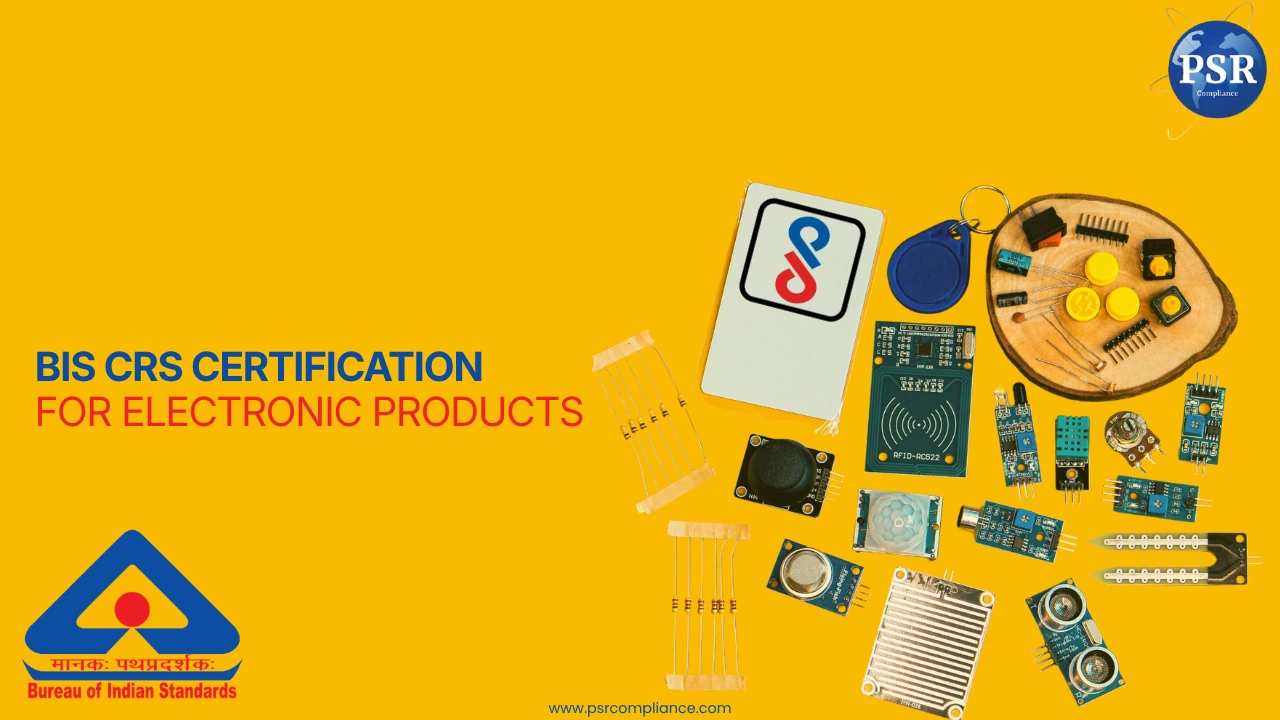
BIS CRS Certification for Electronic Products : IS/IEC 62368-1:2023
If you manufacture, import, or sell any electronic product in India : laptops, televisions, mobile phones, power banks, CCTV cameras, speakers, or chargers : there is a major update you cannot afford to ignore. The Bureau of Indian Standards (BIS) has officially announced a shift in the safety standard for electronic and IT products under the Compulsory Registration Scheme (CRS). The old standards, IS 13252 (Part 1):2010 and IS 616:2017, are being phased out and replaced by a single, modern, unified standard: IS/IEC 62368-1:2023.
This change was announced via a Ministry of Electronics and Information Technology (MeitY) notification in October 2025, and the detailed implementation guidelines were issued by BIS on 9 March 2026.
In simple words: if you are involved in selling electronics in India, your products must meet this new safety standard. The deadline to fully migrate is 1 November 2028. After that date, only IS/IEC 62368-1:2023 will be accepted. No exceptions.
What Is IS/IEC 62368-1:2023?
IS/IEC 62368-1:2023 is India's latest safety standard for audio/video (AV) and information technology (IT) equipment. It is based on the international IEC 62368-1:2023 standard, which means India's rules are now aligned with global safety practices followed by countries across Europe, the USA, South Korea, and Japan.
Unlike the older standards that focused on fixed design rules, this new standard uses a hazard-based safety approach. This means it focuses on identifying and preventing actual risks : such as electric shock, fire, and overheating : rather than just checking design boxes.
Think of it like this, the older standard would say "use this specific wire thickness." The new standard says "make sure the product does not catch fire, shock the user, or overheat : and here is how you prove it." This makes the standard both more flexible and more thorough.
IS/IEC 62368-1:2023 – Product Categories Covered
| Product Category | Description | Examples |
|---|---|---|
| IT Equipment | Information technology devices used for computing, data processing, and office work | Laptops, Printers, Servers, Scanners, Keyboards |
| Audio/Video Devices | Equipment used for audio output, video display, and entertainment purposes | Televisions, Speakers, Amplifiers, Bluetooth Speakers |
| Communication Devices | Devices used for wireless or wired communication and personal connectivity | Mobile Phones, Wireless Headphones, Smart Watches |
Who Needs BIS CRS Certification Under IS/IEC 62368-1:2023?
BIS CRS certification under this standard is required for anyone in the supply chain of electronic products sold in India. Here is a clear list:
Indian Manufacturers
Indian manufacturers producing electronic products within India.
Foreign Manufacturers
Foreign manufacturers (from China, South Korea, USA, Taiwan, and other countries) who wish to sell their products in the Indian market.
Importers
Importers who bring electronic goods into India.
Brand Owners
Brand owners who source products from third-party factories and sell under their own brand name.
E-Commerce Sellers
E-commerce sellers listing products on Amazon India, Flipkart, Meesho, Snapdeal, Tata Neu, or any other Indian platform.
Distributors and Wholesalers
Distributors and wholesalers supplying electronic goods to Indian retailers.
Important for Foreign Manufacturers
You must appoint an Authorised Indian Representative (AIR) : a legally registered entity in India : to handle your BIS coordination. Without an AIR, you cannot apply for BIS CRS registration in India.
Which Products and Sectors Require This Certification?
The IS/IEC 62368-1:2023 standard covers 38 product categories under BIS CRS. If your product falls in this list, certification is mandatory : no exceptions.
Electronic Games (Video)
- Electronic Games (Video) : replaces IS 616:2017
Computing and IT Equipment
- Laptops / Notebooks / Tablets : replaces IS 13252 (Part 1):2010
- Plasma / LCD / LED Television : replaces IS 616:2017 and IS 18112:2025
- Optical Disc Players (200W and above) : replaces IS 616:2017
- Visual Display Units / Video Monitors : replaces IS 13252 (Part 1):2010
- Printers / Multi-Function Devices / Plotters : replaces IS 13252 (Part 1):2010
- Scanners and Biometric Devices : replaces IS 13252 (Part 1):2010
- Wireless Keyboards : replaces IS 13252 (Part 1):2010
- Telephone Answering Machines : replaces IS 13252 (Part 1):2010
- Amplifiers (2000W and above) : replaces IS 616:2017
- Electronic Musical Systems : replaces IS 616:2017
- Set Top Boxes : replaces IS 13252 (Part 1):2010
- Automatic Data Processing Machines : replaces IS 13252 (Part 1):2010
- Power Adaptors for IT Equipment : replaces IS 13252 (Part 1):2010
- Power Adaptors for Audio/Video Equipment : replaces IS 616:2017
- Mobile Phones : replaces IS 13252 (Part 1):2010 and IS 16333 (Part 3):2022
- Cash Registers : replaces IS 13252 (Part 1):2010
- Point of Sale (POS) Terminals : replaces IS 13252 (Part 1):2010
- Copying Machines / Duplicators : replaces IS 13252 (Part 1):2010
- Smart Card Readers : replaces IS 13252 (Part 1):2010
- Mail / Postage / Franking Machines : replaces IS 13252 (Part 1):2010
- Passport Readers : replaces IS 13252 (Part 1):2010
- Power Banks : replaces IS 13252 (Part 1):2010
- CCTV Cameras and Recorders : replaces IS 13252 (Part 1):2010 plus Security Requirements
- Smart Watches : replaces IS 13252 (Part 1):2010
- Keyboards : replaces IS 13252 (Part 1):2010
- ATM Machines : replaces IS 13252 (Part 1):2010
- USB External Hard Disk Drives : replaces IS 13252 (Part 1):2010
- External SSD (above 256 GB) : replaces IS 13252 (Part 1):2010
Television and Audio/Video Equipment
- Plasma / LCD / LED Television : replaces IS 616:2017 and IS 18112:2025
- Optical Disc Players (200W and above) : replaces IS 616:2017
- Amplifiers (2000W and above) : replaces IS 616:2017
- Electronic Musical Systems : replaces IS 616:2017
- Televisions other than LCD/LED/Plasma : replaces IS 616:2017 and IS 18112:2025
- Wireless Microphones : replaces IS 616:2017
- Digital Cameras : replaces IS 13252 (Part 1):2010
- Video Cameras : replaces IS 616:2017
- Webcams : replaces IS 616:2017
- Smart Speakers (with and without display) : replaces IS 616:2017
- Bluetooth Speakers : replaces IS 616:2017
Mobile and Communication Devices
- Mobile Phones : replaces IS 13252 (Part 1):2010 and IS 16333 (Part 3):2022
- Smart Watches : replaces IS 13252 (Part 1):2010
- Wireless Headphones and Earphones : replaces IS 616:2017
Power and Charging Equipment
- Power Adaptors for IT Equipment : replaces IS 13252 (Part 1):2010
- Power Adaptors for Audio/Video Equipment : replaces IS 616:2017
- Power Banks : replaces IS 13252 (Part 1):2010
- Standalone SMPS (output up to 48V) : replaces IS 13252 (Part 1):2010
Security and Surveillance Equipment
- CCTV Cameras and Recorders : replaces IS 13252 (Part 1):2010 plus Security Requirements
Broadcasting Equipment
- Set Top Boxes : replaces IS 13252 (Part 1):2010
The Transition Timeline : Key Deadlines You Must Remember
October 2025
MeitY notification issued; IS/IEC 62368-1:2023 announced as the new mandatory standard.
9 March 2026
BIS issued detailed implementation guidelines for migration.
Now Until 1 November 2028
Transition period: both old and new standards are allowed; you can apply under either.
After 1 November 2028
Only IS/IEC 62368-1:2023 accepted; old standards become invalid; no fresh applications under IS 13252 or IS 616 will be considered.
Benefits of Getting BIS CRS Certification Under IS/IEC 62368-1:2023
1. Legal Right to Sell in India
2. E-Commerce Platform Access
3. Smooth Customs Clearance
4. Global Standard Alignment
5. Consumer Trust and Brand Credibility
6. Competitive Advantage
7. Protection from Legal Liability
8. Future-Ready Compliance
Post-Approval Requirements : What You Must Do After Getting Certified
Certificate Validity
BIS CRS certificates are valid for 2 years. You must renew before expiry, with fresh test reports if required.
Licence Update for Existing Holders
If you currently hold a BIS CRS licence under IS 13252 or IS 616, you must update your licence to IS/IEC 62368-1:2023.
No Unauthorised Product Changes
If you change internal design, components, or model specifications, you may need scope amendment or fresh registration.
Correct Labelling at All Times
Your product must carry the BIS CRS Standard Mark and R-Number.
Annual Marking Fee
A fee is payable annually based on production/import volume.
Product Series Compliance
Products must follow strict similarity rules under May 2026 BIS guidelines.
Consistent Product Quality
The product sold must match what was tested and certified.
Penalties for Non-Compliance With BIS CRS
Financial Penalties
- Up to Rs. 5 lakh for first offence
- Up to Rs. 10 lakh + imprisonment for repeat offences
Business Consequences
- Licence cancellation
- Product seizure
- Customs detention
- E-commerce delisting
- Marketplace bans
- Full liability exposure
Get Expert Help for BIS CRS Certification
Need assistance with BIS CRS certification under IS/IEC 62368-1:2023? PSR Compliance provides complete support for testing, documentation, AIR appointment, and BIS approval.
👉 Get compliant faster and avoid delays in market entry
📞 +91 8796104190
📧 support@psrcompliance.com
FAQs About IS/IEC 62368-1:2023 BIS Certification
Q1. I already have BIS CRS under IS 13252. Do I need to update?
Yes, you must migrate before 1 November 2028.
Q2. Can I apply under the old standard?
Yes, but migration commitment is required.
Q3. Does CE/UL replace BIS CRS?
No, Indian BIS certification is mandatory.
Q4. How many products in a series?
Maximum 10 models.
Q5. How long does certification take?
4–12 weeks depending on product type.
Q6. What documents are required?
CDF, CCL, test reports, technical files, and AIR documents for foreign manufacturers.
Q7. What changed in series rules?
Strict grouping based on design, power source, cooling type, and display.