Fri, Jul 03 2026
Raju Karn
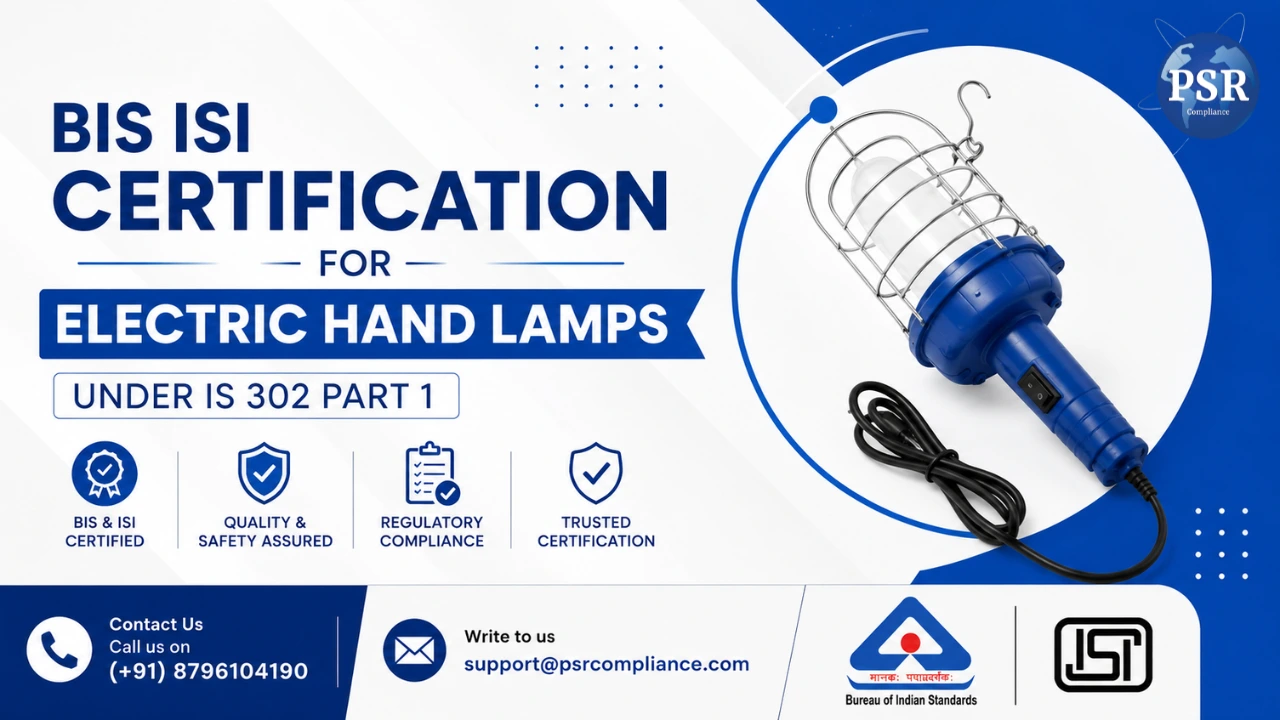
BIS ISI Certification for Electric Hand Lamps Under IS 302 Part 1 c
Electric hand lamps are used wherever fixed lighting cannot provide enough visibility. Mechanics rely on them while working beneath vehicles, electricians use them during installations and repairs, technicians carry them inside machinery, and factory maintenance teams depend on them during inspections. They are also commonly used in garages, workshops, warehouses, construction sites, emergency repair operations, railway maintenance, and industrial service environments where portable lighting is essential.
Although they appear to be simple lighting tools, electric hand lamps operate in demanding conditions. They are frequently carried from one location to another, plugged in and unplugged multiple times, exposed to dust, moisture, vibration, and accidental impacts, and often used close to metal surfaces. Because of these conditions, electrical safety becomes far more important than many businesses realize. Under the Safety of Household, Commercial and Similar Electrical Appliances Quality Control Order (QCO), electric hand lamps are covered products that must comply with IS 302 (Part 1):2024 and carry a valid BIS ISI Mark before they can be legally manufactured, imported, or sold in India. For general enterprises, the implementation date is 1 October 2026, making early compliance planning essential.
Why Hand Lamps Carry More Risk Than Fixed Lights
Unlike wall-mounted lighting, electric hand lamps are constantly moved, handled, and exposed to physical stress. Every time the product is picked up, transported, plugged into a power source, or accidentally dropped, its electrical components face additional wear. This makes portable hand lamps significantly more vulnerable to safety failures than permanently installed lighting fixtures.
A typical electric hand lamp contains multiple components including the lamp holder or LED module, power cord, plug, switch, protective guard, handle, insulation, wiring, and in rechargeable variants, a battery, charger, and adapter. If even one of these components is poorly designed or manufactured, users may face electric shock, overheating, loose electrical connections, damaged wiring, battery failures, short circuits, or mechanical breakage during operation. Since these lamps are often used in factories, workshops, and maintenance sites where uninterrupted work is critical, one defective product can cause injury, production delays, or costly downtime. This is exactly why BIS certification plays such an important role in ensuring electrical safety and consistent manufacturing quality.
Who Should Prepare for BIS Certification?
Electric hand lamp certification is relevant for a wide range of businesses involved in manufacturing, importing, distributing, and supplying industrial lighting equipment. Companies dealing with covered products should begin their compliance planning well before the implementation deadline.
This requirement applies to:
- Indian manufacturers of electric hand lamps
- Foreign manufacturers exporting electric hand lamps to India
- Importers of portable work lights
- Industrial tool suppliers
- Garage equipment dealers
- Workshop product distributors
- Construction equipment suppliers
- Electrical goods retailers
- E-commerce sellers
- Maintenance tool brands
- Emergency lighting equipment suppliers
- Private-label electrical product companies
Even though an electric hand lamp is a relatively small product, it often moves through a large supply chain involving manufacturers, importers, distributors, retailers, and industrial buyers. Every participant should ensure the products they supply comply with BIS requirements.
Common Applications of Electric Hand Lamps
Electric hand lamps are designed as professional working tools rather than decorative lighting products. Their primary purpose is to provide reliable illumination in locations where fixed lighting cannot reach or where maintenance work requires portable lighting.
They are commonly used in:
- Automobile workshops
- Vehicle garages
- Manufacturing factories
- Warehouses
- Construction sites
- Electrical maintenance work
- Machine servicing
- Railway maintenance
- Transport maintenance facilities
- Industrial inspection work
- Emergency repair operations
- Industrial service companies
Because these products are regularly used in demanding work environments, industrial buyers expect them to deliver consistent performance, durability, and electrical safety.
What Many Sellers Often Overlook
Manufacturers and sellers usually promote features such as higher brightness, longer cable length, rechargeable batteries, magnetic mounting, hanging hooks, lightweight construction, or extended battery backup. While these features certainly improve product appeal, they cannot replace compliance with mandatory electrical safety standards.
Electric hand lamps are frequently held close to the user's body while operating. If insulation deteriorates, wiring becomes exposed, or internal electrical components fail, the risk of electric shock increases significantly. Industrial buyers understand these risks, which is why BIS certification increasingly serves as a strong indicator of product quality, reliability, and compliance with Indian safety requirements.
Electric Hand Lamp Products Businesses Should Review
Businesses should carefully review every model within their product portfolio because different product designs may require separate technical evaluation during certification.
Products commonly requiring review include:
- Electric hand lamps
- Portable inspection lamps
- Workshop hand lamps
- Garage work lamps
- Rechargeable hand lamps
- Corded hand lamps
- Industrial portable work lights
- Emergency repair lamps
- Imported electric hand lamp models
- Private-label electric hand lamps
Each variant should be evaluated individually since rechargeable models, corded models, LED inspection lamps, guarded lamps, and industrial work lights may differ in construction, electrical ratings, charging systems, and safety features.
Commercial Benefits of BIS Certification
For industrial lighting products, BIS certification offers benefits that extend far beyond regulatory compliance. Buyers in industrial sectors prefer products that demonstrate proven safety and quality because equipment failures can interrupt operations and increase workplace risks.
A BIS-certified electric hand lamp can help businesses secure:
- Industrial procurement orders
- Workshop and garage equipment contracts
- Construction project supplies
- Factory maintenance purchases
- Greater dealer confidence
- Online marketplace approvals
- Institutional procurement opportunities
- Stronger brand reputation
Industrial buyers rarely select products based solely on price. A certified product demonstrates professionalism, quality assurance, and long-term reliability, giving suppliers a competitive advantage over uncertified alternatives.
Common Reasons for Certification Delays
Many certification projects experience unnecessary delays because businesses begin the application process before their technical documentation is fully prepared. Correcting these issues after submission often increases costs and extends approval timelines.
Common reasons for delay include:
- Incomplete model information
- Incorrect electrical ratings on product labels
- Missing charger or adapter specifications
- Weak or incomplete user manuals
- Missing safety instructions
- Incomplete factory documentation
- Missing testing equipment information
- Imported products without technical documentation
- Incorrect mapping of multiple product variants
Identifying and resolving these issues before filing the application helps businesses achieve a smoother certification process.
Documents Required for BIS ISI Certification
To ensure a successful BIS certification process, businesses should prepare all technical and regulatory documentation in advance. Essential documents generally include company registration certificates, factory address proof, detailed product specification sheets, model lists, electrical rating details, trademark documents, manufacturing process flowcharts, quality control plans, testing equipment lists, machinery details, product label artwork, user manuals, and product safety instructions.
For electric hand lamps, user manuals should clearly explain electrical ratings, operating instructions, charging procedures for rechargeable models, maintenance recommendations, safe handling practices, and all necessary electrical safety precautions. Well-prepared documentation significantly reduces the chances of BIS queries and certification delays.
How a BIS Consultant Makes the Process Easier
Obtaining BIS certification involves several technical and regulatory stages, including product applicability assessment, documentation preparation, model grouping, laboratory testing, factory inspection readiness, label verification, manual review, BIS application filing, and responding to technical queries raised during the approval process. Managing multiple product variants can make the process even more challenging without proper guidance.
A professional BIS consultant simplifies the entire certification journey by coordinating each stage of the process from start to finish. For importers, consultant support becomes especially valuable because overseas manufacturers often lack familiarity with Indian BIS documentation requirements. Proper coordination between the importer, foreign manufacturer, testing laboratory, and BIS helps prevent unnecessary delays and ensures faster approval.
Conclusion
Electric hand lamps may be compact products, but they are designed for demanding industrial environments where safety and reliability cannot be compromised. Under the current Quality Control Order, these products are covered by the mandatory BIS certification framework and must comply with IS 302 (Part 1):2024 before they can be legally manufactured, imported, or sold in India.
If your business manufactures, imports, distributes, or sells electric hand lamps, now is the right time to begin preparing. Review every product model, organize technical documentation, verify labels and user manuals, coordinate product testing, and plan your BIS certification well before the compliance deadline arrives.
In industrial lighting, brightness may attract the buyer initially—but BIS certification is what builds lasting trust, protects your business, and wins long-term commercial opportunities.
Get Expert Help with BIS ISI Certification for Electric Hand Lamps
Need assistance with BIS ISI Certification under IS 302 (Part 1):2024 for Electric Hand Lamps? PSR Compliance provides complete end-to-end support—from documentation and application filing to product testing, factory inspection, and final BIS licence approval.
👉 Ensure faster approvals and stress-free compliance with expert guidance.
📞 +91 8796104190
📧 support@psrcompliance.com
Frequently Asked Questions (FAQs)
1. Is BIS ISI Certification mandatory for electric hand lamps?
Yes. Under the Safety of Household, Commercial and Similar Electrical Appliances Quality Control Order (QCO), electric hand lamps covered under the notification must comply with IS 302 (Part 1):2024 and obtain a valid BIS licence before they can be manufactured, imported, or sold in India.
2. Which Indian Standard applies to electric hand lamps?
Electric hand lamps are required to comply with IS 302 (Part 1):2024, which specifies the safety requirements for household, commercial, and similar electrical appliances.
3. Who needs BIS Certification for electric hand lamps?
BIS certification is generally required for Indian manufacturers, foreign manufacturers exporting to India, importers, private-label brands, distributors, wholesalers, retailers, and e-commerce sellers dealing with covered electric hand lamps.
4. What documents are required for BIS Certification?
The application generally requires company registration documents, factory address proof, product specifications, model list, electrical ratings, quality control documents, machinery details, testing equipment information, trademark documents, product labels, user manuals, and safety instructions.
5. Are rechargeable electric hand lamps also covered under BIS Certification?
Yes. Rechargeable electric hand lamps, along with their charging systems and electrical components, should be evaluated to determine their applicability under the relevant Quality Control Order and BIS standards.
6. Can imported electric hand lamps be sold without BIS Certification?
No. Covered imported electric hand lamps cannot be legally imported or sold in India without obtaining the required BIS licence and using the ISI Standard Mark.
7. What are the common reasons for delays in BIS approval?
Common reasons include incomplete technical documentation, incorrect product labels, missing charger or battery details, weak user manuals, improper model mapping, incomplete factory records, and inadequate testing preparation.
8. How long does the BIS Certification process take?
The overall timeline depends on product testing, document readiness, factory inspection, and BIS review. Preparing documents correctly and starting the process early can significantly reduce approval time.
9. Why is BIS Certification important for industrial buyers?
Industrial buyers prefer BIS-certified products because certification demonstrates compliance with Indian safety standards, improves buyer confidence, supports institutional procurement, and reduces the risk of product failures during operation.
10. How can PSR Compliance help with BIS Certification for electric hand lamps?
PSR Compliance provides complete end-to-end support, including applicability assessment, documentation, product testing coordination, factory inspection preparation, BIS application filing, query handling, and post-approval compliance assistance, helping businesses obtain their BIS licence with minimal hassle.