Fri, Jun 19 2026
Raju Karn
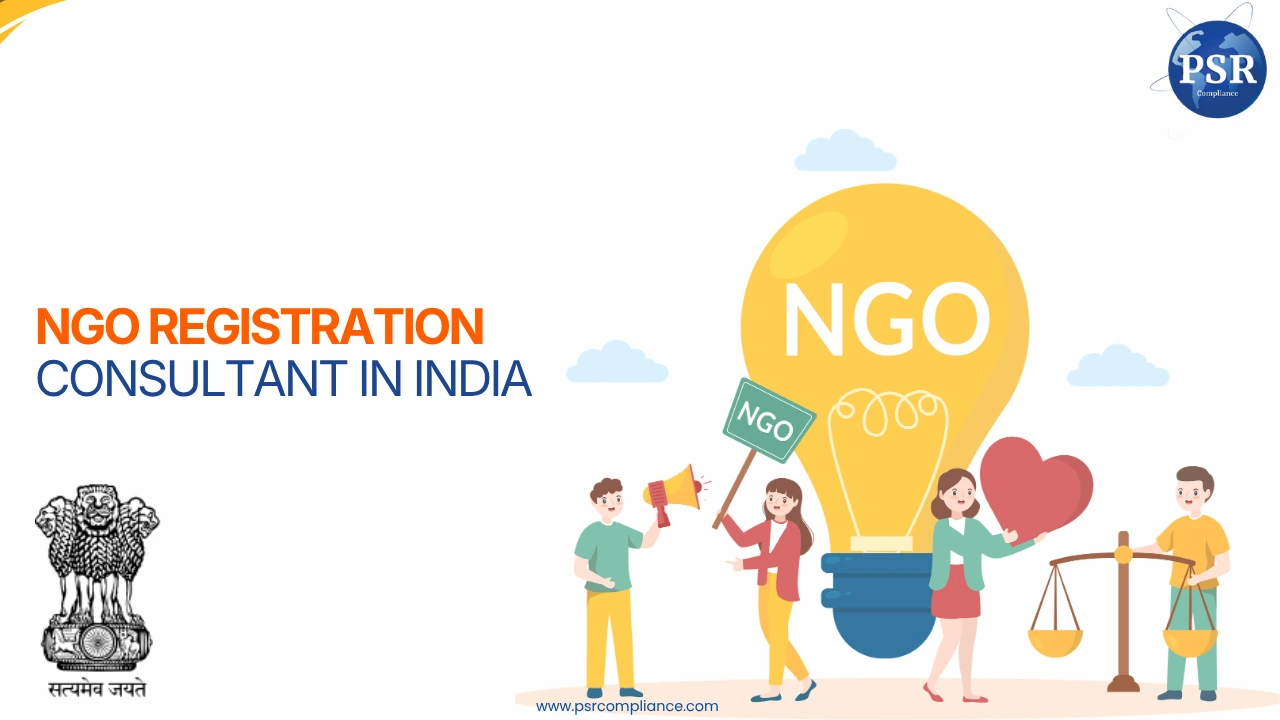
NGO Registration Consultant in India: Trust, Society, Section 8 & FCRA Experts
Find a cause, gather a few like-minded people, and start helping others. But the legal reality is far more complicated. Between choosing the right structure (Society, Trust, or Section 8 Company), registering on the NGO Darpan portal, applying for tax exemption and donor-deduction approval under Sections 332 and 354 of the new Income-tax Act, 2025, and securing FCRA approval for foreign funding, the paperwork alone can overwhelm even the most passionate founder. A single mistake in documentation or a missed deadline can delay your NGO's ability to receive donations or government grants by months.
This is exactly why working with a professional NGO registration consultant makes all the difference. A good consultant doesn't just fill out forms, they map out the entire journey for your organisation, from choosing the right legal structure to keeping you compliant year after year. Whether you're an individual wanting to start a charitable trust, a group of professionals forming a society, or a company looking to set up a Section 8 entity for CSR purposes, expert guidance ensures your NGO is built on a solid legal foundation from day one, saving you time, money, and the risk of rejection.
Who Actually Needs an NGO Registration Consultant?
Many people assume registration is something they can do on their own using online guides. While that's technically true, the process involves multiple government departments, each with its own forms, timelines, and document requirements. You should strongly consider hiring a consultant if you are:
• First-time founders who have never dealt with government registration processes before
• Social workers and activists who want to focus on fieldwork, not paperwork
• Corporates and businesses setting up a Section 8 Company for CSR (Corporate Social Responsibility) compliance
• Religious or community groups wanting to formalise as a public trust or society
• International donors or diaspora groups planning to fund Indian causes and needing FCRA-compliant structures
• Existing NGOs that need to renew, migrate, or correct their 12A/80G/FCRA registrations under the new rules
• Educational and healthcare institutions that need tax-exempt status to operate sustainably
Essentially, anyone planning to legally operate a non-profit : regardless of size or cause : benefits from expert support, because errors at the registration stage can cause rejection, delays, or even denial of future tax benefits.
Which Sectors and Causes Require NGO Registration?
NGO registration isn't limited to one type of cause. It applies across a huge range of sectors, including:
| Sector | Causes and Activities |
|---|---|
| Education | Schools, coaching centres for underprivileged children, scholarship trusts, skill development programmes |
| Healthcare | Free medical camps, hospitals, blood banks, mental health initiatives |
| Women and Child Welfare | Shelters, orphanages, anti-trafficking organisations, girl child education programmes |
| Environment and Wildlife | Forest conservation groups, wildlife protection trusts, clean energy and sustainability projects |
| Rural Development | Clean water projects, sanitation drives, rural infrastructure and livelihood programmes |
| Disaster Relief | Flood, earthquake, and pandemic relief organisations |
| Animal Welfare | Shelters, rescue operations, and veterinary care non-profits |
| Arts, Culture, and Heritage | Preservation of monuments, traditional crafts, and cultural programmes |
| Religious and Community Trusts | Public temples, mosques, churches, and gurdwaras run for public benefit |
| Sports Development | Grassroots sports training and infrastructure for underprivileged youth |
Choosing the Right Structure: Society, Trust, or Section 8 Company
1. Trust Registration in India
A Trust is the simplest and most common structure for charitable work, especially for religious or welfare-based causes.
▸ Formed through a Trust Deed, registered with the local Registrar/Sub-Registrar
▸ Requires a minimum of two trustees (no upper limit)
▸ Best suited for activities like running orphanages, temples, relief funds, or educational institutions
▸ Governed by state-specific Trust Acts (since there's no single central law covering all trusts in India)
▸ Relatively easier and faster to set up compared to a society or company
2. Society Registration in India
A Society is ideal for groups wanting more democratic, membership-based governance.
▪ Registered under the Societies Registration Act, 1860 (or state amendments)
▪ Requires a minimum of 7 members (can be more depending on the state)
▪ Governed by a Managing Committee elected by members
▪ Common for clubs, sports bodies, cultural associations, and welfare societies
▪ Requires filing a Memorandum of Association along with By-Laws
3. Section 8 Company Registration
A Section 8 Company is the most formal and credible structure, ideal for larger NGOs planning to scale, attract corporate funding, or operate with high transparency.
• Registered under the Companies Act, 2013, with the Ministry of Corporate Affairs (MCA)
• Requires a minimum of 2 directors and shareholders (for a private limited structure)
• Cannot distribute profits to its members : all income must go back into the charitable objective
• Offers higher credibility with foreign donors, banks, and government bodies
• Subject to stricter annual compliance (ROC filings, audits, board meetings)
A consultant helps you weigh these options based on your goals : whether you want quick setup, donor credibility, or long-term scalability : and handles the entire registration filing on your behalf.
NGO Darpan Portal Registration (NITI Aayog)
Once your NGO is legally registered as a Trust, Society, or Section 8 Company, the next essential step is registering on the NGO Darpan Portal, run by NITI Aayog (Government of India).
Why Darpan Registration Matters
- It is mandatory for NGOs seeking government grants or funding
It is required when applying for 12A, 80G, and FCRA registrations
It creates a unique identification number for your NGO, improving transparency and trust
Government departments and ministries often use this portal to identify and fund eligible organisations
What a Consultant Helps With
- Preparing and uploading the correct registration certificate, PAN, and address proof
Filling in accurate details about your NGO's objectives and activities
Avoiding common errors that lead to application rejection or delays
Keeping your Darpan profile updated as your NGO grows
12A and 80G Registration: Why Your NGO Cannot Skip This
This is one of the most financially important steps for any NGO, and also one of the most misunderstood.
12A Registration exempts your NGO's income from income tax : without it, donations and grants received are taxed like regular income.
80G Registration allows your donors to claim a tax deduction on their contributions, making your NGO far more attractive to individual and corporate donors.
Why You Need Expert Help Here
The process now requires filing Form 10A or Form 10AB on the income tax e-filing portal, along with supporting documents like:
✓ Trust deed / MOA / incorporation certificate
✓ PAN card of the organisation
✓ Financial statements for the last 1–3 years
✓ NGO Darpan registration details
✓ Notes on the activities carried out
Since the Finance Act amendments, these registrations now come with expiry dates (3 years for provisional, 5 or 10 years for renewed registration), and missing a renewal deadline can mean your NGO suddenly becomes fully taxable. A consultant tracks these deadlines for you and manages the entire renewal cycle so you never lose your tax-exempt status by accident.
FCRA Registration: Essential for Foreign Funding
If your NGO plans to receive donations, grants, or contributions from outside India : including from NRIs, foreign foundations, or international companies : you must register under the Foreign Contribution (Regulation) Act (FCRA), 2010.
Who Needs FCRA Registration?
- NGOs receiving funds from foreign individuals, trusts, or companies
Organisations partnering with international NGOs or UN bodies
Educational and research institutions receiving foreign grants
Religious organisations receiving donations from overseas followers
Why This Process Needs Expert Guidance
→ FCRA registration is one of the strictest approval processes in the NGO sector, requiring:
→ A minimum operational history (usually 3 years) before applying for normal registration
→ A dedicated FCRA bank account with the State Bank of India's New Delhi Main Branch (or as currently mandated)
→ Detailed disclosure of office bearers, past activities, and fund utilisation
→ Annual filing of Form FC-4 once registered, along with strict reporting of every foreign contribution received
Mistakes or non-disclosure here can lead to registration cancellation or even legal action : making professional consultancy not just helpful, but essential.
Benefits of Hiring a Professional NGO Registration Consultant
Faster Processing : Consultants know exactly which documents authorities expect, reducing back-and-forth and rejection
💡 Error-Free Filings : Avoid technical mistakes in forms like 10A, 10AB, FC-3, or Darpan applications
💡 End-to-End Support : From incorporation to Darpan, 12A, 80G, and FCRA : all under one roof
💡 Compliance Tracking : Consultants remind you of renewal deadlines so your NGO never loses its tax-exempt or FCRA status
💡 Expert Documentation : Trust deeds, MOAs, By-Laws, and resolutions drafted correctly the first time
💡 Audit and Accounting Support : Many consultants, including teams of Chartered Accountants and Company Secretaries, also assist with annual NGO audits and tax filings
💡 Credibility Boost : Properly registered and compliant NGOs find it easier to attract donors, partners, and government grants
Final Thoughts
Setting up an NGO is an act of good intention, but running one legally and sustainably requires careful planning. From choosing between a Trust, Society, or Section 8 Company, to securing your Darpan ID, 12A, 80G, and FCRA registrations : every step builds the legal and financial backbone your organisation needs to grow, attract donors, and create real impact.
Rather than risking delays or rejections by navigating this alone, partnering with an experienced NGO registration consultant ensures your paperwork is right the first time : so you can focus on what matters most: your mission.
Get Expert Help with NGO Registration & Compliance
Need assistance with NGO registration, Trust/Society/Section 8 Company setup, NGO Darpan registration, 12A & 80G tax exemption, or FCRA approval? PSR Compliance provides end-to-end support to ensure fast, accurate, and hassle-free NGO registration and compliance.
👉 Avoid delays, rejections, and compliance risks with expert guidance.
📞 8796104190
📧 support@psrcompliance.com
FAQs on NGO Registration in India
1. What are the types of NGOs in India?
NGOs in India are mainly registered as Trust, Society, or Section 8 Company, depending on scale, purpose, and funding needs.
2. How many members are required to start an NGO?
Trust: Minimum 3 Trustees
Society: Minimum 7 Members
Section 8 Company: Minimum 2 Members/Directors
3. What documents are required for NGO registration?
PAN, ID proofs of members, address proof of office, and Trust Deed or MoA/AoA are required.
4. How long does NGO registration take?
It usually takes 30 to 60 days, depending on documentation and government processing time.
5. What is 12A and 80G registration?
12A: Makes NGO income tax-exempt
80G: Allows donors to claim tax benefits
6. Can NGOs receive foreign funding in India?
Yes, but only after obtaining FCRA registration from the Ministry of Home Affairs.
7. Can NGOs register with the United Nations?
Yes, NGOs can apply for UN ECOSOC consultative status to participate in global programs.